Quick Answer
The power bank that got taken at the gate: and the one that didn’t
Keflavík airport, 6am, and the man at security was turning my friend’s power bank over in his hands looking for a number that wasn’t there. No printed watt-hour rating, a suspiciously round “30000mAh” sticker peeling at one corner, bought off a marketplace listing for the price of a sandwich. Into the bin it went. Mine (boring, brand-name, 74Wh printed right on the side) got a glance and a nod. Same queue, two very different mornings.
That’s the quiet truth about the best travel power banks: the spec that matters most isn’t capacity or wattage, it’s whether the thing is airline-legal and provably so. A confiscated charger isn’t just a lost gadget; it’s the start of a trip where your phone (boarding pass, maps, the lot) dies at the worst possible moment. I’d packed mine as an afterthought on a 12-day Iceland loop and used it on the first morning.
You don’t need the biggest brick on the shelf. You need one that’s under the limit, has the number printed on it, and actually holds the charge it claims. Here are the five I’d buy: every one carry-on legal, every one with the rating printed where a security officer can read it. We’ll start with the one most people should just buy.
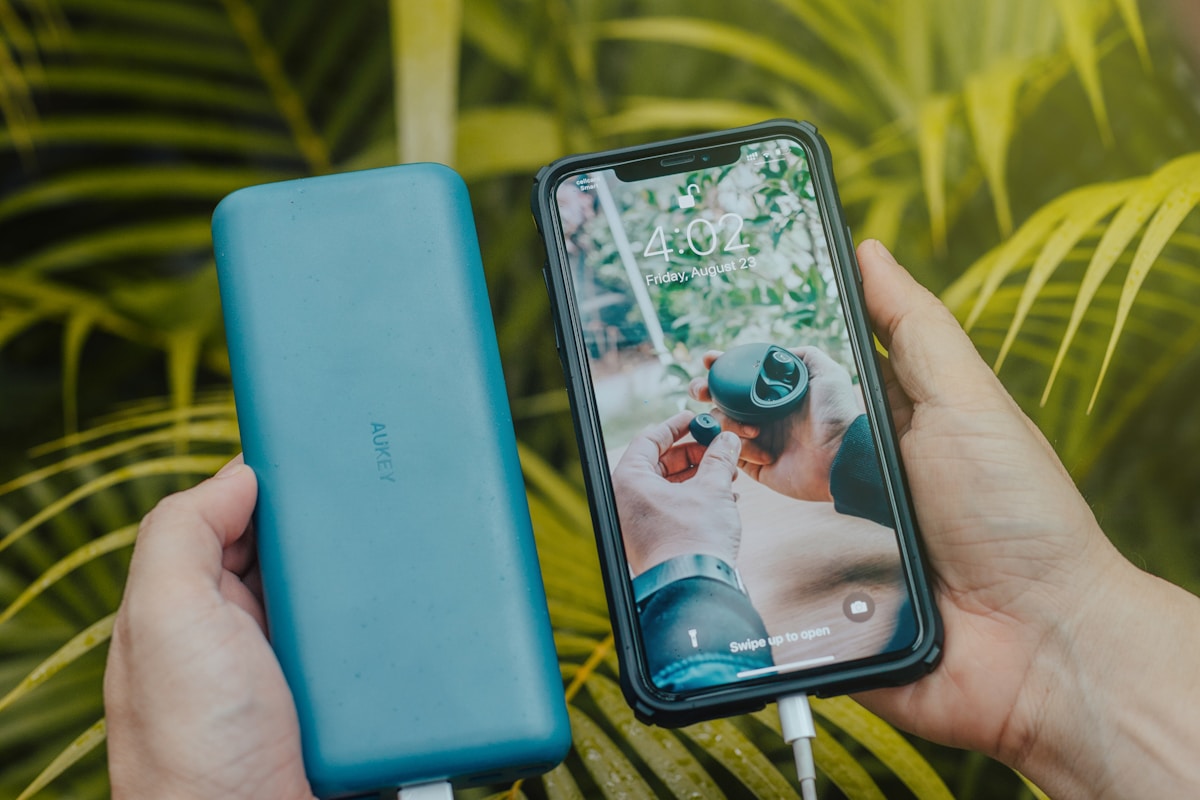
The best travel power bank for most people. 20,000mAh (≈74Wh, comfortably carry-on legal) recharges a phone four-plus times and tops up a laptop, and the USB-C cable is built into the body so you can’t leave it behind. The one I’d buy first.
Check price on Amazon Live price on AmazonPocket-size and feather-light at ~37Wh, with the charging cable built in. Two-plus full phone charges (plenty for a day out or a short trip), and small enough to forget it’s in your jacket. The carry-everywhere pick when 20,000mAh is overkill.
Check price on Amazon Live price on AmazonMaximum legal capacity in one brick: ≈99.5Wh sits just under the 100Wh airline limit, so it’s still carry-on legal with no approval. 250W across three ports charges a laptop fast and a phone instantly, with a smart display showing exactly what’s left. For heavy device days.
Check price on Amazon Live price on AmazonA genuine laptop charger that’s still flight-legal (≈90Wh). 100W USB-C tops up a MacBook or Steam Deck, three ports cover the whole table, and INIU’s long warranty makes it a low-risk pick. The value choice for travelers who work on the road.
Check price on Amazon Live price on AmazonFlat, slim and built to slide into a laptop sleeve instead of bulging a pocket. 100W with two USB-C and two USB-A ports (≈74Wh, carry-on legal) and a clear digital readout. The pick if you hate the chunky-brick feel of most high-watt banks.
Check price on Amazon Live price on AmazonThe best travel power banks for 2026, at a glance
Pick by what you charge and how much you carry. If you only want one, the Anker 20,000mAh is the right answer for most people: enough to matter, small enough to bring, and legal everywhere.
| Power bank | Capacity | ≈Wh (airline) | Best for |
|---|---|---|---|
| Anker 20,000mAh 87W | 20,000mAh | ~74Wh ✅ | Best overall; phone + light laptop |
| Anker Nano 10,000mAh | 10,000mAh | ~37Wh ✅ | Pocket-size daily carry |
| Anker Prime 27,650mAh | 27,650mAh | ~99.5Wh ✅ | Max legal capacity, heavy days |
| INIU 25,000mAh 100W | 25,000mAh | ~90Wh ✅ | Laptops, value pick |
| Baseus Blade 100W | 20,000mAh | ~74Wh ✅ | Slim laptop charging |
(Every Wh figure above is under the 100Wh no-approval ceiling: all five are carry-on legal.)
Anker 20,000mAh: the one to buy first
Start here. At 20,000mAh / ≈74Wh it sits comfortably under the airline limit, recharges a phone four-plus times, and will top up a laptop in a pinch. The detail that makes it the default, though, is the USB-C cable built into the body: the cord you’d otherwise leave on the hotel nightstand is physically attached. I’ve left cables in three countries. This one I can’t.
87W of output means it charges fast, not just slowly trickling power back in. It’s the right size: big enough to get a couple through a long travel day, small enough that you’ll actually bring it instead of leaving it home “to save space.” If you read no further, buy this one.
Anker Nano 10,000mAh: the one you’ll always have on you
Some days you don’t need a brick. The Nano 10,000mAh is ≈37Wh, light enough to forget in a jacket pocket, and still good for two-plus full phone charges: which is a whole day of maps, photos and translation without range anxiety. The USB-C cable’s built in here too.
This is the bank for the day-trip, the city break, the carry-on-only minimalist. Honest trade-off: it won’t meaningfully charge a laptop and it’ll need its own top-up by night two of heavy use. But as the charger that’s always with you rather than the one back at the hotel, nothing here beats it.
For laptops and heavy days: Prime, INIU, Baseus
Work on the road, or travel with a power-hungry pile of devices? Three picks push real wattage while staying flight-legal.
The Anker Prime 27,650mAh is the maximum-capacity play: ≈99.5Wh sits just under the 100Wh ceiling, so it’s still carry-on legal with no approval, and 250W across three ports charges a laptop genuinely fast. The smart display showing exact remaining charge is more useful than it sounds when you’re rationing power across a long flight day.
The INIU 25,000mAh 100W is the value laptop pick: ≈90Wh, a true 100W USB-C output for a MacBook or Steam Deck, three ports, and INIU’s long warranty taking the risk out. The Baseus Blade 100W does similar numbers in a flat, slim shape that slides into a laptop sleeve instead of bulging your bag: the pick if you hate the chunky-brick feel. All three stay under 100Wh; all three are carry-on legal.
How I picked (and the airline rules, plainly)
I weight three things: is it provably airline-legal (under 100Wh, with the rating printed on the case), does it hold its claimed capacity (cheap banks routinely don’t), and does the output actually match the trip: enough watts for what you’re charging, in a size you’ll really carry. Brand-name cells from Anker, INIU and Baseus all passed; no-name marketplace bricks are exactly what gets binned at security.
The rules in one breath: power banks go in carry-on, never checked. Up to 100Wh needs no approval (covers everything here). 100–160Wh needs airline approval and is usually capped at two. Over 160Wh is banned. Several airlines now also want the bank visible in the cabin and not charging during the flight, so keep it in the seat pocket. To convert capacity yourself: Wh = mAh ÷ 1000 × 3.7.
No prices here. They move constantly and Amazon’s the source of truth, so tap any card for the current price. Pair your bank with a universal travel adapter so you can actually recharge it abroad, a travel eSIM so the phone it’s keeping alive is also online, and see our travel gear hub for the rest of the kit worth packing.
Frequently Asked Questions
What’s the best travel power bank in 2026?
For most travelers, the Anker 20,000mAh with a built-in USB-C cable. It’s ≈74Wh (carry-on legal), recharges a phone four-plus times, tops up a laptop, and you can’t forget the cable. Want pocket-size? The Anker Nano 10,000mAh. Need to charge a laptop fast? The INIU 25,000mAh 100W or the slim Baseus Blade. Maximum legal capacity? The Anker Prime 27,650mAh.
Can I bring a power bank on a plane?
Yes. In your carry-on only. Power banks are banned from checked luggage. Most airlines allow batteries up to 100Wh without any approval, which covers every pick here (a 20,000mAh bank is roughly 74Wh). Banks from 100–160Wh need airline approval and are usually limited to two; anything over 160Wh is banned outright.
How many mAh can I take on a flight?
The real limit is watt-hours (Wh), not mAh. The no-approval ceiling is 100Wh, which works out to roughly 27,000mAh at typical 3.6–3.7V cells, so a 10,000, 20,000 or 25,000mAh bank is fine, and a 27,650mAh bank like the Anker Prime sits just under the line. To convert: Wh = mAh ÷ 1000 × 3.7.
Why do power banks get confiscated at the gate?
Usually one of three reasons: it was packed in checked luggage (not allowed), it exceeds 100Wh without airline approval, or it’s a cheap no-name bank with no printed Wh rating, so staff can’t verify it’s legal. Buy a reputable bank with the Wh clearly printed on the case and keep it in your carry-on, and you’ll sail through.
Are new 2026 rules stricter about power banks on planes?
Several airlines have added rules requiring power banks to stay visible in the cabin (not in the overhead bin) and not be used to charge devices during the flight. The capacity limits (100Wh without approval, 160Wh with) haven’t changed. Keep the bank in your seat pocket, not charging, and you’re following the newer rules too.
The bottom line
Buy the Anker 20,000mAh for most trips, drop down to the Nano 10,000mAh if you travel light, or step up to the Prime / INIU / Baseus if you’re charging a laptop. Whatever you pick, make sure the watt-hours are printed on the case and keep it in your carry-on. That’s the difference between a nod at security and a sad goodbye to your charger. Tap any card above for the current price, then see the rest of the travel tech I never fly without .