Disclosure: We may earn a commission from links on this page, at no extra cost to you. How we earn
This article contains affiliate links. If you make a booking through these links, we may earn a commission at no extra cost to you. About & Affiliate Disclosure
Quick Answer
- Safari luxury: Greater Kruger all-inclusive lodges run roughly $800 to $2,500 per person per night, with Royal Malewane from around $1,400 per person.
- Maldives low season: resort rates run around 30-50% below peak during the May-October southwest monsoon, with 6-7 hours of daily sunshine still typical.
- Paris airport transfer: CDG taxis charge a fixed €56 to the Right Bank or €65 to the Left Bank, either direction, day or night, luggage included.
- A no-foreign-fee travel card saves ~3% on every five-star charge abroad, and travel insurance protects deposits that now run into five figures.
- Where five-star costs less: Bali, Kyoto and Cape Town deliver world-class service at a fraction of Maldives or Dubai pricing.
Where to go







Luxury travel isn’t about the biggest number: it’s about the right one
You could spend $40,000 a night on the Royal Mansion at Atlantis The Royal in Dubai, or $25,000 on the Burj Al Arab’s Royal Suite. Most people who travel luxuriously (and travel a lot) never touch those numbers. They’ve learned the quieter truth: the difference between a good luxury trip and a great one is choosing well, not spending most.
This is the page for the traveler who wants the barefoot-butler service, the caldera view, the villa over the reef, but who also reads the fine print and books like an adult. Here’s how to pick the destination, what it actually costs in 2026, and where the smart money goes.
Start with a live search for your dates: luxury inventory is thin, and the best suites go first:
What the luxury traveler actually optimizes for
Strip away the marketing and luxury travelers optimize for three things, in this order: privacy, service, and a sense of place. A generic marble lobby doesn’t move anyone anymore. A private plunge pool with a caldera sunset, a butler who remembers your coffee, a ryokan dinner served in your room. That’s what the money buys.
The honest trade-offs: peak season means peak crowds and peak prices, so the “perfect” July Santorini trip is also the most expensive and most packed. Ultra-remote lodges (fly-in Kruger camps, far-flung Maldivian atolls) buy seclusion at the cost of long transfers and $500 seaplane hops. And the flashiest properties aren’t always the most luxurious: sometimes the 12-suite boutique beats the 800-room megaresort on everything that matters. Decide which of the three you’re really buying, and the destination picks itself.
The 2026 luxury shortlist
The Maldives for the overwater dream. Nothing else quite matches a villa on stilts above a house reef. Entry-level water villas start around $540 a night all-in; add a private pool and you’re near $900; the icons (Soneva Jani, Cheval Blanc) run $5,500 to $25,000+. It’s the honeymoon default for a reason, but it’s a commit-to-one-island trip, so choose the resort carefully.
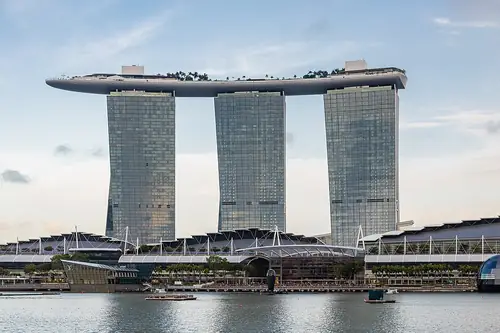
Dubai for maximalist service. This is luxury as spectacle: the world’s highest suites, private beaches on the Palm, restaurants with a chef you’ve heard of. You can do Dubai at $500 a night or $40,000; the mid-tier five-stars are where the value hides, and winter (November–March) is the season to go before the summer heat.
Kyoto for quiet, cultured luxury. A private-onsen ryokan with a multi-course kaiseki dinner runs roughly $460–$1,200 a night, a fraction of Maldives pricing for arguably deeper luxury. Pair it with the wider Japan trip; the country’s service culture is the real five-star.
The Swiss Alps for slow, scenic indulgence. The Glacier Express Excellence Class, a single reserved seat with fine catering across the Alps for CHF 540 (plus a first-class ticket), is the marquee ride, and it’s already fully booked for 2026, so 2027 planning starts now. Grand alpine hotels in Zermatt and St. Moritz do the rest.
Santorini and Mykonos for the caldera cave suite. A plunge-pool suite carved into the cliff in Oia runs €800–€2,500+ in peak summer, but the same room drops 30–40% in April or October, and the light is arguably better. This is where shoulder-season booking pays off most.
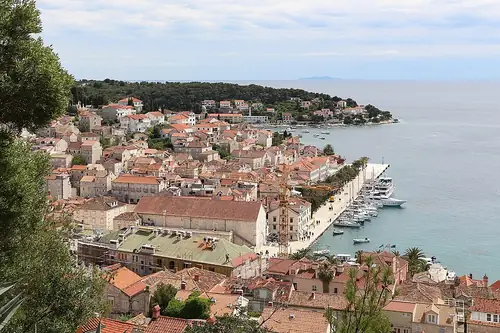
The Amalfi Coast and the French Riviera for cliffside glamour. Positano and Cap-Ferrat sell the same fantasy (a terrace over impossibly blue water) with the same shoulder-season logic. Late May and September are the connoisseur’s months.
A Greater Kruger safari for barefoot luxury with a pulse. All-inclusive private lodges run roughly $800–$2,500 per person per night (covering suite, meals, and twice-daily game drives) with ultra-luxury names like Royal Malewane from around $1,400pp. It’s the one entry on this list where the “activity” is a Big Five sighting from your private deck.
Bali: specifically Ubud: for value luxury. Private-pool villas with full staff cost a fraction of Europe or the Maldives, which is why Bali punches so far above its price. For a colder-weather version of the same “five-star for less” idea, Queenstown in New Zealand delivers lodge luxury against the Southern Alps.
How to book bucket-list luxury for less
The people who travel best aren’t paying rack rate. Four moves do most of the work:
- Book shoulder season. April–May and October undercut peak Santorini, Amalfi and Riviera rates by roughly a third while the sea’s still warm and the crowds have thinned.
- Reserve sell-outs early. Flagship experiences (Glacier Express Excellence Class, top Maldivian villas over New Year) go 6–12 months out. Set the date and book the moment the calendar opens.
- Stop losing ~3% to foreign fees. On a five-figure trip that surcharge is real money, a no-foreign-fee travel credit card erases it and often earns points back.
- Protect the deposit. Luxury bookings mean large, sometimes non-refundable prepayments. Travel insurance that covers cancellation is not optional at this price point.
Two more that quietly upgrade the trip: a good eSIM so you land connected without a €50 roaming shock, and the right packing kit: the gap between “luxury” and “flustered at the gate” is often just organization.
How to plan a luxury trip, step by step
Picking the destination is the fun half. The other half is a sequence of booking decisions, and getting them in the right order is worth thousands on a five-figure trip.
- Time the premium cabin with data, not folklore. Expedia’s 2026 Air Hacks report found Thursday departures average 17% cheaper than Sunday (the priciest day) for business class, Friday is the cheapest day to fly economy, and August the cheapest month. International economy also averages around $190 less when booked 31–45 days out versus six-plus months ahead. Treat all of these as averages, never guarantees; fares move daily.
- Turn everyday spending into premium-cabin fuel. As of mid-2026 the US American Express Membership Rewards program transfers points to 16 airline and 3 hotel loyalty programs (Choice, Hilton, Marriott), most at 1:1, which is how a cash economy budget becomes a points business-class seat. Earn on the year’s ordinary spending, then move the points only when you’ve found the award seat.
- Choose the booking channel for the perks, not just the price. Amex Fine Hotels + Resorts bookings (Platinum and Centurion cardmembers) include daily breakfast for two valued at a minimum of $60 per room per day, a $100 property credit, guaranteed 4pm checkout and a room upgrade on arrival when available. Booking.com Genius gives at least 10% off at Level 1 and at least 20% off at Level 3 (15 stays in 2 years), while chasing Hilton or Marriott status means booking direct: neither program awards elite benefits or elite night credit on third-party bookings.
- Engineer the suite upgrade instead of hoping for it. Marriott Bonvoy gives Platinum Elite and above a complimentary upgrade including select suites, subject to availability at check-in (the terms were softened in May 2025 from best available room to simply an upgrade, so keep expectations honest). Target low-occupancy nights (Sunday–Tuesday at business-district hotels), ask politely when the desk can actually see unsold suites, and get any promised upgrade in writing in the app or confirmation.
- Run the five-star-low-season math before settling for four stars in peak week. The budget that buys a 4-star in peak week often buys a genuine 5-star in that destination’s low season: Maldives resort rates run around 30–50% below peak during the May–October southwest monsoon, with 6–7 hours of daily sunshine still typical. Price both tiers for identical dates, then price the 5-star again in its own low season before deciding.
- Book the airport transfer as a fixed cost, not a meter gamble. Where regulated flat fares exist the official rank is hard to beat: Paris CDG to Paris is a fixed €56 (Right Bank) or €65 (Left Bank) in either direction, day or night, luggage included. Elsewhere, a pre-booked fixed-price airport taxi includes taxes, tolls and gratuity, cancels free up to 24 hours before pickup and waits 45 minutes after landing; compare the options in our airport transfer guides.
- Pre-book the on-property luxuries and calendar their cancellation deadlines. Signature spa slots and marquee tables sell out like flights and carry real penalty windows: Mandarin Oriental spas charge 100% for cancellations inside 24 hours or no-shows, with a 48-hour window at Mandarin Oriental Paris for treatments of €600 or more. Book before arrival, put each deadline in your phone calendar, and pack one smart outfit for dress-coded dining rooms.
What to do when things go wrong
At luxury prices the stakes of a mishap are higher, but so are your formal rights. These are the six failures that actually happen, and the recovery playbook for each.
The hotel will not honor the rate or room you booked
Screenshot the rate page at booking time (room name, view, bed type, inclusions, total) and keep the confirmation email. At the desk, calmly ask for the duty manager; if you booked through a platform, call its support line from the lobby so it pressures the property in real time. If you’re still forced to pay more or accept less, dispute the difference on the card: under the US Fair Credit Billing Act you must dispute in writing within 60 days of the first statement showing the charge (the issuer must acknowledge within 30 days and resolve within 90), and under Section 75 of the UK Consumer Credit Act 1974 the card provider is jointly liable for purchases over £100 and up to £30,000, triggered even by a card-paid deposit.
You are downgraded from the premium cabin you paid for
Do not accept an on-the-spot voucher as full settlement. On flights covered by EU261 or the UK’s mirrored UK261 (any departure from an EU or UK airport, plus EU and UK carriers flying in), Article 10 of Regulation 261/2004 entitles you to reimbursement within 7 days of 30% of the ticket price for flights of 1,500 km or less, 50% for intra-EU flights over 1,500 km and other flights of 1,500–3,500 km, and 75% for longer flights. The percentage applies to the downgraded flight segment only, not the whole itinerary, so keep the fare breakdown. Claim in writing to the airline first, then escalate to the national enforcement body if it stalls.
A missed spa slot quietly bills the full price to your room
Treat every pre-booked treatment and tasting-menu table like a flight. Mandarin Oriental spas charge 100% inside 24 hours or for no-shows (48 hours at Mandarin Oriental Paris for treatments of €600 or more), and Ritz-Carlton spas charge the full service fee inside 24 hours. Cancel inside the free window the moment plans wobble, and check the folio at checkout so a fee you did not incur is removed before you leave the desk.
You are turned away over a dress code you did not know existed
Check the code on the venue’s own site before you book, not at the door: The Ritz London requires a jacket and tie for gentlemen at Afternoon Tea and in The Ritz Restaurant, with jeans and sportswear not permitted. Pack one smart outfit (collared shirt, jacket, closed shoes) even on a beach itinerary; some flagship restaurants keep loaner jackets but none guarantee one. If you arrive non-compliant, ask to be moved to the property’s smart-casual venue rather than losing the booking to a no-show fee.
You tip wrong: too little, too much, or twice
Anchor by region. In the US, 15–20% is the restaurant standard and the American Hotel and Lodging Association suggests $1–5 per night for housekeeping, more at luxury properties. In Japan, tipping is not customary in restaurants, taxis or hotels, and upscale venues often add a 10–15% service charge instead; in France a 15% service charge is already included in menu prices, so rounding up is normal and 5–10% is generous. When a bill already shows a service-charge line, do not add a second full tip.
Your pre-booked transfer driver is not at arrivals
Never follow anyone soliciting rides inside the terminal: Paris Aeroport warns that only taxis with a rooftop light and official plate are legitimate, and CDG’s regulated flat fares (€56 Right Bank, €65 Left Bank) make the official rank a safe fallback. A pre-booked fixed-price airport taxi tracks your flight and waits 45 minutes after landing, so clear immigration before panicking, then use the in-app driver contact. A genuine no-show on a prepaid booking is refundable through support, with the card-dispute routes above as the backstop.
Sources
VoyageHacks verified every figure in this guide in August 2026 against the primary sources below.
- EUR-Lex, Regulation (EC) No 261/2004 (Article 10, downgrading): https://eur-lex.europa.eu/legal-content/EN/TXT/?uri=CELEX%3A32004R0261, checked August 2026
- EUR-Lex, Interpretative Guidelines on Regulation (EC) No 261/2004: https://eur-lex.europa.eu/legal-content/EN/TXT/HTML/?uri=OJ:C_202405687, checked August 2026
- Expedia Newsroom, Expedia 2026 Air Hacks: https://www.expedia.com/newsroom/expedia-2026-air-hacks/, checked August 2026
- American Express Travel, Fine Hotels + Resorts: https://www.americanexpress.com/en-us/travel/fine-hotels-and-resorts, checked August 2026
- Booking.com, Genius loyalty programme: https://www.booking.com/genius.html, checked August 2026
- Booking.com, Airport taxis: https://www.booking.com/taxi/index.html, checked August 2026
- Paris Aeroport, Taxis at Charles de Gaulle Airport: https://www.parisaeroport.fr/en/passengers/transport-parking/taxi/cdg, checked August 2026
- FTC Consumer Advice, Using Credit Cards and Disputing Charges: https://consumer.ftc.gov/articles/using-credit-cards-and-disputing-charges, checked August 2026
- MoneyHelper, Section 75 and chargeback protection: https://www.moneyhelper.org.uk/en/everyday-money/credit/how-youre-protected-when-you-pay-by-card, checked August 2026
- Hilton Honors, Support FAQ (third-party bookings): https://www.hilton.com/en/hilton-honors/support-faq/, checked August 2026
- The Ritz London, FAQs (dress code): https://www.theritzlondon.com/faqs/, checked August 2026
Frequently Asked Questions
What are the best luxury travel destinations in 2026? The standout luxury destinations for 2026 are the Maldives for overwater villas (from around $540 to $25,000+ a night), Dubai for suite-and-service excess (top suites $25,000+), Kyoto for private-onsen ryokan (roughly $460–$1,200), the Swiss Alps for the Glacier Express Excellence Class (CHF 540 plus a first-class ticket), and Santorini for caldera cave suites (€800–€2,500+ in peak season).
How much does a luxury vacation cost per night in 2026? It depends entirely on the destination and tier. A Santorini cave suite with a plunge pool runs €800–€2,500+ a night in peak summer; a Maldives water villa with a pool starts near $900 and climbs past $5,000; a Greater Kruger safari lodge is roughly $800–$2,500 per person per night all-inclusive. Shoulder-season dates cut many of these by 30–40%.
How do you travel luxuriously on a smaller budget? Book luxury properties in shoulder season, when Santorini and Amalfi cave-suite rates drop 30–40% versus July–August. Use a no-foreign-fee travel credit card so 5-star spending abroad avoids the ~3% surcharge, target destinations where five-star costs less (Bali, Kyoto, Cape Town), and book refundable rates early so you can rebook if the price falls.
When is the cheapest time to book a luxury trip? For flagship experiences that sell out (like the Glacier Express Excellence Class, already fully booked for 2026) reserve 6–12 months ahead. For hotels, the shoulder months (April–May and October) undercut peak-season rates by roughly a third while the weather still holds, making them the sweet spot for value luxury.
Which luxury destination is best for a honeymoon? The Maldives leads for classic honeymoon romance (private overwater villas, house reefs and total seclusion) with pool water villas from around $900 a night. Santorini’s caldera-view cave suites and Bali’s private-pool villas in Ubud are strong lower-cost alternatives, and a Greater Kruger safari suits couples who want adventure alongside the barefoot-luxury service.
How much money do you get back if an airline downgrades you in Europe? Under Article 10 of EU Regulation 261/2004 (mirrored by the UK’s UK261), an involuntary downgrade entitles you to reimbursement within 7 days of 30% of the ticket price for flights of 1,500 km or less, 50% for flights of 1,500–3,500 km and intra-EU flights over 1,500 km, and 75% for longer flights. The percentage applies only to the downgraded flight, not the whole itinerary.
Is business class cheaper on certain days of the week? On average, yes. Expedia’s 2026 Air Hacks report found Thursday departures average 17% less for business class than Sunday, the most expensive day, while Friday is the cheapest day for economy and August the cheapest month overall. These are averages from 2026 booking data, not guarantees, so still compare a few departure days before locking your dates.
Do five-star hotels give free room upgrades? Not by default, but three channels make one likely: Amex Fine Hotels + Resorts bookings include a room upgrade on arrival when available, Booking.com Genius Levels 2 and 3 include free upgrades on select stays, and Marriott Bonvoy Platinum Elite and above get a complimentary upgrade, including select suites, subject to availability at check-in. Asking politely on a low-occupancy night helps.
Pick your dream, then price it
Luxury travel rewards the planner. Decide what you’re really buying (privacy, service, or a place you’ll never forget) pick the destination that delivers it, then book smart: shoulder season, early for the sell-outs, and with a card that doesn’t skim 3% off every charge.
Start with a live search and see what your dates actually cost: the barefoot-butler week might be closer than you think: search five-star stays now .