Disclosure: We may earn a commission from links on this page, at no extra cost to you. How we earn
This article contains affiliate links. If you make a booking through these links, we may earn a commission at no extra cost to you. About & Affiliate Disclosure
Quick Answer
- Warm sea beats warm air. Mediterranean water is warmest in September, not midsummer: shoulder season gets you the best swimming for the lowest price.
- Tropics run on dry seasons, not summer. Bali is best April–October; Costa Rica flips to December–April. Match your dates to the dry window.
- Winter sun in Europe = the Canary Islands: highs around 18–22°C December to February, short-haul, open all year.
- Shoulder season is the value play: May–June and September–October in the Med; May/June/September in Bali (~30–40% cheaper than July–August).
- Sort insurance and an eSIM before you fly: both are cheap, quick, and save real money and stress once you’re there.
Where to go
 PortugalAlgarve
See hotels
PortugalAlgarve
See hotels  GreeceSantorini
See hotels
GreeceSantorini
See hotels 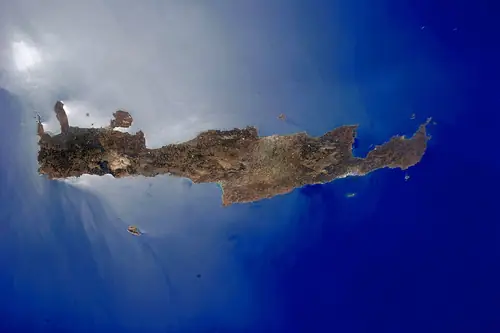 GreeceCrete
See hotels
GreeceCrete
See hotels  ThailandPhuket
See hotels
ThailandPhuket
See hotels 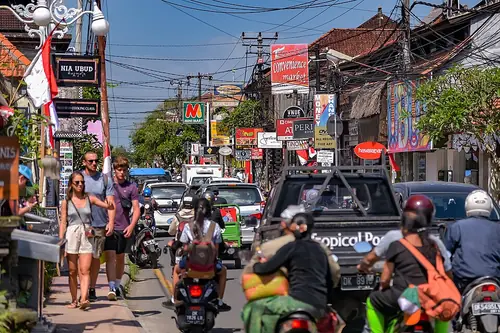 AsiaBali
See hotels
AsiaBali
See hotels  AmericasCosta Rica
See hotels
AmericasCosta Rica
See hotels  PortugalMadeira
See hotels
PortugalMadeira
See hotels 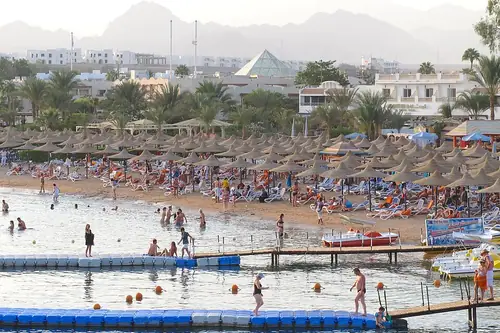 EgyptSharm El Sheikh
See hotels
EgyptSharm El Sheikh
See hotels Show all 33 guides
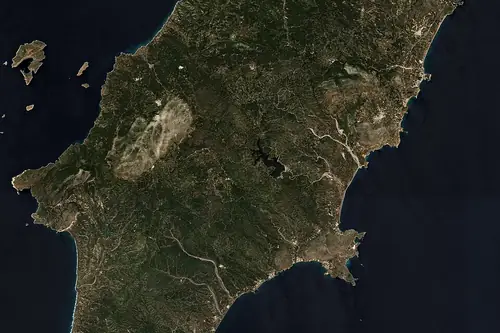 GreeceRhodes
See hotels
GreeceRhodes
See hotels  ThailandKoh Samui
See hotels
ThailandKoh Samui
See hotels 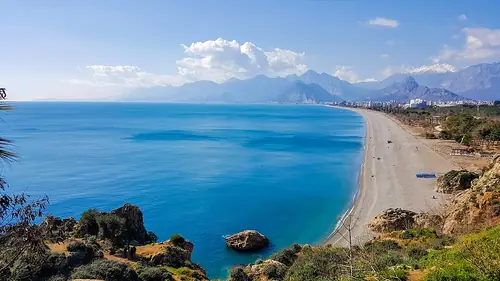 TürkiyeAntalya
See hotels
TürkiyeAntalya
See hotels  PhilippinesEl Nido
See hotels
PhilippinesEl Nido
See hotels  SpainTenerife
See hotels
SpainTenerife
See hotels  SpainGran Canaria
See hotels
SpainGran Canaria
See hotels  SpainLanzarote
See hotels
SpainLanzarote
See hotels  SpainFuerteventura
See hotels
SpainFuerteventura
See hotels  SpainMallorca
See hotels
SpainMallorca
See hotels 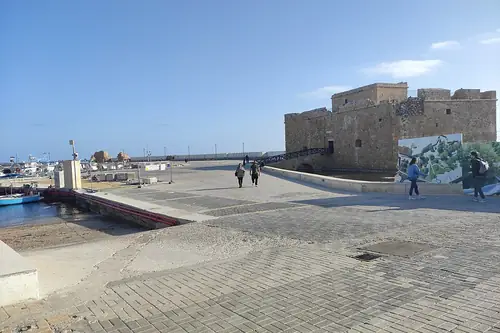 CyprusPaphos
See hotels
CyprusPaphos
See hotels 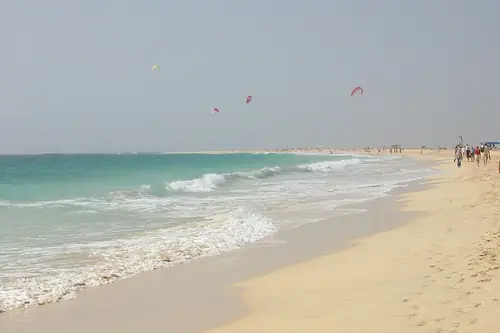 Cape VerdeSal
See hotels
Cape VerdeSal
See hotels 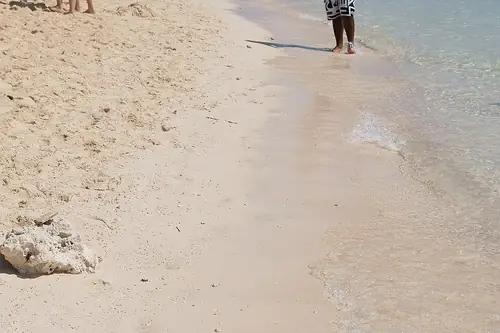 EgyptHurghada
See hotels
EgyptHurghada
See hotels 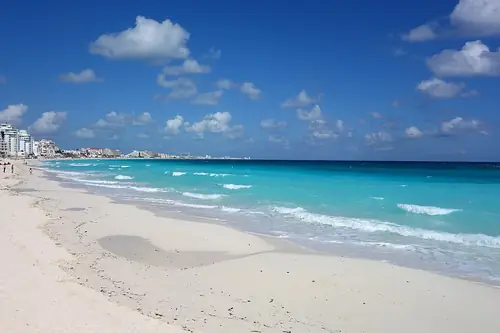 MexicoCancún
See hotels
MexicoCancún
See hotels  MexicoTulum
See hotels
MexicoTulum
See hotels  IndiaGoa
See hotels
IndiaGoa
See hotels 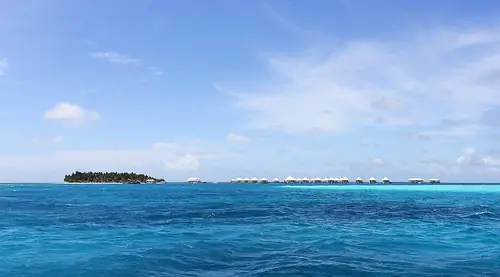 AsiaMaldives
See hotels
AsiaMaldives
See hotels 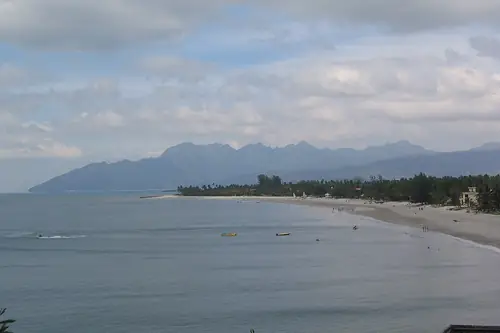 MalaysiaLangkawi
See hotels
MalaysiaLangkawi
See hotels  VietnamDa Nang
See hotels
VietnamDa Nang
See hotels 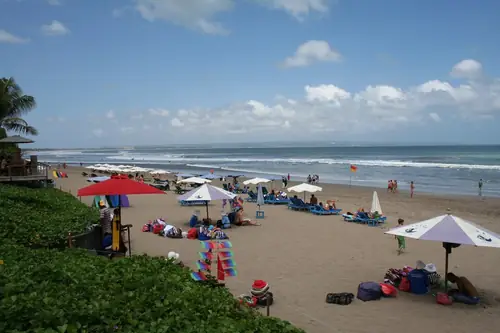 BaliSeminyak
See hotels
BaliSeminyak
See hotels  TürkiyeBodrum
See hotels
TürkiyeBodrum
See hotels 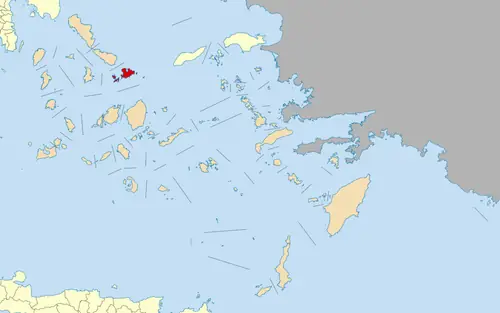 GreeceMykonos
See hotels
GreeceMykonos
See hotels 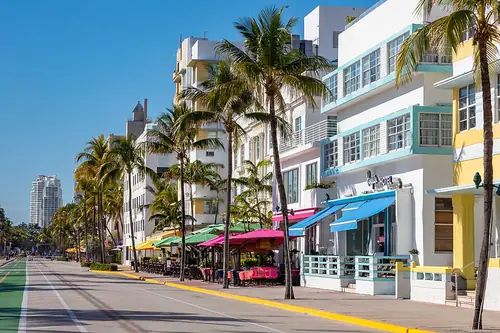 USAMiami
See hotels
USAMiami
See hotels  USAHonolulu
See hotels
USAHonolulu
See hotels  Costa RicaManuel Antonio
See hotels
Costa RicaManuel Antonio
See hotels  Sri LankaGalle
See hotels
Sri LankaGalle
See hotels What a beach traveler actually optimizes for
You already know you want sand. The hard part is which sand, and when, because the same coast that’s paradise in June is grey, shuttered and rained-on in January. Get the timing wrong and you’ve flown thousands of miles to sit indoors watching the weather app.
So skip the “top 50 beaches” lists. A beach trip is really an optimization problem with four levers, and every honest choice trades one against another:
- Warm sea, not just warm air. Air temperature lies. The Mediterranean doesn’t warm up until the land has baked it for months: which is why September beats May for swimming even though both feel sunny. Long-haul tropics (Bali, the Caribbean coast of Costa Rica) give you a warm sea year-round; the trade is the flight.
- A dry window that lines up with your dates. Tropical destinations run on wet/dry seasons, not summer/winter. Bali is glorious April–October and soggy the rest; Costa Rica flips it, dry December–April. Match your calendar to the destination’s dry season and half the risk disappears.
- Transfer time. A “beach” two hours from the nearest airport by taxi is a different holiday from one you walk to from the terminal. Short transfers matter more than most people budget for.
- Price versus crowds. Peak season is hottest, busiest and priciest all at once. Shoulder season (the weeks either side) is the sweet spot almost everywhere: near-peak weather, far-from-peak prices.
Nail those four and the destination almost picks itself. Here’s how the honest trade-offs shake out, and where each one earns its place.
See what beach stays cost for your dates before you fall for a photo: the picks below make far more sense with a live price in front of you:
Where to go, by season and vibe
For a classic Mediterranean summer (May–October)
The Greek islands are the default for good reason: clear water, hundreds of islands at every price point, and a swimming season that runs late May to early October. June and September are the sweet spot: warm sea, thinner crowds, gentler prices than the July–August crush.
Portugal’s Algarve is the Atlantic alternative: dramatic golden cliffs, air of 22–28°C by June, and a sea that peaks warm in September. For something quieter and more dramatic, Sardinia and Sicily deliver Caribbean-grade water without leaving Europe, while Italy’s Amalfi Coast trades wide beaches for cliff-hung villages and swim platforms over deep blue.
Along the Adriatic, Croatia (Hvar, Split and the islands between them) is all pebbly coves and startlingly clear water, and next-door Montenegro offers a shorter, cheaper version of the same coastline before it gets discovered.
For winter sun without a long-haul flight
When mainland Med resorts shut for winter, the Canary Islands stay open and warm: December-to-February highs around 18–22°C, with the southern coasts of Tenerife and Gran Canaria warm enough to swim. It’s the single best winter-sun value in Europe, and short-haul from most of the continent. For a greener, calmer alternative with dependable sun and a cooler sea, Portugal’s Madeira is hard to beat.
For long-haul tropical warmth
Bali is the long-haul beach benchmark: dry season April–October, warm 27–31°C days, and a spread from surf towns to calm-water resorts: base yourself in Seminyak if you want the beach on your doorstep. Thailand’s islands run on the same idea: Phuket for range and easy access, Koh Samui for a mellower pace. And Sri Lanka is the value pick of the three, with a two-monsoon system that means some coast is always in season.
For the Americas
Costa Rica is the standout: dry season December–April, Pacific-coast beaches paired with rainforest and wildlife you won’t find on a European coast. Mexico covers everything from Caribbean-blue Yucatán to Pacific surf, and its dry, sunny high season (roughly November–April) lines up neatly with the northern-hemisphere winter you’re escaping.
Don’t leave these off the packing list
A beach trip has a few gear and admin gaps that quietly cost money or ruin a day:
- An eSIM for cheap data on arrival. You’ll want maps, ride-hailing and booking the moment you land: not a roaming bill or a hunt for a SIM shop. Sort a local plan before you fly from our eSIM guides; a week of data is usually a few euros.
- Travel insurance. Water sports, remote islands and long-haul flights are exactly when things go wrong. Medical cover, cancellation and lost-gear protection are non-negotiable. Compare what you actually need in our travel insurance guides.
- The right gear. Salt, sand and sun are hard on electronics. A rugged power bank keeps your phone alive for a full beach day, and our wider travel gear picks cover the small stuff that makes island-hopping smoother.
- A card that doesn’t punish you abroad. Foreign-transaction fees and bad exchange rates skim a few percent off everything you spend overseas. The right travel credit card kills those fees and can bundle useful travel cover.
How to plan a beach trip that goes right
Once the destination is set, five short checks stop the classic beach-trip mistakes before you pack a single towel:
Check the UV index for your dates, not just the temperature. The EPA’s UV Index scale runs from 1–2 (low) through 3–5 (moderate), 6–7 (high) and 8–10 (very high) to 11+ (extreme), and sun protection is needed from index 3 upward. UV is typically strongest between 10 a.m. and 4 p.m., and reflection off water and sand pushes your real dose above the forecast number.
Check the destination’s sunscreen laws before you shop. Hawaii has banned the sale of sunscreens containing oxybenzone or octinoxate statewide since January 1, 2021, and Maui County has banned even the use of non-mineral sunscreen without a prescription since October 1, 2022. “Reef-safe” on a label is unregulated marketing, so read the actives list: a non-nano zinc oxide formula is legal in every Hawaii county and a safe default anywhere with coral.
Do the sunscreen math. An average adult needs about 1 ounce (a full shot glass) per application, reapplied at least every 2 hours and again straight after swimming, and studies show most people apply only 25 to 50 percent of what they need. A week on the sand can empty a full-size bottle per person, so budget bottles, not one shared tube.
Plan your swims around lifeguards. NOAA’s first rule of rip current safety is to swim at lifeguarded beaches, and to check the surf forecast and flag status before entering the water. Basing yourself near a patrolled beach removes most of the risk on this page in one decision.
Pack from a real checklist, not from memory. Our full beach vacation packing list covers the eight pieces of gear that earn their bag space, the carry-on sunscreen rules, and the complete safety and first-aid detail behind the summaries below.
What to do when things go wrong
Most beach trips end with nothing worse than sand in the car. For the rare bad day, these are the responses that actually work, drawn from NOAA, the NHS and the American Red Cross.
You are caught in a rip current
Do not fight it. NOAA’s guidance is to stay calm and swim parallel to the shoreline, because most rip currents are less than 80 feet wide, then angle back to shore; if you cannot escape, float or calmly tread water, face the beach, and yell and wave for help. Never go in after someone else: would-be rescuers often become the victims, so alert a lifeguard instead.
You are stung by a jellyfish
Get out of the water and rinse the sting with seawater, never fresh water, which fires the remaining stinger cells. Pluck off tentacles with tweezers or the edge of a bank card (do not rub or scrape with sand), then soak the area in hot water at 40–45°C (104–113°F) for at least 30 minutes; painkillers help. Urine does nothing, and vinegar depends on the species: right for box jellyfish, wrong for Portuguese man-of-war and most Atlantic species, where the NHS advises against it.
Call emergency services for trouble breathing or swallowing, chest pain, stings covering a large area or the face, or any suspected box jellyfish sting. On Oahu, box jellyfish arrive at south-facing shores like Waikiki 8 to 10 days after each full moon, so check the Waikiki Aquarium’s box jellyfish calendar before you swim. The packing list guide walks through the full first-aid protocol and the myths to skip.
The flags turn red or purple
Patrolled beaches use the USLA flag system, and misreading it is how swimmers end up in closed water:
| Flag | Meaning |
|---|---|
| Green | Low hazard, calm conditions (not always flown, since some hazard always exists) |
| Yellow | Medium hazard: moderate surf or currents, weak swimmers should stay out |
| Red | High hazard: all swimmers discouraged |
| Double red | Water closed to the public |
| Purple | Dangerous marine life present (jellyfish, stingrays); not used for sharks |
| Red over yellow | Lifeguard-patrolled swim zone |
A red flag discourages all swimmers, not just weak ones, and double red means the water is closed to the public. Purple often flies alongside another color, so check both and ask the lifeguard what has been sighted.
Airport security pulls your sunscreen
The TSA allows sunscreen in carry-on bags only in containers of 3.4 ounces (100 mL) or less, all inside one quart-size bag, and the container size counts even if the bottle is half empty. Sprays count as liquids; solid sunscreen sticks are exempt. Put full-size bottles in checked luggage, or buy on arrival (checking the local rules first if you are headed to Hawaii).
Sources
VoyageHacks checked every figure in these sections against the primary sources in August 2026.
- EPA, UV Index Scale, https://www.epa.gov/sunsafety/uv-index-scale-0, checked August 2026
- NOAA Ocean Today, Rip Currents, https://oceantoday.noaa.gov/ripcurrentfeature/, checked August 2026
- NHS, Jellyfish and other sea creature stings, https://www.nhs.uk/conditions/jellyfish-and-other-sea-creature-stings/, checked August 2026
- American Red Cross Scientific Advisory Council, Jellyfish Stings scientific review, https://www.redcross.org/content/dam/redcross/Health-Safety-Services/scientific-advisory-council/Scientific%20Advisory%20Council%20SCIENTIFIC%20REVIEW%20-%20Jellyfish%20Stings.pdf, checked August 2026
- American Academy of Dermatology, Sunscreen FAQs and stats, https://www.aad.org/media/stats-sunscreen, checked August 2026
- TSA, Liquids, Aerosols and Gels Rule, https://www.tsa.gov/travel/security-screening/liquids-aerosols-gels-rule, checked August 2026
- Maui County, Mineral-Only Sunscreen ordinance, https://www.mauicounty.gov/2483/Mineral-Only-Sunscreen-Maui-County, checked August 2026
- NRDC, Hawaii’s sunscreen law (Act 104), https://www.nrdc.org/stories/its-new-sunscreen-law-hawaii-aims-set-gold-standard-world-follow, checked August 2026
- Volusia County Beach Safety, Beach Warning Flags, https://www.volusia.org/services/public-protection/beach-safety/beach-warning-flags.stml, checked August 2026
- Waikiki Aquarium, Box Jellyfish Calendar, https://www.waikikiaquarium.org/interact/box-jellyfish-calendar/, checked August 2026
- Cleveland Clinic, Jellyfish Stings, https://my.clevelandclinic.org/health/diseases/17821-jellyfish-stings, checked August 2026
Frequently Asked Questions
What are the best beach destinations for 2026?
For 2026 the strongest all-round beach picks are the Canary Islands (Europe’s warmest winter sun, highs around 21°C), the Algarve and the Greek islands for a Mediterranean summer, Bali and Thailand for long-haul warmth, and Costa Rica or Mexico for the Americas. Choose by season: match your travel dates to a place whose dry, warm-sea window is open then.
When is the cheapest time for a beach holiday?
Shoulder season (the weeks either side of peak) is almost always cheapest. In the Mediterranean that means May–June and September–October, when the sea is still warm but prices and crowds drop sharply from July–August. In Bali, May, June and September run roughly 30–40% below the July–August peak. You get near-peak weather for well below peak prices.
Where can I go for winter sun in Europe?
The Canary Islands are Europe’s warmest winter beach destination, with December–February daytime highs around 18–22°C and swimmable coasts on the southern shores of Tenerife and Gran Canaria. Madeira is milder and greener with dependable sun but a cooler sea. Both are short-haul from most of Europe and stay open all year, unlike mainland Mediterranean resorts that largely shut down for winter.
Do I need travel insurance and an eSIM for a beach holiday?
Yes to both for any trip abroad. Travel insurance covers medical care, cancellations and lost gear: essential for water sports, remote islands and long-haul flights. A local eSIM gives you cheap data for maps, ride-hailing and booking on arrival without roaming fees or hunting for a SIM shop. Both are quick to sort before you fly.
How do you escape a rip current?
Stay calm and never swim against the current. NOAA advises swimming parallel to the shoreline, because most rip currents are less than 80 feet wide, then angling back to the beach. If you cannot escape, float or calmly tread water, face the shore, and yell and wave for help. Swim at lifeguarded beaches and let lifeguards make any rescue.
What does a purple flag at the beach mean?
A purple flag means dangerous marine life such as jellyfish or stingrays has been spotted in the water. It is not a shark warning: sharks trigger red or double red flags and a water closure. Purple often flies alongside another hazard flag, so check both and ask the lifeguards what has been sighted before you swim.
Can I bring sunscreen in my carry-on?
Yes, but only in containers of 3.4 ounces (100 mL) or less, all fitting inside your single quart-size liquids bag. The TSA counts the container size, not how much product is left inside, and spray sunscreen counts as a liquid. Solid sunscreen sticks are exempt from the liquids rule, and full-size bottles belong in checked luggage.
Ready to book your beach escape?
Pick your season, pick your coast, then see what it actually costs. Compare live prices for your dates and lock a flexible rate while the shoulder-season deals are still open: