Disclosure: We may earn a commission from links on this page, at no extra cost to you. How we earn
This article contains affiliate links. If you make a booking through these links, we may earn a commission at no extra cost to you. About & Affiliate Disclosure
Quick Answer
- Krakow and Budapest are Europe’s best-value hostel cities: quality dorms from around €8–13 per night.
- Lisbon, Porto and Athens offer excellent hostels at €12–22 with outstanding locations.
- Prague and Berlin have a wide range. Expect to pay €12–28 depending on quality and season.
- Dorm vs private: a hostel private room often undercuts a budget hotel while keeping kitchen and social access.
- Always check individual locker size (will your pack fit?), verified recent reviews, and free cancellation policy.
- Book 3–6 weeks ahead in summer; the lower bunks in small dorms disappear first.
The Best Hostels in Europe 2026 Are Not What You Remember
The old image of a hostel is a scratchy sleeping bag on a plastic mattress, a broken shower, and a fifteen-person dorm that smells of wet boots. That image is out of date. A well-run Krakow hostel today checks a guest in for €9 a night with a clean bunk, a reading light, a USB port, an individual locker, and a common room with a coffee machine that is never empty. Booking the smartest option, not just the cheapest, now means checking which hostels clear that bar.
The best hostels in Europe 2026 are nothing like the horror stories. They are well-designed social spaces with thoughtful touches, free walking tours, shared kitchens that save you €20 a day, and locations that make the city walkable from the front door. The catch is they are not all like that: maybe one in four is. This guide is about knowing which cities have the highest floor quality and which specific things to check before you book.
Seven cities, honest prices, no padding.
Find Your Hostel Across Europe
Why These 7 Cities Lead the Way for Hostel Travel in Europe
Not every European city has a thriving hostel scene. London and Paris do, but you pay London and Paris prices for the privilege. The seven cities below hit a different sweet spot: genuinely low dorm prices, a compact old town that makes a central hostel useful, and enough happening during the day (free museums, food markets, river walks, viewpoints) that you never feel pressure to spend money you don’t have.
Here is how dorm prices stack up across all seven in 2026:
| City | Budget dorm (per night) | Mid-range dorm | Private room (hostel) | Best for |
|---|---|---|---|---|
| Krakow | €8–11 | €12–16 | €22–32 | Lowest prices, rich history |
| Budapest | €10–13 | €15–19 | €26–38 | Architecture, thermal baths |
| Lisbon | €15–20 | €22–28 | €38–55 | Scenery, food, Atlantic coast |
| Porto | €13–18 | €20–26 | €34–50 | Riverside, day trips, quieter |
| Athens | €12–17 | €18–24 | €30–44 | Ancient sites, warm weather |
| Prague | €12–17 | €18–25 | €30–48 | Gothic centre, easy to walk |
| Berlin | €18–24 | €24–30 | €40–58 | Neighbourhoods, culture, scale |
Prices are approximate for a standard mixed or female-only dorm in mid-season. Summer and public holidays push rates up by 20–40 percent in all cities.
Krakow: Europe’s Best-Value Hostel City
Krakow is the city to pick for a real budget trip that compromises on nothing that matters. The Main Market Square (one of the largest medieval squares in Europe) is a five-minute walk from most central hostels. You can spend an entire day at Wawel Castle, stroll the Planty ring gardens, and wander Kazimierz without spending more than the cost of lunch.
Dorm beds here genuinely sit at €8–11 per night for well-run places. The hostel scene is competitive enough that standards are high: lockers, en-suite bathrooms in the common areas, and free walking tours that cover the Jewish Quarter and the castle are almost universal. Many hostels run free pierogi evenings where guests cook together, a community kitchen night that costs nothing and teaches you more about Polish food than any restaurant menu.
Transit tip: Krakow’s old town is compact and almost entirely walkable. The main bus and tram network is straightforward and costs around PLN 4 (about €0.90) per ride.
Budapest: Grand Architecture, Tiny Prices
Budapest rewards the budget traveler almost unfairly. You get thermal baths built inside 19th-century palaces, one of the most spectacular river panoramas in Europe (Parliament across the Danube from Buda Castle), and a hostel scene that charges accordingly: not very much.
Dorms in the central Pest side, particularly around the Jewish Quarter and near Keleti station, run €10–13 per night for good mid-range options. The better hostels here have rooftop terraces (worth factoring in for summer evenings), and some are housed inside ornate former apartment buildings with original tiling and high ceilings. It feels incongruous to be paying hostel prices while standing under a decorated ceiling that belongs in a museum.
Practical note: the Budapest public transport day pass costs around HUF 2,500 (approximately €6.50) and covers trams, metro, and buses. Tram 2 along the Pest embankment is the city’s scenic ride: the Parliament Building and Buda Castle across the water for a standard transit fare.
Lisbon: Steep Streets, Strong Coffee, Affordable Beds
Lisbon is pricier than Krakow or Budapest, but it earns its place on this list because the hostel quality here is genuinely exceptional. Several Lisbon hostels have won international awards, and you feel that in the attention to detail: hand-painted tiles on reception walls, rooftop terraces with Atlantic views, staff who can tell you which bakery queues are worth standing in and which are tourist traps.
Budget dorms start around €15–20 per night in neighborhoods like Mouraria, Intendente and Arroios: slightly back from the main tourist zones but connected to the center in under ten minutes by metro or tram. For the Alfama experience, expect to pay €20–25 for a well-reviewed dorm, but the location (waking up above the castle quarter) is hard to put a price on.
The scenic transit fact you need: Tram 28 climbs through Alfama past the Sé cathedral and up to Graça for a standard €3 single ticket. It is slow, crowded in peak hours, and absolutely worth the ride at least once.
Self-catering saves you serious money: a pastel de nata costs around €1.20 at a local bakery, and the Mercado de Campo de Ourique is an indoor food market where lunch runs €7–10. Budget for those instead of sit-down restaurants and your daily food spend drops by half.
Porto: The Quieter, Cheaper Alternative
Porto sits about three hours north of Lisbon and consistently undercuts it on both hostel prices and crowds. Dorms start around €13–18 in the Ribeira riverside district and Bonfim neighbourhood, and the city is compact enough that a central hostel puts most of the main sights within a thirty-minute walk.
The Douro riverfront is free to walk, the Dom Luís I bridge gives you one of the best urban views in southern Europe at zero cost, and the São Bento railway station is worth a visit for its azulejo tile panels alone. Porto also has better access to day trips: the Douro Valley by train (for the dramatic river-gorge scenery and the hillside villages) starts at around €15 return.
What makes Porto hostel-friendly beyond price is the social infrastructure: strong free walking tour culture, well-equipped common kitchens, and a hostel staff community that actually talks to each other and shares tips across properties.
Athens: Ancient City, Modern Hostel Scene
Athens had a rough reputation for a while and it has spent the last decade building something genuinely worthwhile for budget travelers. The hostel scene around Monastiraki, Psyrri and the base of the Acropolis has grown fast, and some of the city’s newer openings are among the most thoughtfully designed in southern Europe.
Dorm beds in central Athens run €12–17 per night for solid mid-range options. The headline fact is that the Acropolis is a fifteen-minute walk from most central hostels, and the combined site ticket (Acropolis + several surrounding ancient sites) costs €30 in peak season, a single purchase that keeps you occupied for two full days. The Athens street food scene is also excellent and affordable: a souvlaki wrap from a local grill runs €2.50–3.50, and the Varvakios Central Market is one of the liveliest food markets in Europe outside Southeast Asia-style night markets. If you’d rather skip the dorm scene entirely, our neighbourhood-by-neighbourhood breakdown of where to stay in Athens on a budget covers the best-value private rooms too.
Transit note: the Athens metro is clean, fast and well-signed in English. A single ticket costs €1.20 and the day pass runs €4.50: both good value given that the metro connects the airport, the port and the historic center on the same line.
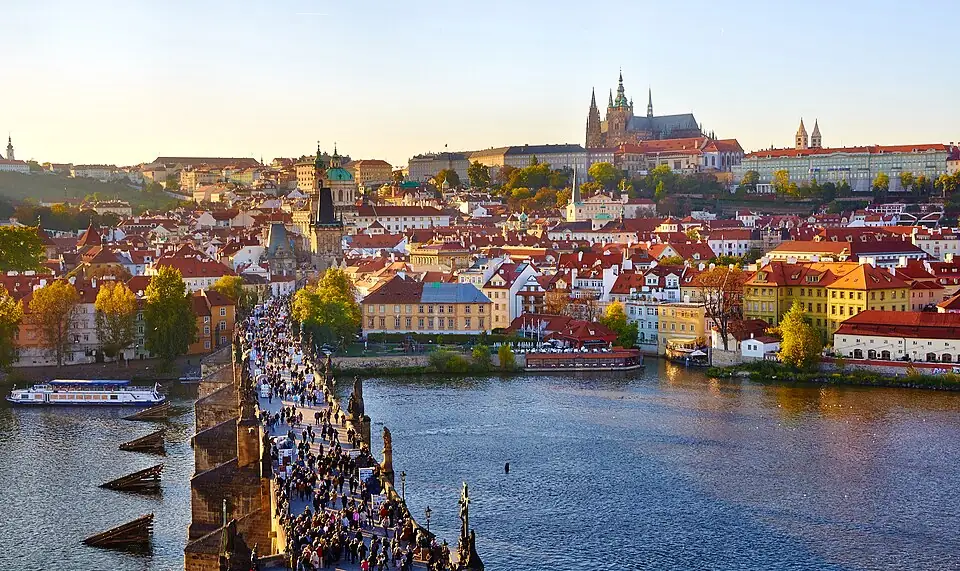
Prague: Gothic Beauty, Book Early
Prague is stunning and its hostel scene knows it. Demand is high, which means quality has had to match (the best hostels here have genuinely strong design and service), but it also means the cheapest beds sell out faster than anywhere else on this list in summer.
Dorms in Prague run €12–17 for mid-range options in neighborhoods like Žižkov, Vinohrady and the New Town. Old Town hostels charge a premium for the location (expect €17–24), but you are paying for walking distance to the Astronomical Clock, Charles Bridge and Josefov. The smart play is to stay one metro or tram stop outside the old town and walk in, which saves you €4–7 per night and takes twelve minutes. If a private room beats a dorm for your trip, our Prague budget hotel guide has picks by neighbourhood.
Tram 22 is the city’s classic scenic route: it climbs from Národní třída through Malá Strana and all the way up to Prague Castle, covering the most beautiful stretch of the city for a single ticket fare. Take it late morning when the castle crowds thin out.
Berlin: Highest Prices, Biggest Payoff for Culture
Berlin is the most expensive city on this list for hostels, but it justifies the cost differently from every other entry. This is not a city where you walk between landmarks in an afternoon. It is a city where each neighbourhood is its own world, and the free or low-cost cultural offering (over 170 museums, many free or reduced on certain days, the East Side Gallery, the free outdoor markets in Prenzlauer Berg and Kreuzberg) is larger than any other city in Europe.
Dorms run €18–24 per night for decent mid-range hostels in neighborhoods like Mitte, Friedrichshain and Prenzlauer Berg. The better hostels in Kreuzberg have community feel built into their design: big shared kitchens, notice boards for events, and staff who have actually lived in the city for years rather than just managing a bed count.
The transit deal: Berlin’s day ticket (Tageskarte) costs around €9.40 and covers all S-Bahn, U-Bahn, trams and buses. It pays off the moment you make three trips in a day, which is easy in a city this spread out.
- Activate before you fly: data works on arrival
- Plans for 200+ countries from a few dollars
- Keep your number; no physical SIM swap
Dorm vs Private Room: Which One to Book
This is the question every hostel traveler eventually stops ignoring. Here is the honest version:
Book a dorm when: you are traveling solo, you are comfortable with shared sleeping spaces, you actively want to meet people, or your budget simply requires it. A 4–6 bed dorm in a well-run hostel with good lockers and reading lights is perfectly comfortable.
Book a private hostel room when: you are traveling as a couple (the combined cost of two dorm beds often exceeds a private room), you need unbroken sleep for work or a long travel day ahead, or you want the hostel common areas and kitchen without the shared dormitory. Private hostel rooms regularly undercut equivalent budget hotels by 20–40 percent.
- Dorm beds from €8 per night in the cheapest cities
- Kitchen access cuts daily food costs dramatically
- Free walking tours standard in most well-run hostels
- Common rooms and social spaces with genuine community feel
- Central locations that make sightseeing on foot easy
- Light sleepers struggle with dorms, bring earplugs
- Locker size varies, check reviews before booking
- Summer dorms book out weeks in advance in Prague and Lisbon
- Berlin hostels cost nearly double Krakow for a comparable bed
- Quality varies sharply, one-star and five-star hostels exist at similar prices
How to Pick a Good Hostel (Without Getting Burned)
Read reviews from the last 60 days. Hostels change management, have refurbishments, or slip in quality. A five-year-old five-star average tells you nothing about last month. Filter for recent reviews and read the one-star ones: recurring complaints about cleanliness or security are the ones to take seriously.
Check the locker dimensions. Some hostels have lockers that fit a laptop bag but not a 65-litre backpack. If you are carrying a large pack, email the hostel and ask, or look for reviews that mention it.
Confirm the free walking tour policy. The best hostels in all seven cities above offer free (tip-based) city walking tours organized or recommended by the hostel. This single perk (a knowledgeable local guide for two to three hours) is worth more than most paid day tours.
Verify the kitchen setup. A proper common kitchen with hobs, fridge space and utensils can save you €15–25 per day on food. A “kitchen” that is just a kettle and a microwave is not the same thing. Our full Hostelworld review goes deeper on reading reviews and understanding the deposit and cancellation rules before you book a bed.
You can compare prices across all seven cities and filter by dorm type, amenities, and verified reviews in one place. Our partner search covers the full range from €8 party-quiet dorms to well-appointed private rooms:
Compare hostel prices across all 7 citiesFor more on planning the trip itself, browse our hotels hub, check the cheapest European countries to visit in 2026, or look at flights to figure out the cheapest entry point into the continent.
Book Tours & Activities for Your Trip
A great hotel is just the base: fill your days with skip-the-line tickets and local experiences booked in advance.
- Instant booking confirmation
- Free cancellation on most tours
- Skip-the-line tickets for top attractions
Frequently Asked Questions
How much does a hostel dorm bed cost in Europe?
Dorm beds range widely by city. Krakow and Budapest offer the lowest rates: around €8–12 per night for a clean, well-run dorm. Lisbon and Porto run €15–22; Prague and Athens €12–18; Berlin is pricier at €18–28. Private rooms in the same hostels typically cost around double a dorm bed but often undercut standard budget hotels.
Which European city has the cheapest hostels?
Krakow is consistently Europe’s most affordable hostel city, with quality dorms from around €8–10 per night. Budapest is a close second at €10–13. Both cities have central, well-run properties with strong communities and free walking tours.
What is the difference between a dorm bed and a private room in a hostel?
A dorm bed is in a shared room of 4–12 bunks, the cheapest option. A private hostel room has a locked door for one or two people but shares bathrooms, kitchens and common areas with the rest of the property. Private hostel rooms regularly undercut equivalent budget hotels by 20–40 percent while still giving you kitchen access.
Are hostels safe in Europe?
Modern European hostels take security seriously. Individual lockers (bring your own padlock or buy one on arrival) key-card access and 24-hour front desks are standard in well-reviewed properties. Read recent reviews specifically mentioning security before booking. The practical discomfort is usually a snoring dormmate, not a safety issue.
What should I look for when choosing a hostel?
Location relative to public transport, individual locker size (check it fits your bag), verified recent reviews from the last 60 days, a functional shared kitchen if you plan to self-cater, and a free walking tour offering. Match the social energy of the hostel to what you want: some are quiet retreats, others are buzzing community spaces.
Should I book a hostel in advance in Europe?
Yes, especially June through August and around public holidays. The best-value beds (lower bunks in smaller dorms) sell out first. Book three to six weeks ahead in peak season, two to three weeks in shoulder season. Prague and Lisbon fill fastest; Krakow and Budapest have more capacity but still warrant advance booking in July and August.