Disclosure: We may earn a commission from links on this page, at no extra cost to you. How we earn
This article contains affiliate links. If you make a booking through these links, we may earn a commission at no extra cost to you. About & Affiliate Disclosure
Quick Answer
- Budget doubles in Split run €35 to €80 a night in shoulder season; hostel dorms start around €18 to €28.
- Manuš and Varoš offer the best value within walking distance of the Old Town; Bačvice suits beach lovers.
- May, early June and October are the sweet spot: warm weather, low crowds, and prices well below peak.
- July and August rates roughly double; book two to three months ahead for those months.
- Midweek stays and booking direct can save 10 to 20 percent versus weekend walk-in rates.
Why Split Rewards Smart Budget Travelers
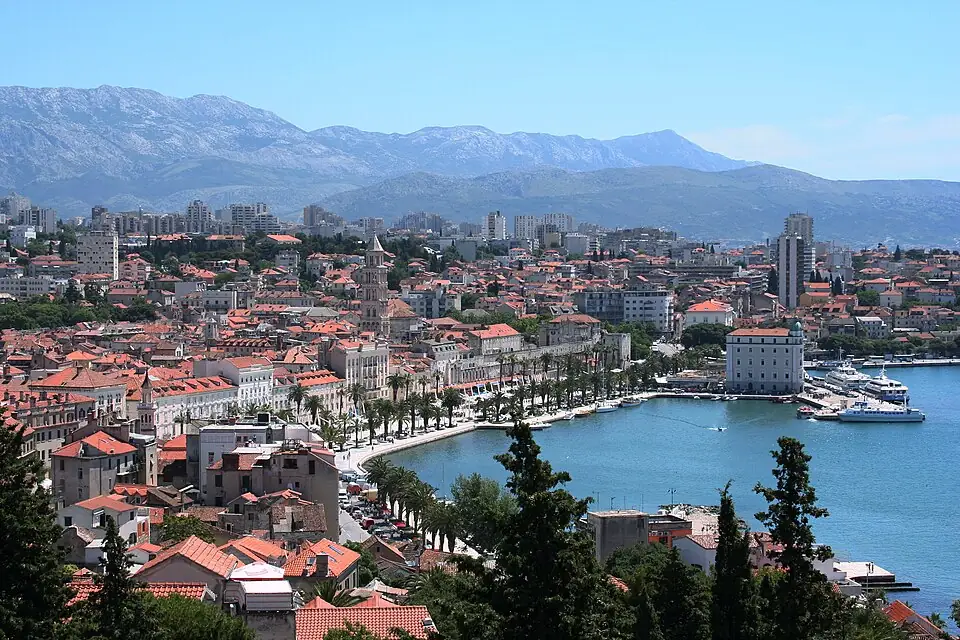
Split is one of Europe’s most unfairly affordable Adriatic cities once you know which neighborhoods to look at: a room a ten-minute walk from the Riva promenade, with clean sheets and a window that catches enough sea breeze to sleep through August, can cost a third of what a hotel two doors down charges for “palace view,” in the same neighborhood, with the same old-town buzz at night and the same morning smell of grilled fish from the market. The gap comes down to knowing where the best budget hotels in Split actually hide.
Skip the rest of this if you’re content with the rack rate, genuinely no judgment. But knowing which weeks to avoid matters just as much as the neighborhood. A slice of grilled fish at a konoba away from the Riva runs €10 to €14, the ferries to the islands are cheaper than a tourist boat, and Diocletian’s Palace (a whole living neighborhood you wander for free) is free scenery. There’s also one booking trap that catches almost everyone’s first time in Split, covered after the neighborhood breakdown below.
Find Your Hotel in Split
Best Areas to Stay in Split on a Budget
Where you base yourself shapes everything: from how long you spend dragging a suitcase over cobblestones to how much you pay for exactly the same view. Here is an honest look at the four neighborhoods that matter for value.
Old Town (Diocletian’s Palace): Most Atmosphere, Highest Price
Sleeping inside the walls of Diocletian’s Palace is a genuine bucket-list experience. The alleys are narrow, the stonework is 1,700 years old, and you wake up to cathedral bells and the smell of the market. The catch is price: rooms inside the walls command a premium, especially July and August, and hauling a wheeled case over the uneven flagstones is its own small adventure.
If you can find a room here under €90 in peak season you’ve done well. Shoulder season brings it down toward €55 to €70, which is more reasonable. Best for: couples, special-occasion stays, anyone who can pack light and wants the full atmosphere experience. Dubrovnik down the coast has the identical trade-off between its walled Old Town and cheaper neighborhoods like Lapad. See our best budget hotels in Dubrovnik guide if you’re combining both cities, and Cancún’s Hotel Zone follows the same pattern on the other side of the Atlantic, covered in our best budget hotels in Cancún guide.
Varoš: Charming and Underpriced
Tucked against the hill just west of the Palace, Varoš is Split’s old fishing quarter. Think low stone houses, tiny cafés, and an authentic local feel that the Old Town lost a little as tourism grew. It’s a five-minute walk to the Riva and the Palace entrance, and prices are noticeably kinder.
This is consistently one of the best-value neighborhoods in the city. It’s quiet enough to sleep, close enough to walk anywhere in the center, and the konobe (traditional restaurants) here are among the best in the city. Best for: travelers who want atmosphere without the peak-season price tag.
Bačvice: Beach Access and Better Summer Rates
South of the Old Town along the coastal path, Bačvice is home to Split’s most famous city beach and a string of cafés and konobe looking out over the Adriatic. In summer, the beach is the main event; in shoulder season it’s a calm, slightly residential neighborhood that prices gentler than the Palace area.
There’s no metro in Split, but the Old Town is a 15-minute walk along the waterfront or a short bus ride. Best for: beach-focused travelers, families, longer stays where you want space to decompress.
Manuš: Best Value, Still Central
Manuš sits just east of the Old Town near the Green Market and the bus station: practical, central, and consistently the most affordable area in the inner city. It’s not picturesque in the way Varoš is, but rooms here offer genuine value at every season, and you’re minutes from the main sights on foot.
If your priority is the best budget hotels in Split without stretching the definition of “budget,” start your search here. Best for: solo travelers, first-timers, anyone who treats the room as a base and plans to be out all day.
| Neighborhood | Vibe | Typical budget double | Best for |
|---|---|---|---|
| Old Town / Diocletian’s Palace | Historic, lively | €55-110 | Atmosphere, couples |
| Varoš | Charming, local | €45-80 | Value + character |
| Bačvice | Coastal, relaxed | €40-80 | Beach, families |
| Manuš | Practical, central | €35-65 | Best value, solo travelers |
Now for the actual rooms: the specific types of stays that deliver at these price points.
Best Budget Hotels in Split Under €65 a Night
These picks consistently deliver clean rooms, working air conditioning and a real bathroom without the nasty surprises that haunt the very cheapest listings. Prices below are low to shoulder season starting rates; expect them to rise through July and August.
Guesthouses in Varoš: From €45/night
Check prices for Guesthouses in Varoš on Booking.com
Varoš is the spiritual home of Split’s small family-run guesthouses. Owners tend to know the city deeply, breakfast is often served in a little courtyard, and the rooms are simple but well-kept. Booking four to six weeks ahead in shoulder season generally lands you something good here in the €45 to €65 range.
Apartments Near Manuš Market: From €38/night
Check prices for Apartments Near Manuš Market on Booking.com
Self-catering apartments around the Green Market area offer the best raw price in the inner city. A one-room apartment with a kitchenette and your own bathroom from €38 to €55 a night in May or October is genuinely hard to beat in Adriatic terms.
Bačvice Beach Rooms: From €42/night
Check prices for Bačvice Beach Rooms on Booking.com
Small B&Bs and rooms-for-rent line the streets behind the Bačvice beach. In May and June you can find a clean double with sea breezes in this range; in July those same rooms can hit €90 to €120, which is still less than the Palace premium.
Hostels in the Old Town: Dorms From €20/night
Check prices for Hostels in the Old Town on Booking.com
Split has a solid hostel scene concentrated around the Old Town and Manuš. Dorm beds start around €18 to €25 in low season, rising toward €35 in August. Many have rooftop or terrace common areas with views of the Palace walls, a genuine perk at the price.
Mid-Range Hotels Worth the Upgrade: €65 to €130 a Night
Sometimes an extra €20 to €40 a night buys a quieter room, air conditioning that actually works in an August heat wave, and a private bathroom that doesn’t require a queue. These picks bridge budget and comfort.
Boutique Hotels in the Old Town: From €80/night
Check prices for Boutique Hotels in the Old Town on Booking.com
A handful of small boutique hotels inside the Palace walls keep their shoulder-season rates in the €80 to €110 range. You’re paying for stone walls, a central location and a very good story: worth it for a two- or three-night stay if you can book early.
Design Apartments in Varoš: From €70/night
Check prices for Design Apartments in Varoš on Booking.com
The next step up from a guesthouse in Varoš is a renovated apartment or small design hotel with better air conditioning, a rain shower and a comfortable bed. These hold their prices better because supply is limited, so book early or come in May or October.
Comfort Hotels Near Bačvice: From €75/night
Check prices for Comfort Hotels Near Bačvice on Booking.com
Established three-star hotels on the Bačvice side offer reliable comfort at a price that feels fair: pools, sea views and functioning lifts (a real advantage when it’s 35°C in August). These are the pick for families who want predictability.
When to Book for the Best Rates
Split’s prices are among the most seasonally volatile on the Adriatic. Get the timing right and the same room costs less than half what you’d pay in peak season.
| Period | Demand | What to expect | When to book |
|---|---|---|---|
| Nov-Mar | Low | Cheapest rates, quiet city | 1-3 weeks ahead |
| Apr, May, Oct | Shoulder | Great value, warm and uncrowded | 4-6 weeks ahead |
| Jun, early Jul | Building | Good rates before peak kicks in | 6-8 weeks ahead |
| Jul-Aug | Peak | Highest prices, rooms scarce | 2-3 months ahead |
| Sep | Shoulder-peak | Still warm, prices start to drop | 4-6 weeks ahead |
The sweet spot: May, early June and October. The Adriatic is warm enough to swim, the Palace isn’t packed, the ferries to Hvar and Brač run on full schedules, and a room that costs €120 in August can be had for €45 to €55. That’s the version of Split worth planning around.
Summer reality: July and August are the dream for sun and sea but a budget challenge. Rooms go fast and prices climb steeply. Book two to three months out, look at Bačvice or Manuš instead of the Palace interior, and be flexible on exact dates, a night shift from a Friday to a Tuesday can save €25 to €40 on the same property.
Off-season: November through March is cheapest but quieter. Some konobe close for the season, ferry frequency drops, and the Riva is deserted by 9pm. Worth it if you want the city almost to yourself and don’t mind the chill.
Split Hotel Tips That Actually Save Money
Walk the Riva at dawn. The Riva promenade before 8am is one of the most pleasant free things you can do in any Adriatic city. It’s also a good time to check which ferry you want for a day trip: the schedules are posted at the port, and the staff there are helpful before the tourist rush hits.
Eat at the Green Market, not the Riva. The Pazar market behind the Riva sells fresh local produce, cheese, and pastries at local prices. A proper breakfast of burek (filo pastry) and a coffee from a market-side café runs around €3 to €4: compared to €10 to €14 on the Riva terrace.
Ferry day trips, not tour boats. The Jadrolinija public ferry to Brač or the catamaran to Hvar cost a fraction of organized tours and drop you in the center of the island. Book online the night before in low season or a few days ahead in August.
Watch for the city tourist tax. Like most Croatian cities, Split charges a small tourist tax (usually €1 to €2 per person per night) that is sometimes not included in the headline rate. It’s minor but worth knowing so it doesn’t catch you off guard at check-in.
Get data from the airport. Split Airport (SPU) is a 25-minute drive from the center. Activate a travel eSIM before you fly so your maps and booking confirmations load the moment you land: the bus into town costs around €7 and the eSIM pays for itself within an hour of navigation use.
- Activate before you fly: data works on arrival
- Plans for 200+ countries from a few dollars
- Keep your number; no physical SIM swap
Pros and Cons of a Budget Stay in Split
- Rooms from €35 a night in shoulder season
- Free world-class sightseeing inside Diocletian's Palace
- Easy ferry access to Hvar, Brač and the Dalmatian islands
- Compact Old Town is entirely walkable
- Excellent local food at genuine local prices
- July-August prices roughly double and rooms sell out fast
- Cobblestones in the Old Town make suitcase-dragging a chore
- City tourist tax added on arrival
- Some areas quiet in off-season with reduced ferry schedules
Book Tours & Activities for Your Trip
A great hotel is just the base: fill your days with skip-the-line tickets and local experiences booked in advance.
- Instant booking confirmation
- Free cancellation on most tours
- Skip-the-line tickets for top attractions
Frequently Asked Questions
How much does a budget hotel in Split cost?
Budget hotels in Split run from €35 to €80 per night for a clean double with a private bathroom in low to shoulder season. Hostel dorm beds start around €18 to €28. Old Town rooms command a premium; Bačvice and Manuš offer the best value. July and August prices roughly double.
What is the best area to stay in Split on a budget?
Manuš and Varoš give you the best value closest to the Old Town. Bačvice is slightly further but excellent for beach access and lower summer rates. The Old Town itself is atmospheric but expensive in peak season, and the stone alleys mean no easy suitcase access.
When are Split hotels cheapest?
May, early June and October are the sweet spot: warm, uncrowded and priced well below the summer peak. November through March is cheapest of all but quieter, with some attractions and restaurants closing for the off-season. July and August are the most expensive months by far.
How far in advance should I book a hotel in Split?
For July and August, book at least two to three months ahead; the best budget rooms disappear fast. May, June and September need four to six weeks. Low season you can often book a week or two out, but the best-value rooms still go to early planners.
Is Split safe for tourists?
Split is generally very safe for tourists, including solo travelers. The Old Town and Riva promenade are well-lit and busy in the evenings. Standard city precautions apply. Watch your bag in the market area and on busy ferry days when day-trippers flood the port.
What is the best way to get around Split?
Split’s Old Town and the adjacent neighborhoods are compact and walkable. City buses cover the broader city and the beaches beyond Bačvice. For the islands, ferries and catamarans depart right from the port next to the Old Town: no transfers needed.
Compare Split Hotel Prices
A Varoš room booked six weeks out on a midweek arrival date typically lands in the €45 to €65 range. The ferry days and the Palace wandering are free; the room is the one variable worth controlling, and it sets the tone for the whole trip.
Browse more ideas in our hotels hub or see our guide to cheap flights to Split if you haven’t locked in travel yet. And if you’re island-hopping after Split, check the Dalmatia destinations section for Hvar, Brač and Vis.
Compare all Split hotel prices now