Quick Answer
- Best time to visit Rotorua: year-round (geothermal in any weather); Dec–Mar warmest, the Apr–May / Sep–Nov shoulder is the calm, better-value sweet spot.
- Where to stay: central Rotorua for walkability, the lakefront for views, near the Redwoods for forest mornings.
- Getting there: fly into Rotorua (ROT) via Auckland, or drive ~3 hrs from Auckland.
- Don’t miss: Te Puia’s Pōhutu geyser, Wai-O-Tapu’s Champagne Pool, a Māori evening with a hāngī, the Redwoods Treewalk, the Polynesian Spa.
- The smell fades: the geothermal sulphur smell stops registering within a day. Don’t let it scare you off.
Rotorua, Where the Ground Breathes
Rotorua has a reputation problem before visitors even arrive: the “it smells like rotten eggs” warning is accurate for the first ten minutes near a sidewalk vent puffing steam into the cold air. Watching the Pōhutu geyser fire a column of boiling water thirty metres into the sky, then sitting down that evening to a hāngī pulled steaming from the earth, changes the impression fast, and by the next morning most visitors genuinely can’t smell the sulphur anymore. The nose adjusts. The wonder doesn’t.
So here’s the short version this Rotorua travel guide is built around: it’s a year-round place because the geothermal parks steam in any weather, you only need two or three days, a car helps because the sights are spread out, and the thing you came for (Māori culture done properly, plus a landscape that looks like the planet’s plumbing) is genuinely world-class. Don’t let the smell put you off.
A quick photo stop on the drive south undersells Rotorua; a couple of nights pays off far better. The geysers, the living villages, the redwood forest and the hot-spring soak add up to one of the most distinctive corners of New Zealand, and the one thing first-timers get wrong is treating it as a drive-through.
What to pack for Rotorua
Four picks from our gear guides that suit this trip. Each card opens the live Amazon price; the links below lead to the full comparisons.
360-degree memory foam with asymmetrical sides, so you pick which side gets the most support instead of getting the same generic curve everywhere. It was the single most-purchased travel product among Travel + Leisure readers in 2025. The catch: even compressed to about 60% of its size in the included bag, it’s still bulkier than an inflatable.
Check price on Amazon Live price on AmazonThe cheapest way to find out whether you even like compression socks: three knee-high pairs in 15-20 mmHg, the range most often recommended for flying.
Check price on Amazon Live price on AmazonThe reliable all-rounder: one USB-C and four USB-A ports, plugs for 200+ countries, and a built-in fuse with a spare. The adapter most people should buy.
Check price on Amazon Live price on AmazonModel A1259, 10,000mAh, about 37Wh, 215 g. Two phone charges in a jacket pocket, and small enough that the two-bank limit never becomes a question.
Check price on Amazon Live price on AmazonGetting Around Rotorua
The geothermal parks ring the town rather than sit inside it, so a little planning saves you a lot of doubling back. Here’s what actually works on the ground.
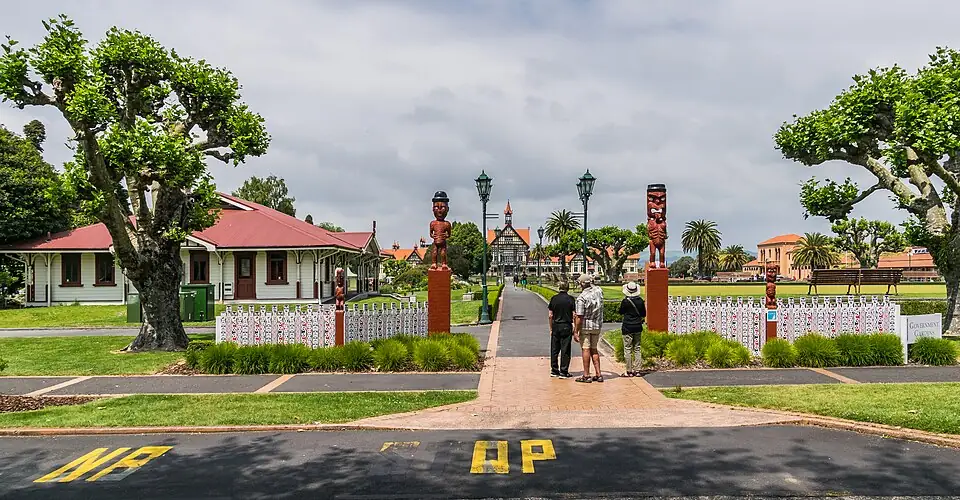
And honestly? Once you’re parked in the centre, slow down. The Government Gardens, the lakefront walk and the steaming vents poking up between ordinary streets are half the strangeness of the place, and they cost nothing.
What Not to Miss
You can’t do every park in one trip, so aim for a handful done well rather than a checklist done badly.
- Te Puia’s Pōhutu geyser is the headline act: New Zealand’s largest active geyser, firing up to 30 metres, set in a geothermal valley alongside a Māori arts and crafts institute where you can watch carvers and weavers at work.
- Wai-O-Tapu is the most colourful park: the mineral-rimmed Champagne Pool glows orange and green, and the Lady Knox geyser erupts each morning. It’s a short drive south of town and worth the trip for the colours alone.
- A Māori cultural evening with a hāngī is the experience that ties Rotorua together, a meal cooked in the earth, song, story and dance, shared respectfully. Book ahead; the good ones fill up.
- The Redwoods Forest and Treewalk give you the gentlest day: shaded trails under towering redwoods and a canopy walkway strung between the trees, lovely by day and lit up at night.
- The Polynesian Spa lets you soak in natural mineral hot pools right on the lake edge: the classic Rotorua wind-down after a day on your feet.
- Whakarewarewa living village is the cultural anchor: a place where Māori have lived among the geothermal activity for generations, cooking in the steam and bathing in the pools, shown to visitors by the people who live there.
The quiet wins are free: steam rising off the lake at dawn, the smell of the forest after rain, a sleepy vent puffing away on a residential street like the ground is just breathing.
Best Time to Visit Rotorua
Rotorua sits in the southern hemisphere, so the seasons run the opposite way to Europe and North America, and because the geothermal parks steam whatever the weather, there’s no truly “wrong” time to come. The season you pick mostly changes the crowds, the warmth for swimming and biking, and the price. Here’s how it actually compares.
| Season | Months | Weather | Crowds | Best for |
|---|---|---|---|---|
| Summer | Dec–Mar | Warmest, driest, 20–25°C | Heaviest | Lake swims, forest biking, long evenings |
| Autumn | Apr–May | Mild, crisp, golden | Easing | Fewer crowds, softer prices, clear geothermal steam |
| Winter | Jun–Aug | Cool, wet, 8–14°C | Lowest | Hot-pool soaking, dramatic steam, bargains |
| Spring | Sep–Nov | Mild, fresh, greening | Building | Shoulder value before the summer rush |
The takeaway: summer is the prettiest and most active but also the busiest and priciest, while the shoulder months either side give you the same steaming geysers with thinner queues and easier rates. Winter has a quiet magic of its own. There’s nothing like easing into a natural hot pool while the cold air turns every vent into a wall of steam. If you only care about price and soaking, come in winter; if you want the lakes and the forest at their best, come in summer.
Where to Stay in Rotorua
Rotorua is small and the town centre is easy to walk, so where you sleep is more about the kind of mornings you want, a flat stroll to dinner, a lake view, or a forest trail from the door. Here’s how the main bases compare.
| Area | Vibe | Best for | Note |
|---|---|---|---|
| Central Rotorua | Walkable, convenient, lively | First-timers, no-car travellers | Walk to the night market, restaurants and Government Gardens |
| The lakefront | Scenic, calm, open | Lake views, sunsets, families | A short drive or long walk from the centre |
| Near the Redwoods | Leafy, quiet, outdoorsy | Hikers, bikers, early starts | Trailheads on the doorstep; you’ll want a car |
If it’s your first time and you’d rather not drive much, base yourself in central Rotorua. You can walk to dinner, the lakefront and the Thursday night market, and drive out to the parks each day. The lakefront trades a little convenience for those wide water-and-steam views, and the streets near the Redwoods put forest trails right outside if biking or trail-running is the point of your trip. Compare live rates anytime on our hotels hub.
Frequently Asked Questions
What is the best time to visit Rotorua?
Rotorua is a year-round destination because the geothermal parks steam in any weather. December to March is the warmest, driest stretch and best for lake swimming and forest biking, but it’s also busiest. The autumn and spring shoulder months (April–May, September–November) bring mild days, thinner crowds and softer prices: the sweet spot for most travellers.
How many days do you need in Rotorua?
Two to three days covers it comfortably. One day for a geothermal park like Te Puia or Wai-O-Tapu plus a Māori cultural evening, a second for the Redwoods forest and the Polynesian Spa, and a third if you want a slower pace, a lake day, or a living village visit. Many people stop for a single night en route, but you’ll feel rushed.
Is the sulphur smell in Rotorua a problem?
Not really. The “rotten-egg” hydrogen-sulphide smell from the geothermal activity is strongest near the parks and on still mornings, and most visitors stop noticing it within a day. It’s harmless at these levels. Lakefront and forest spots smell far fainter than the steaming areas right in town.
How do I get to Rotorua?
You can fly into Rotorua Airport (ROT), usually connecting through Auckland, Wellington or Christchurch. Most visitors drive instead. It’s roughly a 3-hour trip from Auckland down State Highway 1 and 5, or about an hour from Tauranga. A car is handy in Rotorua because the geothermal parks are spread out around the town.
What is the best way to experience Māori culture in Rotorua?
Rotorua is the heart of Māori tourism in New Zealand. The classic experience is a cultural evening with a hāngī (a feast cooked in an earth oven) and a performance, offered at places like Te Puia, or a daytime visit to a living village such as Whakarewarewa, where people still live among the steam and cook in the hot pools.
Is Rotorua worth visiting?
Yes. There’s nowhere else in New Zealand where you can watch a geyser erupt, learn living Māori culture, soak in natural hot springs and bike a redwood forest all in a couple of days. It’s compact, family-friendly and genuinely unique: the geothermal landscape alone is unlike anywhere most travellers have been.
Start Planning Your Rotorua Trip
Give Rotorua two or three days, base yourself somewhere walkable, and let the steam, the culture and the forest do the rest. Come in summer for the lakes and forest, in the shoulder months for the calm and the value, and don’t let the sulphur smell talk you out of one of New Zealand’s most extraordinary corners.
Compare prices now and lock in your dates:
Find cheap flights to Rotorua | Compare Rotorua hotel prices
Planning the wider trip? See our best time to visit New Zealand guide and browse more stays on the hotels hub.