Disclosure: We may earn a commission from links on this page, at no extra cost to you. How we earn
This article contains affiliate links. If you make a booking through these links, we may earn a commission at no extra cost to you. About & Affiliate Disclosure
Quick Answer
- Best overall: summer (Dec-Feb) for hiking and beaches; shoulders (Mar-Apr, Oct-Nov) for value.
- Cheapest: May, June, and early September, often 25 to 40 percent below the summer peak.
- Seasons are reversed: summer is Dec-Feb, winter is Jun-Aug. June is cold, not warm.
- Skiing: mid-June to early October, best snow late July to early September around Queenstown and Wanaka.
- Daily budget: 65 to 100 US dollars for backpackers, 140 to 260 for mid-range comfort.
The Best Time to Visit New Zealand, in One Sentence
The most common New Zealand planning mistake is booking a late-June trip around beaches and the Great Walks on the assumption that June means summer. It does not. In June many alpine tracks are snowbound or closed, and the trip that works is built around hot pools and ski fields instead. A little planning around the flipped seasons avoids that surprise entirely.
So here’s the answer first. The best time to visit New Zealand is summer (December to February) for warmth, long days, and the famous hiking, or the March-April and October-November shoulders for mild weather, fewer crowds, and softer prices. New Zealand sits in the Southern Hemisphere, so the seasons are flipped: summer is December to February, winter is June to August. Get that one fact right and you’re halfway to a great trip.
If your heart is set on the Routeburn or a summer road trip, pay the December premium and go. For everyone else, the shoulders deliver glorious weather for hundreds less, and winter turns Queenstown into a world-class ski town. This guide breaks down what every month costs and feels like.
What to pack for New Zealand
Four picks from our gear guides that suit this trip. Each card opens the live Amazon price; the links below lead to the full comparisons.
360-degree memory foam with asymmetrical sides, so you pick which side gets the most support instead of getting the same generic curve everywhere. It was the single most-purchased travel product among Travel + Leisure readers in 2025. The catch: even compressed to about 60% of its size in the included bag, it’s still bulkier than an inflatable.
Check price on Amazon Live price on AmazonThe cheapest way to find out whether you even like compression socks: three knee-high pairs in 15-20 mmHg, the range most often recommended for flying.
Check price on Amazon Live price on AmazonThe reliable all-rounder: one USB-C and four USB-A ports, plugs for 200+ countries, and a built-in fuse with a spare. The adapter most people should buy.
Check price on Amazon Live price on AmazonModel A1259, 10,000mAh, about 37Wh, 215 g. Two phone charges in a jacket pocket, and small enough that the two-bank limit never becomes a question.
Check price on Amazon Live price on AmazonBuild your New Zealand itinerary
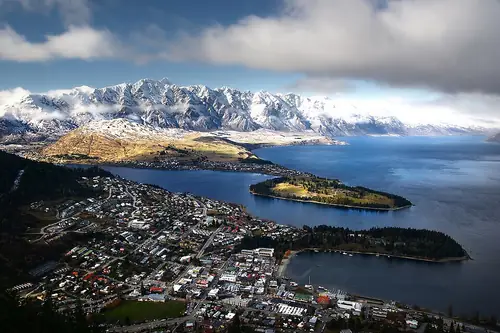
New Zealand splits into two islands, and the first decision is which one (or both). Most trips lean on the South Island for adventure and jaw-dropping scenery (Queenstown, Milford Sound, Abel Tasman), and/or the North Island for geothermal landscapes and Māori culture, with Rotorua as the anchor. The thing the map hides is distance: the country looks compact but the driving is bigger than it looks, with winding mountain roads that take longer than the kilometres suggest. Don’t try to rush it. And remember it’s the southern hemisphere, so December to February is high summer, the warmest, busiest, priciest window.
Pick your base by what you came for, then build outward a few days at a time.
| Place | Best months | How long to stay | Pairs well with |
|---|---|---|---|
| Queenstown | Dec–Mar (summer hiking), Jul–Sep (ski) | 3–4 days | Hub for the south; day-trip to Milford Sound |
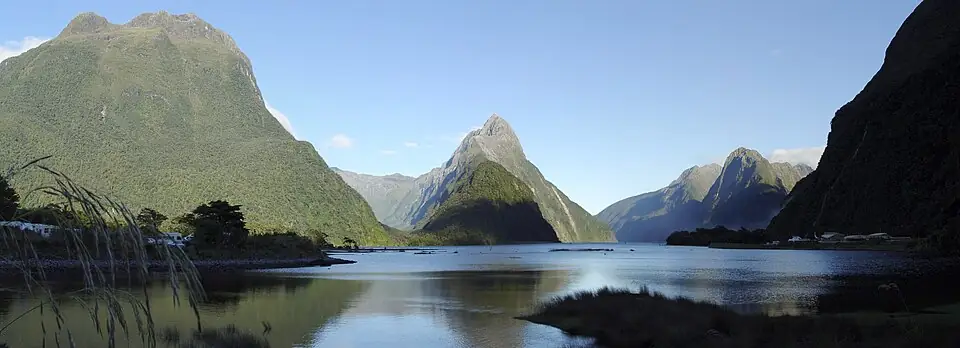
| Milford Sound | Year-round; Dec–Mar driest | 1 day | A day-trip from Queenstown or Te Anau |
| Rotorua | Year-round (Dec–Feb warmest) | 2 days | The North Island loop |
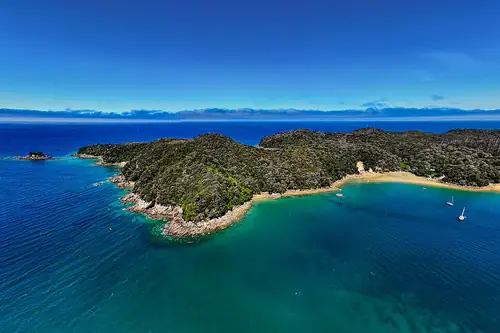
| Abel Tasman | Dec–Mar (sea kayaking, coastal walks) | 2–3 days | Top of the South Island, near Nelson |
A few honest notes: Queenstown is the natural southern hub and where most South Island trips begin, with Milford Sound an easy (if long) day-trip; Milford itself is a single unforgettable day rather than an overnight; Rotorua earns its two days for the geysers, hot springs and Māori cultural experiences up north; and Abel Tasman, at the sunny top of the South Island near Nelson, is best in the Dec–Mar warm season for kayaking and coastal walks.
Two routes that actually work:
- South Island, 10 days: Queenstown 4 (with a Milford Sound day-trip built in) → self-drive up to Abel Tasman and Nelson 3 (the coastal track, sea kayaking) → loop back down. It’s a long but stunning drive each way; budget the hours and break the journey with an overnight rather than pushing it in one go.
- Both islands, 2 weeks: Rotorua 2 on the North Island (geothermal parks, Māori culture) → fly south to Queenstown 4 with a Milford Sound day → drive to Abel Tasman 3. Flying between islands saves a full day versus the Cook Strait ferry plus the long drives at each end.
A warning worth repeating: New Zealand’s summer (December to February) books out early (campervans, lodges and the Milford cruises fill weeks ahead), so lock in accommodation and any rental vehicle well in advance. Use the city guides below to go deeper on whichever stops make your shortlist.
Top Cities to Explore
New Zealand’s Seasons and What They Cost
New Zealand is long and narrow, running from the subtropical Far North to the cool, alpine deep south, so the weather varies more by latitude and altitude than by anything else. Prices, though, follow a clear national rhythm built around summer and school holidays, and that’s what shapes your budget.
Summer (December to February): Peak Everything
This is the headline season and the most expensive. Days are long and warm, with 20 to 28 C across most of the country, the Great Walks are open, and the beaches and lakes come alive. The catch: airfares, campervans, and lakeside accommodation all peak from Christmas through January, and popular spots like Queenstown and Abel Tasman get genuinely busy. Worth it for the weather, if you book early.
Autumn (March to May): The Quiet Stunner
Autumn is the underrated season. March and April stay mild (16 to 22 C), the crowds melt away after the summer rush, and Central Otago around Arrowtown and Wanaka turns gold and crimson. Prices ease month by month. By May it’s cooling toward winter, but the value is excellent and the light is gorgeous.
Winter (June to August): Ski Country
Down at sea level it’s cool and often wet, with Auckland around 14 C and the deep south frosty. But this is ski season: Queenstown, Wanaka, and the Canterbury fields fire up from mid-June, and the alpine towns buzz. Outside the July school break, prices are low and the hot pools have never felt better. Many hiking tracks, though, are snowbound or closed.
Spring (September to November): Fresh and Frugal
Spring warms things back up to pleasant 14 to 20 C, lambs dot the paddocks, the rivers run high and dramatic, and the gardens bloom. Crowds and prices stay moderate until they climb again in December. A lovely, affordable window, with the caveat that the weather is at its most changeable.
Month-by-Month Guide to Visiting New Zealand
Use this as your at-a-glance planner before the detailed notes below.
| Month | Weather | Crowds | Prices | Best for |
|---|---|---|---|---|
| January | Warm summer, peak | Very high | Peak | Hiking, beaches, but busy |
| February | Warm, settled | High | High | Best summer weather, easing late |
| March | Mild early autumn | Moderate | Mid | Great Walks, value, settled days |
| April | Cool, autumn colour | Moderate (avoid Easter) | Mid | Foliage in Central Otago, value |
| May | Cool, quiet | Low | Low | Cheapest, dramatic light |
| June | Cold; ski season opens | Low | Low | Skiing starts, hot pools, low fares |
| July | Cold, snow; school break | Moderate | Low-mid | Skiing, glaciers, winter scenery |
| August | Cold, peak snow | Moderate | Low-mid | Best skiing, Queenstown buzz |
| September | Warming spring | Rising | Mid | Spring value, late-season snow |
| October | Fresh spring | Moderate | Mid | Blooms, fewer crowds, good value |
| November | Mild, changeable | Rising | Mid | Pre-summer value, long days return |
| December | Warm summer, festive peak | Very high | Peak | Summer road trips, if booked ahead |
A few things the table can’t quite hold: April is when Central Otago’s foliage peaks around Arrowtown and Wanaka, so plan autumn-colour trips then (and dodge the Easter price bump). August is typically the snowiest month and the ski peak around Queenstown and Wanaka, while September is the rare window to ski and hike in the same week. Remember the seasons are flipped: June is genuinely cold, not warm.
Find Cheap Flights to New Zealand
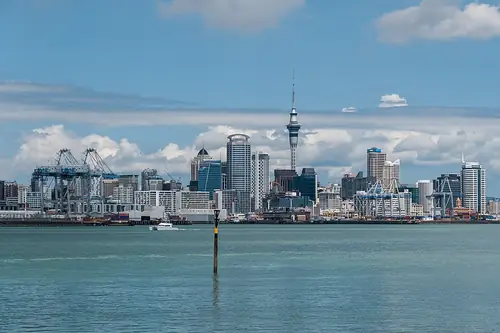
New Zealand is about as far as long-haul gets, so routing and timing are everything. Auckland (AKL) is the main international gateway, with Christchurch (CHC) and Wellington (WLG) handy for South Island and capital trips. From Europe, the cheapest routes connect through Asia (Singapore, Bangkok, Kuala Lumpur) or the Gulf, often with a second hop via Australia; from North America, watch the direct trans-Pacific services and connections through Los Angeles, San Francisco, and Honolulu.
Use the live calendar below to spot the cheapest departure dates at a glance, then compare across months.
Tips for cheaper flights:
- Book 4 to 6 months ahead for long-haul to New Zealand; these fares rarely improve last-minute.
- Consider an Australia stopover. Many cheap routings pass through Sydney or Melbourne, and a night there breaks the journey.
- Fly into the right island. Christchurch can be cheaper and closer if your trip is South Island focused.
- Travel in the May-June or early-September shoulders. Midweek departures outside school holidays are routinely cheapest.
- Avoid Christmas, New Year, and the July ski holidays, which carry the steepest fares.
For more route ideas and fare hacks, browse our full flights hub.
When Prices Are Lowest: Best Time for Budget Travelers
Target these windows for the cheapest trips:
May, June, and early September are the cheapest stretches. A Queenstown room that runs 170 US dollars a night over Christmas can drop to 90 to 120 in the off-season, and long-haul fares fall hardest in the quiet shoulders. You trade peak summer warmth for crisp days, dramatic light, and the start of ski season.
March and April deliver similar savings as the summer rush unwinds, with mild weather and Central Otago’s autumn colour as a bonus.
Steer clear of the December-to-February summer holidays, Easter, and the July ski-school break for the lowest rates. Those windows push campervans, flights, and lakeside accommodation up all at once.
Where to Stay in New Zealand
Where you base yourself shapes both your budget and your trip, and New Zealand rewards a mix of city, lake, and small-town stays. Auckland is the harbour gateway; Queenstown the adventure capital; Wellington the compact, creative capital.
| Area | Vibe | Budget room | Best for |
|---|---|---|---|
| Auckland (City / Ponsonby) | Harbour, dining, transit | 55 to 110 US dollars/night | Arrivals, city days, North Island base |
| Queenstown | Lakes, adventure, nightlife | 70 to 140 US dollars/night | Skiing, hiking, bungy, scenery |
| Wanaka | Relaxed, alpine, scenic | 60 to 120 US dollars/night | Quieter base, lake, autumn colour |
| Wellington | Compact, creative, cafes | 55 to 100 US dollars/night | Culture, food, ferry to South Island |
| Rotorua / Taupo | Geothermal, lakes, Maori culture | 45 to 90 US dollars/night | Hot springs, geysers, central North Island |
Auckland is the easy entry point and a North Island hub. Queenstown is the adrenaline and scenery capital, with Wanaka as its calmer neighbour. Wellington packs museums, coffee, and the Cook Strait ferry into a walkable city. Compare current rates anytime on our hotels hub.
Daily Budget for New Zealand
| Category | Budget (US dollars) | Mid-Range (US dollars) | Comfort (US dollars) |
|---|---|---|---|
| Accommodation | 28 to 50 | 85 to 150 | 190 to 380 |
| Food (3 meals) | 18 to 32 | 42 to 75 | 85 to 170 |
| Transport | 12 to 20 | 30 to 55 | 65 to 130 |
| Activities | 10 to 30 | 35 to 75 | 80 to 200 |
| Daily Total | 65 to 100 | 140 to 260 | 400 to 800 |
A few notes that keep costs honest: a campervan or self-drive plus self-catering is the classic budget setup, supermarket food and bakery pies keep meals cheap, and tap water is safe and free everywhere. Adventure activities (bungy, jet boats, glacier walks) are the budget-busters, so pick a few rather than all. Fuel and ferries add up across long distances. Many of the best experiences, from day hikes to free hot pools and lookouts, cost nothing. The currency is the New Zealand dollar (NZD).
Stay Connected and Safe: eSIM and VPN
Skip the airport SIM counter. A travel eSIM gives you fast data the moment you land at Auckland or Christchurch, which matters when you’re booking activities, navigating the South Island, or checking mountain weather. New Zealand has good 4G/5G in towns and along main routes, though coverage drops out in remote valleys and on backcountry tracks.
- Activate before you fly: data works on arrival
- Plans for 200+ countries from a few dollars
- Keep your number; no physical SIM swap
New Zealand offers plenty of open Wi-Fi in hostels, cafes, and i-SITE centres, and a VPN keeps your banking and logins private on those public networks while letting you reach your usual streaming and home services. Set it up before you fly.
- Up to 10 devices on one account
- Obfuscated servers for networks that block VPNs
- 30-day money-back guarantee
For the full rundown, see our guides to the best travel eSIM and VPN.
Tours & Activities: New Zealand
Skip the ticket queues and pre-book the best local tours, day trips and skip-the-line attractions.
Frequently Asked Questions
What is the best time to visit New Zealand?
Summer (December to February) is the warmest and best for hiking, beaches, and the Great Walks, but it is the priciest. The shoulder months of March-April and October-November offer mild weather, autumn colour or spring blooms, smaller crowds, and lower prices.
What is the cheapest time to visit New Zealand?
May, June, and early September are usually cheapest, with airfares often 25 to 40 percent below the December-February summer-holiday peak. Avoid Christmas, New Year, and the July ski holidays for the lowest prices.
Is summer in New Zealand in December?
Yes. New Zealand is in the Southern Hemisphere, so the seasons are reversed: summer runs December to February, autumn March to May, winter June to August, and spring September to November. December and January are peak holiday season.
When is the best time to ski in New Zealand?
The ski season runs roughly mid-June to early October, with the most reliable snow from late July through early September. Queenstown, Wanaka, and the Canterbury fields are the main hubs. August is typically the snowiest month.
How much does a trip to New Zealand cost per day?
Budget travelers manage on 65 to 100 US dollars a day; mid-range travelers should plan for 140 to 260. See the cost table above for the full breakdown.
Do I need a visa or NZeTA to visit New Zealand?
Visa-waiver visitors still need an NZeTA (electronic travel authority) plus the tourism levy before arrival, applied for online. Many other nationalities need a visitor visa. Both should be arranged well before you book non-refundable travel.
Start Planning Your New Zealand Trip
The best time to visit New Zealand comes down to what you want from it. Summer hands you warmth and the famous hiking at a premium; the autumn and spring shoulders trade a little reliability for golden colour, fewer people, and softer prices; and winter turns the south into ski country. A June trip built around hot pools and powder can be a great one, as long as you plan it knowing the seasons are flipped. Get that one fact right, match the month to your wallet, and New Zealand pays you back in scenery for years.
Compare prices now and lock in your dates:
Find cheap flights to New Zealand | Compare New Zealand hotel prices