Quick Answer
- Best time: March to May and September to November. January is the busiest month.
- Where to stay: the CBD first time; Fitzroy or Collingwood for cafés; St Kilda for the beach; Southbank for the arts.
- Free rides: trams in the CBD Free Tram Zone, including the City Circle tram (route 35).
- Penguins: the free St Kilda Pier viewing boardwalk must be booked through Phillip Island Nature Parks, with two one-hour sessions a night capped at 150 people.
- Airport return: SkyBus runs from about 4am to 1am and a return ticket costs AUD 43.40 online, since there is no airport train.
At a glance
- Best time
- Mar to May, Sep to Nov
- Time needed
- 3 to 4 days
- Currency
- Australian dollar (AUD)
- Language
- English
- From the airport
- SkyBus, A$25.90, every 10 min
- Visa
- ETA (A$20) or free eVisitor or visa 600 (from A$250)
- Getting around
- Free CBD trams; tap card elsewhere
Melbourne rewards visitors who know two things: the city centre’s trams are free, and the best food, coffee and street art hide down laneways you could walk straight past. This guide covers when to come, where to sleep and how to get around, with fares and opening days checked against Transport Victoria, SkyBus, Parks Victoria and the Bureau of Meteorology on 3 October 2026.
When is the best time to visit Melbourne?
Melbourne is in the southern hemisphere, so summer is December to February and winter is June to August. It is famous for changeable weather, so the season sets the baseline rather than the guarantee.
| Season | Average high / low (BOM) | Crowds and prices | Best for |
|---|---|---|---|
| Summer (Dec–Feb) | 25–27°C / 14–17°C, with hot spells | Busiest; peak in January | Beaches, festivals, the Australian Open |
| Autumn (Mar–May) | 18–24°C / 10–15°C | Easing, good value | Laneways, gardens, the all-round sweet spot |
| Winter (Jun–Aug) | 15–16°C / 7–8°C | Lowest, cheapest | Galleries, cafés, bargains |
| Spring (Sep–Nov) | 18–22°C / 10–13°C | Building | Gardens, markets, mild walking weather |
Averages are from the Bureau of Meteorology’s Melbourne (Olympic Park) station. The Australian Open runs from 11 to 31 January 2027 at Melbourne Park, and hotel rates rise across the city for those three weeks.
What to pack for Melbourne
Four picks from our gear guides that suit this trip. Each card opens the live Amazon price; the links below lead to the full comparisons.
360-degree memory foam with asymmetrical sides, so you pick which side gets the most support instead of getting the same generic curve everywhere. It was the single most-purchased travel product among Travel + Leisure readers in 2025. The catch: even compressed to about 60% of its size in the included bag, it’s still bulkier than an inflatable.
Check price on Amazon Live price on AmazonThe cheapest way to find out whether you even like compression socks: three knee-high pairs in 15-20 mmHg, the range most often recommended for flying.
Check price on Amazon Live price on AmazonThe reliable all-rounder: one USB-C and four USB-A ports, plugs for 200+ countries, and a built-in fuse with a spare. The adapter most people should buy.
Check price on Amazon Live price on AmazonModel A1259, 10,000mAh, about 37Wh, 215 g. Two phone charges in a jacket pocket, and small enough that the two-bank limit never becomes a question.
Check price on Amazon Live price on AmazonWhere should you stay in Melbourne?
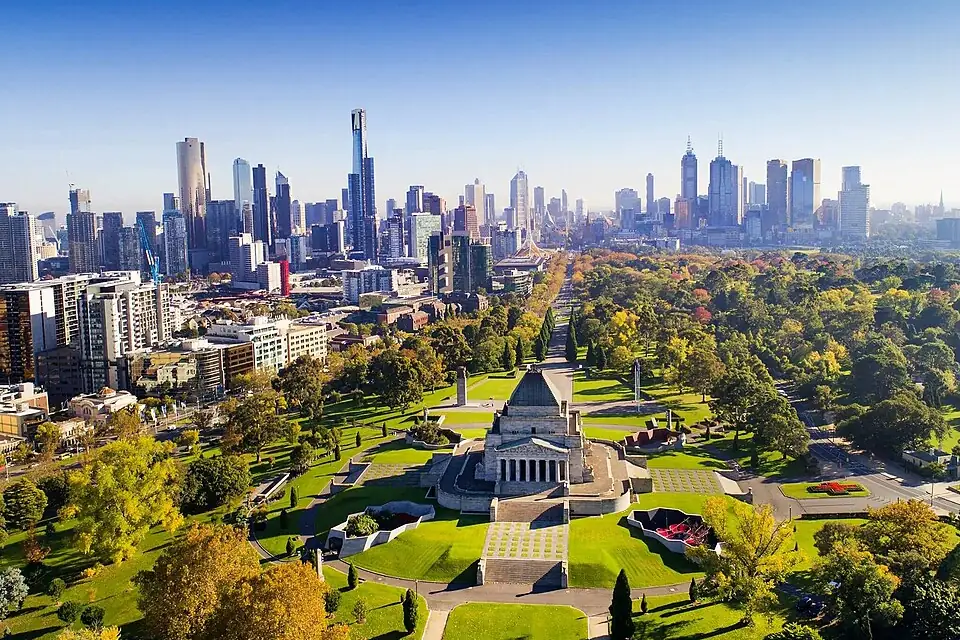
The CBD grid is the hub, and the best neighbourhoods fan out from it along tram lines.
| Area | Feel | Best for |
|---|---|---|
| CBD | Central grid, free trams | First-timers, laneways, almost no transport needed |
| Fitzroy / Collingwood | Creative, café-heavy | Coffee, street art, independent shops |
| St Kilda | Beachside, breezy | The bay, the pier, the penguins |
| Southbank | Riverside, modern | The NGV, Arts Centre, big-hotel comfort |
Price check: for two nights in mid-November 2026, a Booking.com search returned most 4-star CBD hotels at roughly AUD 200 to 330 a night. Expect more during the Australian Open and major events.
How do you get around Melbourne?
Then walk. The CBD grid is compact, and the laneways (Degraves Street, Hosier Lane, the Block Arcade) are the attraction in themselves.
What should you not miss in Melbourne?
- Laneways and street art. Hosier Lane and AC/DC Lane are open-air galleries that change constantly. Wander them with a coffee from a laneway café.
- Queen Victoria Market. Produce, deli and food stalls. It trades Tuesday and Thursday to Sunday and is closed on Mondays and Wednesdays, so plan around that.
- NGV and Federation Square. Entry to the National Gallery of Victoria collection is free (special exhibitions charge), and NGV International opens daily 10am to 5pm.
- St Kilda’s little penguins. Parks Victoria’s viewing boardwalk at St Kilda Pier opened in October 2025. Viewing is free but booking is essential through Phillip Island Nature Parks, with two one-hour sessions a night capped at 150 people. No flash or phone torches.
- Great Ocean Road. The coast road to the Twelve Apostles is a long but spectacular day trip by hire car or tour.
What does a Melbourne trip cost, and what do you need to enter Australia?
Hotels are the main cost. Transport is modest: a full weekday of trams and trains stops at AUD 11.40, and the CBD is free. Coffee, market food and laneway lunches keep daily spending down. Our Australia budget guide has fuller numbers.
Most visitors need an Electronic Travel Authority (AUD 20 service charge through the Australian ETA app, for passports such as the US, Canada and Japan) or the free eVisitor (EU and several other European passports) before flying, according to the Department of Home Affairs. See our Australia visa guide.
Passports on neither list, including those of Mexico, Brazil, India and mainland China, need the Visitor visa (subclass 600) instead: apply online through ImmiAccount from AUD 250, and do it before you buy flights, because it is not granted instantly like the ETA.
Frequently Asked Questions
What is the best time to visit Melbourne?
Autumn (March to May) and spring (September to November) are the sweet spot: average highs of about 18 to 24°C, fewer crowds and lower prices than summer. Summer (December to February) averages 25 to 27°C with hot spells and is busiest in January, when the Australian Open runs. Winter averages around 15°C by day. Pack layers in any season: the weather can change fast.
Where should I stay in Melbourne for the first time?
The CBD puts you inside the Free Tram Zone, steps from the laneways, Queen Victoria Market and Federation Square. Fitzroy and Collingwood are the creative, café-heavy pick just north; St Kilda trades distance for the beach and the bay; and Southbank lines you up along the river by the arts precinct.
How do I get from Melbourne Airport into the city?
There is no airport train. The SkyBus Melbourne City Express runs to Southern Cross Station every 10 minutes from about 4am to 1am, and costs AUD 25.90 one way or AUD 43.40 return bought online. Taxis and rideshares also run. From Southern Cross you connect to trams and trains.
Do I need a myki card in Melbourne?
Not if you pay full fare. Since mid-2026 adults can tap a Visa or Mastercard, phone or smartwatch on trains, trams and buses at myki-enabled readers. Trams inside the CBD Free Tram Zone cost nothing at all. Concession, senior and youth passengers still need a myki.
Is Melbourne walkable, and what shouldn’t I miss?
Very. The CBD grid, the laneways and street art, Federation Square and the NGV are all walkable, and the free City Circle tram loops the centre. Add Queen Victoria Market (closed Mondays and Wednesdays), the free St Kilda penguin viewing (booking essential), and a Great Ocean Road day trip if you have time.
How many days do you need in Melbourne?
Three full days covers the essentials: one for the CBD laneways, the NGV and Federation Square; one for Fitzroy, the market and the cafés; and one for St Kilda and the bay. Add a fourth day for a Great Ocean Road trip, which is a long day out by car or tour.
Start planning your Melbourne trip
Come in autumn or spring, sleep in the CBD, ride the free trams, and let the laneways lead.
Find cheap flights to Melbourne | Compare Melbourne hotel prices
Planning the wider trip? See our best time to visit Australia guide, Sydney and Cairns guides, and more stays on the hotels hub.