Quick Answer
- Fees: Citadel 3 JD, Roman Theatre 2 JD, Jerash 10 JD, all free with the Jordan Pass (70 to 80 JD).
- Best time: March to May and September to November; January is the coldest, wettest month.
- Where to stay: Jabal Amman for first-timers, downtown for budget, Abdali for modern hotels and the Petra bus.
- From the airport: Sariyah Airport Express, around 3.4 JD, or a fixed-fare airport taxi.
- Day trips: Jerash (about 45 km north) and the Dead Sea; Petra deserves its own night.
At a glance
- Best time
- March to May, September to November
- Time needed
- 2 to 3 days
- Currency
- Jordanian dinar (JOD)
- Language
- Arabic; English widely spoken
- Visa
- Fee waived with a Jordan Pass
- Getting around
- Taxis, ride-hailing apps, Airport Express bus
Amman is a city of hills, white stone and Roman ruins in the middle of everyday traffic, and it is where almost every trip to Jordan starts. The decisions that shape your stay: which ticket to buy, which hill to sleep on, and which day trips to fit around the city. Fees, fares and timetables below were checked on 10 October 2026.
When is the best time to visit Amman?
Spring and autumn are the easy answer. Amman sits high above the Jordan Valley, so it is far cooler than the desert south, and winter here is genuinely cold and wet.
| Month | Average high / low | Rain days | What it means |
|---|---|---|---|
| December | 14°C / 5°C | about 8 | Cool, rain likely, quiet sights |
| January | 12°C / 4°C | about 11 | The coldest, wettest month; snow possible on the hills |
| February | 14°C / 4°C | about 11 | Still wet; clear days are crisp |
| March to May | 17–28°C / 6–14°C | 2 to 8 | The best walking weather |
| June to August | 31–32°C / 17–19°C | none | Hot and dry; sightsee early |
| September to November | 20–31°C / 9–17°C | 0 to 5 | Warm days, cooling nights |
Figures are the Jordan Meteorological Department’s normals for the Amman Airport station, published by the WMO’s World Weather Information Service. Snow does happen. In cold spells the department forecasts snow on ground above about 900 to 1,000 metres, and Amman’s higher hills reach that height, so some winters bring a snow day that closes roads for a while. Pack a warm layer and a waterproof jacket from December to February.
Where should you stay in Amman?
Amman spreads across hills (jabals), and the climbs between them are steep. Pick the area by what you want to walk to.
| Area | Best for | Trade-off |
|---|---|---|
| Jabal Amman (Rainbow Street) | First-timers: cafés, restaurants, a downhill walk to downtown | The walk back up is steep |
| Downtown (Al-Balad) | The Roman Theatre, the souqs, street food, budget hotels | Busy and noisy, simpler rooms |
| Jabal al-Weibdeh | A quieter, arty neighbourhood with small cafés | Fewer hotels to choose from |
| Abdali | Modern hotels, malls, the JETT bus to Petra | Feels business-like, a taxi to the old city |
First time? Base yourself in Jabal Amman so you can walk to Rainbow Street in the evening and down to the Roman Theatre in the morning. Compare hotels in Jabal Amman and downtown
How do you get to and around Amman?
Almost everyone arrives at Queen Alia International Airport, south of the city.
Jordan uses the dinar (JD). Mobile data makes maps and ride-hailing far easier, so set up a plan before you land.
- Activate before you fly: data works on arrival
- Plans for 200+ countries from a few dollars
- Keep your number; no physical SIM swap
What should you not miss in Amman?
| Sight | Entry for foreign visitors | Tip |
|---|---|---|
| Amman Citadel (Jabal al-Qal’a) | 3 JD | Temple of Hercules, the Umayyad Palace and the best view over downtown |
| Roman Theatre | 2 JD | Includes the Museum of Popular Traditions next door |
| Rainbow Street | Free | Cafés, galleries and evening strolls |
| Downtown souqs | Free | Spices, sweets and street food around the Grand Husseini Mosque |
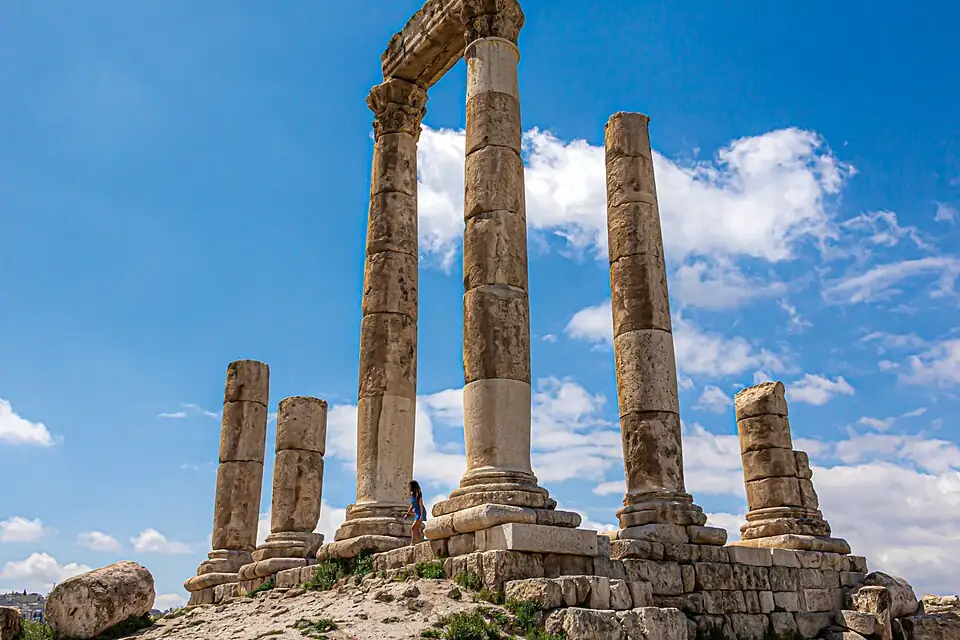
The Citadel is the highest point in the old city and the place to start: the Temple of Hercules, the Umayyad Palace complex and a Byzantine church sit on one hilltop, with the Roman Theatre directly below. The Roman Theatre dates from the 2nd century AD and seats around 6,000 people, according to the Jordan Tourism Board; the smaller Odeon beside it holds about 500 and still hosts concerts. Both are open 08:00 to 17:00 on the Jordan Pass list and both are covered by the pass.
Eat your way through downtown. Amman is a food city: falafel and hummus for breakfast, knafeh (warm cheese pastry soaked in syrup) in the afternoon, and mansaf, the national dish of lamb, rice and a yogurt sauce, for a big lunch. The Jordan Tourism Board singles out the street food stalls and Hashem Restaurant near the Grand Husseini Mosque; Rainbow Street and Jabal al-Weibdeh are the places for coffee, fresh juice and a slow evening.
Which day trips can you take from Amman?
- Jerash. About 45 km north, one of the best-preserved Roman provincial towns in the world, with Hadrian’s Arch (129 AD), an 800 m colonnaded street and two theatres. Entry is 10 JD including the museum, or free with the Jordan Pass.
- The Dead Sea. At 427 metres below sea level, the lowest point on Earth, with water about ten times saltier than the ocean. The Dead Sea Public Beach has pools and beach access, and a 3.5 km promenade runs along the shore.
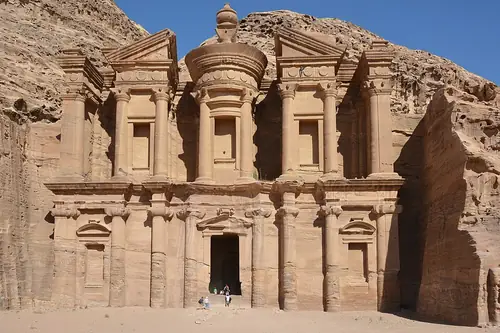
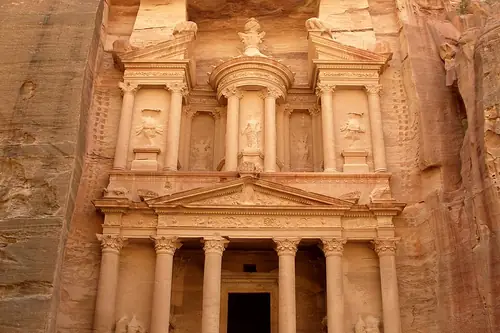
- Petra. Too far for a comfortable day trip; spend at least a night in Wadi Musa. See our Petra guide for tickets and the 06:30 JETT bus.
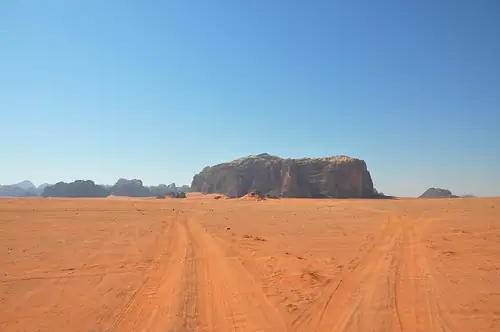
- Wadi Rum. The desert further south suits an overnight in a camp; see our Wadi Rum guide.
What goes wrong in Amman?
- Buying the Jordan Pass too late. The visa fee is only waived if you buy the pass before you arrive and stay at least two nights (3 days).
- Fridays. The Airport Express runs hourly instead of roughly every half hour, so leave extra time for a Friday flight.
- Underestimating the hills. Distances look short on a map but the stairways between jabals are steep. Use taxis between neighbourhoods and walk within them.
- Packing for desert heat in winter. January averages 4°C at night, with around 11 rain days and the occasional snowfall on the hills.
- Leaving the Dead Sea too late. Plan the trip down and back in daylight, and keep the water away from your eyes.
How many days do you need in Amman?
Two days covers the city: one for the Citadel, the Roman Theatre and downtown, and an evening on Rainbow Street; one for Jerash. Add a third for the Dead Sea, then head south to Petra and Wadi Rum. For the whole country month by month, see our best time to visit Jordan guide.
Frequently Asked Questions
How much does it cost to visit the Amman Citadel and Roman Theatre?
The Jordan Tourism Board lists 3 Jordanian dinars for foreign visitors at the Amman Citadel and 2 dinars at the Roman Theatre, a ticket that also covers the Museum of Popular Traditions beside it. Both sites are included in the Jordan Pass, and the Jordan Pass list shows them open 08:00 to 17:00.
What is the best time to visit Amman?
March to May and September to November are the most comfortable months, with average highs of about 17 to 31°C at the Amman Airport station. June to August is dry and hot at 31 to 32°C. December to February is cool and wet, with January averaging 12°C by day and 4°C at night, and the occasional snowfall on Amman’s higher hills.
How do I get from Queen Alia airport to central Amman?
The Sariyah Airport Express bus leaves from the curbside in front of the Arrivals Hall and runs to the Seventh Circle and the North Bus Station for around 3.4 dinars, with buses roughly every 30 minutes at busy times and hourly on Fridays. Airport taxis charge fixed fares set by the Land Transport Regulatory Commission, posted at the taxi stands.
Is the Jordan Pass worth it if I visit Amman?
Yes, if Petra is also on your route. The Jordan Pass costs 70, 75 or 80 dinars for one, two or three days at Petra, covers more than 40 other sites including the Amman Citadel, the Roman Theatre and Jerash, and waives the tourist visa fee if you buy it before arrival and stay at least two nights (3 days).
Where should I stay in Amman?
Jabal Amman, around Rainbow Street, is the easiest first-time base: cafés, restaurants and a downhill walk to downtown. Downtown (Al-Balad) puts you next to the Roman Theatre and the souqs for the lowest prices, and Abdali suits travellers who want modern hotels and the JETT bus to Petra close by.
Can you do a day trip from Amman to Jerash or the Dead Sea?
Yes. Jerash lies about 45 km north of Amman, according to the Jordan Tourism Board, and its 10-dinar ticket includes the site museum. The Dead Sea, 427 metres below sea level, is the other classic day trip, with the Dead Sea Public Beach and a 3.5 km promenade on the shore.
Start planning your Amman trip
If you are flying in for a week in Jordan, buy the Jordan Pass first, then book two or three nights in Amman before heading south. Spring and autumn fill up fastest; winter brings lower prices and cold nights.
Find cheap flights to Amman | Compare Amman hotel prices
Planning the wider trip? See our best time to visit Jordan guide, the Petra guide and the hotels hub.