Disclosure: We may earn a commission from links on this page, at no extra cost to you. How we earn
This article contains affiliate links. If you make a booking through these links, we may earn a commission at no extra cost to you. About & Affiliate Disclosure
Quick Answer
- Best overall: late April to June and September to October, warm and uncrowded.
- Cheapest: November to March, often 30 to 40 percent off summer prices.
- Best for beaches: June and September, warm seas without the mid-summer crush.
- Avoid for price and crowds: July and August peak, plus the two Bayram (Eid) holidays.
- Daily budget: 40 to 65 US dollars for backpackers, 90 to 160 for mid-range comfort.
The Best Time to Visit Turkey, in One Sentence
Late September in Istanbul’s Galata district means rooftop terraces that are packed in high summer sit nearly empty, with the same call to prayer rolling across the Golden Horn and the same ferries cutting white lines through the water below. Visitors who land in the shoulder season routinely trade July’s queues for this kind of quiet, at a fraction of the price.
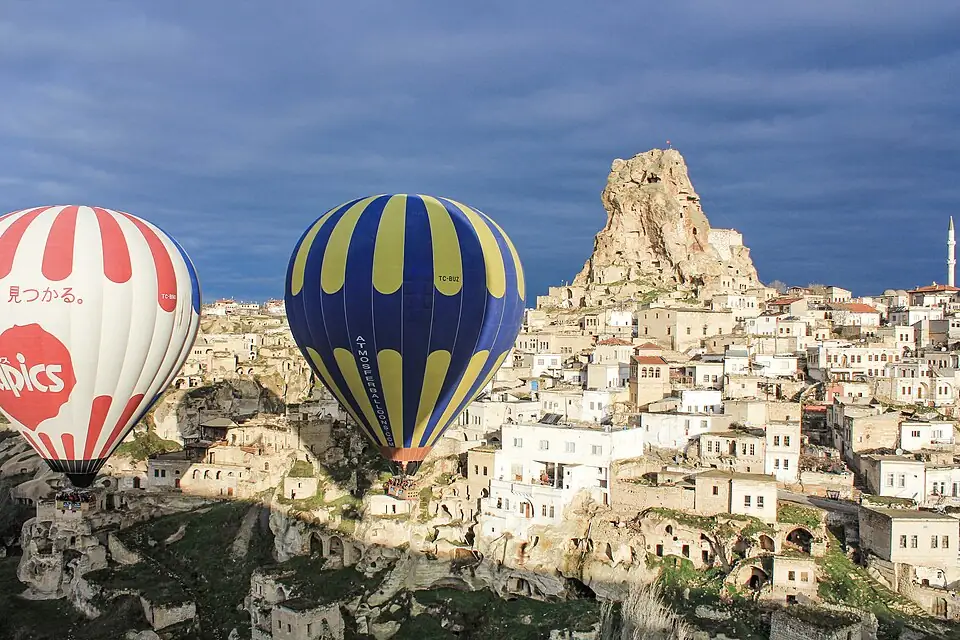
Here’s the answer you came for. The best time to visit Turkey is late April to June and September to October: warm, dry days, seas you can actually swim in, manageable crowds, and prices well below the July-August peak. You get Istanbul at its most golden, Cappadocia’s balloons rising over clear mornings, and the Aegean coast still bath-warm, all without the high-summer crush or the high-summer bill.
If your heart is set on beach weather at its absolute hottest, July and August deliver: just expect the highest prices and the busiest resorts of the year. For nearly everyone else, the shoulder months are the move. This guide breaks down what each month costs and feels like so you can match Turkey to your wallet.
What to pack for Türkiye
Four picks from our gear guides that suit this trip. Each card opens the live Amazon price; the links below lead to the full comparisons.
25 x 18 x 4 cm, 254 g, 2.1 L. Locking zips, a cut-resistant double-cable strap, an RFID passport pocket and a strap that clips to a chair. Reader’s Digest’s best crossbody for travel.
Check price on Amazon Live price on AmazonThe best value compression set going. A double-zip pulls the air out so a week of clothes shrinks to a few inches thick, and you get eight pieces (cubes plus a shoe and laundry bag) for roughly the price of one branded cube. The fabric is thin and the zips aren’t lifetime kit, but for the money nothing beats it.
Check price on Amazon Live price on AmazonThe reliable all-rounder: one USB-C and four USB-A ports, plugs for 200+ countries, and a built-in fuse with a spare. The adapter most people should buy.
Check price on Amazon Live price on AmazonModel A1259, 10,000mAh, about 37Wh, 215 g. Two phone charges in a jacket pocket, and small enough that the two-bank limit never becomes a question.
Check price on Amazon Live price on AmazonBuild your Turkey itinerary
The mistake most first-timers make is treating Turkey like one stop. It isn’t. Almost every great first trip pairs Istanbul with Cappadocia (a one-hour domestic flight apart), and then adds a stretch of the Mediterranean or Aegean coast, usually Antalya or Bodrum. Distances look intimidating on the map, but cheap domestic flights make them disappear: Turkish Airlines, Pegasus and AnadoluJet crisscross the country all day, so you can be sipping breakfast tea over the Bosphorus and watching the sun set over Cappadocia’s fairy chimneys the same evening.
Pick an anchor by season, then add a neighbor that’s at its best the same week.
| City | Best months | How long to stay | Pairs well with |
|---|---|---|---|
| Istanbul | Apr–Jun, Sep–Oct (good year-round) | 3 days | Cappadocia (1 hr by air) |
| Cappadocia | Apr–Jun, Sep–Oct (for the balloons) | 2 days | Istanbul, fly in, fly out |
| Antalya | Apr–Oct | 2–3 days | The Turquoise Coast (Kaş, Side, Lycian Way) |
| Bodrum | May–Jun, Sep | 3–4 days | The Aegean beaches and nearby coves |
A few honest notes: Istanbul is the safe anchor and works in any month, so build around it; Cappadocia is short but unmissable: two days is enough to catch a sunrise balloon flight (the whole reason to go) and still wander the valleys; Antalya is your gateway to the Turquoise Coast; and Bodrum rewards a slower few days on the Aegean.
Two routes that actually work:
- Classic 10 days: Istanbul 3 → fly to Cappadocia 2 → fly to the coast (Antalya) 3 → back via Istanbul. Every leg is a short, cheap domestic hop, so you never lose a day to the road.
- City + Aegean week: Istanbul 3 → fly to Bodrum 4. One flight, two very different worlds: the great city and the slow Aegean.
Two things to plan around. First, those famous Cappadocia balloons only fly when the weather cooperates, and flights get cancelled at short notice. Leave a buffer day so a single grey morning doesn’t cost you the experience. Second, the summer coast is genuinely brutal in July and August: searing heat, packed beaches and peak prices, which is exactly why late spring and September are the sweet spot. Use the city guides below to go deeper on whichever stops make your shortlist.
Top Cities to Explore
Turkey’s Seasons and What They Cost
Turkey is huge and geographically split: a Mediterranean and Aegean coast, a cooler interior plateau around Cappadocia and Ankara, and the unique microclimate of Istanbul straddling two continents. Prices and weather swing hard between them, and knowing which season you’re landing in saves real money.
Spring (April to June): The Sweet Spot
This is when Turkey wakes up. Istanbul’s tulips bloom in April, the countryside turns green, and by late May the coast is warm enough to swim. Days run a comfortable 18 to 28 C. Prices sit at pleasant shoulder levels, well below summer, and the crowds haven’t yet arrived. Late May stands out as the single best window in this stretch.
Summer (July to August): Hot, Busy, Expensive
The coast bakes at 30 to 38 C, resorts fill with European families, and prices hit their annual peak in Bodrum, Antalya, and Fethiye. Istanbul gets hot and humid but many locals flee to the coast, so the city can feel oddly quiet. Great for guaranteed beach heat; punishing for budgets and queues.
Autumn (September to October): The Other Sweet Spot
The quieter sibling to spring, and the season behind that near-empty Galata terrace scene above. The sea stays warm into October, the air cools to a glorious 20 to 28 C, and prices fall back to shoulder levels as the crowds thin. Cappadocia is at its clear-skied best for balloon flights. This is the budget traveler’s secret peak.
Winter (November to March): Cheap and Atmospheric
The coast goes quiet and many resorts close, but this is when Turkey is cheapest. Istanbul under a dusting of snow, Cappadocia’s fairy chimneys frosted white, and steaming hammams come into their own. Days sit around 8 to 14 C in Istanbul, colder inland. Pack layers and chase the bargains.
Month-by-Month Guide to Visiting Turkey
Use this at-a-glance planner before the detailed notes below.
| Month | Weather | Crowds | Prices | Best for |
|---|---|---|---|---|
| January | Cold, wet, snow inland | Low | Low | Cheap city breaks, hammams |
| February | Cold, crisp | Low | Lowest | Bargain Istanbul, Cappadocia snow |
| March | Cool, warming | Low | Low | Value before spring, fewer crowds |
| April | Mild, tulips, lovely | Rising | Mid | Istanbul, sightseeing, spring color |
| May | Warm, near-perfect | Moderate | Mid | Best all-round weather, coast warming |
| June | Hot, swimmable seas | High | Mid-high | Beaches before the peak crush |
| July | Very hot, peak | Very high | Peak | Guaranteed beach heat |
| August | Very hot, peak | Very high | Peak | Summer resorts, festivals |
| September | Hot, sea still warm | High then easing | Mid-high | Coast value, clear Cappadocia |
| October | Warm, mild, lovely | Moderate | Mid | Sightseeing, late beaches, balloons |
| November | Cool, wetter | Low | Low | Cheap city trips, quiet sights |
| December | Cold, festive | Low | Low | Istanbul atmosphere, bargains |
A few notes the grid can’t capture: Istanbul highs climb from around 9 C in January to the high 20s in summer, with the coast hotter (35 C-plus in July) and inland Cappadocia colder. April brings Istanbul’s tulip festival and green countryside; September and October keep the sea warm (around 26 C) under clear Cappadocia balloon skies. In 2026 Ramadan runs roughly mid-February to mid-March with Eid al-Fitr around March 20, so plan the spring shoulder just after it.
Find Cheap Flights to Turkey
Istanbul has two airports: Istanbul Airport (IST), the huge new long-haul hub, and Sabiha Gokcen (SAW) on the Asian side, favored by low-cost carriers like Pegasus. Turkish Airlines connects Turkey to almost everywhere, and from Europe, budget carriers fly cheaply to both Istanbul and the coastal airports of Antalya (AYT), Dalaman (DLM), and Bodrum (BJV).
Use the live calendar below to spot the cheapest departure dates at a glance, then compare across months.
Tips for cheaper flights:
- Book 2 to 4 months ahead for summer coast trips; off-season city breaks can be cheap last-minute.
- Fly into the cheapest gateway. For the coast, compare Antalya, Dalaman, and Bodrum directly rather than routing through Istanbul.
- Travel midweek and mid-season. Tuesday and Wednesday departures in spring or autumn are routinely the cheapest.
- Watch Pegasus and the budget carriers. Low-cost fares to SAW often undercut full-service routes to IST.
- Avoid the Bayram holidays. Domestic flights and fares spike around both Eid periods.
For more route ideas and fare hacks, browse our full flights hub.
When Prices Are Lowest: Best Time for Budget Travelers
Target these windows for the cheapest trips:
November to March is the cheapest stretch. An Istanbul hotel that runs 110 US dollars a night in June can drop to 60 to 75 in winter, and flights fall hardest in February. You trade beach weather for empty sights, snow-dusted Cappadocia, and steaming hammams.
Late March to April and late October to November deliver shoulder savings with much better weather, the smart compromise if you want mild days without the summer bill.
Steer clear of the July-August beach peak and the two Bayram (Eid) holidays, when domestic travel, ferries, and coastal hotels spike. In 2026, Ramadan runs roughly mid-February to mid-March, with Eid al-Fitr around March 20, so the spring shoulder is best planned just after it.
Where to Stay in Turkey
Where you sleep shapes both your budget and your experience. Istanbul alone has wildly different neighborhoods, and the coast spreads across distinct resort towns.
| Area | Vibe | Budget room | Best for |
|---|---|---|---|
| Istanbul (Sultanahmet) | Old city, monuments | 45 to 80 US dollars/night | First-timers, history, walking to sights |
| Istanbul (Beyoglu / Galata) | Hip, nightlife, views | 50 to 95 US dollars/night | Cafes, bars, atmosphere, ferries |
| Cappadocia (Goreme) | Cave hotels, balloons | 50 to 110 US dollars/night | Hot-air balloons, landscapes |
| Antalya / Kas (coast) | Beaches, resorts | 40 to 90 US dollars/night | Mediterranean sun, diving, families |
| Izmir / Cesme (Aegean) | Relaxed coast, food | 45 to 95 US dollars/night | Aegean beaches, day trips to Ephesus |
Istanbul is the dazzling gateway, where Europe and Asia meet across the Bosphorus. Cappadocia is the surreal heartland of cave hotels and dawn balloon flights. The Mediterranean and Aegean coasts offer everything from package resorts to quiet coves. Compare current rates anytime on our hotels hub.
Daily Budget for Turkey
| Category | Budget (US dollars) | Mid-Range (US dollars) | Comfort (US dollars) |
|---|---|---|---|
| Accommodation | 15 to 30 | 50 to 95 | 130 to 300 |
| Food (3 meals) | 10 to 18 | 25 to 50 | 60 to 130 |
| Transport | 5 to 10 | 12 to 30 | 40 to 90 |
| Activities | 8 to 15 | 20 to 45 | 55 to 120 |
| Daily Total | 40 to 65 | 90 to 160 | 300 to 600 |
A few notes that keep costs honest: a plate of pide or a doner kebab runs 80 to 200 lira, a glass of tea is a few lira and refilled endlessly, and breakfast (kahvalti) is often included at hotels and pensions. Long-distance buses are excellent value and comfortable. Many of Turkey’s best experiences, from Bosphorus walks to bazaar wandering, cost nothing; major museums and the balloon flights are where the bills add up.
Stay Connected and Safe: eSIM and VPN
Skip the airport SIM counter. A travel eSIM gives you fast data the moment you land at IST or SAW, which matters when you are navigating Istanbul’s ferries, finding a cave hotel in Goreme, or translating a menu in a coastal lokanta. Turkey has fast, widespread 4G/5G.
- Activate before you fly: data works on arrival
- Plans for 200+ countries from a few dollars
- Keep your number; no physical SIM swap
Turkey offers plenty of open Wi-Fi in hotels and cafes, and a VPN keeps your banking and logins private on those public networks while letting you reach your usual streaming and home services. Some sites and apps can be intermittently restricted in Turkey, so a VPN is genuinely useful here. Set it up before you fly.
- Up to 10 devices on one account
- Obfuscated servers for networks that block VPNs
- 30-day money-back guarantee
For the full rundown, see our guides to the best travel eSIM and VPN.
Frequently Asked Questions
What is the best time to visit Turkey?
Late April to June and September to October are the sweet spot: warm, dry days, swimmable seas on the coast, smaller crowds, and noticeably lower prices than the July-August peak. Istanbul is at its best in these same shoulder months.
What is the cheapest time to visit Turkey?
November to March is the cheapest, with airfares and hotels often 30 to 40 percent below the summer peak. The coast goes quiet and many resorts close, but Istanbul and Cappadocia stay open and atmospheric, if chilly.
When is the best time for the Turkish coast and beaches?
June and September are ideal: sea temperatures around 24 to 26 C, hot but not scorching air, and fewer crowds than mid-summer. July and August are hottest and busiest, with the highest prices in Bodrum, Antalya, and Fethiye.
Should I avoid any dates for budget reasons?
Avoid the July-August beach peak and the two Eid (Bayram) holidays, when domestic travel and resort prices spike. In 2026 Ramadan runs roughly mid-February to mid-March, with Eid al-Fitr around March 20, so plan coast trips outside the school-holiday and Bayram weeks.
How much does a trip to Turkey cost per day?
Budget travelers manage on 40 to 65 US dollars a day; mid-range travelers should plan for 90 to 160. See the cost table above for the full breakdown.
Do I need a visa to visit Turkey?
Many nationalities, including most EU citizens, enter visa-free for up to 90 days. UK, US, and some other passport holders may need an e-Visa, which is quick and cheap to obtain online before you fly. Always check your own passport’s current rules.
Start Planning Your Turkey Trip
The best time to visit Turkey comes down to your priorities. The spring and autumn shoulders (late April to June, September to October) give you the best balance of warm weather, swimmable seas, and softer prices; winter is cheapest if you’ll trade the beach for atmospheric cities and snowy Cappadocia; and only the July-August peak truly costs a premium. A late-September trip typically combines Istanbul, Cappadocia, and a still-warm coast with crowds and prices cut roughly in half compared to summer. Match the month to your wallet and Turkey is one of the best-value trips around.
Compare prices now and lock in your dates: