Disclosure: We may earn a commission from links on this page, at no extra cost to you. How we earn
This article contains affiliate links. If you make a booking through these links, we may earn a commission at no extra cost to you. About & Affiliate Disclosure
Quick Answer
- 10 days is the first-timer sweet spot: Madrid 4n → Seville 3n (+ Andalusia day trip) → Barcelona 3n, all by AVE high-speed train.
- 7 days: Madrid and Barcelona only - a third base means more train time than town time.
- 14 days: the 10-day route plus Granada (Alhambra) and a coastal or island add-on.
- Skip the rental car in Madrid, Barcelona, and Seville - historic centres are dense, parking is scarce and expensive, and the AVE beats driving on every one of these routes anyway.
- Book Renfe AVE, Iryo, or Ouigo a few weeks out - Spain’s rail price war means Madrid-Barcelona fares can start around 16-18 euros each way versus 90-130 euros for a flexible same-day ticket.
Why a Spain Itinerary Works Better Without a Car in the Cities
A rental car picked up at Barajas to “do Spain properly” - Seville, Granada, Barcelona, all in ten days - is one of the most common first-timer mistakes on this route: unused hotel parking, no legal spot to be found anywhere near Seville’s Santa Cruz quarter, and a real risk of missing an AVE departure sitting in traffic on the A-4. Skip the car for the cities and the trip runs smoother and cheaper by train alone.
Spain isn’t one trip, it’s several: a capital, a Mediterranean city with its own language and rhythm, and an Andalusian south that runs on a completely different clock. What ties them together is a genuinely good - and increasingly cheap - high-speed rail network. Below are three itineraries that hold up at 7, 10, and 14 days, plus exactly where to add or cut when the calendar doesn’t cooperate.
How to Structure Any Spain Itinerary
Three rules that avoid the parking headaches and missed trains first-timers run into most:
- Let the AVE do the work. Madrid-Barcelona and Madrid-Seville both run around 2 hours 30 minutes on Renfe’s AVE, with Iryo and Ouigo now competing on the same corridors. A car adds nothing here and costs you fuel, tolls, and a parking hunt in three different old towns.
- Cap it at three or four bases. Every hotel change eats half a day. Three bases in a week and a half, four in two weeks, is about the ceiling before you’re spending more time on a platform than in a plaza.
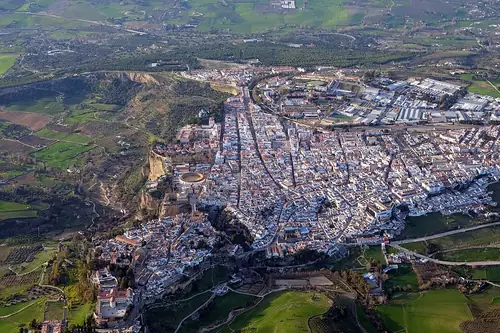
- Save the rental car for rural Andalusia. The white villages around Ronda, the Alpujarras foothills below Granada, and the wider countryside genuinely reward a car; the historic centres of Madrid, Barcelona, and Seville genuinely don’t.
The 7-Day Spain Itinerary (Madrid + Barcelona)
A week is enough for the capital and the coast if you resist adding a third base. Madrid and Barcelona sit on the same AVE line as the Madrid-Seville route, so the connection itself is fast and frequent - the constraint is really just how much of each city you can cover.
| Day | Base | Plan |
|---|---|---|
| 1 | Madrid | Land, settle in near Sol or Centro, evening walk through Plaza Mayor |
| 2 | Madrid | Museo del Prado, Retiro Park, Palacio Real |
| 3 | Madrid | Reina Sofía (Guernica), Gran Vía, tapas crawl through La Latina |
| 4 | Madrid → Barcelona | Morning free; afternoon AVE (around 2h30) into Barcelona |
| 5 | Barcelona | Sagrada Família, Passeig de Gràcia, Gothic Quarter |
| 6 | Barcelona | Park Güell, Barceloneta beach, Mercat de la Boqueria |
| 7 | Barcelona → home | Last morning in El Raval, then metro or Aerobús to El Prat |
The one cut if you’re tight on time: trim the Reina Sofía visit to the Guernica room only and add that half-day to Barcelona instead. Don’t shorten Barcelona to squeeze in a day trip - you’ll spend the saved time on a train, not on a beach.
See the full Madrid travel guide and Barcelona guide for where to base yourself in each city.
The 10-Day Spain Itinerary (the sweet spot)
This is the one worth booking. It keeps Madrid and Barcelona, adds real time in Andalusia via Seville, and still holds to three bases.
| Day | Base | Plan |
|---|---|---|
| 1 | Madrid | Arrive, settle near Sol or Centro, Plaza Mayor and Mercado San Miguel |
| 2 | Madrid | Museo del Prado, Retiro Park |
| 3 | Madrid | Palacio Real, Gran Vía, Reina Sofía |
| 4 | Madrid → Seville | Morning free; AVE (around 2h30) south to Seville |
| 5 | Seville | Real Alcázar (around €12.50 entry, book a timed slot days ahead), Santa Cruz quarter |
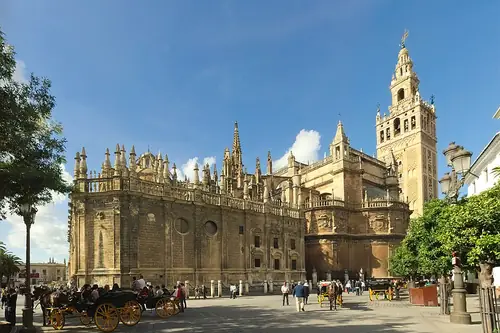
| 6 | Seville | Seville Cathedral and the Giralda tower (general ticket around €14), Mercado de Triana |
| 7 | Seville → Barcelona | Longest transit day - back through Madrid, or a direct connection depending on the timetable, roughly 5-6 hours total |
| 8 | Barcelona | Sagrada Família, Gothic Quarter |
| 9 | Barcelona | Park Güell, Barceloneta, Passeig de Gràcia |
| 10 | Barcelona → home | Last morning in El Born, then to El Prat |
Where to cut to 8-9 days: drop one Seville day and treat Andalusia as a single overnight stop. Where to add: an extra Seville day for a slower Real Alcázar and Cathedral visit, or a half-day detour into the Andalusia region, is never wasted.
The 14-Day Spain Itinerary (add Granada + the coast)
Two weeks lets Spain breathe. Take the 10-day route and extend the Andalusia leg to include Granada, then add a coastal or island detour before looping back north.
| Days | Base | Plan |
|---|---|---|
| 1–3 | Madrid | As above: Prado, Retiro, Palacio Real, Reina Sofía |
| 4 | Madrid → Seville | AVE south (around 2h30); afternoon in Santa Cruz |
| 5–6 | Seville | Real Alcázar, Cathedral and Giralda, Mercado de Triana |
| 7 | Seville → Granada | Bus or train connection into Granada; afternoon in the Albaicín |
| 8 | Granada | The Alhambra and Generalife gardens - book entry well ahead, it sells out |
| 9 | Granada → coast or islands | Onward to the Costa del Sol for beach time, or fly to the Canary Islands for a longer island detour |
| 10–11 | Coast/islands | Beach days, coastal towns, a scenic terrace or two |
| 12 | → Barcelona | Return north (via Madrid if flying) into Barcelona |
| 13–14 | Barcelona | Sagrada Família, Park Güell, Gothic Quarter, a slower last morning before flying home |
The alternative fortnight: swap the coastal leg for more time in Andalusia itself - Córdoba and Ronda both work as day trips from Seville or Granada if you’d rather stay inland than add a flight. See our Granada guide and Andalusia guide to pick a side, or the Canary Islands guide if the coast detour means the islands.
Getting Around Your Spain Itinerary
The transport question first-timers overthink most: which train operator, and whether to rent a car.
Budget for This Route
Expect a 10-day trip in the roughly €900-1,600 per-person range outside flights, using a mix of mid-range hotels, AVE trains, and menú del día lunches (a fixed 3-course lunch that averages around €14 nationally, a bit less outside Madrid and Barcelona) - more if you extend into the 14-day route with Granada and a coastal add-on. Andalusia (Seville, Granada) runs roughly 25-40% cheaper than Barcelona or Madrid for equivalent hotel quality, which is part of why it’s worth the extra train time.
For where to sleep in each base: Madrid hostales near Sol run around $103-135/night, mid-range 3-4 star rooms in Chamberí or Moncloa around $155-215; Barcelona’s Gothic Quarter and Raval mid-range hotels run around $170-190/night, upscale around $200-235; Seville is the softest of the three, with budget guesthouses in the Old Town around $85-120 and mid-range Santa Cruz rooms around $140-200 (all bands from a September 2026 search - book early for the September-October shoulder season).
Shorter or Longer?
Cutting to 5-6 days: stick to one city only - Madrid or Barcelona - and go deeper rather than adding the AVE leg at all. Stretching past 14 days: the Canary Islands work as a self-contained week added onto either end, since they’re reached by flight rather than train and don’t fit neatly into the AVE spine; treat that stretch as its own mini-trip bolted onto the mainland itinerary rather than squeezing it into the same rail-based flow.
Frequently Asked Questions
Is 7 days enough for Spain?
Seven days is enough for Madrid and Barcelona at a sane pace: 3-4 nights in Madrid, 3-4 in Barcelona, linked by an AVE high-speed train of around 2 hours 30 minutes. It’s not enough to add Andalusia properly; 10-14 days is where Seville and Granada fit.
Should I fly into Madrid or Barcelona?
Fly into Madrid if you’re doing the classic west-to-south route through Andalusia, since Madrid-Seville is the same AVE line. Fly into Barcelona if you want the coast first or fares are cheaper into El Prat; an open-jaw ticket into one city and out of the other avoids backtracking entirely.
Do I need to book Spanish trains in advance?
You don’t have to, but Spain’s rail corridors now run three competing operators (Renfe, Iryo and Ouigo), and advance fares undercut walk-up prices, sometimes to around 16-18 euros one-way on Madrid-Barcelona versus 90-130 euros for a same-day flexible fare. Book as soon as your dates are fixed, especially for July, August, and Easter week.
Is ETIAS required to visit Spain in 2026?
No. ETIAS is not live in 2026 - the EU has set no start date, and press reports point to 2027 at the earliest. Visa-free visitors from the US, UK, Canada, Australia and New Zealand still just need a passport valid for the stay, under the standard Schengen 90-days-within-180-days rule.
What order should I visit Madrid, Barcelona, and Seville?
Madrid to Seville to Barcelona (or the reverse) avoids backtracking least: Madrid-Seville runs about 2 hours 30 minutes on the AVE, and Madrid-Barcelona is a similar 2 hours 30 minutes, so Madrid works as the hinge between the south and the coast. Flying into one end and out the other saves a full return leg.
Should I add Granada or the coast on a 14-day Spain itinerary?
Granada is the easier add from Seville - a bus or train ride away - and gives you the Alhambra without much extra transit. A coastal stop (the Costa del Sol or a Canary Islands detour) works better if you want beach downtime over another historic city, but budget an extra travel day either way.
Start Planning Your Spain Trip
Pick your length, book the AVE, Iryo, or Ouigo tickets a few weeks ahead, leave the rental car for rural Andalusia only, and let the high-speed rail spine carry you from Madrid to Seville to Barcelona - or Madrid straight to Barcelona if a week is all you have. Spain rewards a short list of bases done well over a long list rushed through by car.
Compare prices and lock in your dates:
Find cheap flights to Spain | Compare Barcelona hotels
Keep planning with our Spain pillar guide, Madrid, Barcelona, Seville, Granada, and Andalusia guides, plus our trains, eSIM, and hotels hubs for the rest of the trip.