Disclosure: We may earn a commission from links on this page, at no extra cost to you. How we earn
This article contains affiliate links. If you make a booking through these links, we may earn a commission at no extra cost to you. About & Affiliate Disclosure
Quick Answer
- Hotels (Sep 2026): 3-star doubles run around €170–190 a night in Barcelona, €136–188 in Madrid and €123–175 in Seville.
- Madrid airport: Metro Line 8 adds a €3 airport surcharge (~€4.50–5 total), while the Cercanías C1 train from Terminal 4 runs around €2.60–3 with no surcharge.
- The expensive part: Barcelona hotels plus its nightly tourist tax, and last-minute high-speed rail.
- Barcelona tourist tax: charged per person per night for the first 7 nights only, around €6 at lower-category hotels versus €12 at 5-star.
- Save by basing more nights in Seville or elsewhere in Andalusia (around 25–40% cheaper than Barcelona or Madrid), and booking rail tickets weeks ahead.
Is Spain Actually Expensive? Depends Which City
Look up a 3-star double in central Barcelona for mid-September and you’ll see around €170–190 a night. Look up the same star rating, same two-adult search, in Seville’s old town, and it’s closer to €140–200: often less once you filter for a specific neighborhood. Same country, same season, meaningfully different bill. That’s the real shape of a Spain budget: it isn’t one number, it’s three cities with three different price floors, and Barcelona and Seville sit at opposite ends.
Add up a full day of spending (public transport, a menú del día lunch, a tapas-style dinner, one paid sight), and it lands close to €60–70 in Seville. In Barcelona, the same day runs closer to €85–100, partly because of the city’s own tourist tax stacking onto the hotel bill. Below is what things actually cost by category, what a day runs at each travel style, and a real 7-day sample budget across Spain’s three flagship cities.
What Things Actually Cost in Spain
Real, current on-the-ground prices in euros (per the July 2026 research used for this guide):
| Item | Typical cost |
|---|---|
| Hostel dorm bed | ~€20–40/night |
| 3-star hotel (double), Barcelona | ~€170–190/night |
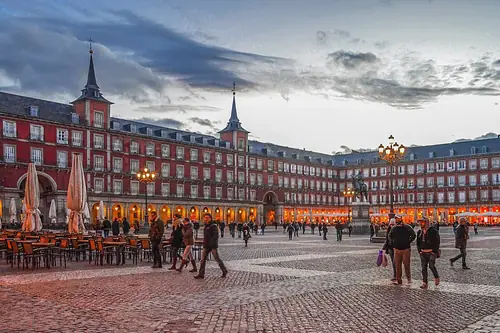
| 3-star hotel (double), Madrid | ~€136–188/night |
| 3-star hotel (double), Seville | ~€123–175/night |
| Menú del día (3-course lunch + bread + drink) | ~€14 average (€12–18 in Madrid/Barcelona) |
| Tapas-style restaurant dinner | ~€40–70/day mid-range dining |
| Madrid Metro (flat fare, since June 2026) | €1.50/ride |
| Barcelona T-casual (10 trips, zone 1) | |
| Seville single Tussam bus ticket | ~€1.40 |
| AVE/Iryo/Ouigo high-speed rail, booked ahead | from ~€16–18 |
| AVE/Iryo, closer to departure or flexible fare | up to ~€95–130 |
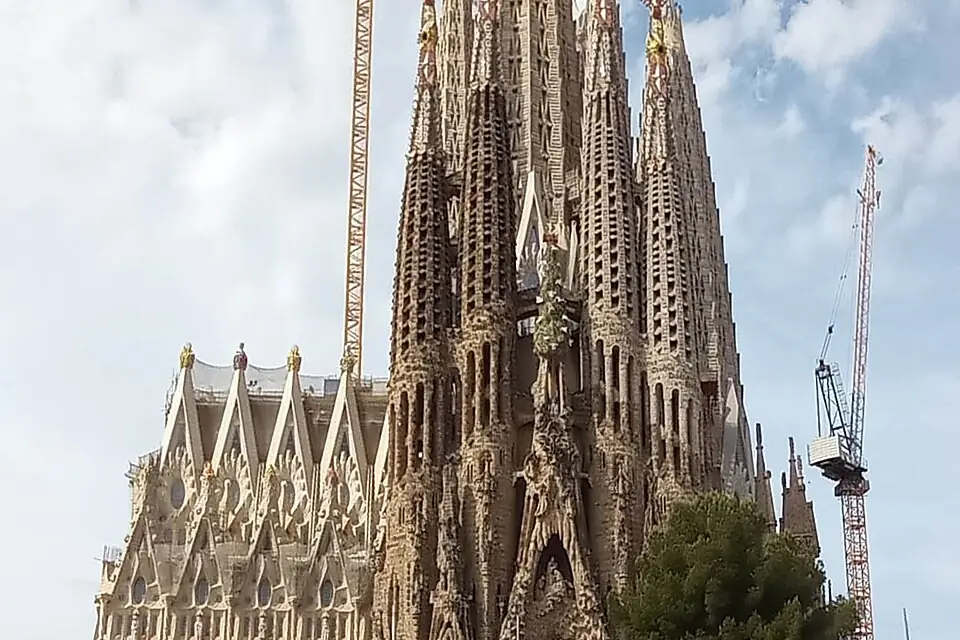
| Sagrada Família (church only) | ~€26 |
| Real Alcázar, Seville | ~€12.50 |
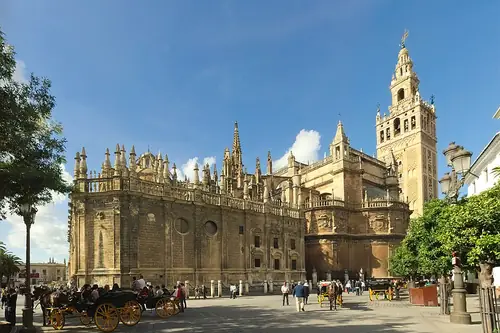
| Seville Cathedral + Giralda | ~€14 |
| Museo del Prado, Madrid | ~€15 |
| Barcelona tourist tax (per person/night, first 7 nights) | ~€6–12 depending on hotel category |
| eSIM (Airalo, Spain-specific, 1GB/7 days) | from ~$4.00 |
The pattern holds across the country: eat the menú del día, ride flat-fare transit, and book rail ahead, and daily spending stays low; Barcelona hotels plus its tourist tax and last-minute rail are where a Spain budget is won or lost.
Cost Per Day by Travel Style
| Style | Per day (on the ground) | What it looks like |
|---|---|---|
| Budget | ~€50–95 | Hostel dorm or budget guesthouse ( |
| Mid-range | ~€100–170 | 3-star hotel/guesthouse ( |
| Comfort/Luxury | ~€220–320+ | 4–5-star hotel (Barcelona/Seville upscale bands run roughly €175–250/night converted from Booking.com’s September 2026 USD rates), full-menu restaurant dining, first-class rail, private guides for the headline sights |
These exclude your international flight. On rail, book Renfe AVE, Iryo or Ouigo weeks ahead: advance fares run from around €16–18 versus €95–130 for flexible or last-minute tickets.
A Real 7-Day Spain Budget (mid-range, per person)
Based on the classic Madrid–Barcelona–Seville route, excluding international flights:
| Category | 7-day cost | Notes |
|---|---|---|
| Accommodation | ~€910–1,225 | 3-star hotels, ~€130–175/night average across the three cities (Barcelona highest) |
| Food | ~€280–490 | Menú del día lunches most days plus tapas-style dinners |
| Intercity transport | ~€60–150 | AVE/Iryo/Ouigo Madrid→Barcelona→Seville, booked ahead |
| Local transport | ~€30–50 | Madrid Metro flat fare, Barcelona T-casual, Seville Tussam |
| Attractions | ~€70–120 | Prado, Sagrada Família, Alcázar, Seville Cathedral |
| Miscellaneous | ~€60–110 | eSIM, Barcelona tourist tax, souvenirs |
| Total (on the ground) | ~€1,410–2,145 | Add international airfare |
Budget version: swap the hotels for hostels and guesthouses, eat the menú del día every day, and the same 7 days drops to roughly €600–750 on the ground.
Where Your Money Goes Further: Barcelona vs Madrid vs Seville
Barcelona is Spain’s priciest base among the three flagship cities for a well-rated central hotel, and it’s the only one of the three with its own municipal tourist tax on top of the room rate. Seville is consistently the softest, and Andalusia as a region runs roughly 25–40% cheaper than Barcelona or Madrid for equivalent quality. Madrid sits in between.
| City | 3-star double, per night (Sep 2026) | Notes |
|---|---|---|
| Barcelona | ~€170–190 | Priciest of the three; plus a nightly tourist tax of ~€6–12/person |
| Madrid | ~€136–188 | Wide range by neighborhood; Centro (Sol/Gran Vía) has the cheapest budget beds |
| Seville | ~€123–175 | Softest of the three; Old Town and Santa Cruz cover most budgets |
If your itinerary allows it, trimming a Barcelona night in favor of an extra night in Seville, Granada or elsewhere in Andalusia is the single easiest lever on a total Spain budget. Travelers building in beach time instead of a third city should also look at the Canary Islands, which run their own separate cost curve.
How to Cut Your Spain Budget (without cutting the trip)
Cash vs Card in Spain
Cards are accepted almost everywhere in Madrid, Barcelona and Seville: hotels, restaurants, trains and museums all take them, and contactless is standard on city transit. Carry some cash for smaller-town markets, tobacco shops, and the odd cash-only stall, and expect it to be the easiest way to settle a small tip (never obligatory in Spain: locals round up or leave a euro or two, and up to 5–10% at nicer restaurants for great service). An eSIM, like the ones covered on our eSIM hub, sidesteps a foreign-transaction surprise from a physical SIM purchased at the airport.
Frequently Asked Questions
How much does a trip to Spain cost per day?
Budget travelers manage on around 50 to 95 euros a day, covering a hostel dorm or budget guesthouse, a menú del día lunch, and public transport. Mid-range travelers should plan for around 100 to 170 euros a day, covering a 3-star hotel, tapas-style restaurant meals, and a museum entry or two, before international flights.
Is Barcelona or Seville more expensive to visit?
Barcelona is Spain’s priciest of the three flagship cities for hotels, and Seville is the softest. As of September 2026 rates, a well-rated 3-star double runs around 170 to 190 euros a night in Barcelona versus around 140 to 200 euros in Seville, and Barcelona alone adds a municipal tourist tax on top. Andalusia overall runs roughly 25 to 40 percent cheaper than Barcelona or Madrid for equivalent quality.
How much is a menú del día in Spain?
A menú del día (the fixed three-course lunch with bread and a drink) averages around 14 euros nationally in 2026, typically 12 to 18 euros in Madrid and Barcelona and a little less outside the big cities. It’s the single best-value meal in the country and the fastest way to hold down a daily food budget.
How do I get between Spanish cities cheaply?
Book high-speed rail early: Spain’s Madrid–Barcelona and Madrid–Seville corridors are now a price war between Renfe (AVE), Iryo and the budget operator Ouigo, with fares from around 16 to 18 euros booked ahead versus 95 euros or more for last-minute or flexible fares. Within cities, Madrid’s Metro is a flat 1.50 euros per ride since a June 2026 fare simplification.
Is there a tourist tax in Barcelona?
Yes. Barcelona’s combined nightly tourist tax, current since April 2026, runs around 12 euros per person at 5-star hotels, around 8.40 euros at 4-star, and around 6 euros at lower-category hotels and hostels. It’s charged only for the first 7 nights of a stay, and under-16s are exempt.
Do I need a visa or ETIAS to visit Spain in 2026?
No. Travelers from the US, UK, Canada, Australia and similar visa-exempt countries can still enter Spain visa-free for up to 90 days within any 180-day period, unchanged for 2026. ETIAS is not live in 2026 (the EU has set no start date; press reports point to 2027 at the earliest), so there’s no ETIAS fee to budget for yet.
Start Planning Your Spain Trip
The headline worry (that Spain will blow the budget) mostly comes down to two choices: which cities you weight the trip toward, and how early you book the trains. Trim Barcelona nights in favor of Seville or Andalusia, book Renfe/Iryo/Ouigo ahead, and eat the menú del día, and the daily cost is genuinely manageable. Set your style, copy the sample budget, and lock in the big-ticket items early.
Find cheap flights to Spain | Compare Barcelona hotel prices
Keep planning with the Spain travel guide pillar, and the Barcelona, Madrid, Seville and Granada city guides. For the connectivity side of the trip, see our eSIM guide and train booking tips for Europe.