Quick Answer
- Best time to visit Andalusia: spring (Apr–Jun) and autumn (Sep–Oct): warm, walkable, far kinder than the furnace of an inland summer.
- Where to base: Málaga or Seville as gateways; Ronda for the white villages; the Costa del Sol / Costa de la Luz for beaches; Cádiz for the deep south.
- Getting around: a hire car unlocks the white villages; fast AVE trains link Seville–Córdoba–Málaga cheaply; the coast has cercanías commuter trains.
- Don’t miss: Ronda’s gorge bridge, the white villages, Córdoba’s Mezquita, Cádiz old town and beaches, and the Caminito del Rey cliff walk.
- Eat smart: pescaíto frito (fried fish) on the coast, Córdoba’s cool salmorejo inland, and go inland early, before the heat.
Andalusia, Done the Right Way
Arriving in Seville in late June with a vague plan to “see Andalusia” means hitting the pavement by 2pm with heat coming off it like an open oven, hiding in a tiled courtyard and willing it to be 6pm. The towns inland run hotter still. The fix is simple: go in spring instead, or get up early, because an 8am drive up to Ronda (cool air, empty streets, the gorge glowing) is the version of the trip worth planning for from the start.
So here’s the short version this Andalusia travel guide is built around: come in spring (April to June) or autumn (September to October), use Málaga or Seville as your gateway, rent a car for the white villages, and do anything inland early before the midday heat. Get those four things right and Andalusia opens up: the gorge bridge at Ronda, the whitewashed hill towns, Córdoba’s Mezquita, two very different coastlines: without the sunstroke and the crowds.
You don’t need to choose between “culture” and “beach” here; Andalusia hands you both, plus mountains and some of the prettiest villages in Spain. The trick is the season and the wheels. And the single thing most first-timers get wrong is when they show up.
What to pack for Andalusia
Four picks from our gear guides that suit this trip. Each card opens the live Amazon price; the links below lead to the full comparisons.
25 x 18 x 4 cm, 254 g, 2.1 L. Locking zips, a cut-resistant double-cable strap, an RFID passport pocket and a strap that clips to a chair. Reader’s Digest’s best crossbody for travel.
Check price on Amazon Live price on AmazonThe best value compression set going. A double-zip pulls the air out so a week of clothes shrinks to a few inches thick, and you get eight pieces (cubes plus a shoe and laundry bag) for roughly the price of one branded cube. The fabric is thin and the zips aren’t lifetime kit, but for the money nothing beats it.
Check price on Amazon Live price on AmazonThe reliable all-rounder: one USB-C and four USB-A ports, plugs for 200+ countries, and a built-in fuse with a spare. The adapter most people should buy.
Check price on Amazon Live price on AmazonModel A1259, 10,000mAh, about 37Wh, 215 g. Two phone charges in a jacket pocket, and small enough that the two-bank limit never becomes a question.
Check price on Amazon Live price on AmazonGetting Around Andalusia
Here’s where the trip is won or lost: the white villages are the reason most people come, and they’re the one thing public transport can’t really do for you. Don’t fight it. Get the right wheels and the heat timing right.
Plan the days around the thermometer and Andalusia is suddenly effortless: mornings for the old towns and the gorge, middays for shade and food, late afternoons for the villages and the sea.
What Not to Miss
You can’t see all of Andalusia in one trip, so aim for a handful done well rather than a checklist done badly.
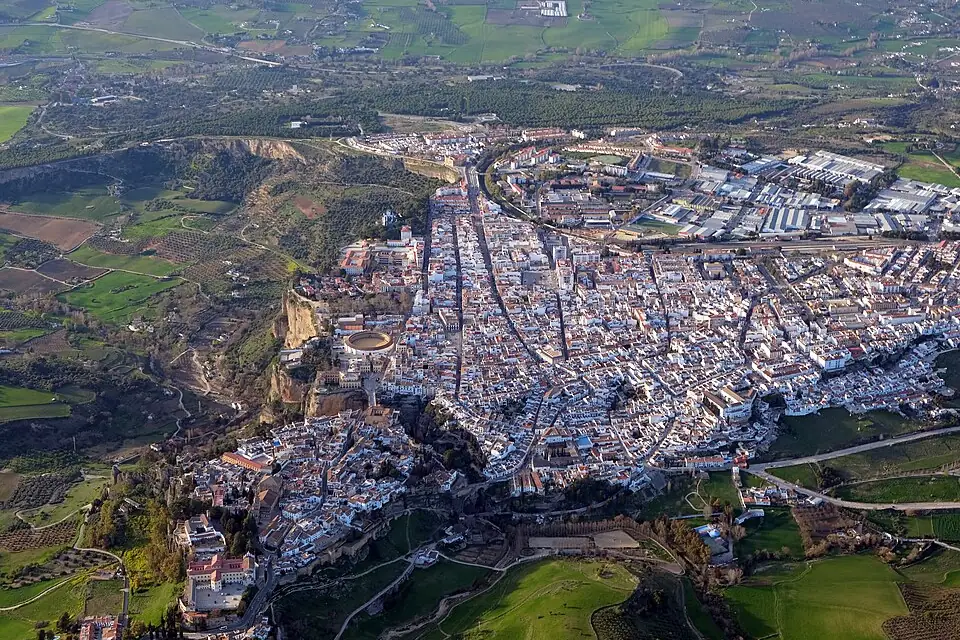
- Ronda’s gorge bridge. The Puente Nuevo spans a 100-metre cliff cleft right through the middle of town: stand on the viewpoints below for the shot, then walk the old quarter on the far side. The showpiece of the white villages.
- The white villages (pueblos blancos). String together Frigiliana, Grazalema, Zahara de la Sierra and Setenil de las Bodegas: whitewashed lanes, hilltop views and slow, sun-warmed mornings. A hire car makes a perfect scenic loop.
- Córdoba’s Mezquita. The great mosque-cathedral, a forest of red-and-white arches, is one of the most extraordinary buildings in Europe. Go early, both for the cool and the quiet.
- Cádiz old town and beaches. One of Europe’s oldest cities, a golden-stone tangle of lanes wrapped in sea, with city beaches you can walk to and the Atlantic light pouring over everything.
- The Caminito del Rey. A vertiginous boardwalk pinned to the walls of a gorge north of Málaga: once “the world’s most dangerous path,” now safe, ticketed and unforgettable. Book ahead; slots sell out.
- Costa de la Luz beaches. The Atlantic coast near Cádiz and Tarifa delivers long, wild, golden beaches with big skies and far fewer high-rises than the Costa del Sol: the place to spread out a towel and breathe.
The quiet wins are free: a dawn walk up to a white village before the day-trippers, the gorge light at Ronda, the sea breeze threading the lanes of Cádiz at dusk.
Best Time to Visit Andalusia
Andalusia rewards the season you pick more than almost anywhere in Spain, because the gap between a perfect April morning and a 42°C July afternoon inland is enormous. The short answer: the shoulder months win, easily. Here’s how the seasons actually compare.
| Season | Weather | Crowds | Prices | Best for |
|---|---|---|---|---|
| Spring (Apr–Jun) | Warm, blooming, 18–28°C | Building | Mid, rising into June | The all-round sweet spot, villages, cities, early beach |
| Summer (Jul–Aug) | Very hot inland (often 38–42°C), hot coast | Heaviest on the coast | Peak at the beach | Beaches and coast only, inland towns are punishing |
| Autumn (Sep–Oct) | Warm, golden, 18–28°C | Easing | Good value | Sea still warm, cities comfortable again, soft prices |
| Winter (Nov–Mar) | Mild on the coast (12–18°C), cool inland | Low | Cheapest of the year | Quiet sightseeing, mild coast walks, bargain stays |
The pattern to internalise: the coast stays liveable year-round, while the inland towns swing from glorious in spring to genuinely dangerous in a July heatwave. If your trip lands in high summer, weight it toward the coast and treat any inland day as a dawn raid: Córdoba’s old town is magic at 9am and a trap at 3pm. For the best all-round balance of warm sea, walkable cities and bearable hill towns, May and October are hard to beat.
Where to Base Yourself
Andalusia is big (bigger than most people expect), so don’t try to do it all from one bed. Pick a gateway city, then a second base near whatever you most want: villages, beaches or the deep south. Here’s how the classic bases compare.
| Base | Vibe | Good for | Best paired with |
|---|---|---|---|
| Málaga | Lively port city, great airport, beaches | Easy arrival, Costa del Sol, day trips | Ronda, Frigiliana, the coast |
| Seville | Grand, walkable, cultural heart | Monuments, atmosphere, AVE trains | Córdoba, Cádiz, white villages |
| Ronda | Hilltop, dramatic, small-town calm | The white villages, slow days | A hire car and the sierra |
| Costa del Sol | Resorts, promenades, reliable sun | Beach holidays, families | Málaga, Marbella |
| Costa de la Luz | Wild Atlantic beaches, big skies | Quieter sand, surf, escape | Cádiz, Tarifa |
| Cádiz | Salty old port, golden-stone lanes | The south, history, seafood | Costa de la Luz beaches |
First-timers do best landing in Málaga (the busiest airport and beaches on the doorstep) or flying into Seville (the cultural showpiece and the AVE hub) and building out from there. For the white villages, Ronda is the natural base. It is one, and the others fan out around it. Chasing sun? The Costa del Sol has the resorts and the Costa de la Luz the wilder, emptier sand. And Cádiz is the soulful deep-south choice, all sea air and golden lanes. Compare live rates anytime on our hotels hub.
Frequently Asked Questions
What is the best time to visit Andalusia?
Spring (April to June) and autumn (September to October) are ideal: warm days, soft light and the inland towns still comfortable to walk. Inland summers are brutally hot, often topping 40°C in Seville and Córdoba, while the coast stays a touch cooler. Winters are mild on the coast and quiet everywhere, with the cheapest prices of the year.
Should I base myself in Málaga or Seville for Andalusia?
Both make great gateways. Málaga has the busiest airport, the Costa del Sol beaches on the doorstep and quick access to Ronda and the white villages. Seville is the cultural heart, walkable and grand, and the hub of the AVE fast trains. Many people split their trip: a few days in each, with a hire car for the villages in between.
How do I get around Andalusia?
For the white villages (Ronda, Frigiliana, Grazalema, Zahara) a hire car is by far the easiest way; the roads are scenic and many villages have little or no train service. Between the big cities, fast AVE trains link Seville, Córdoba and Málaga cheaply and quickly, and the coast has handy cercanías commuter trains.
Is Andalusia good for beaches?
Yes, and you get two coasts. The Costa del Sol around Málaga and Marbella has the resorts, promenades and reliable sun. The wilder Costa de la Luz on the Atlantic side, near Cádiz and Tarifa, has long golden beaches, big skies and fewer high-rises: gorgeous, though the Atlantic water is cooler and breezier.
What are the white villages of Andalusia?
The pueblos blancos are hilltop towns of whitewashed houses scattered across the inland hills, many founded centuries ago. Ronda, perched over a dramatic gorge, is the showpiece; Frigiliana, Grazalema, Zahara de la Sierra and Setenil de las Bodegas are favourites. A hire car lets you string several together on a slow, scenic day.
How many days do you need in Andalusia?
Five to seven days covers the highlights: a couple of days in Seville, a day in Córdoba for the Mezquita, time in Málaga or on the coast, and a day or two driving the white villages around Ronda. Ten days lets you add Cádiz, the Caminito del Rey and a slower coast stretch without rushing.
Start Planning Your Andalusia Trip
Get the season and the wheels right and Andalusia is one of the most rewarding corners of Europe: two coasts, the white villages, Córdoba and Seville, and the gorge at Ronda, all within a few hours of each other. A June arrival without a plan means sweltering through the heat; driving up to Ronda before the heat sets in shows how the region is meant to feel. Come in spring or autumn, base in Málaga or Seville, rent a car for the villages, and go inland early.
Compare prices now and lock in your dates:
Find cheap flights to Málaga | Compare Andalusia hotel prices
Planning the wider trip? See our best time to visit Spain guide and browse more stays on the hotels hub.