Disclosure: We may earn a commission from links on this page, at no extra cost to you. How we earn
This article contains affiliate links. If you make a booking through these links, we may earn a commission at no extra cost to you. About & Affiliate Disclosure
Quick Answer
- Tipping is light, never obligatory: round up at cafés, 5-10% at sit-down restaurants for good service, closer to 10% in the Algarve. Skip small copper coins.
- Lunch, not dinner, is often the bigger meal, starts around 1pm and can run long on weekends; dinner service typically opens around 7:30-8pm.
- Café/pastelaria culture is a daily ritual, not a quick caffeine stop: coffee plus a pastel de nata, taken slowly, standing or seated.
- Fado demands silence once the singing starts: conversation and eating pause, lights dim between sets, applause comes after each song, not during.
- ETIAS is NOT required in 2026: the 90/180-day Schengen visa-free rule is unchanged; ETIAS has no start date yet (press reports point to 2027 at the earliest).
- No-alcohol angle: build evenings around pastelarias, miradouros, food markets, azulejo tiles and Fado: not a checklist of tourist stops or bar-hopping.
Rushing a Coffee Is the Tell
A visitor who orders a bica (Portugal’s espresso), drinks it in under two minutes at the counter and leaves misses what’s actually happening around them: everyone else at that same counter is still there ten minutes later, cup long empty, just talking. The coffee isn’t really the point. It’s the excuse to stand still for a while, and that one small shift, from rushing to lingering, explains most of the etiquette mistakes visitors make in Portugal.
None of what follows is about avoiding offense: Portugal is genuinely relaxed with visitors, and nobody’s going to correct you out loud. It’s about the difference between a trip where you’re constantly slightly out of step with the room, and one where the timing, the tipping and the silence during a Fado set just click.
Greetings: A Little Portuguese, and the Right Level of Formal
A handshake or two cheek-kisses (one kiss is common among friends in parts of Lisbon, which surprises visitors used to two) covers most social greetings, but a few habits go further:
- Bom dia / Boa tarde / Boa noite: good morning / good afternoon / good evening, used on entering a shop, café or small elevator with someone else already in it.
- Senhor / Senhora + surname is the polite default with anyone you don’t know (shopkeepers, hotel staff, older locals) until they invite you to be informal.
- Por favor (please) and Obrigado/Obrigada (thank you: the ending changes with your own gender, not the listener’s) go a long way even at beginner level.
- Faz favor is the everyday way to get a waiter’s attention, more common than raising a hand or calling out.
- Portuguese people are famously patient with visitors attempting the language, a mangled “bom dia” still lands better than defaulting straight to English.
Meal Times: Lunch Is the Meal to Take Seriously
Portugal’s clock sits between Spain’s very late rhythm and the rest of Western Europe’s, but the emphasis on lunch as the day’s real event still catches visitors off guard.
Tipping: Round Up First, Calculate Second
Tipping culture in Portugal sits close to Spain’s: present, appreciated, and nowhere near American norms.
| Situation | What locals actually do |
|---|---|
| Café or quick coffee stop | Round up, or leave small change |
| Casual lunch or prato do dia | Round up the bill |
| Sit-down dinner, good service | 5-10% is generous, never required |
| Algarve restaurants | Tipping runs a little more common, closer to 10% |
| Taxis | Round up to the nearest euro |
| Hotel staff (bags, cleaning) | A euro or two is a kind gesture, not an expectation |
There’s no automatic service charge the way some countries add a coperto, and nobody will chase you down for more. One habit worth actually avoiding: tipping in a handful of small copper coins reads as dismissive rather than generous: round to at least a euro if you’re leaving cash.
Café and Pastelaria Culture: The Real Social Anchor
Cafés in Portugal aren’t a caffeine pit stop. They’re the daily social anchor, and treating one like a drive-through is the etiquette miss that trips up most visitors.
- Order a bica (the standard espresso) and a pastel de nata, then actually sit or stand at the counter for a few minutes rather than drinking and leaving. That pause is the point, not a delay.
- Pastelarias double as bakeries and social spots: locals stop in multiple times a day, not just for a single mid-morning break.
- Standing at the counter is often cheaper than table service for the same coffee, a small, genuinely useful budget habit as well as the more local way to order.
- The café is where the day’s unhurried pace really shows up. It’s the same rhythm that governs the long lunch and the late dinner, just in miniature.
Fado Etiquette: Silence Is the Whole Rule
Fado (Portugal’s melancholic, guitar-driven musical tradition) has one etiquette rule that matters more than any other, and it’s easy to break without meaning to.
- Go silent once the singing starts. Conversation and eating typically pause the moment the fadista begins. This isn’t background music for a chat, it’s the reason everyone’s there.
- Lights dim to signal a new set is starting. That’s the cue to settle back into silence, not a moment to check a phone screen.
- Applause comes after each song, not during: no shouting out mid-performance, no clapping along.
- Many Fado houses run as “Fado com Jantar” (Fado with dinner), serving the meal between sets rather than while the fadista performs, so plan to eat in the gaps, not through the songs.
- Shows commonly start around 8-9pm, which lines up naturally with Portugal’s evening dinner rhythm rather than requiring a separate late-night outing.
- Skip a flash photo entirely, a dimmed room with a single spotlighted singer is exactly the setting a phone flash ruins for everyone else.
Porto’s Riverside, Reframed
Porto’s Ribeira district gets pitched constantly as a quick hop across the river to Vila Nova de Gaia for guided tours, but the etiquette-minded, alcohol-free version of that same evening, built around the riverside itself, is arguably better anyway:
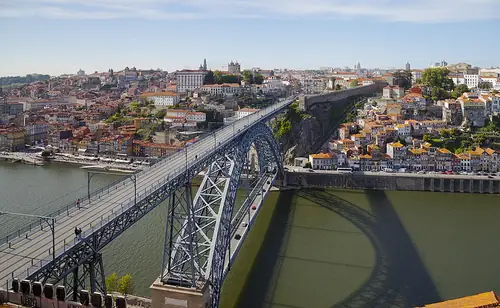
- Walk the Ribeira waterfront at golden hour, when the stacked pastel-colored houses along the Douro catch the light and the Dom Luís I Bridge fills with people crossing on foot or by tram.
- Cross the upper deck of the Dom Luís I Bridge for the classic postcard view back over the river toward the old town: free, and better than most paid viewpoints in the city.
- Azulejo tile-hunting is its own worthwhile activity here: São Bento train station’s entrance hall is covered floor to ceiling in blue-and-white historical tile panels, free to walk through even if you’re not catching a train.
- The riverside markets and food stalls along Ribeira are where the actual local scene plays out in the evening: not a requirement to book a cellar tour to have a genuine Porto night out.
Mistakes Tourists Make Most
| Mistake | Do this instead |
|---|---|
| Tipping 15-20% like in the US | Round up, or leave 5-10% at sit-down restaurants |
| Rushing lunch as a 20-minute stop | Treat it as the day’s bigger meal, especially on weekends |
| Talking or photographing during Fado | Go silent once the singing starts; applaud after each song |
| Assuming ETIAS is required in 2026 | It isn’t yet, the 90/180-day visa-free rule still applies |
| Treating Porto’s riverside as a rushed checklist | Walk Ribeira, cross Dom Luís I Bridge, browse the azulejo tiles |
| Tipping in small copper coins | Round to at least a euro if paying cash |
| Expecting Aerobus at Lisbon airport | It was discontinued around 2022-2023, take the Metro Red Line instead |
Getting Around Without the Mistakes
Good etiquette extends to how you actually move through Portugal’s cities. Lisbon’s airport-to-city link is the Metro Red Line (Aeroporto station, under Terminal 1): around €1.90 for the single fare plus a one-time €0.50 reusable Navegante card, running 20-35 minutes into the centre between 6:30 AM and 1:00 AM. Aerobus was discontinued around 2022-2023 and no longer operates, so don’t plan around it: Metro, Carris buses, taxis and ride-hailing are the current options. Between Lisbon and Porto, CP’s Alfa Pendular covers the roughly 274km run in around 2h35-2h50, with the standard second-class fare around €35.70 one-way: booking online 8 or more days ahead can cut that by up to 65%. Our Portugal trains guide breaks down the full fare structure.
One tax to budget for either city: Lisbon charges a €4 per person, per night tourist tax (capped at 7 nights, max €28), and Porto charges €3 per night (same 7-night cap): both added at checkout, not part of the room rate you compare while booking.
Staying connected matters for reading transit apps, translating menus and looking up which Fado houses have room the night you land: an eSIM landed before departure means no hunting for café wifi. Airalo’s Portugal eSIM starts around $4 for a 1GB/3-day plan, with a 10GB/30-day plan around €10; see our Portugal eSIM guide for the current lineup.
Frequently Asked Questions
What are the most common mistakes tourists make in Portugal?
The most common mistakes are tipping American-style percentages when rounding up is the norm, rushing a meal that’s meant to be lingered over, talking or taking photos with flash during a Fado performance, and treating Porto’s riverside as a quick checklist stop rather than the azulejo-and-viewpoint experience it actually is. None will get a visitor in real trouble, but avoiding them means a warmer welcome and a much better evening.
Do you tip in Portugal?
Tipping is not obligatory in Portugal. Rounding up the bill is the everyday minimum locals use at cafés and casual meals, while around 5 to 10 percent at a sit-down restaurant is generous and appreciated for good service, never expected. In the Algarve, tipping runs a little more common and closer to 10 percent. Avoid leaving a tip in small copper coins. It can read as dismissive rather than generous.
What time do people eat dinner in Portugal?
Dinner service in Portugal typically starts around 7:30 to 8pm, a bit earlier than Spain, though restaurants in heavily touristed areas often open sooner to catch early diners. Lunch, starting around 1pm, is often treated as the bigger, more leisurely meal, especially on weekends when family lunches stretch well into the afternoon with a lingering post-meal coffee.
What is the etiquette for watching a Fado show in Portugal?
Silence is the core rule once the singing starts: conversation and eating typically pause, the venue’s lights dim to signal a new set is starting, and applause is saved for the end of each song rather than during it. Many Fado houses run as “Fado com Jantar” (Fado with dinner), serving food between sets rather than while the fadista is performing, with shows commonly starting around 8 to 9pm.
Do you need ETIAS to visit Portugal in 2026?
No. As of July 2026, ETIAS is not live and is not required to enter Portugal: the EU has set no start date and will announce one several months before launch, with press reports pointing to 2027 at the earliest. Visa-free travelers, including US, UK, Canadian, Australian and New Zealand passport holders, can still enter Portugal and the wider Schengen Area for up to 90 days within any 180-day period under the existing rules, with no ETIAS authorization needed yet.
How do I get from Lisbon airport into the city?
The Lisbon Metro Red Line is the main link: the Aeroporto station sits under Terminal 1, with a single fare around 1.90 euros (plus a one-time 0.50-euro reusable Navegante card) and a 20 to 35 minute ride into the centre, running 6:30 AM to 1:00 AM. Aerobus was discontinued around 2022-2023 and no longer operates, so the Metro, Carris buses, taxis and ride-hailing are now the only official options.
Travel Portugal Like You’ve Done This Before
Get the rhythm right: lunch as the day’s real meal, a light hand with tips, silence once the Fado starts, and a pastelaria counter instead of a rushed coffee, and the rest sorts itself out by watching what the table next to you does. Portugal doesn’t expect visitors to get everything right; matching the pace is what turns a checklist trip into an evening you didn’t want to end.
Find cheap flights to Portugal | Compare Lisbon hotels
Keep planning with our Portugal itinerary, Portugal budget guide, Portugal trains guide, Portugal eSIM guide and best time to visit Portugal. Heading to specific spots? See our guides to Lisbon, Porto, Sintra, the Algarve and Madeira. Compare more hotels, grab a data eSIM before you land, or check travel insurance options for your trip.