Quick Answer
- Best time to visit Porto: May–June and September–October: warm, dry, long light, prices below the summer peak.
- Where to stay: Ribeira/Baixa or around São Bento for first-timers; Cedofeita for value and atmosphere; Gaia for river views.
- From OPO: ride Metro line E (purple) into the centre in ~30 min for the price of a normal ticket plus an Andante card: not a taxi.
- Getting around: the centre is compact but steep; use the funicular and Metro for the climbs, walk the flat bits.
- Eat smart: a francesinha, the Mercado do Bolhão, a pastel de nata, great food for a few euros.
Porto, Without the Rookie Mistakes
Arriving at OPO and heading straight for the taxi rank is the easy, expensive default; the purple-line Metro covers the same route into the centre in about thirty minutes for the cost of a normal ticket, while the taxi queue is often still inching forward by the time a Metro rider is downtown.
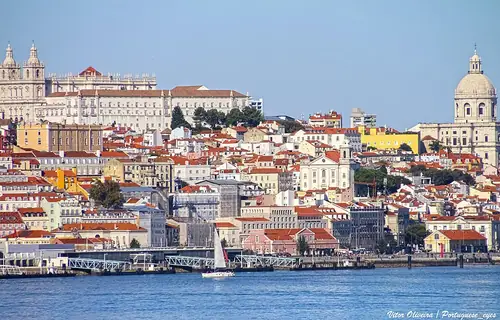
So here’s the short version this Porto travel guide is built around: come in late spring or early autumn, stay central around São Bento or down in the Ribeira, ride Metro line E in from the airport, and accept that this city is gloriously, calf-achingly steep. Do those four things and Porto stops feeling like a logistics puzzle and starts feeling like what it is, a riverfront city of tiled façades and bridges that costs a lot less than it looks.
A packed itinerary isn’t really needed here. What matters is landing in the right season, sleeping on the right side of the river, and not overpaying for the ride in. The rest is hills, azulejos and a sandwich worth remembering. The detail most first-timers get wrong is the very first decision made at the airport.
What to pack for Porto
Four picks from our gear guides that suit this trip. Each card opens the live Amazon price; the links below lead to the full comparisons.
25 x 18 x 4 cm, 254 g, 2.1 L. Locking zips, a cut-resistant double-cable strap, an RFID passport pocket and a strap that clips to a chair. Reader’s Digest’s best crossbody for travel.
Check price on Amazon Live price on AmazonThe best value compression set going. A double-zip pulls the air out so a week of clothes shrinks to a few inches thick, and you get eight pieces (cubes plus a shoe and laundry bag) for roughly the price of one branded cube. The fabric is thin and the zips aren’t lifetime kit, but for the money nothing beats it.
Check price on Amazon Live price on AmazonThe reliable all-rounder: one USB-C and four USB-A ports, plugs for 200+ countries, and a built-in fuse with a spare. The adapter most people should buy.
Check price on Amazon Live price on AmazonModel A1259, 10,000mAh, about 37Wh, 215 g. Two phone charges in a jacket pocket, and small enough that the two-bank limit never becomes a question.
Check price on Amazon Live price on AmazonGetting Around Porto
Here’s where most first-timers lose money before they’ve seen the river: the ride in from the airport. Don’t. Porto’s Metro reaches OPO directly, and inside the centre your own two legs do most of the work.
And honestly? Walk the flat stretches and let the funicular and Metro handle the hills. The best things in Porto are the ones you find drifting down a tiled lane between two viewpoints.
Where to eat without overpaying takes the same instinct: follow the local queue, not the menu in four languages:
- A francesinha for the main event. This towering sauced sandwich is Porto’s signature and a full meal, a sit-down plate runs roughly €9–14 at a neighbourhood spot, far better value than tourist-row prices.
- Snacks at the Mercado do Bolhão. The restored covered market does bread, cheese, fruit and small bites; assemble a cheap, brilliant picnic for a few euros and eat it down by the river.
- A pastel de nata at the counter. Portugal’s custard tart costs around €1.20–2 from a café and is best warm with a small coffee standing at the bar, the local way.
- Riverside stalls in Gaia. Cross the bridge for casual food stands with tables facing back at old Porto: the view is free and the prices are gentler than the Ribeira waterfront.
What Not to Miss
You can’t do all of Porto in one trip, so aim for a handful done well rather than a checklist done badly.
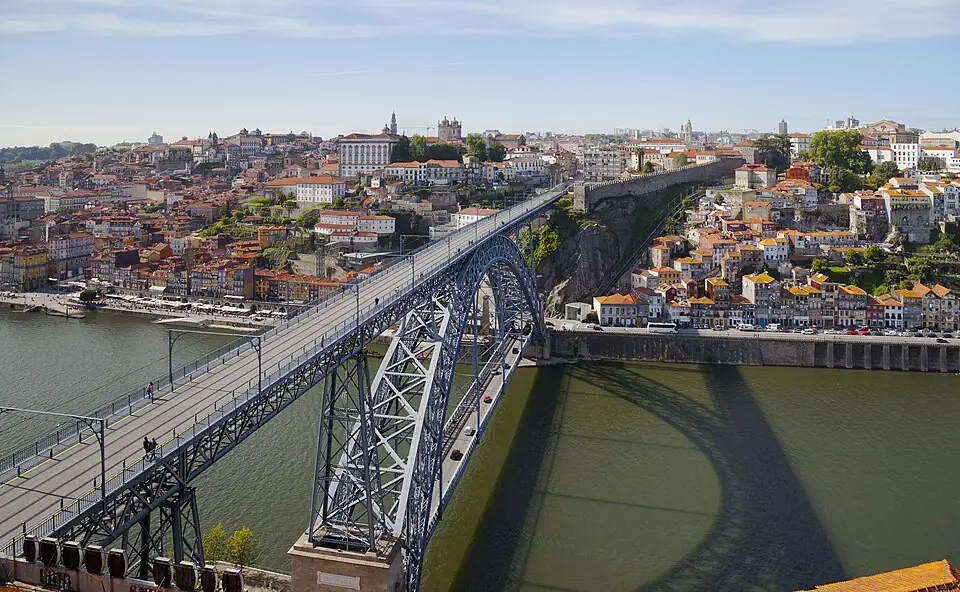
- The Ribeira riverfront is the postcard: tiled houses stacked above the Douro, working boats below, the bridge framing it all. Walk it slowly, then cross to Gaia for the wide view back.
- Livraria Lello is one of the world’s most beautiful bookshops, with its swooping red staircase and stained glass: buy a timed ticket online to skip the worst of the queue.
- São Bento station hides a vast hall lined with azulejos: blue-and-white tiled panels telling Portugal’s history. It’s free to walk in; look up.
- The Clérigos tower is the city’s tall baroque landmark; climb the spiral steps for a 360° view over the rooftops and the river. Go early or near closing to dodge the crush.
- The Crystal Palace gardens (Jardins do Palácio de Cristal) are a free, leafy terrace with peacocks and one of the best high vantage points over the Douro, perfect for late afternoon.
- A Douro river day trip takes you upstream into the terraced valley by boat or train; it’s the slow, scenic way to see the countryside beyond the city.
The quiet wins are free: the view from the Gaia side at sunset, a slow walk along the lower bridge deck, a bench in the Crystal Palace gardens as the river turns gold.
Best Time to Visit Porto
Porto is an Atlantic city, so it’s greener and rainier than the Algarve and the season you pick changes the crowds, the light and the bill. The short answer: the shoulder months win. Here’s how the seasons actually compare.
| Season | Weather | Crowds | Prices | Best for |
|---|---|---|---|---|
| Spring (Mar–Jun) | Mild, greening, 14–23°C, some rain early | Building | Mid, rising into June | River walks, fewer crowds, the all-round sweet spot |
| Summer (Jul–Aug) | Warm, dry, 20–28°C | Heaviest | Peak | Long evenings, beach trips, but packed Ribeira and queues |
| Autumn (Sep–Oct) | Warm, golden, 16–24°C | Easing | Good value | Best light, soft prices, calmer riverfront |
| Winter (Nov–Feb) | Cool, wet, 8–15°C | Low | Cheapest of the year | Quiet streets, cosy cafés, bargain hotels |
A couple of things worth knowing: the São João festival on the night of 23 June turns the whole city into a street party, so book early and expect higher rates around then. And because Porto faces the Atlantic, even summer evenings can turn breezy by the river. Pack a layer whatever the month.
Where to Stay in Porto
Porto stacks up the hillside above the Douro, so where you sleep decides how much you climb and what your window looks out on. The historic core is small and walkable; the trade-offs are altitude, noise and view. Here’s how the classic bases compare.
| Neighbourhood | Vibe | Roughly | Best for |
|---|---|---|---|
| Ribeira / Baixa | Historic, riverside, tourist-central | €110–200/night | First-timers, the river and bridge on your doorstep |
| Around São Bento / Aliados | Central, grand, best-connected | €90–170/night | Transport, walking everywhere, mid-range hotels |
| Cedofeita | Arty, local, leafy | €70–130/night | Value, independent shops, a calmer base |
| Vila Nova de Gaia (across the river) | Quieter, panoramic | €80–150/night | Sunset views back at old Porto, a short bridge walk |
For a first visit, base around São Bento or the Ribeira and just walk. You’ll be steps from the river, the bridge and the station’s famous tiles. Cedofeita is the value-and-character pick a few minutes uphill, full of independent shops and quieter streets. Gaia, across the Dom Luís I bridge, trades a short walk for the best postcard view of old Porto, especially at dusk. Compare live rates anytime on our hotels hub.
Frequently Asked Questions
What is the best time to visit Porto?
Late spring (May to June) and early autumn (September to October) are the sweet spot: warm, dry days, long light over the river, and prices below the July-August peak. Summer is hot and busy along the Ribeira; winter is cheap, green and rainy, with quieter streets and the lowest hotel rates of the year.
Where should I stay in Porto for the first time?
Ribeira and Baixa put you in the historic core, steps from the river and the Dom Luís I bridge. Around São Bento and Aliados is the most central and best-connected base, Cedofeita is the arty, lower-priced choice a short walk out, and Vila Nova de Gaia across the river trades a bridge crossing for sunset views back at old Porto.
How do I get from OPO airport into central Porto?
Take Metro line E (the purple line) from Aeroporto straight into the centre in around 30 minutes. It costs the price of a normal Metro ticket loaded onto a reusable Andante card (a small one-off charge), so it’s far cheaper than a taxi and runs frequently from early morning to late.
Is Porto walkable, or do I need transport?
The historic centre is compact and very walkable, but it’s genuinely steep. You’ll climb between the riverfront and the upper town. Use the Metro and buses for longer hops, the funicular dos Guindais to spare your legs up from the river, and save the walking for the lanes around São Bento and the Ribeira.
What should I eat in Porto?
Order a francesinha, the city’s hearty layered sandwich smothered in a rich tomato sauce. It’s the local signature and a meal in itself. Browse the restored Mercado do Bolhão for produce, bread and snacks, and grab a pastel de nata from a café. Cross to Gaia for riverside food stalls with a view back at old Porto.
How much does a day in Porto cost?
Budget travellers manage on roughly €60 to €100 a day with a simple hotel or hostel, market and café meals, and an Andante card for transport. Mid-range visitors should plan for €120 to €220 a day, more for river-view rooms in peak season. Porto is one of Western Europe’s better-value city breaks.
Start Planning Your Porto Trip
Get the season and the neighbourhood right and Porto is one of the kindest city breaks in Western Europe. On your time, your legs and your wallet. Skip the airport taxi queue; the Metro gets you there for a fraction, and the money saved easily covers a francesinha with a river view. Aim for the shoulder months, sleep central, ride line E in, and walk the flat bits.
Compare prices now and lock in your dates:
Find cheap flights to Porto | Compare Porto hotel prices
Planning the wider trip? See our best time to visit Portugal guide and browse more stays on the hotels hub.