Quick Answer
- Best time to visit Sicily: May–June and September–October: warm sea, lighter crowds, prices below the July–August peak.
- Where to stay: Palermo or the west for markets and temples; Catania, Taormina or Syracuse in the east for Etna and the coast.
- You need a car. Trains and buses are slow and limited; a hire car is what makes touring the island work.
- Fly smart: into Catania (CTA) for the east or Palermo (PMO) for the west: many people fly into one and out of the other.
- Eat smart: arancini, granita with brioche, cannoli, and street food from Palermo’s markets: local prices, no tourist menus.
Sicily, Without the Rookie Mistakes
Arriving in Catania in early August with two weeks to cover one island sounds generous, but the reality is beach traffic, peak rates for an ordinary room, and a 38°C queue for a granita. Visit the same island in late spring instead (warm sea, half-empty temples, easy parking) and it feels like a different country. The Sicily this guide is built around is that late-spring version.
So here’s the short version. Visit Sicily in late spring (May–June) or early autumn (September–October), pick one base in the west and one in the east rather than chasing everything, hire a car the moment you land, and eat where the market stalls are busy. Do those four things and Sicily stops feeling chaotic and overheated and becomes what it actually is: Greek temples, a live volcano, baroque hill towns and some of the best street food in the Mediterranean.
You don’t need to see the whole island in one trip, and trying to is exactly the mistake. The east and the west are different worlds, and the smartest move is the one most first-timers skip. It starts before you’ve even chosen an airport.
What to pack for Sicily
Four picks from our gear guides that suit this trip. Each card opens the live Amazon price; the links below lead to the full comparisons.
25 x 18 x 4 cm, 254 g, 2.1 L. Locking zips, a cut-resistant double-cable strap, an RFID passport pocket and a strap that clips to a chair. Reader’s Digest’s best crossbody for travel.
Check price on Amazon Live price on AmazonThe best value compression set going. A double-zip pulls the air out so a week of clothes shrinks to a few inches thick, and you get eight pieces (cubes plus a shoe and laundry bag) for roughly the price of one branded cube. The fabric is thin and the zips aren’t lifetime kit, but for the money nothing beats it.
Check price on Amazon Live price on AmazonThe reliable all-rounder: one USB-C and four USB-A ports, plugs for 200+ countries, and a built-in fuse with a spare. The adapter most people should buy.
Check price on Amazon Live price on AmazonModel A1259, 10,000mAh, about 37Wh, 215 g. Two phone charges in a jacket pocket, and small enough that the two-bank limit never becomes a question.
Check price on Amazon Live price on AmazonGetting Around Sicily
Here’s the thing nobody tells you until you’re standing on a quiet platform watching a once-a-day bus not show up: Sicily is a driving island. The trains and buses are slow and limited, and the best of the place sits exactly where they don’t go.
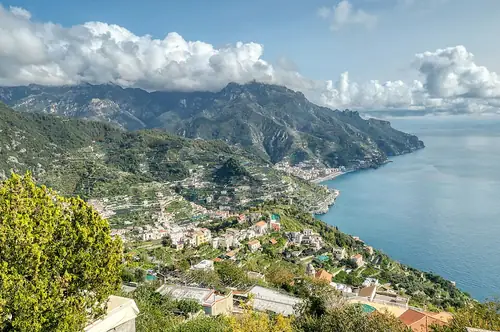
And honestly? Embrace the drive. The coast roads and the climb up toward Etna are half the trip, and the hill towns you’ll find between the famous stops are often the ones you remember most.
What Not to Miss
You can’t do all of Sicily in one trip, so aim for a handful done well rather than a checklist done badly.
- The Valley of the Temples in Agrigento is the headline of the west, a row of Greek temples strung along a ridge above the sea, best at opening or late afternoon when the stone glows and the heat eases.
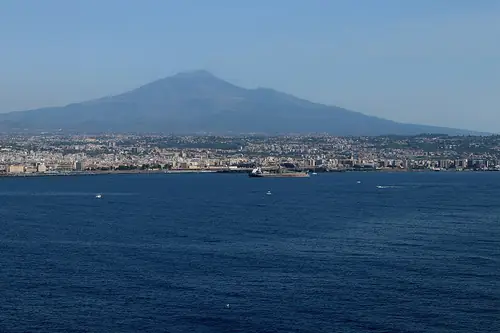
- Mount Etna is Europe’s most active volcano and you can ride a cable car and 4x4 toward the summit craters; go with a guide on the upper slopes and bring a layer, because it’s cold and windy up top even in summer.
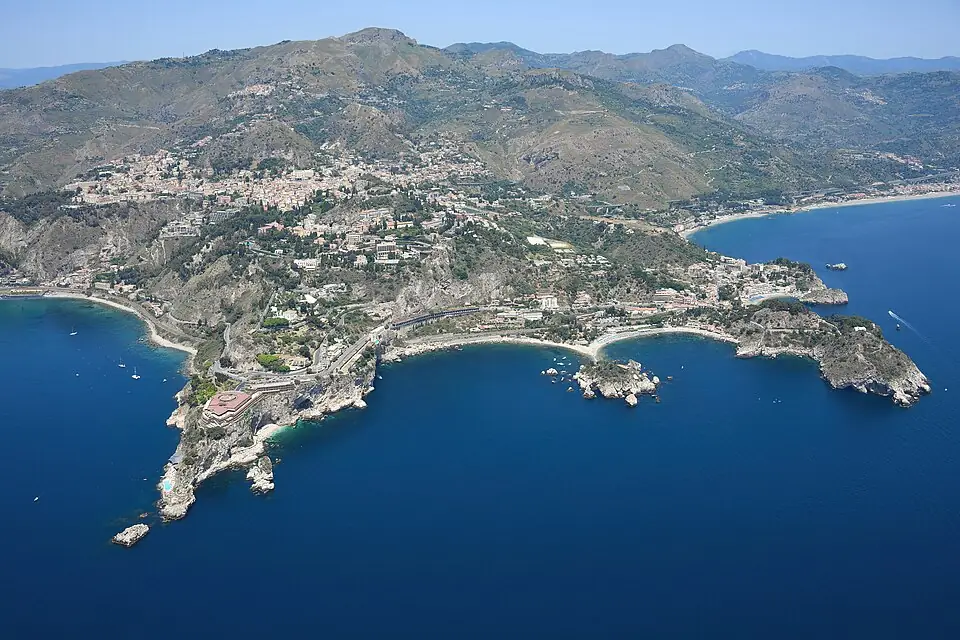
- Taormina’s Greek theatre frames Etna and the sea through its ancient arches: the most photographed view on the island, and worth the climb for the panorama alone.
- Ortigia in Syracuse is a tiny, walkable island of baroque squares, sea-spray lanes and a freshwater spring: the loveliest evening stroll in Sicily once the day-trippers leave.
- Palermo’s markets and the mosaics of Monreale. Wander Ballarò and Vucciria for street food, then drive up to Monreale for a cathedral lined floor to ceiling in golden Byzantine mosaics: one of the great sights of the Mediterranean.
The quiet wins are free: a granita on an Ortigia terrace, the view of Etna from the Taormina road, the smell of frying arancini drifting through a Palermo lane at dusk.
Best Time to Visit Sicily
Sicily runs hot and busy in summer and quiet and cheap in winter, and the season you pick changes the heat, the crowds and the bill far more than the brochure photos suggest. The short answer: the shoulder months win. Here’s how the seasons actually compare.
| Season | Weather | Crowds | Prices | Best for |
|---|---|---|---|---|
| Spring (Apr–Jun) | Warm, blooming, 18–28°C | Building | Mid, rising into June | Etna hikes, temples, swimmable sea from late May |
| Summer (Jul–Aug) | Very hot, 30–40°C | Heaviest | Peak | Beaches and festivals, but heat, crowds and high rates |
| Autumn (Sep–Oct) | Warm, mellow, 20–30°C | Easing | Good value | Warm sea into October, harvest food, calmer sights |
| Winter (Nov–Mar) | Mild, wetter, 10–17°C | Low | Cheapest | Quiet cities, snow on Etna, off-season bargains |
If you only care about price, late autumn and winter are the cheapest the island gets, and Catania and Palermo stay mild and walkable. But the real sweet spot is late May to June and September to October: the sea is warm enough to swim, Etna is clear of summer haze, and you can park at the Valley of the Temples without circling for twenty minutes. Skip mid-July to late August unless beach time is the whole point. That’s when prices and temperatures peak together.
Where to Stay in Sicily
Sicily is big (far bigger than first-timers expect), so where you sleep is really a question of which half of the island you’re exploring. The west is markets, mosaics and ancient temples; the east is the volcano, the baroque towns and the most famous coast. Here’s how the classic bases compare.
| Base | Vibe | Roughly | Best for |
|---|---|---|---|
| Palermo (west) | Big, gritty, market-rich | 70–150€/night | Street food, mosaics, the capital’s energy |
| Catania (east) | Lively, volcanic-stone, foodie | 70–140€/night | Mount Etna, the fish market, transport links |
| Taormina (east) | Scenic, polished, pricey | 130–280€/night | Greek theatre, sea views, romance |
| Syracuse / Ortigia (east) | Historic, walkable, charming | 90–180€/night | Old-town strolls, baroque, the prettiest base |
For a first trip, split it: a few nights in Palermo for the markets and the mosaics, then a few in Syracuse’s Ortigia old town or Catania for Etna and the east. Taormina is gorgeous and worth a night for the Greek theatre and the views, but it’s the most expensive base on the island, so many people day-trip in rather than sleep there. Whatever you choose, pick one base per region and drive out from it. Compare live rates anytime on our hotels hub.
Frequently Asked Questions
What is the best time to visit Sicily?
May to June and September to October are the sweet spot: warm sea, long sunny days, open beaches and prices below the summer peak. July and August are very hot and very busy, with packed beaches and high hotel rates. Spring and autumn give you Etna hikes, temples and the coast without the crush or the heat.
Where should I stay in Sicily for the first time?
Pick one base per region. Palermo and the west put you near markets, mosaics and the Valley of the Temples; Catania, Taormina or Syracuse anchor the east near Mount Etna and the Greek theatre. Most first-timers split the trip: a few nights west, a few nights east, with a hire car between them.
Do I need a car to get around Sicily?
For touring the island, yes. Trains and buses are slow, infrequent and skip many of the best spots, so a hire car is what makes Sicily work. You can stay car-free if you base yourself in one walkable city like Palermo, Catania or Syracuse, but to reach Etna, the temples and hill towns you’ll want to drive.
Which airport should I fly into for Sicily?
Sicily has two main airports: Catania (CTA) in the east, handy for Mount Etna, Taormina and Syracuse, and Palermo (PMO) in the west, handy for the capital and the Valley of the Temples. Many travellers fly into one and out of the other, picking up a hire car so they don’t have to double back.
What food should I try in Sicily?
Start with arancini (fried stuffed rice balls), granita with a brioche for breakfast, and cannoli for something sweet. Then graze the street food in Palermo’s historic markets like Ballarò and Vucciria, where you eat shoulder to shoulder with locals at everyday prices rather than tourist menus.
How many days do you need in Sicily?
A week lets you do one side of the island properly; ten days to two weeks covers both east and west without rushing. A tight long weekend works if you stay around a single city. With a car, plan loops rather than long daily drives: Sicily is bigger than it looks on the map.
Start Planning Your Sicily Trip
Get the season and the route right and Sicily is far kinder to your time and your wallet than its August reputation suggests. An August trip means peak prices and sweating through the crowds; the same trip in May costs less, queues less, and feels twice as good. Aim for the shoulder months, base yourself once in the west and once in the east, hire a car, and eat where the market stalls are busy.
Compare prices now and lock in your dates:
Find cheap flights to Sicily | Compare Sicily hotel prices
Planning the wider trip? See our best time to visit Italy guide and browse more stays on the hotels hub.