Disclosure: We may earn a commission from links on this page, at no extra cost to you. How we earn
This article contains affiliate links. If you make a booking through these links, we may earn a commission at no extra cost to you. About & Affiliate Disclosure
Quick Answer
- Best overall: September, then late May and June, for warm weather plus shoulder-season prices.
- Cheapest flights and hotels: November to March (30-40% off summer peak), outside the holidays.
- Avoid for crowds and price: July, August (especially Ferragosto), Easter week, and Christmas-New Year.
- Region matters: the south is hottest and driest; the north is cooler with cold winters; central Italy sits in between.
- Book flights 6-8 weeks out for European routes, 2-3 months out for peak summer and holidays.
The Best Time to Visit Italy, in One Sentence
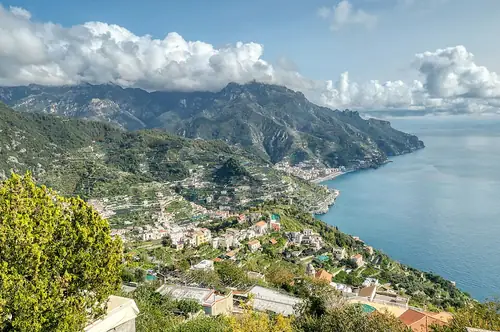
The best time to visit Italy, if you want the easy win, is late May, June, or September: warm sun, a swimmable sea, and flights and hotels well below the July-August crush. An Amalfi room that runs 320 euros a night in the second week of August can drop to around 190 euros for the same room in the last week of September, with a sea that’s often warmer in September than it was in August and far shorter queues on the Positano terraces.
The right month for you, though, depends on whether you’re chasing southern beach heat, cool northern lakes and mountains, or rock-bottom city-break prices, and those three pull in very different directions.
Italy stretches from the snowy Dolomites to sun-baked Sicily, so “the weather” is really several weathers at once. Get the timing right and you save real money while skipping the worst of the queues at the Colosseum and the crush on Venice’s bridges. Skip ahead if you already know your month; everyone else, keep reading, because the season that looks safest on paper is often not the best value.
What to pack for Italy
Four picks from our gear guides that suit this trip. Each card opens the live Amazon price; the links below lead to the full comparisons.
25 x 18 x 4 cm, 254 g, 2.1 L. Locking zips, a cut-resistant double-cable strap, an RFID passport pocket and a strap that clips to a chair. Reader’s Digest’s best crossbody for travel.
Check price on Amazon Live price on AmazonThe best value compression set going. A double-zip pulls the air out so a week of clothes shrinks to a few inches thick, and you get eight pieces (cubes plus a shoe and laundry bag) for roughly the price of one branded cube. The fabric is thin and the zips aren’t lifetime kit, but for the money nothing beats it.
Check price on Amazon Live price on AmazonThe reliable all-rounder: one USB-C and four USB-A ports, plugs for 200+ countries, and a built-in fuse with a spare. The adapter most people should buy.
Check price on Amazon Live price on AmazonModel A1259, 10,000mAh, about 37Wh, 215 g. Two phone charges in a jacket pocket, and small enough that the two-bank limit never becomes a question.
Check price on Amazon Live price on AmazonBuild Your Italy Itinerary
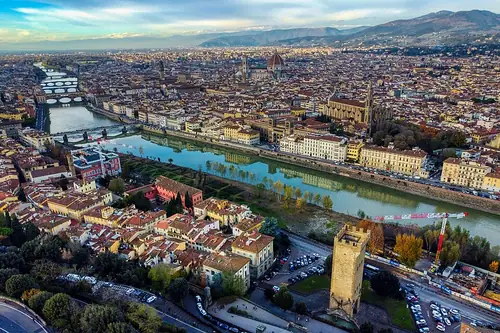
The mistake most first-timers make is trying to cram all of Italy into one trip. Don’t. Italy rewards pairing a few regions and letting each one breathe over a few days far more than it rewards a frantic dash from the Dolomites to Sicily. The good news is the high-speed Frecciarossa and Italo trains make city-hopping fast: Rome to Florence is about 1.5 hours, Florence to Venice about 2 hours, and Rome to Naples roughly 1 hour, so you can string very different cities together without losing a day to travel.
Start by picking an anchor city by season, then add a neighbor that connects in a couple of hours by fast rail.
| City / Region | Best months | How long to stay | Pairs well with |
|---|---|---|---|
| Rome | Good year-round (Apr–Jun, Sep best) | 3–4 days | Florence (1.5 hrs by train), Naples & the south |
| Florence | Apr–Jun, Sep–Oct | 2–3 days | Rome and Venice (the classic triangle) |
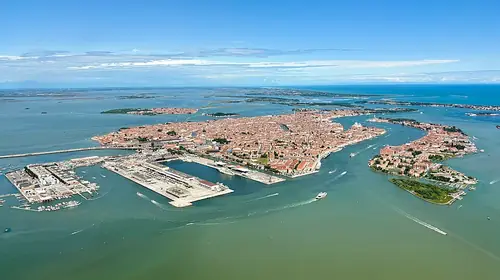
| Venice | Apr–Jun, Sep | 2 days | Florence (2 hrs by train) |
| Amalfi Coast | May–Jun, Sep | 3–4 days | Rome, via Naples (1 hr by train, then the coast) |
| Milan | Year-round | 1–2 days | Gateway to Lake Como and the lakes |
| Sicily | May–Jun, Sep | 5–7 days | Its own trip, fly in and out |
A few honest notes: Rome works in any month, so it’s the safe anchor; Rome, Florence, and Venice line up on the same high-speed spine, which makes them the classic first-timer triangle; the Amalfi Coast hangs off Naples, an easy hour south of Rome by train before you switch to the coast road; Milan earns its place mainly as the gateway to Lake Como and the northern lakes; and Sicily is big and slow enough that it really deserves its own trip rather than a tacked-on add-on.
Two routes that actually work:
- 10-day classic: Rome 4 (the Forum, the Vatican, long Trastevere evenings) → fast train to Florence 3 (the Uffizi, the Duomo, a Tuscany day trip) → on to Venice 2 (the canals early, before the day-trippers arrive). All three legs link in about 1.5 to 2 hours by Frecciarossa or Italo, so you spend your days in the cities, not in transit.
- South + coast: Rome 3 (the headline sights at an easy pace) → train down to Naples (about an hour) → Amalfi Coast 4 (Positano, Ravello, a boat day, Pompeii on the way). Sequencing south by high-speed rail means you only handle the winding coast road once, at the end.
The high-speed trains are the thread that ties it together: book a few weeks ahead and city-hopping is fast, scenic, and cheaper than you’d guess. Use the city guides below to go deeper on whichever stops make your shortlist.
Top Cities to Explore
Italy’s Seasons: Sun, Crowds, and What Each One Costs You
Italy has a broadly Mediterranean climate, hot, dry summers and mild, wetter winters, but the north and south barely feel like the same country, and your euros stretch very differently depending on the month. Here is what each season actually buys you.
Summer (June to September)
Hot, dry, and reliably sunny, especially in the south. Rome and Florence hit 30-34 C (86-93 F), the Amalfi Coast and Sicily run similar or hotter, and even Milan and the Lakes warm to a humid 28-30 C (82-86 F). July and August are peak: blue skies almost guaranteed, but also the highest prices of the year and packed sights from the Vatican to the Cinque Terre.
This is the season for the coast, swimming in a sea that finally warms past 24 C, long evenings in the piazzas, and the big summer festivals. The trade-off is simple, you pay top rates and you share the view. One thing many visitors miss: that sea is at its warmest a little after the August peak, which is why a September swim often beats anything August offers.
Shoulder and Winter (October to May)
Spring (April-May) and autumn (late September-October) are the sweet spots: warm days, cool evenings, smaller crowds, and prices that ease off. Winter (November-February) is mild in Rome and the south, 12-15 C (54-59 F), but cold and sometimes snowy in the north, with the Alps and Dolomites in full ski season.
The payoff is value. A central Rome hotel that runs 200 euros in May can drop to 100-120 euros in January. The art cities stay open and lively year-round, with museums like the Uffizi far less crowded on a winter weekend, while southern beach resorts go quiet and many seasonal businesses close. To pin down your exact week, the month-by-month breakdown below is the next step.
Month-by-Month Guide to Visiting Italy
Use this at-a-glance planner before the detailed notes below.
| Month | Weather | Crowds | Prices | Best for |
|---|---|---|---|---|
| January | Mild south, cold/snowy north | Low | Lowest of the year | City breaks, skiing, value |
| February | Cool, crisp | Low-moderate | Low | Venice Carnival, skiing, deals |
| March | Spring begins | Low-moderate | Low | Cities before crowds, fewer queues |
| April | Mild, green | Moderate (Easter spikes) | Shoulder | Gardens, sightseeing, hiking |
| May | Warm, long days | Moderate-high | Mid | All-rounder, perfect city weather |
| June | Hot, festive | High | Mid-high | Coast, lakes, beginning of beach season |
| July | Peak heat | High | Peak | Beaches, lakes, guaranteed sun |
| August | Hottest, Ferragosto closures | Highest | Peak | Beaches, but cities partly shut |
| September | Warm, sea at its best | Thinning | Great value | The single best month overall |
| October | Mild, autumn light, harvest | Low-moderate | Shoulder, cheaper flights | Scenic countryside, cities, food |
| A few notes the table can’t hold: Rome’s average highs climb from a mild 13 C in January to 31 to 32 C at the July-August peak (hotter still in Sicily and Naples), then ease back to 14 C in December. The dates to plan around are Venice Carnival (running from late January to 9 February in 2027), Easter week, and Ferragosto on 15 August, when many family-run city shops close as locals head to the coast, plus the Christmas spike from around 20 December. The payoff month is September: the Tyrrhenian sea sits around 24 C, warmer than it was in July, while crowds thin and an Amalfi room that cost 320 euros in August can drop to 190. |
Picked your month? The next thing that moves the price is the flight, and that’s where the real savings hide.
Find Cheap Flights to Italy
Rome (FCO) and Milan (MXP/LIN) are the main gateways, with Venice (VCE), Naples (NAP), and Bologna (BLQ) close behind. Budget carriers Ryanair, easyJet, Wizz Air, and ITA Airways connect Italy to most of Europe; from North America, ITA, United, Delta, and American fly direct to Rome and Milan.
Use the live calendar below to spot the cheapest departure dates at a glance, then compare across months.
Tips for cheaper flights:
- Book 6-8 weeks ahead for European routes, 2-3 months ahead for July-August and holidays.
- Fly into the right airport. Naples for the Amalfi Coast, Venice for the northeast, Milan for the lakes and Alps, often a cheaper combination than backtracking through Rome.
- Fly midweek. Tuesday and Wednesday departures are consistently cheaper, often by 10-20%.
- Set fare alerts. Rome and Milan fares swing fast on competitive low-cost routes.
- Skip peak windows. August, Easter week, and Christmas/New Year carry the highest fares.
For more route ideas and fare hacks, browse our full flights hub.
Rome, the North, and the South: Three Very Different Trips
Italy is one country but its regions feel distinct, and the best time to visit each one shifts.
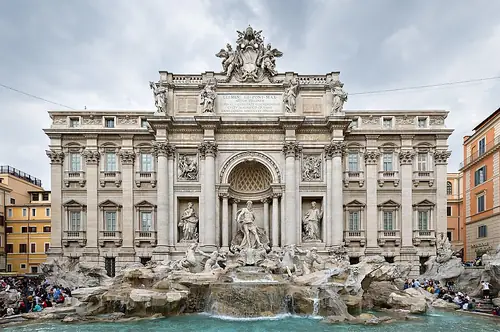
Rome and central Italy are the all-season pick: mild winters, glorious springs, and hot summers. The Forum, the Vatican, and the Trastevere backstreets are pleasant most of the year, but spring and September dodge both the worst heat and the deepest crowds.
The north, the Lakes, Milan, and the Dolomites, is cooler and more seasonal. Summer is best for Lake Como and Garda, autumn for the cities and the grape and olive harvest, and winter for skiing the Alps and Dolomites, which have some of the finest slopes in Europe.
The south, Naples, the Amalfi Coast, Puglia, and Sicily, is the sun-trap: long, hot summers, mild winters, and a beach season that stretches from late May into October. July and August are scorching and packed; May, June, and September give you warm-sea swimming without the crush, while winter sees many coastal resorts close entirely.
A common dates mistake is booking the first week of September when the last week is often cheaper and just as warm: the further into the month you go, the more families have gone home and the more rates soften, right up until the weather finally turns in mid-October. Shift your week later within the same month and you can save without losing a degree of sun. Which brings us to where the savings actually pile up.
When Prices Are Lowest: Best Time for Budget Travelers
Target these windows for the cheapest trips:
November to March is the absolute cheapest stretch, outside the holidays. A central Rome hotel that runs 200 euros in May can drop to 100-120 euros in January, and southern apartments fall even further.
Late September to October delivers the best balance: warm weather, the harvest season, and shoulder prices with notably cheaper flights.
Late May and June are the budget traveler’s sweet spot when you still want beach heat, close to July-August conditions at 15-30% lower prices.
A 130-euro saving on an Amalfi room is often enough to cover a high-speed train leg up to Rome and on to Florence, which is why shoulder season is less a compromise than the smart default.
Steer clear of Easter week, the August peak and Ferragosto, and the Christmas-New Year block, when both fares and hotels spike. So once you’ve got the cheap dates, where should you actually sleep?
Where to Stay in Italy
Where you base yourself shapes the whole trip. Here is how the headline areas compare.
| Area | Vibe | Budget room | Best for |
|---|---|---|---|
| Rome (Trastevere/Centro) | Historic, lively, walkable | 80-130 euros/night | First-timers, food, ruins |
| Florence (Centro Storico) | Renaissance art, compact | 80-120 euros/night | Art, day trips, Tuscany |
| Venice (Cannaregio) | Canals, atmospheric | 90-150 euros/night | Romance, Carnival, photography |
| Amalfi/Naples coast | Cliffs and sea | 90-180 euros/night | Beaches, scenery, summer |
Rome’s Trastevere and historic centre put you steps from the trattorias, the Forum, and the Pantheon. Florence’s compact Centro Storico is walkable to every major museum and a launchpad for Tuscany. Venice’s Cannaregio is quieter and cheaper than San Marco but still central, and off-season it stays notably uncrowded. On a Rome-and-Amalfi trip, flying into Naples for the coast leg and out of Rome afterward avoids a long backtrack. Compare current rates anytime on our hotels hub.
Daily Budget for Italy
| Category | Budget (euros) | Mid-Range (euros) | Comfort (euros) |
|---|---|---|---|
| Accommodation | 35-60 | 90-150 | 180-350 |
| Food (3 meals) | 18-30 | 35-60 | 70-130 |
| Transport | 5-10 | 12-25 | 30-60 |
| Activities | 8-18 | 20-45 | 50-100 |
| Daily Total | 65-120 | 160-280 | 330-640 |
A few notes that keep costs honest: a pranzo set lunch or a slice of pizza al taglio runs 6-12 euros, so eating the midday menu keeps food cheap. Cities have excellent metro, bus, and tram passes (a Rome 24-hour transit pass is about 8.50 euros), and high-speed trains from Rome to Florence start around 20-30 euros if you book ahead. An espresso at the bar is around 1.20 euros, and major sights like the Colosseum or the Uffizi run 18-25 euros, with the first Sunday of the month free at many state museums.
Stay Connected: eSIM for Italy
Skip the airport SIM queue. A travel eSIM gives you fast data the moment you land, which matters when you’re decoding Rome’s bus map, booking a regional train, or finding a hidden Sicilian beach. Italy has strong 4G/5G across the cities and most tourist regions.
- Activate before you fly: data works on arrival
- Plans for 200+ countries from a few dollars
- Keep your number; no physical SIM swap
Set it up before you fly and you’re online before you reach baggage claim. For the full rundown, see our guide to the best travel eSIM, and for more destination planning, browse the destinations hub.
Tours & Activities: Italy
Skip the ticket queues and pre-book the best local tours, day trips and skip-the-line attractions.
Frequently Asked Questions
What is the best month to visit Italy?
September is the standout: warm weather, the sea still swimmable, the harvest season starting, and prices easing from the August peak. May and June are close runners-up with long days, mild heat, and shoulder-season value before the summer rush.
When is the cheapest time to visit Italy?
November to March is cheapest, with flights and hotels often 30-40% below summer, outside the Christmas, New Year, and Easter spikes. Cities like Rome, Florence, and Venice stay lively, so winter culture trips are excellent value, even if beach resorts largely shut down.
Is August a good time to visit Italy?
August is the hottest, busiest, and priciest month, and around Ferragosto (15 August) many family-run shops and restaurants in the cities close while locals head to the coast. Beaches are packed and rates peak. Go in August only if you want guaranteed heat and book well ahead.
What is the weather like in northern versus southern Italy?
The south (Sicily, Naples, the Amalfi Coast) is hotter and drier, with mild winters and long beach seasons. The north (Milan, the Lakes, the Dolomites) is cooler and wetter, with cold, sometimes snowy winters and humid summers. Central Italy, including Rome and Tuscany, sits in between.
Is it worth visiting Italy in winter?
Yes for cities and the Alps. Rome, Florence, and Venice stay mild and far less crowded, with museums uncrowded and prices low outside the holidays. The Dolomites and Alps offer world-class skiing. Coastal resorts in the south, though, largely close for the season.
Do I need a SIM card or eSIM in Italy?
An eSIM is the easiest option. Italy has fast 4G/5G across the cities and most tourist regions, and an eSIM gets you online the moment you land without queuing for a local SIM, handy for maps, trains, and booking tickets on the move.
Start Planning Your Italy Trip
The best time to visit Italy comes down to your priorities. Summer (July-August) means guaranteed beach heat at peak prices, with cities partly shuttered around Ferragosto; the shoulder months of May, June, and September trade a touch of that heat for warm seas, thinner crowds, and bills 15-35% lower. Winter rewards city-break hunters and skiers with mild days, empty museums, and the year’s cheapest rates. A room that costs August money can rent for a third less in late September, with warmer water and an emptier terrace, so if you take one thing from this, let it be that the “safe” peak-summer week is usually the expensive choice.
Compare prices now and lock in your dates: