Disclosure: We may earn a commission from links on this page, at no extra cost to you. How we earn
This article contains affiliate links. If you make a booking through these links, we may earn a commission at no extra cost to you. About & Affiliate Disclosure
Quick Answer
- Café culture runs unhurried: one frappé or freddo can hold a table for an hour-plus with no pressure to order more.
- Tipping is light: round up or leave around 5-10% at tavernas; 10-15% for excellent service at nicer restaurants; leave it in cash.
- Meals run late: lunch around 2pm, dinner rarely starts before 9pm in summer.
- Cover shoulders and knees at any church or monastery: no exceptions, bring a light scarf just in case.
- “Siga siga” (slowly, slowly) is the local mindset: build slack into ferry connections and schedules instead of fighting it.
- No-alcohol angle: this guide covers café/frappé culture and taverna food, not a night out: Greek evenings are just as good built around a sunset and a plate of food.
Nobody Rushes a Frappé in Greece
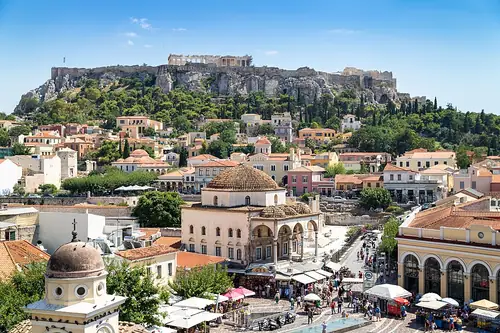
A freddo cappuccino at a café off Plaka’s back streets isn’t meant to be finished quickly. A visitor who drains it in fifteen minutes and starts looking around for the check gets nothing more than a water refill, because the table isn’t considered done until the person sitting at it says so. Settling in for a longer sit and watching the street go by is the actual local rhythm, and it is usually the best hour of the day.
None of the mistakes below will get you scolded or thrown out of anywhere: Greeks are warm with visitors who clearly don’t know the rules yet. But get the pace, the tipping and the dress code right, and you go from feeling like you’re doing something wrong to moving through Athens and the islands like you’ve done this before.
Café Culture: Why Nobody’s Rushing Your Frappé
The single biggest adjustment for first-time visitors isn’t a rule at all. It’s a pace.
Tipping in Greece: Round Up, Don’t Calculate a Percentage
Tipping culture in Greece sits close to the rest of southern Europe: present, appreciated, never obligatory the way it is stateside.
| Situation | What locals actually do |
|---|---|
| Café or coffee stop | Nothing, or small change left on the table |
| Casual taverna meal | Round up the bill, or leave around 5-10% |
| Sit-down dinner, good service | 10-15% is generous, never required |
| Taxis | Round up to the nearest euro |
| Hotel staff (bags, cleaning) | A euro or two is a kind gesture, not an expectation |
Staff earn a wage in Greece, so there’s no US-style reliance on tips, but leave any tip in cash on the table rather than adding it to a card payment, since a printed service charge doesn’t reliably make it back to the person who served you.
Church and Monastery Dress Code: No Exceptions
This is the one rule where Greece is genuinely strict, and it applies everywhere from a small village chapel to the big Athens cathedrals.
- Shoulders and knees covered, for everyone: no shorts, no sleeveless tops, regardless of gender or how hot the day is.
- Some monasteries keep wraps or long skirts at the entrance for visitors who show up underdressed, but it’s not guaranteed at every site: carrying a light scarf or a cover-up in your bag is the safer move.
- This applies island-wide, not just at famous sites, a Santorini or Mykonos village chapel enforces the same standard as an Athens church, even when everything else about the island feels casual.
- Shoes off is not typically required the way it can be at other religious sites elsewhere in the world: the dress code is the part that actually matters here.
Getting the Timing Right: Siga Siga in Practice
“Siga siga” isn’t just a phrase, it’s the operating logic behind a lot of what confuses first-time visitors.
- Ferries leave on their schedule, not a rushed one: build a buffer day into any island-hopping itinerary, especially in July and August when the meltemi (a strong seasonal north wind, strongest July-August) can delay or cancel high-speed catamaran sailings; the larger conventional ferries handle the wind far better.
- Service in tavernas and cafés is unhurried by design, not understaffed, a slow-arriving check is the same instinct as not rushing your frappé, not a sign anything’s wrong.
- Shops and small businesses can run on flexible hours, especially outside central Athens and on the islands. Don’t assume a posted opening time is exact.
- Museums and paid attractions are the exception: the Acropolis, the Acropolis Museum and similar sites keep firm hours and ticket windows, so double-check those specifically rather than assuming siga siga applies.
Mistakes Tourists Make Most
| Mistake | Do this instead |
|---|---|
| Rushing a café order like a coffee-shop stop | Settle in, a frappé or freddo is meant to hold the table |
| Tipping 15-20% like in the US | Round up, or leave around 5-10%, in cash |
| Showing up at a church/monastery in shorts | Cover shoulders and knees; carry a light scarf |
| Booking a tight island-hop with no buffer day | Add slack for meltemi-related ferry delays, especially July-August |
| Assuming ETIAS is required in 2026 | It isn’t yet, the 90/180-day visa-free rule still applies |
| Skipping tavernas for tourist-strip restaurants | Walk a street or two back for better food and prices |
Entry Rules: What’s Actually True in 2026
Here’s the etiquette-adjacent question every visitor eventually asks, and it’s worth getting right: ETIAS is not live and has no published start date as of September 2026. The EU will announce a date several months before launch, and press reports point to 2027 at the earliest. That means US, UK, Canadian, Australian and other visa-exempt passport holders can still enter Greece visa-free for up to 90 days within any 180-day period under the existing Schengen rules: no ETIAS authorization, no extra form, no fee yet. Double-check your own passport’s specific status before flying, since rules vary by nationality, but as of September 2026 nothing new has been added at the Greek border.
Acropolis and Ancient Sites: One More Rule Worth Knowing
Beyond dress codes and tipping, the Acropolis carries its own bit of 2026-specific etiquette: ticket pricing recently changed, and getting it wrong wastes a chunk of a travel day. Athens moved toward a flat, year-round adult ticket around €30, replacing the older seasonal split of roughly €20 in summer and €10 in winter: EU seniors 65+ pay around €15, and EU under-25s enter free with ID. Because this is a recent, still-settling change, verify the current price directly at the official hhticket.gr before you build it into a budget. Arrive at opening or a couple of hours before closing to avoid both the heat and the biggest crowds, and expect the same shoulders-covered courtesy to apply loosely at any site with a working chapel on the grounds.
Frequently Asked Questions
What are the most common mistakes tourists make in Greece?
The most common mistakes are rushing a café order like it’s a coffee shop back home, over-tipping as if service charges don’t exist, showing up at a monastery or church in shorts or a sleeveless top, and fighting the island’s slower pace instead of settling into it. None of these will get you in real trouble, but avoiding them means calmer days, welcoming looks from staff, and actually getting into the sites you came to see.
Do you tip in Greece?
Tipping is not mandatory in Greece (staff earn a wage and there’s no US-style tip culture), but the norm is rounding up the bill or leaving around 5-10% at tavernas and casual spots, and up to 10-15% for excellent service at nicer restaurants. Leave it in cash on the table rather than adding it to a card payment, since a printed service charge doesn’t reliably reach the server.
What should I wear to visit a church or monastery in Greece?
Cover your shoulders and knees at any Greek Orthodox church or monastery: no shorts, no sleeveless tops, for men and women alike. Some monasteries, including several on Mount Athos-adjacent routes and popular island chapels, keep wraps or long skirts at the entrance for visitors who arrive underdressed, but it’s more reliable to bring a light scarf or cover-up yourself.
What does ‘siga siga’ mean and why does it matter for visitors?
Siga siga (“slowly, slowly”) is the phrase Greeks use to describe their own unhurried approach to time: meals, ferries, service, and conversation all move at a pace that can frustrate a visitor used to rushing. Building slack into your schedule, rather than treating siga siga as an obstacle, is the single biggest etiquette shift that makes a Greece trip feel relaxing instead of stressful.
Do you need ETIAS to visit Greece in 2026?
No, not yet. As of September 2026, ETIAS is not live and has no published start date: the EU will announce a date several months before launch, and press reports point to 2027 at the earliest. Visa-exempt travelers, including US, UK, Canadian and Australian passport holders, can still enter Greece and the wider Schengen Area for up to 90 days within any 180-day period under the existing rules, with no ETIAS authorization required yet.
How much is the Acropolis ticket in 2026?
The Acropolis moved toward a flat, year-round adult ticket of around €30 in 2026, replacing the old seasonal split of roughly €20 in summer and €10 in winter. EU citizens 65 and over pay around €15, and EU under-25s enter free with ID, but this is a recently changed, still-settling rule, so verify the current price at the official hhticket.gr before you go.
Travel Greece Like You’ve Done This Before
Get the rhythm right: an unhurried frappé, a light hand with tips, covered shoulders at the chapel, and a buffer day for the ferries, and the rest sorts itself out by watching how the table next to you moves through its afternoon. Greece doesn’t expect visitors to get everything right on day one; matching the pace is what turns a checklist trip into the kind of slow evening you didn’t want to end.
Find cheap flights to Greece | Compare Athens hotels
Keep planning with our Greece itinerary, Greece budget guide, Greece ferries and island-hopping guide, Greece eSIM guide and best time to visit Greece. Heading to specific islands? See our guides to Athens, Santorini, Mykonos, Crete, Rhodes and the cheapest Greek islands to visit. Compare more hotels, grab a data eSIM before you land, or check travel insurance options.