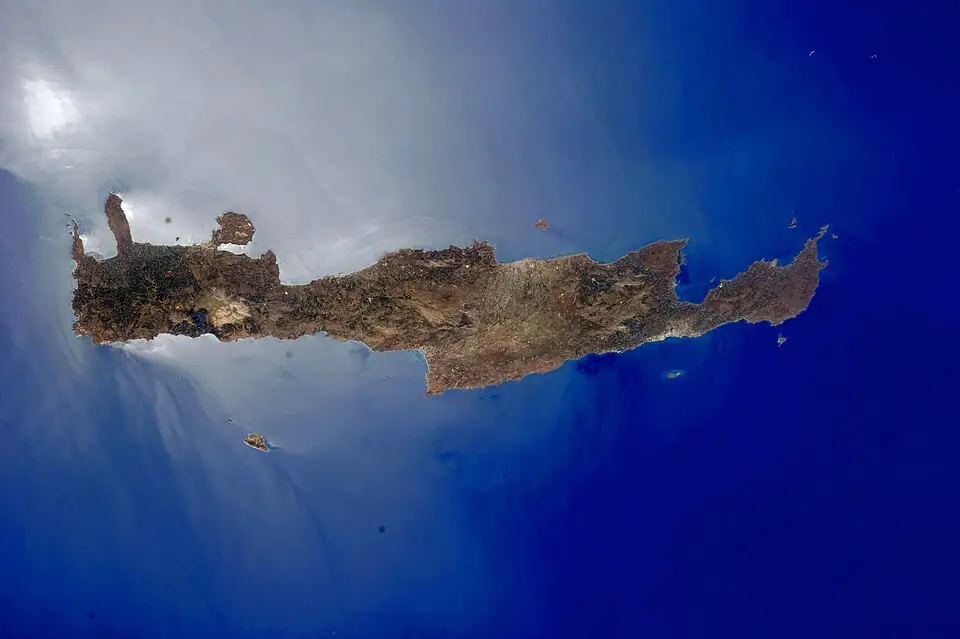
Quick Answer
- Best time to visit Crete: May–June and September–October: warm sea, sunshine, open tavernas, prices below the summer peak.
- Where to stay: Chania for the old harbour and west-coast beaches; Rethymno mid-island; Heraklion for Knossos; Agios Nikolaos in the quieter east.
- Getting around: hire a car to reach Elafonisi, Balos and the gorges; KTEL buses link the north-coast towns cheaply.
- Don’t miss: the Palace of Knossos, Chania’s Venetian harbour, the pink-sand lagoons of Elafonisi and Balos, and the Samaria Gorge.
- Eat well: dakos, Cretan cheeses and slow-cooked lamb at a village taverna inland: the food alone is worth the trip.
Crete, Without Trying to See All of It
Crete rewards a narrower plan than most first-time visitors bring. A two-week list that tries to cover Knossos, every beach on the map, both ends of the island and the Samaria Gorge usually means three exhausting days of driving and a blur of lagoons that all photograph alike. Crete is not an island to see in a weekend: pick a side, and come back for the other.
So here’s the short version this Crete travel guide is built around: come in late spring (May–June) or early autumn (September–October), base yourself in Chania for the old harbour and the western beaches, hire a car because the best of the island is off the bus network, and don’t try to do all 260 km of it in one go. Do that and Crete stops feeling like a checklist and starts feeling like the warm, slow, wildly beautiful island it actually is.
You probably don’t need to see the whole island this trip. Really. The travellers who try to cover both ends spend their holiday behind a windscreen. Pick a base, do it properly, and leave the far coast for next time, because the one thing first-timers underestimate is just how big Crete is, and it changes everything about how you plan.
What to pack for Crete
Four picks from our gear guides that suit this trip. Each card opens the live Amazon price; the links below lead to the full comparisons.
61 x 122 cm, listed at 120 g in navy, snap loop and a ventilated carry bag. Rainleaf says it absorbs five times its own weight, and it comes in six sizes. The one most travelers should buy first.
Check price on Amazon Live price on Amazon710 ml, 450 g, press-style purifier. Grayl publishes 99.99% virus, 99.9999% bacteria and 99.9% protozoan cyst removal and a 250 L (350-press) cartridge. OutdoorGearLab’s best water-quality score of its 2026 test.
Check price on Amazon Live price on AmazonThe reliable all-rounder: one USB-C and four USB-A ports, plugs for 200+ countries, and a built-in fuse with a spare. The adapter most people should buy.
Check price on Amazon Live price on AmazonModel A1259, 10,000mAh, about 37Wh, 215 g. Two phone charges in a jacket pocket, and small enough that the two-bank limit never becomes a question.
Check price on Amazon Live price on AmazonGetting Around Crete
Here’s the thing nobody tells you until you’re standing at the rental desk: Crete is big. It’s roughly 260 km from Chania to the far east, the interior is mountainous, and the best beaches sit at the end of long, winding roads. How you get around is the single biggest decision of the trip.
One thing worth knowing ahead of time: Balos and Elafonisi are gorgeous but exposed, and the afternoon wind on the west coast can be fierce. Go in the morning, both for the calm water and to beat the tour buses that roll in by midday.
What Not to Miss
You can’t see all of Crete in one trip, so aim for a handful done well rather than a map full of pins you barely remember.
- The Palace of Knossos, just outside Heraklion, is Europe’s oldest city and the heart of Minoan civilisation. Go early, and pair it with the Heraklion Archaeological Museum where the real frescoes live.
- Chania’s Venetian harbour is the postcard of Crete: a curve of pastel houses, a lighthouse at the end of the mole, and a tangle of old-town lanes behind it. Best at golden hour.
- Elafonisi is the famous pink-sand beach in the far southwest, where shallow turquoise water ribbons across the sand: surreal, and worth the long drive if you go early.
- Balos lagoon, on the northwestern tip, is a shallow, blindingly bright lagoon reached by a rough track and a short walk (or a boat from Kissamos): the most photographed view on the island.
- The Samaria Gorge is the great Cretan hike: 16 km one-way down the White Mountains to the sea. Demanding but unforgettable, and a different side of the island entirely.
- Rethymno old town is the underrated stop, a Venetian-Ottoman maze with a fortress above it and a long beach below, quieter than Chania and just as pretty.
The quiet wins are free: a sunset over Chania’s harbour, a swim off an empty south-coast cove, a plate of food in a village square where no one’s selling you anything.
Best Time to Visit Crete
Crete has the longest, warmest season in Greece, but the month you pick changes the crowds, the sea temperature and the bill more than the brochure lets on. The short answer: the shoulder months win on every count. Here’s how the seasons actually compare.
| Season | Weather | Crowds | Prices | Best for |
|---|---|---|---|---|
| Spring (Apr–Jun) | Warm, green, 18–28°C; sea warming | Building | Mid, rising into June | Beaches without the crush, gorges, wildflowers |
| Summer (Jul–Aug) | Hot, dry, 28–35°C; warm sea | Heaviest | Peak | Long beach days, ferries, festivals, but crowds and heat |
| Autumn (Sep–Oct) | Warm, mellow, 20–28°C; sea still warm | Easing | Good value | The sweet spot, swimming, hiking, soft prices |
| Winter (Nov–Mar) | Mild, green, 10–17°C; rain inland | Low | Cheapest | Cities, Knossos, snow on the peaks, but many resorts shut |
A few things the table can’t tell you. The sea is often warmest in September, not July, so early autumn gives you peak swimming with thinning crowds: the single best window if you can pick freely. The Samaria Gorge typically opens around May and closes by late October for safety, so a winter trip rules it out. And if you only care about price, November and the deep winter are the cheapest the island gets: just expect many coastal resorts shuttered and your trip pointed at the cities and ancient sites rather than the beach.
Where to Stay in Crete
Crete is too big to “stay central”. There is no centre, only a string of very different bases along the north coast. Where you sleep decides which half of the island is easy. Here’s how the classic bases compare.
| Base | Vibe | Roughly | Best for |
|---|---|---|---|
| Chania (west) | Venetian old town, harbour, charm | 80–180€/night | First-timers, best beaches, atmosphere |
| Rethymno (mid) | Old town + long sandy beach | 70–150€/night | A balanced base between the airports |
| Heraklion (centre) | Big city, port, museums | 70–140€/night | Knossos, the airport, city energy |
| Agios Nikolaos (east) | Lakeside town, quiet coast | 80–170€/night | Scenic east, calmer pace, day trips |
First-timers do best based in Chania: the Venetian harbour is the prettiest spot on the island and you’re within reach of Elafonisi, Balos and the Samaria Gorge. Rethymno is the smart compromise if you want a foot in both camps, with its own handsome old town and a long beach. Heraklion is the practical pick: closest to Knossos, the biggest airport and the archaeological museum, even if the city itself is more workaday. And Agios Nikolaos in the east trades the famous western beaches for a quieter, scenic coast and a slower rhythm. Compare live rates anytime on our hotels hub.
Frequently Asked Questions
What is the best time to visit Crete?
May to June and September to October are the sweet spot: warm sea, sunshine, open tavernas and prices below the July–August peak. High summer is hot and busy, especially on the beaches and in the gorges. Winter is mild, green and quiet, with many coastal resorts closed but the cities and Knossos still open.
Where should I stay in Crete for the first time?
Chania, in the west, is the most charming base, a Venetian harbour, an old town and the island’s best beaches within reach. Rethymno sits mid-island and splits the difference, Heraklion is handiest for Knossos and the airport, and Agios Nikolaos suits a quieter, scenic east-coast stay. Pick one and hire a car.
Do I need to rent a car in Crete?
For the highlights, yes. Crete is big (roughly 260 km end to end), and the best beaches and gorges (Elafonisi, Balos, Samaria) sit well off the bus network. KTEL buses link the north-coast towns cheaply and reliably, but a hire car is what unlocks the south coast, the mountain villages and the lagoons on your own schedule.
How do I get to Crete?
Fly into Heraklion (HER) or Chania (CHQ); both have plenty of seasonal European connections and domestic links to Athens. Overnight ferries also run from Piraeus (Athens) to Heraklion and Chania in around 8–9 hours, which suits travellers island-hopping or bringing a vehicle. In summer, book flights and ferries well ahead.
Is the Samaria Gorge hike worth it?
If you’re reasonably fit, it’s the classic Crete day out. The Samaria Gorge is a one-way 16 km descent through the White Mountains; you bus up to the trailhead, hike down to Agia Roumeli on the south coast, then catch a ferry and a connecting bus back. Start early, wear proper shoes, and carry water: the route is long and rocky.
What food should I try in Crete?
Cretan cooking is one of the best reasons to visit. Look for dakos (rusk topped with grated tomato, olive oil and cheese), local cheeses like graviera, slow-cooked lamb, snails, wild greens (horta) and honey. Eat at a village taverna inland for the freshest, most honest version, and the warmest welcome.
Start Planning Your Crete Trip
Get the season and the base right and Crete is far easier (and far more rewarding) than its size suggests. Trying to see everything in the first few days burns time fast; the trip turns around the moment visitors pick one base, slow down, and let the island come to them. Aim for the shoulder months, hire a car, and don’t try to do both ends.
Compare prices now and lock in your dates:
Find cheap flights to Crete | Compare Crete hotel prices
Planning the wider trip? See our best time to visit Greece guide and browse more stays on the hotels hub.