Quick Answer
- Best time to go: late May to mid-July and September: warm, market-filled, lighter than August.
- Lavender peak: roughly late June to mid-July, fullest on the Valensole plateau in early July.
- Best first base: Aix-en-Provence (walkable, on the TGV, central for day trips).
- You need a car for the Luberon villages and lavender fields: buses are sparse.
- Gateway: Marseille (MRS), about 25 minutes from Aix; Paris reaches Aix/Avignon by TGV in ~3 hrs.
A Provence Travel Guide for People Short on Time
The easiest Provence mistake is planning a lazy week of café terraces in Aix-en-Provence and never driving up to the Valensole lavender plateau, which sits within easy reach. Go early in the morning and the roads between the fields are quiet, the light is still soft and the tour buses have not arrived. This Provence travel guide is built to stop you missing it.
Here’s the fast version, because you came for an answer. The best time to visit Provence is late May to mid-July or September: warm but not punishing, markets humming, and the lavender on the Valensole plateau at its peak roughly the first two weeks of July. Base yourself in Aix-en-Provence or Avignon, rent a car for the hilltop villages, and you’ve got the heart of it. The rest is knowing which days the markets run and which sights are worth the drive.
That sounds simple, and the broad strokes are. But the detail that trips up most first-timers isn’t the weather. It’s transport, and getting it wrong can cost you a whole day. More on that below.
What to pack for Provence
Four picks from our gear guides that suit this trip. Each card opens the live Amazon price; the links below lead to the full comparisons.
25 x 18 x 4 cm, 254 g, 2.1 L. Locking zips, a cut-resistant double-cable strap, an RFID passport pocket and a strap that clips to a chair. Reader’s Digest’s best crossbody for travel.
Check price on Amazon Live price on AmazonThe best value compression set going. A double-zip pulls the air out so a week of clothes shrinks to a few inches thick, and you get eight pieces (cubes plus a shoe and laundry bag) for roughly the price of one branded cube. The fabric is thin and the zips aren’t lifetime kit, but for the money nothing beats it.
Check price on Amazon Live price on AmazonThe reliable all-rounder: one USB-C and four USB-A ports, plugs for 200+ countries, and a built-in fuse with a spare. The adapter most people should buy.
Check price on Amazon Live price on AmazonModel A1259, 10,000mAh, about 37Wh, 215 g. Two phone charges in a jacket pocket, and small enough that the two-bank limit never becomes a question.
Check price on Amazon Live price on AmazonGetting around Provence
This is the part that makes or breaks a Provence trip. The high-speed rail in is excellent; the local transport once you’re there is not. The TGV from Paris reaches Aix-en-Provence TGV and Avignon TGV in about three hours, and the bigger towns link up by train. But the hilltop villages and the lavender fields sit out in the countryside where buses are infrequent or non-existent, so a morning planned around a rural bus can easily be lost to waiting.
The practical takeaway: arrive by train, but rent a car for the village-and-lavender days. Pick it up at Marseille airport or an Aix-en-Provence station so you’re not doubling back. And build your driving days around market mornings. You’ll eat better and cheaper from a market stall of cheese, olives and ripe tomatoes than from any roadside stop.
What not to miss
You could spend a month here and not run out, but a first trip has a clear shortlist. These are the sights worth shaping your driving days around.
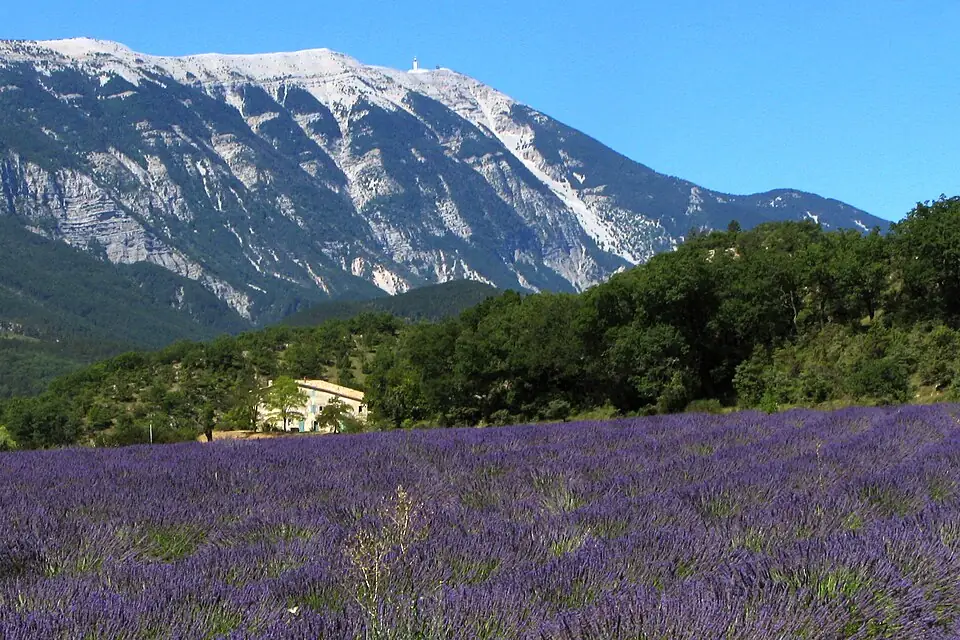
- The Valensole lavender plateau: endless purple rows under big sky, best early morning in the first half of July before the heat and the tour buses arrive.
- Gordes and Roussillon: the two stars of the Luberon: Gordes stacked up a cliffside in pale stone, Roussillon glowing in fiery ochre with a short walk through its old quarries.
- Pont du Gard: the colossal three-tier Roman aqueduct bridge, astonishing up close and an easy detour between Avignon and Nîmes.
- Les Baux-de-Provence, a dramatic ruined fortress village carved into a limestone spur, with valley views and the immersive light-show quarry nearby.
- Arles’ Roman sites: the amphitheatre and ancient theatre in a compact, walkable old town that inspired a season’s worth of famous paintings.
If you do only one thing, make it Valensole at dawn. The villages and the Pont du Gard are there all day; the lavender at first light, with the rows fading into mist and nobody around, is the image you’ll keep.
Best time to visit Provence
Provence runs warm and dry through summer and stays mild well into autumn, so the question is less “will the weather hold” and more “what do you want it to do for you.” Lavender, markets, swimming heat and crowd levels don’t all peak at once, and that tension is the whole planning game.
| Season | Weather | Crowds & price | Best for |
|---|---|---|---|
| Spring (Apr–May) | Mild, green, blossom | Low–mid, good value | Markets, villages, hiking, calm |
| Early summer (Jun–mid-Jul) | Warm, long light | Rising | Lavender peak, the all-round sweet spot |
| High summer (late Jul–Aug) | Hot, dry, busy | Highest | Heat-lovers, but book early and expect crowds |
| Autumn (Sep–Oct) | Warm days, cooler nights | Easing, better value | Markets, olive harvest, quieter villages |
| Winter (Nov–Mar) | Cool, clear, windy (mistral) | Lowest | Quiet towns, cheap stays, bare landscapes |
The date to circle is the lavender window: roughly late June to mid-July, with the famous Valensole plateau usually fullest in the first two weeks of July. The higher fields above Sault flower a touch later, into early August, which is your backup if you can only travel late. Bloom timing slides a week or two each year with the weather, so treat early July as the safe bet and confirm before you commit. Skip August if crowds bother you; everything south of Aix fills up and the heat sits heavy by midday.
Where to stay
Where you sleep decides how much driving you do and what mood your trip takes. Aix is the easy all-rounder; the Luberon villages are the postcard, with the catch that you’ll need a car for everything. Here’s how the main bases compare.
| Base | Feel | Who it suits |
|---|---|---|
| Aix-en-Provence | Elegant, lively, walkable; on the TGV | First-timers, café and market lovers, day-trippers |
| Avignon | Walled, historic, great rail links | History fans, train travelers, festival-goers |
| Arles | Smaller, quieter, Roman heart | Slower pace, Roman sites, Camargue gateway |
| Luberon villages (Gordes, Roussillon) | Hilltop, scenic, rural | Romance and views, but a car is essential |
Aix-en-Provence is the best base for a first trip: arrive by TGV, ditch the car for the old town, and still reach Valensole, the Luberon and Marseille on day trips. Avignon trades a little charm for the best rail connections in the region and a walkable walled center. Arles is smaller and calmer, with Roman ruins on its doorstep and the Camargue’s flamingo marshes just south. The Luberon villages (Gordes clinging to its cliff, ochre-red Roussillon) are the dream stay, but with one honest caveat: without a car you’ll be stuck. Compare current rates on our hotels hub.
Frequently Asked Questions
When is the best time to visit Provence?
Late May to mid-July and September are the sweet spot: warm days, long light and the markets in full swing. The lavender on the Valensole plateau peaks roughly late June to mid-July. August is hot and crowded, while spring and early autumn are calmer and a little cheaper.
When is lavender in bloom in Provence?
Provence lavender season runs roughly from late June into mid-July, with the Valensole plateau usually at its fullest around the first two weeks of July. Higher fields near Sault flower slightly later, into early August. Bloom timing shifts a week or two each year with the weather, so check before locking dates.
Do I need a car in Provence?
For the hilltop villages and lavender fields, yes. The TGV reaches Aix-en-Provence and Avignon from Paris in about three hours, and the bigger towns connect by train and bus, but the Luberon villages and the Valensole fields are poorly served by public transport. A rental car turns a frustrating day into an easy one.
How many days do you need in Provence?
Four to six days lets you base in one or two towns, drive the Luberon villages, catch a couple of weekly markets and reach the lavender plateau without rushing. A long weekend works for Aix plus a day trip; a full week lets you add Arles, the Pont du Gard and the Camargue.
What is the best base for a first trip to Provence?
Aix-en-Provence is the easiest first base: walkable, lively, on the TGV line and central for day trips. Avignon suits history and easy rail links; Arles is smaller and quieter with Roman sights; the Luberon villages like Gordes and Roussillon are gorgeous but need a car. Pick by what you most want to see.
Which airport should I fly into for Provence?
Marseille Provence (MRS) is the main gateway, about 25 minutes from Aix-en-Provence by shuttle bus. Nice (NCE) works for the eastern side, and Paris connects to Aix-en-Provence TGV and Avignon TGV in around three hours by train. From MRS, picking up a rental car at the airport saves backtracking.
Start Planning Your Provence Trip
Provence rewards a little planning more than almost anywhere. Get the timing right (early July for lavender, spring or September for calm) base in Aix-en-Provence or Avignon, rent a car for the village days, and shop the morning markets, and the region opens up, all the way to the empty early-morning roads above Valensole. For the wider picture of when to go, see our best time to visit France guide.
Compare prices now and lock in your dates:
Find cheap flights to Marseille | Compare Provence hotel prices
For more bases and current rates, browse our hotels hub.