Quick Answer
- Best time: May to June and September: mild, long days, fewer crowds than midsummer.
- The tides run everything. Check the tide timetable before you go; the big grandes marées ringing the island are the most dramatic sight.
- Getting in: TGV to Rennes then a bus, or park at the mainland car park and take the free shuttle (or walk ~45 min). No private cars on the island.
- You’ll want a car for the D-Day beaches and the rural Cotentin: public transport is thin out there.
- Stay overnight on or near the island to see it without the day-trip crowds.
Mont-Saint-Michel & Normandy: Where to Start
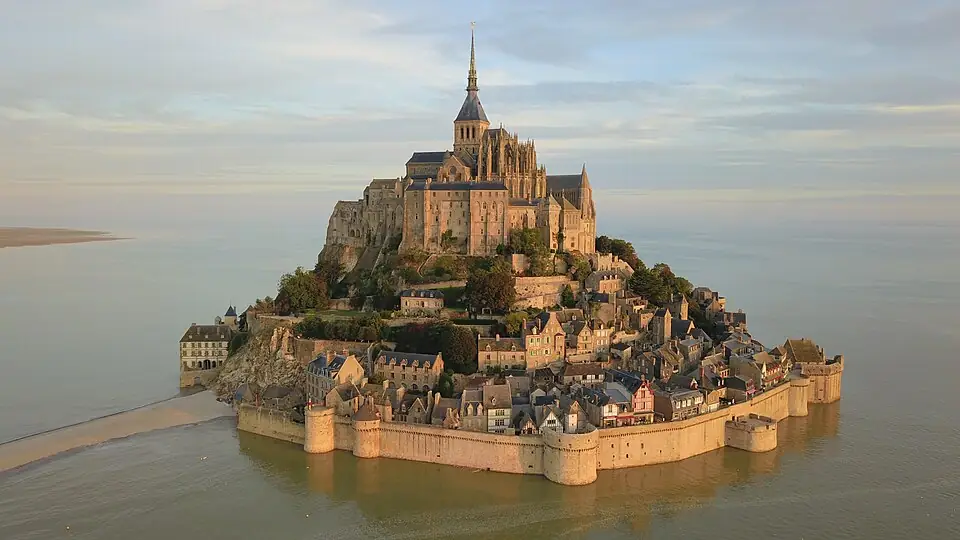
Treating Mont-Saint-Michel as a three-hour stop, driving in, photographing the abbey, driving out before dark, is the most common way to miss the point of the place. Arriving with the coach crowds and climbing the same staircase as four thousand other people means leaving before the tide does the one thing it came to do. Staying the night instead changes everything: by eight in the evening the day-trippers have drained away, the ramparts sit almost empty, and the bay begins to fill, which is the version of the island almost nobody plans for.
Here’s the fast answer if you only want one. The best time to visit Mont-Saint-Michel is late spring or early September, on a day you’ve matched to the tide timetable, with a night nearby so you catch the island at dusk and dawn. The abbey is the centrepiece, but Normandy around it: Bayeux and its tapestry, the D-Day beaches, Honfleur’s harbour, the white cliffs at Étretat, is what turns a photo stop into a real trip.
The catch is logistics. You can’t drive onto the island, the tides genuinely run the show, and the best of Normandy is spread across a region that public transport barely stitches together. Skip ahead if you just need the practical bits. Everyone else, read on: the three-hour-stop mistake above is the one most first-timers make too.
What to pack for Normandy
Four picks from our gear guides that suit this trip. Each card opens the live Amazon price; the links below lead to the full comparisons.
25 x 18 x 4 cm, 254 g, 2.1 L. Locking zips, a cut-resistant double-cable strap, an RFID passport pocket and a strap that clips to a chair. Reader’s Digest’s best crossbody for travel.
Check price on Amazon Live price on AmazonThe best value compression set going. A double-zip pulls the air out so a week of clothes shrinks to a few inches thick, and you get eight pieces (cubes plus a shoe and laundry bag) for roughly the price of one branded cube. The fabric is thin and the zips aren’t lifetime kit, but for the money nothing beats it.
Check price on Amazon Live price on AmazonThe reliable all-rounder: one USB-C and four USB-A ports, plugs for 200+ countries, and a built-in fuse with a spare. The adapter most people should buy.
Check price on Amazon Live price on AmazonModel A1259, 10,000mAh, about 37Wh, 215 g. Two phone charges in a jacket pocket, and small enough that the two-bank limit never becomes a question.
Check price on Amazon Live price on AmazonGetting Around Normandy
Mont-Saint-Michel is the easy part; the rest of Normandy is where a car earns its keep. Trains reach the gateways but the beaches and the Cotentin are spread thin, so plan your wheels around what you actually want to see.
Between towns, regional TER trains link Rennes, Caen, Bayeux and Rouen, but service to the small coastal villages thins out fast. For the landing beaches strung along the coast, a rental car or a half-day guided tour from Bayeux saves a lot of waiting at bus stops.
What Not to Miss in Normandy
The abbey is the headline, but the region rewards anyone who stays a few days. Here’s what earns the time.
- The Abbey of Mont-Saint-Michel. Climb the winding Grande Rue to the church perched at the summit, then explore the Gothic cloister and crypts. Go early or stay over to beat the midday crush.
- The bay at high tide. Time a grande marée and watch the water surround the island: the spectacle the whole place was built around.
- The Bayeux Tapestry & cathedral. The nearly 70-metre embroidered account of the 1066 Norman conquest is genuinely gripping, and Bayeux’s cathedral next door is worth the look.
- The D-Day landing beaches & American Cemetery. Omaha and Utah beaches, the cliffs at Pointe du Hoc, and the moving American Cemetery above Omaha: sobering, essential, and best with a car or guide.
- Honfleur harbour. A postcard slate-fronted port that inspired the Impressionists, lovely for a slow afternoon by the water.
- The Étretat cliffs. Dramatic white chalk arches and a needle of rock on the Alabaster Coast, a bracing clifftop walk for the views.
Best Time to Visit Mont-Saint-Michel & Normandy
Normandy sits on the cool, changeable Channel coast, so this is northern France weather, green for a reason. Summers are mild rather than hot, winters are gray and wet, and rain can blow through in any season. That makes late spring and early autumn the sweet spot: long daylight, gardens and coast at their best, and far fewer coaches than the July–August peak.
But the calendar that matters most here isn’t the season. It’s the tide. Mont-Saint-Michel sits in a bay with one of Europe’s largest tidal ranges, and the water can move fast across the flats. Check the tide timetable before you go. Aim your visit at a grande marée (a great tide) if you want to see the island fully ringed by water, the sight it’s famous for. Low tide is its own reward: the sand opens up for guided bay walks (never wander out alone: the flats hide quicksand and the tide returns quickly).
| Season | Weather | Crowds | Best for |
|---|---|---|---|
| Spring (Apr–Jun) | Mild, greening, showery | Building | Long days, lighter crowds, blossom |
| Summer (Jul–Aug) | Warmest, busiest | Highest | Coast, festivals, but book ahead |
| Autumn (Sep–Oct) | Mild then cooling | Easing | Best value, soft light, calm bay towns |
| Winter (Nov–Mar) | Gray, wet, atmospheric | Lowest | Moody abbey, cheap rooms, quiet |
The one date everyone gets wrong is the middle of the day in August: the island is at its most crowded exactly when the light is flattest. Go shoulder season, or stay over and own the early morning.
Where to Stay Around Mont-Saint-Michel & Normandy
Where you sleep decides whether you fight the crowds or skip them. On the island itself, a handful of small hotels let you wander the ramparts after the coaches leave: magical, but pricey and tiny, so book early. Most travelers stay on the mainland at La Caserne, the cluster of hotels by the car park linked to the island by the free shuttle. To pair the abbey with the rest of Normandy, base in Bayeux (perfect for the tapestry and the D-Day beaches) or charming Honfleur further east.
| Base | Vibe | Best for |
|---|---|---|
| On the island | Medieval, atmospheric, tiny | Dusk/dawn on empty ramparts (book early) |
| La Caserne (mainland) | Practical hotel hub by the car park | Easy shuttle access, more rooms, better value |
| Bayeux | Historic small town, walkable | Tapestry + D-Day beaches base |
| Honfleur | Pretty harbour town | Coastal charm, day trips east to Étretat |
If it’s your first time and you want the island after dark, splash on a night on the rock. If you’re touring the wider region, Bayeux is the smarter, better-value hub. Compare current rates anytime on our hotels hub.
Frequently Asked Questions
What is the best time to visit Mont-Saint-Michel?
Late spring (May to June) and early autumn (September) are ideal: mild weather, long daylight and lighter crowds than July and August. Whenever you go, check the tide timetable first. The biggest tides (grandes marées) ring the island with water and are the most dramatic sight, while low tide opens the bay for guided walks.
How do you get to Mont-Saint-Michel?
By train, take a TGV to Rennes (or Pontorson) and connect by bus to the mainland car park. By car, park at the mainland lot about 2.5 km from the island, then ride the free navette shuttle, walk roughly 45 minutes across the causeway, or take the horse-drawn maringote. Private cars cannot drive onto the island itself.
Do I need a car to visit Normandy?
For Mont-Saint-Michel alone you don’t, since trains and buses reach the car park. But the D-Day landing beaches, the American Cemetery and the rural Cotentin peninsula are spread out with thin public transport, so a rental car (or a guided tour) is the practical way to cover them.
How long do you need in Normandy?
Give Mont-Saint-Michel a full day, ideally with one night nearby so you see the island at dusk and dawn without the day-trip crowds. Add two to three more days for Bayeux and its tapestry, the D-Day beaches, Honfleur harbour and the Étretat cliffs to do the region justice.
What should I eat in Normandy?
Order a galette, the savoury buckwheat crêpe folded around egg, cheese or ham (around 8 to 12 euros), then a sweet crêpe for dessert. Normandy is dairy country, so its cheeses, butter, cream and apple desserts are everywhere, and the coast delivers excellent fresh seafood.
Is Mont-Saint-Michel worth visiting?
Yes. The medieval abbey rising from a tidal bay is one of France’s most striking sights, and the wider region pairs it with the moving D-Day beaches, the Bayeux Tapestry and pretty harbour towns. Stay overnight or arrive early to beat the day crowds and you will see why it endures.
Start Planning Your Normandy Trip
Mont-Saint-Michel is worth far more than a three-hour stop. Match your visit to the tide, stay a night to own the empty ramparts at dusk and dawn, then give the region the days it deserves: Bayeux and its tapestry, the D-Day beaches, Honfleur and Étretat. Paris is the usual gateway, with onward trains west into Normandy. For more on timing your trip, see our best time to visit France guide, and compare stays on our hotels hub.
Compare prices now and lock in your dates: