Quick Answer
- Best time to go: May, June and September: warm, swimmable, and below the August peak.
- Best base: Nice, for the airport, the coastal train, beaches and an old town in one city.
- Cheapest way to explore: the TER coastal train, a few euros a hop, with sea views.
- Eat cheap and well: socca and pan-bagnat from the Cours Saleya market, a few euros a portion.
- Don’t miss: the Promenade des Anglais, Vieux Nice, Èze village, Monaco and the Cap Ferrat coastal walk.
The French Riviera Travel Guide That Skips the Yacht Fantasy
The Côte d’Azur has a reputation for needing serious money to enjoy, yet a €1.50 wedge of socca from the Cours Saleya market and a ride on the little coastal train to Menton tells a different story: an afternoon with the sea on one side the whole way, towns sliding past the window, costing less than a coffee back home. The Riviera that gets sold and the Riviera that’s actually there are two different places.
You came for an answer, so here it is fast. The best time to visit the French Riviera is May, June or September: warm enough to swim, calmer than the August crush, and noticeably cheaper. Base yourself in Nice, ride the coastal train instead of taxis, and the most glamorous coast in Europe turns out to be one of the easiest budget trips on the continent.
Skip ahead if you only need a month or a hotel pick. Everyone else, read on, because the part most guides get wrong is exactly the part that saves you the most money.
What to pack for French Riviera
Four picks from our gear guides that suit this trip. Each card opens the live Amazon price; the links below lead to the full comparisons.
25 x 18 x 4 cm, 254 g, 2.1 L. Locking zips, a cut-resistant double-cable strap, an RFID passport pocket and a strap that clips to a chair. Reader’s Digest’s best crossbody for travel.
Check price on Amazon Live price on AmazonThe best value compression set going. A double-zip pulls the air out so a week of clothes shrinks to a few inches thick, and you get eight pieces (cubes plus a shoe and laundry bag) for roughly the price of one branded cube. The fabric is thin and the zips aren’t lifetime kit, but for the money nothing beats it.
Check price on Amazon Live price on AmazonThe reliable all-rounder: one USB-C and four USB-A ports, plugs for 200+ countries, and a built-in fuse with a spare. The adapter most people should buy.
Check price on Amazon Live price on AmazonModel A1259, 10,000mAh, about 37Wh, 215 g. Two phone charges in a jacket pocket, and small enough that the two-bank limit never becomes a question.
Check price on Amazon Live price on AmazonGetting Around the Riviera
Here’s the part the glossy guides skip, and it’s the one that saves you the most: you almost never need a car or a taxi here. The coast is strung together by one cheap, scenic train, and the towns themselves are small. Spend your money on the view, not the transfer.
A few honest notes. The coastal train gets busy in peak summer and on event weekends, so go early for a seat by the window, and it’s the right (sea) side heading east toward Menton that gets the best views. Driving the coast road is pretty but slow, parking is scarce and pricey in the towns, and you’ll spend more time hunting a space than you saved. For most Riviera trips, the train plus your own two feet is genuinely the best way around.
What Not to Miss
You could spend a week here and not run out, but a few things earn their reputation, and a couple of free ones beat the paid alternatives.
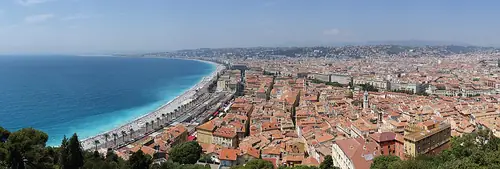
- Promenade des Anglais, Nice. The seafront walk that defines the city: blue water on one side, Belle Époque facades on the other, free pebble beaches all along it. Best at golden hour, with the bay turning copper.
- Vieux Nice (the Old Town). Narrow ochre lanes, the Cours Saleya market, and the climb up to Colline du Château, a free hilltop park with the postcard view back over the rooftops and the bay. Skip the paid lookouts; this one’s better and costs nothing.
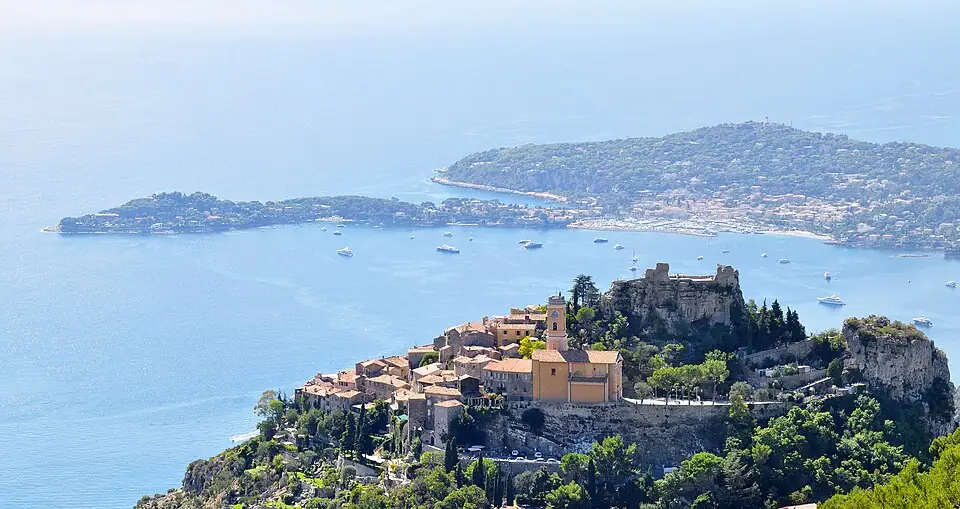
- Èze village. A medieval stone village perched high above the sea, with a cliff-top garden and one of the most dramatic coastal views on the Riviera. Reach it by local bus from Nice.
- Monaco. A 25-minute coastal train ride from Nice drops you in the principality: the old town, the harbour full of boats, the cliff-top palace square and the famous Casino building (worth seeing from outside even if you never set foot in it). A half-day is plenty.
- Cap Ferrat coastal walks. Just past Villefranche, the Saint-Jean-Cap-Ferrat peninsula has free, flat shoreline paths that loop past hidden coves and millionaire villas. One of the best no-cost half-days on the whole coast.
Best Time to Visit the French Riviera
The Riviera has a long, generous season, but the weather, the crowds and the prices don’t move together, and that gap is where you win or lose. The sea is slow to warm and slow to cool, so September can beat June for swimming even though the calendar says summer is over.
| Season | Weather | Sea temp | Crowds | Prices | Best for |
|---|---|---|---|---|---|
| Spring (Apr–May) | Mild, sunny, blooming | ~16–19°C | Low–mid | Shoulder | Walks, towns, value before the heat |
| Early summer (June) | Warm, long days | ~21–22°C | Rising | Mid-high | First swims, fewer crowds than July |
| Peak summer (Jul–Aug) | Hot, dry, busy | ~24–26°C | Highest | Peak | Beach days, if you book early |
| Early autumn (Sep) | Warm, settled | ~23–24°C | Easing | Great value | Best all-rounder: warm sea, thinner crowds |
| Late autumn (Oct) | Mild, some rain | ~20–21°C | Low | Shoulder | Quiet coast, cheap flights |
| Winter (Nov–Mar) | Mild, calm, low-season | ~13–15°C | Low | Lowest | Menton, mild walks, bargains |
The headline: the sea is warmest in September, not August, and the towns are calmer once the school holidays end. June gives you the first comfortable swims with a fraction of the peak-season crowd. If you only care about price, late autumn and winter are cheapest, and Menton (the mildest spot on the coast) barely notices the off-season.
Where to Stay on the French Riviera
Pick your base by the trip you want, then let the coastal train do the rest. You do not need to change hotels to see the whole coast: most of it is a short, scenic train ride from Nice.
| Town | Vibe | Who it suits |
|---|---|---|
| Nice | Big, lively, walkable, well-connected | First-timers, budget travellers, anyone who wants one base for everything |
| Cannes | Polished, seafront, film-festival glamour | Style-seekers, big-event visitors, sandy-beach fans |
| Antibes | Old-town charm + real sandy beaches | Families, slower trips, a calmer alternative to Nice |
| Menton | Mild, quiet, lemon-scented, near Italy | Relaxed stays, mild shoulder-season trips, garden lovers |
| Villefranche-sur-Mer | Tiny postcard cove, candy-coloured houses | Romance, quiet, a short hop from Nice’s buzz |
Nice wins for most people: it has the region’s airport, the coastal train, free pebble beaches along the Promenade, and an old town packed with markets and cheap eats: all in one city you can walk across. Cannes trades that for polish and a long sandy seafront. Antibes is the under-rated pick, mixing a walled old town with proper sand. Menton is the mildest, gentlest town on the coast, and Villefranche-sur-Mer is the cove everyone photographs: just minutes from Nice but a world quieter. Compare current rates anytime on our hotels hub.
Frequently Asked Questions
What is the best time to visit the French Riviera?
May, June and September are the sweet spot: warm, sunny days, a sea that’s swimmable by June and warmest in September, lighter crowds than midsummer, and hotel prices well below the July-August peak. Spring and early autumn give you the coast at its best value.
Where should I stay on the French Riviera?
Nice is the best all-round base: an airport, the coastal train, beaches and an old town in one walkable city. Cannes suits glamour and film-festival energy, Antibes blends old-town charm with sandy beaches, Menton is mild and quiet, and Villefranche-sur-Mer is a postcard cove a few minutes from Nice.
How do I get around the French Riviera cheaply?
The TER coastal train is the budget hero: it hops Nice-Villefranche-Monaco-Menton and Nice-Antibes-Cannes for a few euros each way, with sea views most of the route. In Nice itself, tram Line 2 links the airport to the centre and port for a standard city ticket.
Is the French Riviera expensive?
It can be, but it doesn’t have to be. Monaco and Cap-Ferrat are pricey; Nice, Antibes and Menton are far gentler. Eat socca and pan-bagnat from the Cours Saleya market for a few euros, ride the coastal train instead of taxis, and travel in spring or autumn to dodge peak rates.
How many days do you need on the French Riviera?
Four to five days lets you settle into Nice, ride the coastal train to Monaco and Menton one way and Antibes and Cannes the other, and still have a slow beach day. A week adds Èze village, the Cap Ferrat coastal walk and a relaxed pace between towns.
Which airport serves the French Riviera?
Nice Côte d’Azur (NCE) is the main gateway and France’s second-busiest airport, with direct flights across Europe and some long-haul routes. From the terminal, tram Line 2 reaches central Nice and the port in around 25 minutes for a normal city ticket.
Start Planning Your French Riviera Trip
The Riviera rewards the traveller who ignores the superyacht-brochure glamour and leans into the real thing: a wedge of socca at the market, a few euros on the coastal train, and a free walk along the Promenade as the bay turns gold. Go in May, June or September, base yourself in Nice, and the most glamorous coast in Europe quietly becomes one of its best-value ones. For the wider picture of when to travel across the country, see our best time to visit France guide, and compare bases anytime on our hotels hub.
Compare prices now and lock in your dates: