Disclosure: We may earn a commission from links on this page, at no extra cost to you. How we earn
This article contains affiliate links. If you make a booking through these links, we may earn a commission at no extra cost to you. About & Affiliate Disclosure
Quick Answer
- Best overall: June to August, with Tallinn highs of 19 to 22°C and very long days.
- Christmas: the Tallinn Christmas Market runs from 20 November 2026 to 6 January 2027.
- Winter: January and February average highs just below freezing; about six hours of daylight in late December.
- Getting there: Tallink ferries from Helsinki in two hours, trams from Tallinn Airport for 2 euros.
- Beyond Tallinn: Tartu, Pärnu, Lahemaa National Park and Saaremaa, in five to seven days.
At a glance
- Best time
- Jun–Aug; late Nov–Dec for Christmas
- Time needed
- 5 to 7 days
- Currency
- Euro (EUR)
- Language
- Estonian; English widely spoken
- Getting around
- Elron trains, ferries to the islands
Estonia is small enough to see a lot of in a week: a medieval capital on the Gulf of Finland, a university city in the south, a summer beach town on the west coast and forests, bogs and islands in between. The questions are which season suits your trip, where to base yourself and how to move around without a car. Every date and price below was checked on 10 October 2026.
Estonia month by month
The climate is cool and northern: mild summers with very long days, and cold, dark winters. The figures are the Estonian Weather Service’s 1991-2020 normals for Tallinn-Harku, the station for the capital.
| Month | Average high / low | Rain | Best for |
|---|---|---|---|
| January | -0.7°C / -5.5°C | 56 mm | Quiet museums, the market’s last week to 6 January |
| February | -1.0°C / -6.2°C | 40 mm | The coldest month; winter walks and saunas |
| March | 2.8°C / -3.7°C | 37 mm | Brighter days, still frosty nights |
| April | 9.5°C / 0.7°C | 35 mm | Spring city breaks, few visitors |
| May | 15.4°C / 5.2°C | 37 mm | Long, dry days before the summer crowds |
| June | 19.2°C / 9.8°C | 68 mm | Midsummer and white nights |
| July | 22.2°C / 13.1°C | 82 mm | The warmest month; beaches and islands |
| August | 21.0°C / 12.3°C | 85 mm | Warm sea, busy ferries |
| September | 16.1°C / 8.4°C | 58 mm | Autumn colours, calmer Old Town |
| October | 9.5°C / 3.7°C | 78 mm | Cheap city breaks, short days |
| November | 4.1°C / -0.2°C | 66 mm | The Christmas market opens on 20 November |
| December | 1.2°C / -3.1°C | 59 mm | Christmas market, about six hours of daylight |
The west coast runs slightly warmer in summer: the same normals give Pärnu an average July high of 23.0°C. Daylight swings hugely through the year. In Tallinn, the Norwegian Meteorological Institute’s sunrise data puts the sun up from about 04:03 to 22:42 on 21 June 2026, and from about 09:17 to 15:20 on 21 December 2026.
Top Cities to Explore
Best time to visit Estonia by trip type
Christmas markets (late November to early January)
The Tallinn Christmas Market runs on Town Hall Square from 20 November 2026 to 6 January 2027, open every day from 10:00 to 20:00. Its tall Christmas tree stands at the centre, which the organisers call the world’s first public Christmas tree, with classic carousels and Santa’s house, where he welcomes children from 12:00 to 18:00 each day. The market uses reusable tableware with a 2 euro deposit. It is one of the longest runs in Europe, so you can still catch it in the first days of January. For the full picture, see our Tallinn city guide, Christmas markets in Europe 2026 and where to go in December.
Pack for the cold: December averages a high of 1.2°C, and the wind off the Baltic makes it feel colder. Our Christmas market packing list, best winter boots for travel and best thermal base layers cover what matters.
Winter city break (January to March)
January and February are the coldest months, with highs around minus 1°C and lows around minus 6°C in Tallinn. That suits museums, cafés and short walks through the Old Town more than countryside trips. Kumu Art Museum and Kadriorg Art Museum make a good cold-weather day in Kadriorg Park; both are closed on Mondays.
Summer (June to August)
This is the best time for most trips: average highs of 19 to 22°C in Tallinn, nights that barely get dark around midsummer, and the season for Pärnu’s beach, Lahemaa’s coast and the islands. July and August are also the wettest months, so pack a light rain layer. See where to go in July for how Estonia compares with other summer trips.
Spring and autumn (May, September)
May is the driest stretch of the year and September still averages 16.1°C, with autumn colours and thinner crowds in the Old Town. Both are good months for a cheaper Tallinn and Tartu city break.
Where to go in Estonia
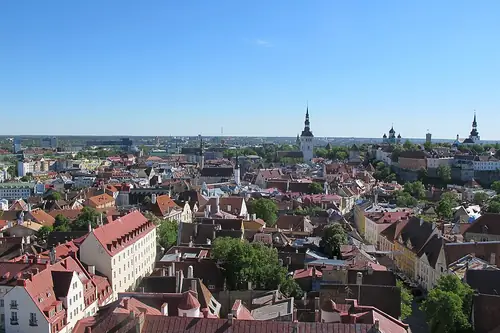
Tallinn. The capital and the obvious base: the Historic Centre (Old Town) of Tallinn has been a UNESCO World Heritage Site since 1997, with Toompea hill above the lower town. Kadriorg, Telliskivi Creative City and the harbour are a short tram ride or walk away. Our Tallinn guide compares the areas to stay in.
Tartu. Estonia’s university city, and the 2024 European Capital of Culture. The University of Tartu was founded in 1632 under King Gustav II Adolf of Sweden. Elron trains run from Tallinn’s Balti jaam station, and Elron’s once-daily train continues from Tartu to Riga.
Pärnu. The summer capital on the west coast, with a wide, sandy beach a short walk from the town centre and a shallow sea that warms up quickly.
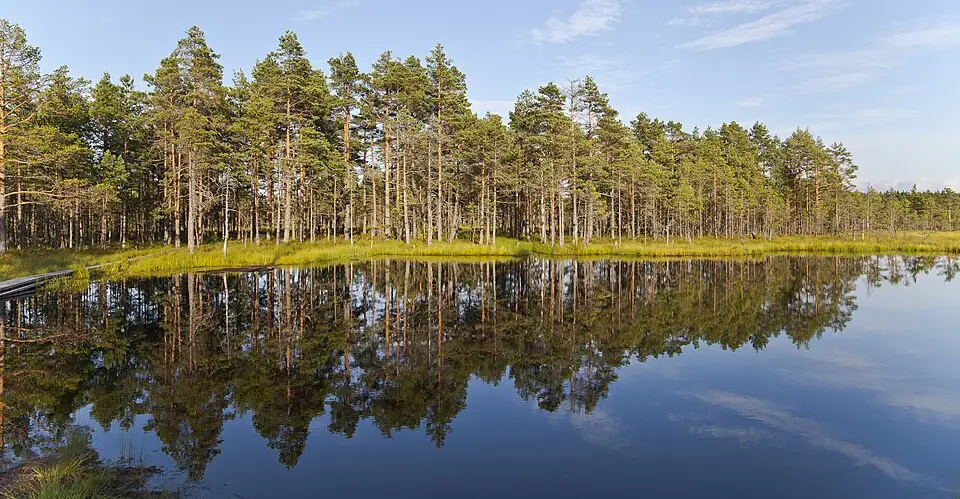
Lahemaa National Park. About an hour’s drive east of Tallinn: 725 km² of forest, bog and rocky coast on the Gulf of Finland, with the Palmse, Sagadi, Vihula and Kolga manors and the Viru Bog study trail. It is an easy day trip.
Saaremaa. Estonia’s largest island. TS Laevad ferries cross from Virtsu on the mainland to Kuivastu on Muhu in 27 minutes, and a causeway carries the road on to Saaremaa. Fares are 20% higher on mainland-to-island departures after 13:00 on Fridays and on the way back after 13:00 on Sundays, and buying in the Praamid.ee e-service guarantees boarding on your chosen sailing.
How much does Estonia cost per day?
The fixed costs below come from official 2026 price lists. Hotels swing with the season: in a Booking.com check on 10 October 2026 for the first weekend of December, Tallinn Old Town rooms for two started at around 45 euros a night at a simple guesthouse, with well-rated three- and four-star hotels at around 115 to 175 euros a night.
| Item | Cost |
|---|---|
| Tallinn tram or bus, one hour | 2 euros (contactless card or QR ticket) |
| Tallinn public transport, 24 hours / 72 hours | 5.50 euros / 9 euros |
| Tallinn Card, 24 / 48 / 72 hours (adult, online) | 43 / 63 / 76 euros |
| Kumu Art Museum, adult | 16 euros |
| Kadriorg Art Museum, adult | 15 euros |
| Tallink ferry Helsinki to Tallinn | From 28.80 euros one way |
| Elron train Tallinn to Riga via Tartu | 25.90 euros one way |
How to get to and around Estonia
By air. Lennart Meri Tallinn Airport is about 4 km from the city centre. Trams T4 (via the A. Laikmaa, Viru and Vabaduse väljak stops) and T2 (via Hobujaama and the Old City Harbour) leave from the public transport centre at the city end of the terminal, and a 2 euro one-hour ticket can be bought by contactless card on board or from the machine by the stop.
By ferry from Helsinki. Tallink’s MyStar and Megastar cross from Helsinki West Harbour Terminal 2 to Tallinn’s Terminal D in two hours, with up to seven departures a day. Viking Line and Eckerö Line also sail the route, and Visit Tallinn puts crossings at roughly two to three hours. If you are combining the two capitals, our Helsinki guide and Finland guide cover the other side.
By train. Elron runs Estonia’s passenger trains from Balti jaam, next to the Old Town. Rail Baltica, the new standard-gauge line through the three Baltic states, is still under construction, with large-scale earthworks under way across Estonia, Latvia and Lithuania; it is not a travel option yet.
In Tallinn. Trams, buses and trolleybuses cost 2 euros an hour by contactless bank card at any validator, 5.50 euros for 24 hours or 9 euros for 72 hours. Free public transport in Tallinn is for registered residents, not visitors.
Entry requirements, money and connectivity
Entry. Estonia is in the EU and the Schengen area, so the 90-days-in-180 rule applies across all member states; see our Schengen 90/180 rule guide. Non-EU visitors are registered by the biometric Entry/Exit System at the border, and ETIAS has not started yet: our EES and ETIAS guide tracks both.
Money and language. Estonia uses the euro, and Visit Tallinn notes that card payments are preferred in most places. Tipping is not compulsory; around 10% is common for exceptionally good service. Estonian is the official language, and English is the most widely known foreign language in Tallinn’s tourist industry.
Mobile data. EU roaming rules apply, and a Europe eSIM covers Estonia along with its neighbours; compare plans in our best eSIM for Europe guide. For plugs, check our travel adapters by country guide.
- Activate before you fly: data works on arrival
- Plans for 200+ countries from a few dollars
- Keep your number; no physical SIM swap
Frequently Asked Questions
What is the best time to visit Estonia?
June to August is the best time for most trips. The Estonian Weather Service’s 1991-2020 normals give Tallinn average highs of 19.2°C in June, 22.2°C in July and 21.0°C in August, and around midsummer the sun is up in Tallinn from about 04:00 to 22:40. Late November and December are the second season, for the Tallinn Christmas Market, but expect highs of around 1 to 4°C.
Is Estonia worth visiting in winter?
Yes, for a city break rather than a road trip. Tallinn’s medieval Old Town, museums and the Christmas market on Town Hall Square work well in the cold, and the market runs from 20 November 2026 to 6 January 2027. January and February are the coldest months, with average highs of minus 0.7°C and minus 1.0°C in Tallinn, and on 21 December the sun is up only from about 09:17 to 15:20.
How do you get from Helsinki to Tallinn?
By ferry. Tallink’s MyStar and Megastar cross between Helsinki West Harbour Terminal 2 and Tallinn’s Terminal D in two hours, with up to seven departures a day, and Viking Line and Eckerö Line also sail the route. Visit Tallinn puts the crossing at roughly two to three hours depending on the ship, and the Tallinn terminals are a 15 to 20 minute walk from the Old Town.
Is public transport free in Tallinn for tourists?
No. Free public transport in Tallinn is for registered Tallinn residents with a personalised card and ID, children under seven and an adult travelling with a child under three. Visitors pay 2 euros for a one-hour ticket by tapping a contactless bank card on board, 5.50 euros for 24 hours or 9 euros for 72 hours, or use the Tallinn Card, which includes public transport.
Does Estonia use the euro?
Yes. Estonia uses the euro, and Visit Tallinn notes that card payments are preferred in most places, with Visa, Mastercard, contactless and mobile wallets widely accepted. Tipping is not compulsory; around 10% is common when service is exceptionally good.
Is Estonia in the Schengen area?
Yes. Estonia is in the EU and the Schengen area, so the 90-days-in-180 rule applies across all Schengen states. Non-EU visitors are registered by the EU Entry/Exit System at the border, and ETIAS was not yet in operation in 2026.
Start planning your Estonia trip
For the Christmas market, aim for a weekday between late November and the first days of January; for beaches, islands and long evenings, June to August. Tallinn is the gateway either way, so lock in your Old Town room once your dates are set.
Find cheap flights to Tallinn | Compare Tallinn hotel prices
More ideas: the cheapest European countries to visit in 2026, where to go in November and Christmas markets by train.