Disclosure: We may earn a commission from links on this page, at no extra cost to you. How we earn
This article contains affiliate links. If you make a booking through these links, we may earn a commission at no extra cost to you. About & Affiliate Disclosure
Quick Answer
- 10 days is the first-timer sweet spot: Dubrovnik 3n → Split 2-3n → Hvar 2n (+ a Plitvice Lakes detour), by FlixBus and catamaran.
- 7 days: Dubrovnik and Split only - a third or fourth base means more transit time than town time.
- 14 days: the 10-day route plus Zadar (gateway to Plitvice) and a swing into Istria before flying home.
- Skip the rental car for the coastal stops - Dubrovnik, Split, Hvar and Zadar are car-free or car-hostile old towns, and there’s no useful coastal rail line to compete with anyway.
- Cross the Peljesac Bridge, not the old Neum corridor - it’s been open since 2022 and keeps the Dubrovnik-Split bus ride inside Croatia the whole way.
Skip the Rental Car for This Route
A rental car looks necessary for covering Dubrovnik, Split and Hvar in ten days, but it isn’t. Parking near the Old Town walls in Dubrovnik and Split is scarce, expensive and stairs-adjacent in centres that are car-free or nearly so, and Hvar has no car-ferry timetable that works with a week-long trip anyway: you go by catamaran or you don’t go. The Platanus airport shuttle, FlixBus and a Jadrolinija catamaran cover the whole route without a car. That’s the one thing worth knowing before booking anything else.
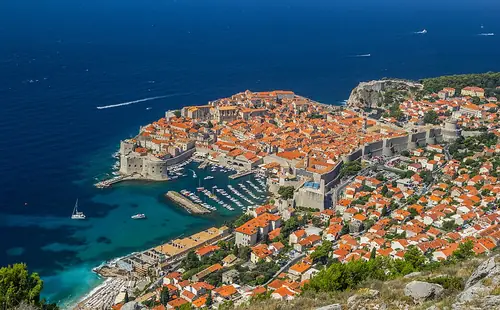
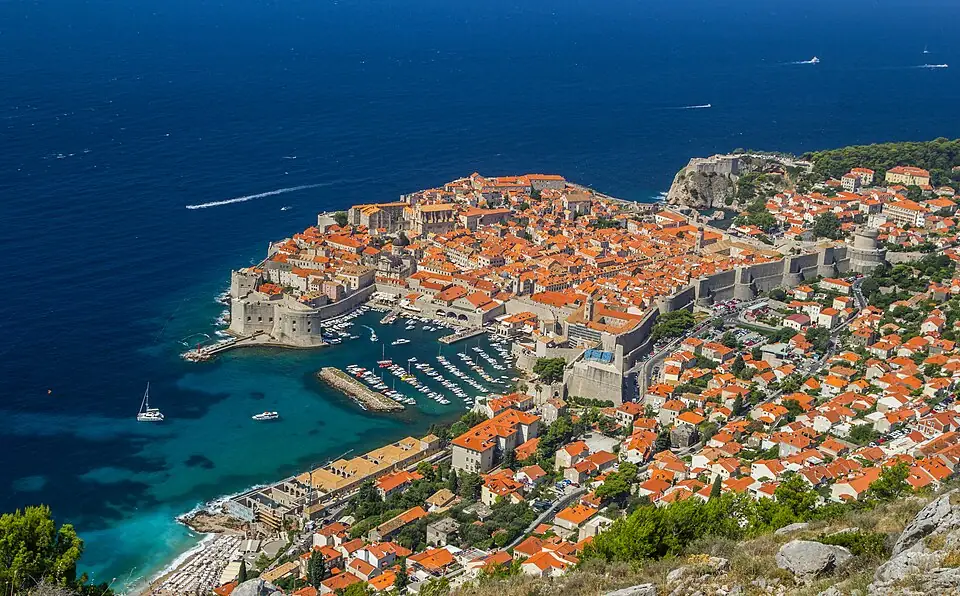
Croatia isn’t one trip, it’s a chain of very different stops: a walled Adriatic showstopper, a Roman-palace city that doubles as the ferry hub, and islands that only make sense once you’re on the water. What ties them together is a genuinely workable bus-and-ferry network, now helped by the Peljesac Bridge cutting the old Bosnia border detour out of the coastal route entirely. Below are three itineraries that hold up at 7, 10, and 14 days, plus exactly where to add or cut when your calendar doesn’t cooperate.
How to Structure Any Croatia Itinerary
Three rules that head off the parking research and the Hvar car-ferry confusion before they start:
- Let the bus and ferry network do the work. FlixBus covers Dubrovnik-Split around 15 times a day in about 3 hours 50 minutes, and Jadrolinija or Krilo catamarans reach the islands in an hour or two. A car adds nothing on this spine and costs you a parking hunt in three car-unfriendly old towns.
- Cap it at three or four bases. Every hotel change eats half a day, and island connections run on their own schedule rather than yours. Three bases in a week and a half, four in two weeks, is about the ceiling before you’re spending more time on a dock than a beach.
- Save the rental car for rural detours only. Istria’s hill towns and the drive between Zadar and Plitvice Lakes genuinely reward a car; the historic centres of Dubrovnik, Split, and Hvar genuinely don’t.
The 7-Day Croatia Itinerary (Dubrovnik + Split)
A week is enough for the walled city and the ferry hub if you resist adding a third base. Both cities sit on the Peljesac Bridge-connected FlixBus corridor, so the link itself is fast and frequent - the real constraint is how much of each old town you can cover.
| Day | Base | Plan |
|---|---|---|
| 1 | Dubrovnik | Land at DBV, Platanus shuttle to Pile (around 10 euros, ~35 minutes), settle in, evening walk on the Stradun |
| 2 | Dubrovnik | City Walls at opening (8:00, around 35-40 euros), Fort Lovrijenac, cable car up Srd Hill |
| 3 | Dubrovnik | Lokrum Island boat trip, a swim off the rocks, Old Town museums in the afternoon heat |
| 4 | Dubrovnik → Split | Morning free; afternoon FlixBus (around 21-23 euros, ~3h50) into Split |
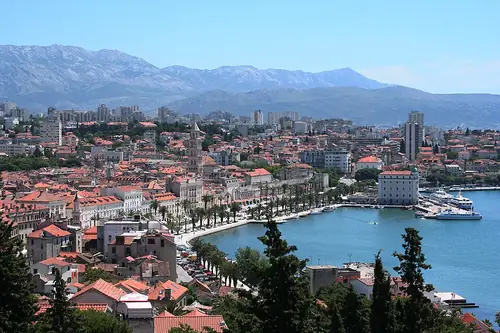
| 5 | Split | Diocletian’s Palace, the Riva promenade, a swim at Bacvice beach |
| 6 | Split | Marjan Hill viewpoints, Split’s green market, a konoba lunch away from the waterfront |
| 7 | Split → home | Last morning in the Palace basement halls, then to Split Airport (SPU) |
The one cut if you’re tight on time: trim Lokrum to a half-day and add that time to Split instead. Don’t shorten the Dubrovnik Walls visit to save time - go at 8:00 opening so it doesn’t cost you the rest of the morning either way.
See the full Dubrovnik guide and Split guide for where to base yourself in each city.
The 10-Day Croatia Itinerary (the sweet spot)
This is the one worth booking. It keeps Dubrovnik and Split, adds Hvar by catamaran, and folds in Plitvice Lakes as an inland detour before you fly out - still three real bases plus one nature stop.
| Day | Base | Plan |
|---|---|---|
| 1 | Dubrovnik | Arrive, Platanus shuttle to Pile, settle in, sunset walk on the Stradun |
| 2 | Dubrovnik | City Walls at opening, Fort Lovrijenac, cable car up Srd Hill |
| 3 | Dubrovnik → Split | Morning Lokrum swim; afternoon FlixBus (~3h50) to Split |
| 4 | Split → Hvar | Morning at Diocletian’s Palace; afternoon catamaran (around 25 euros, 50 min-1.5h) to Hvar |
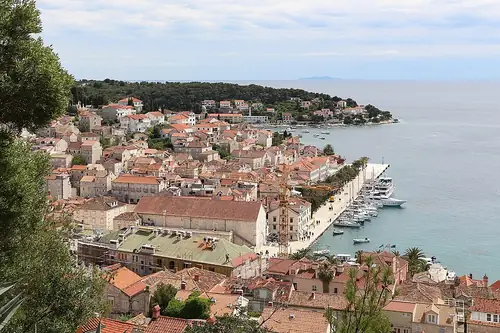
| 5 | Hvar | Hvar Town, the Spanish Fortress viewpoint, a swim off the rocks below town |
| 6 | Hvar → Split | Morning catamaran back; afternoon at Marjan Hill or Bacvice beach |
| 7 | Split → Plitvice Lakes | Bus or transfer inland; check in near the park entrance |
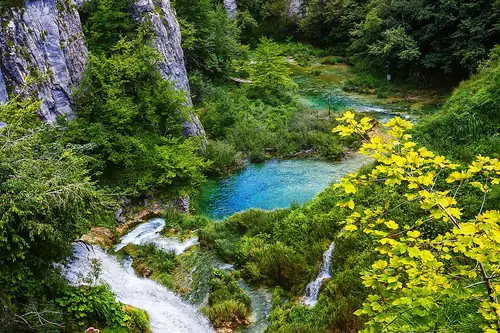
| 8 | Plitvice Lakes | Full day on the lower and upper lakes boardwalks |
| 9 | Plitvice Lakes → Zagreb | Onward transfer; afternoon in Zagreb’s Upper Town |
| 10 | Zagreb → home | Last morning in Zagreb, fly out of Zagreb Airport (ZAG) |
Where to cut to 8-9 days: drop the Zagreb overnight and fly out of Split instead, treating Plitvice as a long day trip rather than an overnight stop. Where to add: a second Hvar day for a slower pace, or a half-day in Split’s Krka day-trip territory, is never wasted - check current park tickets and hours directly with the operator since they shift by season.
The 14-Day Croatia Itinerary (add Zadar + Istria)
Two weeks lets Croatia breathe. Take the 10-day route and route it through Zadar - the northern gateway and the best base for Plitvice Lakes - then add Istria before flying home instead of looping back to Zagreb.
| Days | Base | Plan |
|---|---|---|
| 1-2 | Dubrovnik | As above: City Walls, Fort Lovrijenac, Lokrum, Srd Hill |
| 3 | Dubrovnik → Split | FlixBus (~3h50) over the Peljesac Bridge |
| 4 | Split → Hvar | Catamaran (~25 euros) |
| 5-6 | Hvar | Hvar Town, the Spanish Fortress, swim coves below town |
| 7 | Hvar → Split | Return catamaran |
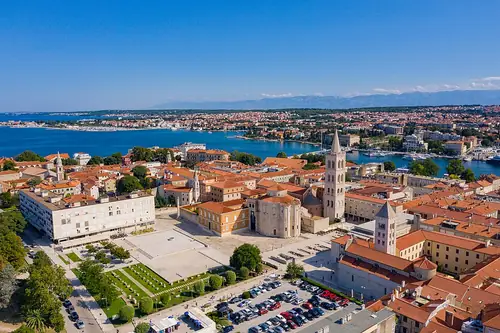
| 8 | Split → Zadar | Bus north along the coast |
| 9 | Zadar → Plitvice Lakes | Day trip inland - Zadar is the closer, easier base for the park |
| 10 | Plitvice Lakes | Full day on the lake boardwalks |
| 11 | Plitvice Lakes → Istria | Longer transfer north-west into Istria (Rovinj or Pula) |
| 12-13 | Istria | Rovinj’s old town lanes, Pula’s Roman amphitheatre, coastal walks |
| 14 | Istria → home | Fly out of Pula Airport (PUY), or transfer to Zagreb for wider flight options |
The alternative fortnight: swap the Istria leg for more time on the islands themselves - Korcula and Vis both work as onward catamaran hops from Split if you’d rather stay on the water than add an inland-to-coast transfer. See our Zadar guide and Plitvice Lakes guide to plan that middle stretch.
Getting Between Stops
The transport question first-timers overthink most: bus or ferry, and whether to rent a car.
For the full breakdown of bus routes, ferry operators, and booking windows, see our Croatia getting-around guide.
Where to Sleep: Dubrovnik Hotel Bands
Dubrovnik is the priciest, most Old-Town-clustered base on this route - and September, the shoulder season, is when the numbers below actually hold. All bands are per night for a 2-adult room, based on a September 2026 search.
| Band | Around /night | Where |
|---|---|---|
| Budget (3-star, outside the walls) | ~€53-106 | Lapad / Babin Kuk - a bus ride from the Old Town, but noticeably cheaper and closer to the beaches |
| Mid (3-4 star, Old Town) | ~€125-150 | Inside the walls - central, atmospheric, car-free (expect stairs) |
| Upscale (3-4 star, Old Town or Ploce) | ~€155-185 | Old Town or the Ploce district just east, some with sea views |
A city-wide sojourn tax adds around 2.65 euros per person per night from April to September (about 1.85 euros October to March), charged separately at most properties. For the neighborhood-by-neighborhood breakdown - Old Town versus Ploce versus Lapad and Babin Kuk - see our Dubrovnik where-to-stay guide.
Budget for This Route
Expect a 10-day trip in the roughly 900-1,600 euro per-person range outside flights on a mid-range budget - more if Dubrovnik’s Old Town is your base every night, less if you spend more time in Split and Lapad. Budget travelers manage on roughly 60-100 euros a day (hostel or shared apartment, self-catering plus one cheap meal, city buses, free sights); mid-range runs around 150-250 euros a day per person (a private apartment, one proper sit-down meal, ferries and buses, a paid attraction like the City Walls). A euro was worth about 1.14 US dollars as of July 2026.
A konoba - a neighborhood tavern serving grilled fish and hearty local plates rather than tourist-menu fare - runs around 15-25 euros per person a street or two back from the water; the same meal on an Old Town waterfront terrace runs 20-40 euros. Fixed lunch specials (locally “marenda”), typically served midday, run around 15-20 euros for a full three-course plate and are the best value meal of the day almost everywhere on this route.
Shorter or Longer?
Cutting to 5-6 days: stick to Dubrovnik only, or Dubrovnik plus a single Split day trip via FlixBus, and go deeper into each old town rather than adding a third base at all. Stretching past 14 days: Korcula and Vis work as a self-contained island week added onto the Hvar leg, reached by catamaran from Split rather than a coastal drive, so treat that stretch as its own mini-trip bolted onto the mainland-and-islands itinerary rather than squeezing it into the same bus-and-ferry flow.
Frequently Asked Questions
Is 7 days enough for Croatia?
Seven days is enough for Dubrovnik and Split at a sane pace: 3 nights in Dubrovnik, 3-4 in Split, linked by a FlixBus of around 3 hours 50 minutes across the Peljesac Bridge. It’s not enough to add Hvar or Plitvice Lakes properly; 10-14 days is where those fit without rushing.
Do I need a rental car for a Croatia itinerary?
No. Dubrovnik, Split, Hvar and Zadar are all walkable old towns with no useful coastal rail line, so buses (FlixBus, Arriva) and Jadrolinija or Krilo ferries do the connecting work instead. A car only earns its keep if you’re detouring into rural Istria or the inland national parks on your own schedule.
Is ETIAS required to visit Croatia in 2026?
No. ETIAS is not live as of September 2026, and no start date has been published: the EU will announce a date several months before launch, and press reports point to 2027 at the earliest. Croatia joined the Schengen Area on 1 January 2023, so visa-free visitors from the US, UK, Canada, Australia and New Zealand just need a passport valid for the stay, under the standard Schengen 90-days-within-180-days rule.
How do you get from Dubrovnik to Split without flying?
FlixBus runs Dubrovnik to Split around 15 times a day for about 21-23 euros, taking roughly 3 hours 50 minutes since the Peljesac Bridge opened in 2022 and cut out the old Bosnia border detour. A Jadrolinija, Krilo or TP Line catamaran covers the same route for around 50 euros and 4.5-6 hours - slower and pricier, but scenic if you want the coastline from the water.
Should I add Hvar or Plitvice Lakes on a 10-day Croatia itinerary?
Both fit in 10 days if you keep Dubrovnik and Split to 3 nights each. Hvar is a short catamaran hop from Split (around 25 euros, 50 minutes to 1.5 hours) and suits swimmers and old-town wanderers; Plitvice Lakes is an inland detour of waterfalls and boardwalks, best reached as a day trip or one-night stop between Split and Zagreb.
Is Croatia expensive to visit in 2026?
It depends on the base. Budget travelers manage on roughly 60-100 euros a day; mid-range travelers should plan for around 150-250 euros a day, with Dubrovnik’s Old Town running noticeably pricier than Split or the islands. A euro was worth about 1.14 US dollars as of July 2026, and Dubrovnik and island prices peak hardest in July and August.
Book the Bones of the Trip
Pick your length, lock in the FlixBus and catamaran legs a few weeks ahead in summer, leave the rental car for rural Istria only, and let the bus-and-ferry spine carry you from Dubrovnik to Split to Hvar - or Dubrovnik straight to Split if a week is all you have. The Peljesac Bridge and a Platanus shuttle ticket do everything a rental car would promise, minus the parking hunt.
Compare prices and lock in your dates:
Find cheap flights to Croatia | Compare Split hotel prices
Keep planning with our Croatia pillar guide, Dubrovnik, Split, Hvar, Zadar, and Plitvice Lakes guides, plus our eSIM, hotels, flights, and travel insurance hubs for the rest of the trip.