Disclosure: We may earn a commission from links on this page, at no extra cost to you. How we earn
This article contains affiliate links. If you make a booking through these links, we may earn a commission at no extra cost to you. About & Affiliate Disclosure
Quick Answer
- Daily on-the-ground cost: budget around €60–100 · mid-range around €150–250.
- The cheap part: Libertas city buses in Dubrovnik (
€1.75 bought ahead), fixed-menu konoba lunches (€15–20), and free Old Town wandering after the cruise crowds clear. - The expensive part: Dubrovnik Old Town hotels, the City Walls ticket (~€35–40), and last-minute inter-city transport.
- No useful coastal rail: buses (FlixBus) and ferries (Jadrolinija/Krilo) are how you move between Dubrovnik, Split and Hvar. Book ahead where you can.
- Save by basing a few nights in Split or Hvar instead of stacking them all in Dubrovnik’s Old Town, and traveling in the June or September shoulder season.
Is Croatia Actually Expensive? It Depends Which Bed You Book
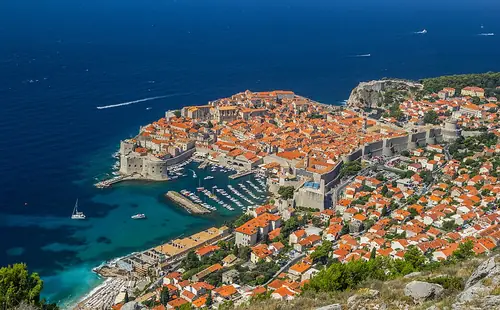
Search a 3-star double inside Dubrovnik’s Old Town walls for mid-September and the well-rated options cluster around €125–150 a night, with a handful of upscale sea-view picks pushing €155–185. Search the same star rating a 15-minute bus ride away, in Lapad or Babin Kuk, and it drops to roughly €53–106. Same city, same season, same two-adult search, a very different bill depending on whether you’re paying for the view through the city gate or the walk to a bus stop.
That gap is the real shape of a Croatia budget: Dubrovnik carries the country’s reputation for being pricey, and it earns it, but the rest of the coast doesn’t follow the same curve. Add up a full day of spending (a bus fare, a konoba lunch, a paid sight), and a budget day in Croatia lands close to €60–100; a mid-range day, with a nicer room and a sit-down meal, runs closer to €150–250. Below is what things actually cost by category, what a day looks like at each travel style, and a real trip budget across Dubrovnik, Split and Hvar.
What Things Actually Cost in Croatia
Real, current on-the-ground prices in euros (per the July 2026 research used for this guide, centered on Dubrovnik):
| Item | Typical cost |
|---|---|
| 3-star hotel (double), Lapad/Babin Kuk, outside Old Town | ~€53–106/night |
| 3-star to 4-star hotel (double), Dubrovnik Old Town | ~€125–150/night |
| Upscale hotel (double), Dubrovnik Old Town, sea view | ~€155–185/night |
| Konoba lunch (neighborhood, outside Old Town) | ~€15–25/person |
| Konoba/restaurant meal, Old Town | ~€20–40/person |
| Fixed-menu lunch special (“gablec”/“marenda”, ~12:00–15:00) | ~€15–20/person |
| Libertas bus, Dubrovnik (bought in advance at a kiosk) | ~€1.70–1.75/ride |
| Libertas bus, Dubrovnik (bought from the driver) | ~€2–2.50/ride |
| Libertas 24-hour day ticket | ~€5.30 |
| Dubrovnik airport (DBV) → Old Town, Platanus shuttle | |
| Dubrovnik airport → Old Town, fixed-rate taxi | ~€30–45 (up to ~€60 for non-fixed operators), ~20–25 min |
| FlixBus, Dubrovnik ↔ Split | ~€21–23, ~3h45–3h55 |
| Jadrolinija/Krilo catamaran, Dubrovnik ↔ Split | ~€50, 4.5–6 hours (seasonal, Apr–Oct) |
| Krilo/Kapetan Luka catamaran, Split ↔ Hvar | ~€25, 50 min–1.5 hours |
| Dubrovnik City Walls ticket | ~€35–40 |
| Dubrovnik Pass (1-day: Walls + ~10 museums + 24h buses) | ~€40 |
| Dubrovnik sojourn/tourist tax (Apr–Sep, per person/night) | ~€2.65 |
| Dubrovnik sojourn/tourist tax (Oct–Mar, per person/night) | ~€1.85 |
| eSIM, Croatia-specific (Airalo, 1 GB) | from ~$4–4.50 |
The pattern holds along the coast: eat the fixed-menu konoba lunch, ride the Libertas bus instead of a taxi, and book buses or ferries ahead in peak summer: Dubrovnik’s Old Town hotels, the Walls ticket, and last-minute inter-city transport are where a Croatia budget is won or lost.
Cost Per Day by Travel Style
| Style | Per day (on the ground) | What it looks like |
|---|---|---|
| Budget | ~€60–100 | Hostel/shared apartment or budget guesthouse outside Old Town ( |
| Mid-range | ~€150–250 | 3- to 4-star hotel, often Old Town-adjacent, a sit-down konoba meal (~€20–40), a paid sight like the City Walls or Dubrovnik Pass, occasional taxi or Uber/Bolt |
| Comfort/Luxury | ~€260+ | Upscale Old Town sea-view hotel (~€155–185/night), full-menu restaurant dining, private transfers, and multiple paid attractions or a day-trip boat |
These exclude your international flight. Peak July–August accommodation runs noticeably higher than the shoulder-season figures above (some sources put it 50–100% above shoulder-season rates), so a June or September trip stretches the same budget further.
A Real 7-Day Croatia Budget (Dubrovnik–Split–Hvar, per person)
Based on the classic Dalmatian coast route: helped along by the Pelješac Bridge, open since 2022, which bypasses the old Neum/Bosnia land-border crossing entirely: excluding international flights:
| Category | 7-day cost | Notes |
|---|---|---|
| Accommodation | ~€700–1,050 | Mix of an Old Town Dubrovnik night or two, then Split and Hvar at somewhat softer rates |
| Food | ~€175–280 | Fixed-menu konoba lunches most days plus a sit-down konoba dinner |
| Inter-city transport | ~€75–100 | FlixBus Dubrovnik→Split ( |
| Local transport | ~€25–40 | Dubrovnik Libertas buses, Split/Hvar local transit and airport transfers |
| Attractions | ~€60–90 | Dubrovnik Pass or standalone Walls ticket, plus a sight or two in Split |
| Sojourn/tourist tax | ~€15–20 | ~€2.65/person/night (Apr–Sep) across the stay |
| Miscellaneous | ~€40–70 | eSIM, water shoes if you didn’t pack them, souvenirs |
| Total (on the ground) | ~€1,090–1,650 | Add international airfare |
Budget version: swap Old Town nights for Lapad/Babin Kuk or Split-outskirts guesthouses, eat the fixed-menu konoba lunch daily, and the same 7 days drops to roughly €500–650 on the ground.
Where Your Money Goes Further: Dubrovnik vs Split vs Hvar
Dubrovnik is Croatia’s priciest stop, and it’s concentrated almost entirely in the Old Town: the walled, car-free, cruise-heavy core where a 3- to 4-star double runs €125–185 a night versus €53–106 just outside the walls in Lapad or Babin Kuk. Split generally undercuts Dubrovnik’s Old Town rates for a comparable central stay, and Hvar swings by season: busy and pricier in peak summer, noticeably calmer and cheaper in the June and September shoulder months.
| Base | What drives the cost | Notes |
|---|---|---|
| Dubrovnik Old Town | ~€125–185/night (3–4★) | Priciest; car-free and hilly, plus the sojourn tax and heaviest cruise-ship crowds |
| Dubrovnik, Lapad/Babin Kuk | ~€53–106/night (3★) | ~15-min Libertas bus to Old Town; beaches, greenery, family-friendly |
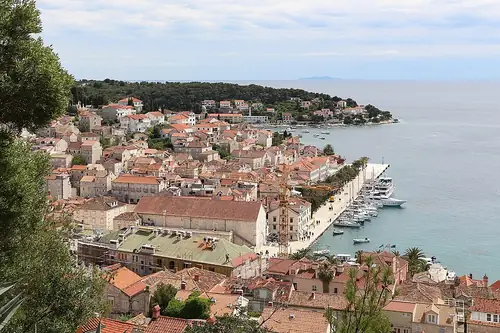
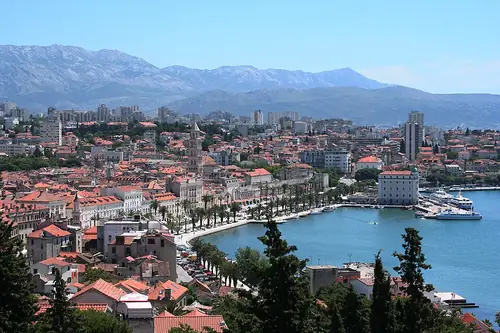
| Split & Hvar | Generally softer than Dubrovnik Old Town | Book the Split↔Hvar catamaran (~€25) ahead in peak season |
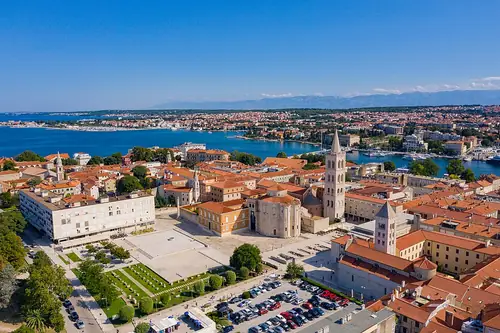
If your itinerary allows it, weighting nights toward Lapad/Babin Kuk or a Split base (and timing the trip for June or September) is the single easiest lever on a total Croatia budget. Travelers adding an inland leg should also look at Plitvice Lakes or Zadar, both of which run their own, generally gentler cost curve than Dubrovnik’s Old Town.
How to Cut Your Croatia Budget (without cutting the trip)
Cash vs Card in Croatia
Cards are widely accepted in Dubrovnik, Split and Hvar: hotels, restaurants, ferries and museums generally take them, and contactless is standard for city buses in Dubrovnik. Carry some cash for smaller konobas, market stalls, and to tip drivers or waitstaff, since tipping isn’t obligatory in Croatia but is increasingly customary: around 10–15% at nicer sit-down restaurants, around 5–10% at mid-range konobas, and rounding up for cafés and taxis (check the bill first, since a service charge is sometimes already added). An eSIM, like the ones covered on our eSIM hub, sidesteps the hassle of a physical SIM purchase on arrival and keeps maps and translation apps working from the airport onward.
Frequently Asked Questions
How much does a trip to Croatia cost per day?
Budget travelers get by on around 60 to 100 euros a day, covering a hostel or budget guesthouse outside the Old Town walls, a fixed-menu konoba lunch, and local buses. Mid-range travelers should plan for around 150 to 250 euros a day, covering a 3- to 4-star hotel, a sit-down konoba meal, and a paid attraction like the Dubrovnik City Walls, before international flights.
Is Dubrovnik more expensive than the rest of Croatia?
Yes. Dubrovnik is Croatia’s priciest city, especially for Old Town hotels. As of September 2026 rates, a 3-star Old Town double runs around 125 to 185 euros a night, versus around 53 to 106 euros for a 3-star outside the walls in Lapad or Babin Kuk. Split and Hvar generally undercut Dubrovnik’s Old Town rates for comparable quality.
What is Dubrovnik’s tourist tax (sojourn tax)?
Dubrovnik charges a boravišna pristojba, or sojourn tax, of around 2.65 euros per person per night from April through September, dropping to around 1.85 euros in the October-to-March off season. It’s billed per person, per night, on top of the room rate; children under 12 are exempt and those aged 12 to 18 pay half.
How do I get between Dubrovnik, Split and Hvar cheaply?
FlixBus runs Dubrovnik to Split for around 21 to 23 euros, taking roughly 3 hours 45 minutes to 3 hours 55 minutes, with around 15 daily departures each way. The Jadrolinija or Krilo fast catamaran covers the same route for around 50 euros in 4.5 to 6 hours, seasonally April to October. From Split, the Krilo or Kapetan Luka catamaran to Hvar runs around 25 euros and takes 50 minutes to 1.5 hours.
Do I need a visa or ETIAS to visit Croatia in 2026?
No. Croatia joined the Schengen Area and the Eurozone simultaneously on 1 January 2023, so it now uses the euro and the standard Schengen 90-day-within-180-day visa-free rule for US, UK, Canadian, Australian and similar passport holders. ETIAS pre-travel authorization is not yet live as of September 2026, and no start date has been published (press reports point to 2027 at the earliest), so there’s no ETIAS fee to budget for on a 2026 trip.
How much are the Dubrovnik City Walls?
A standalone City Walls ticket runs around 35 to 40 euros for adults, with sources split on the exact 2026 figure. The 1-day Dubrovnik Pass costs around 40 euros and effectively matches that price while bundling in the Walls, Fort Lovrijenac, around ten museums, and unlimited Libertas city buses for 24 hours: making it the better-value option for most visitors.
Start Planning Your Croatia Trip
The headline worry (that Croatia will blow the budget) mostly comes down to one choice: how many nights you stack inside Dubrovnik’s Old Town walls versus in Lapad, Split or Hvar. Trim an Old Town night or two, book buses and ferries ahead, and lean on the fixed-menu konoba lunch, and the daily cost is genuinely manageable. Set your style, copy the sample budget, and lock in the big-ticket items early.
Find cheap flights to Croatia | Compare Dubrovnik hotel prices
Keep planning with the Croatia travel guide pillar, and the Dubrovnik, Split, Hvar and Zadar city guides. For the connectivity side of the trip, see our eSIM guide and hotel search for the Dalmatian coast.