Quick Answer
At a glance
- Best time
- May–Jun and Sep
- Time needed
- 2 to 3 days
- Currency
- Euro (EUR) since 1 January 2026
- Language
- Bulgarian
- From the airport
- M4 metro from Terminal 2, bus 84
- Getting around
- Metro, buses, trams, contactless €0.80
Sofia is Bulgaria’s capital, built on a high plain with Vitosha mountain rising straight behind it and the remains of Roman Serdica under its central streets. It is small enough to walk, cheaper than most EU capitals, and since 2026 it uses the euro. Prices and dates below were checked on 9 October 2026; our Bulgaria country guide covers entry rules and the rest of the country.
When is the best time to visit Sofia?
| Month | Average high / low | Rain | Rain days | What it is like |
|---|---|---|---|---|
| January | 2.2°C / -4.9°C | 28 mm | 10 | Coldest month, frost most nights |
| February | 4.9°C / -2.9°C | 31 mm | 10 | Cold, quiet, low hotel prices |
| March | 9.8°C / 0.3°C | 38 mm | 10 | Early spring, cold nights |
| April | 15.7°C / 4.8°C | 51 mm | 12 | Mild, parks turning green |
| May | 20.3°C / 9.0°C | 73 mm | 14 | Ideal city weather, showers |
| June | 23.5°C / 12.1°C | 75 mm | 13 | Warm, the wettest month |
| July | 25.9°C / 13.8°C | 63 mm | 10 | Warm days, cool nights |
| August | 26.0°C / 13.4°C | 51 mm | 8 | Warmest month |
| September | 22.6°C / 10.4°C | 38 mm | 7 | Warm and settled |
| October | 16.6°C / 5.7°C | 35 mm | 7 | Mild, autumn colour on Vitosha |
| November | 9.6°C / 1.2°C | 48 mm | 9 | Grey, short days |
| December | 4.1°C / -2.7°C | 40 mm | 11 | Cold, festive lights |
Figures are the National Institute of Meteorology and Hydrology’s 1961-1990 normals for Sofia, as published by the World Meteorological Organization. Sofia’s altitude keeps summer nights cool, at about 13 to 14°C, so it rarely feels as hot as lowland Balkan cities.
Sofia in winter
Winter is the cheapest time to visit, and the main sights work well in the cold: the Alexander Nevsky Cathedral, the crypt museum and the Museum of History of Sofia are all indoors. Average lows stay below freezing from December to February, so pack a warm layer from our best packable down jackets guide and winter boots that grip on icy pavements. The Museum of History of Sofia closes on Mondays from 1 November to 30 April. For Christmas markets, see our Christmas markets in Europe 2026 guide, and for skiing, Bansko is about 150 km away; our cheapest ski resorts in Europe guide has its pass prices.
Where should you stay in Sofia?
| Area | Best for | Trade-off |
|---|---|---|
| City centre (Serdika, Sveta Nedelya, Vitosha Boulevard) | First visits, two metro lines, walking to every sight | Busiest area, some street noise |
| Oborishte (around the Alexander Nevsky Cathedral) | Quieter streets, near the cathedral and the Doctor’s Garden | Fewer budget hotels |
| National Palace of Culture (south end of Vitosha Boulevard) | Modern hotels, the M2 metro, the park around the palace | A 15 to 20 minute walk to the cathedral |
| Lozenets | Residential, calmer, closer to Vitosha | You will ride a bus or taxi to the centre |
For a first visit, stay in the centre or Oborishte. In a Booking.com check on 9 October 2026, central hotels for a mid-January weekend started at around 50 to 55 euros a night for two, with well-reviewed four-star hotels from around 80 euros; spring and autumn weekends run higher. Check live rates here: compare Sofia hotel prices .
How do you get to and around Sofia?
From the airport. Sofia Airport lists these options:
- Metro M4 from the eastern end of Terminal 2, next to the terminal building, to the city centre in about 20 minutes. A single journey costs €0.80, paid by contactless card, phone or watch at the barrier. Change to the M2 line at Serdika for the Central Railway Station and the main bus station.
- Bus 84 from both terminals to General Gurko Street in the centre, about every 12 minutes; the trip takes around 45 minutes on weekdays and 35 minutes at weekends. A 30 Plus ticket costs €0.80 and allows transfers within 30 minutes.
- Free shuttle bus between Terminal 1 and Terminal 2, around the clock, every 20 to 40 minutes. If you land at Terminal 1, take it to Terminal 2 for the metro.
- Taxi. Yellow! is the airport’s contracted taxi company, with offices in both arrivals halls.
In the city. The metro, buses, trams and trolleybuses share one fare system. On the Sofia Metro’s own price list, a single ticket costs €0.80, a 60 Plus ticket with transfers €1.10, a day card €2.00 and 24-hour and 72-hour cards with night transport €3.00 and €7.60. The centre is compact enough to walk.
What should you not miss in Sofia?
- Alexander Nevsky Cathedral. Sofia’s landmark, a working Orthodox cathedral with gold domes on its own square; dress and behave as you would for a service. In the crypt, the Museum of Christian Art, a branch of the National Gallery, shows Orthodox icons: €10 for adults, €2 on Thursdays, open Tuesday to Sunday 10:00 to 18:00 (ticket office until 17:30).
- Museum of History of Sofia. In the former Central Mineral Bath on Banski Square, opened in 1913 and supplied by the mineral springs beneath the building; it has housed the city museum since 2015. Open daily 10:00 to 18:00 from May to October, and Tuesday to Sunday from November to April.
- Roman Serdica. Remains of the Roman city lie open around the Serdika metro station and in the archaeological level under the St Sofia basilica, both run by the city museum.
- Vitosha Boulevard. The pedestrian main street, running south from the centre with the mountain at its end, for cafés and an evening walk.
- Free Sofia Tour. A two-hour walking tour run by the 365 Association, starting at the Palace of Justice. In English it leaves at 11:00, 14:00 and 18:00 daily until 1 November 2026, then at 11:00 and 14:00. You pay what you think it was worth at the end, and no booking is needed.
What day trips can you take from Sofia?
- Vitosha mountain. Vitosha Nature Park, which its directorate describes as the first park in Bulgaria and on the Balkan peninsula, rises right behind the city, for walks in summer and snow in winter. The directorate warns that weather on the high plateau is unpredictable and can turn dangerous, so check the forecast before going up.
- Boyana Church. On the city’s southern edge at the foot of Vitosha, with medieval frescoes; a UNESCO World Heritage Site since 1979.
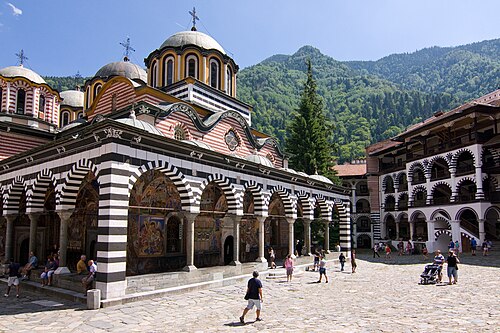
- Rila Monastery. A UNESCO site since 1983, in the Rila mountains south of Sofia. There is no public transport: the monastery lists a car, an organised tour or a bus to Blagoevgrad and then a taxi. It does not admit visitors in shorts, short skirts or sleeveless tops, and photos are not allowed inside the church or museum.
- Plovdiv. Bulgaria’s second city, with a Roman theatre and an Old Town of painted 19th-century houses, reachable by BDZ train or bus; better as an overnight than a rushed day.
What goes wrong in Sofia?
- Waiting for a metro at Terminal 1. The M4 only stops at Terminal 2; take the free shuttle across.
- Turning up at Rila on a bus. There is none; book the tour or car before you go.
- Dressing for the beach at a monastery or cathedral. Shoulders and knees covered, and no shorts at Rila.
- Carrying old levs. Since 1 February 2026 the euro is the only legal tender; the Bulgarian National Bank still exchanges levs free of charge.
- Underestimating Vitosha. It is a real mountain next to the city, with fast-changing weather on top.
How many days do you need in Sofia?
Two days covers the cathedral and its crypt museum, the Museum of History of Sofia, Roman Serdica, Vitosha Boulevard and a walking tour. Three days adds Rila Monastery or a morning on Vitosha, and four or five lets you continue to Plovdiv or, in winter, to Bansko.
- Activate before you fly: data works on arrival
- Plans for 200+ countries from a few dollars
- Keep your number; no physical SIM swap
Frequently Asked Questions
What is the best time to visit Sofia?
May, June and September are the most comfortable months, with average highs of 20.3°C in May, 23.5°C in June and 22.6°C in September, according to the National Institute of Meteorology and Hydrology’s 1961-1990 normals published by the WMO. July and August average about 26°C. Winter is cold, with a January high of 2.2°C and a low of -4.9°C.
Where should I stay in Sofia?
Stay in the city centre around Serdika, Sveta Nedelya Square and Vitosha Boulevard for the metro and most sights within walking distance. Oborishte, around the Alexander Nevsky Cathedral, is quieter and still central. The area around the National Palace of Culture at the south end of Vitosha Boulevard is on the M2 metro and has more modern hotels.
How do I get from Sofia Airport to the city centre?
Take the M4 metro from the eastern end of Terminal 2: Sofia Airport says it reaches the centre in about 20 minutes, and a single ticket costs €0.80, payable by contactless card, phone or watch. Change to the M2 line at Serdika for the Central Railway Station. Bus 84 serves both terminals and takes around 35 to 45 minutes. Yellow! is the airport’s contracted taxi company.
Is Sofia expensive?
No, it is one of the cheaper EU capitals. A single metro or bus ticket costs €0.80 and a 72-hour public transport card €7.60. In a Booking.com check on 9 October 2026, central hotels for a mid-January weekend started at around 50 euros a night for two. The Museum of Christian Art in the cathedral crypt costs €10, or €2 on Thursdays.
Can you visit Rila Monastery from Sofia without a car?
Yes, but not by public transport. Rila Monastery says there is no longer a public bus to it, so the options are an organised tour, a hired car, or a bus to Blagoevgrad followed by a taxi. Dress modestly: the monastery does not admit visitors in shorts, short skirts or sleeveless tops, and photos are not allowed inside the church or museum.
How many days do you need in Sofia?
Two days covers the Alexander Nevsky Cathedral and its crypt museum, the Museum of History of Sofia, Roman Serdica, Vitosha Boulevard and a free walking tour. Three days lets you add a day trip to Rila Monastery or an afternoon on Vitosha mountain.
Start planning your Sofia trip
Book the flight first, because fares into Sofia move more than room rates do, then the room: central hotels are cheap by EU standards but the best-located ones fill early for spring and autumn weekends.
Find cheap flights to Sofia | Compare Sofia hotel prices
More ideas: where to go in May, where to go in September and the cheapest European countries to visit in 2026.