Quick Answer
- Best time: February to April; October and November are the wettest, flood-prone months.
- Tickets: Imperial City 200,000 dong, major tombs 150,000 dong each, four-site combo 530,000 dong.
- Where to stay: the south bank for first-timers, the Citadel for quiet, the riverside south of town for resorts.
- Getting in: Phu Bai airport (HUI) about 15 km south, or the north-south train.
- Moving on: the Hai Van Pass by heritage train or by car to Da Nang and Hoi An.
At a glance
- Best time
- Feb–Apr
- Time needed
- 2 to 3 days
- Currency
- Vietnamese dong (VND)
- Language
- Vietnamese
- Getting around
- Taxi, Grab, bicycle, Perfume River boats
Hue is the city most Vietnam itineraries squeeze into one night between Hanoi and Hoi An, and it is the one that most rewards a second day. The Nguyen emperors ruled from here until 1945, and what they left is spread out: a walled citadel on one bank, a scattering of tombs in the hills to the south, and a river joining it all. Ticket prices below were checked on 10 October 2026.
When is the best time to visit Hue?
Hue sits on the central coast, and its weather runs on a different calendar from Hanoi or Ho Chi Minh City: the heavy rain comes in autumn and early winter, not summer.
| Months | Mean temperature (JMA, 1991-2020) | Rain per month | What to expect |
|---|---|---|---|
| Jan | about 20°C | about 156 mm | Cool, grey, drizzly; quiet sites |
| Feb–Apr | about 21–26°C | about 50–90 mm | The best window: dry-ish, mild, green |
| May–Aug | about 28–29°C | about 70–160 mm | Hot and humid; start sightseeing early |
| Sep | about 27°C | about 440 mm | The wet season begins |
| Oct–Nov | about 24–26°C | about 720–840 mm | Wettest months, real flood risk |
| Dec | about 21°C | about 460 mm | Still wet, cooler, low prices |
These are mean temperatures (day and night averaged), so afternoon highs run several degrees warmer. For a winter trip, Hue in December and January is cool rather than cold, but expect grey skies and days of drizzle. If you want winter sun in Vietnam, the south is the better bet; Hue in winter is for travellers happy to trade weather for empty courtyards.
The flood season is real. In late October 2025, more than 1,000 mm of rain fell on Hue in 24 hours, a record for Vietnam according to the National Center for Hydro-Meteorological Forecasting, and the Imperial City stood under more than a metre of water. That was extreme, but floods in October and November are a recurring hazard here, not a freak event.
Where should you stay in Hue?
The Perfume River splits the city: the Citadel on the north bank, the newer town with most hotels on the south bank.
| Area | Best for | Trade-off |
|---|---|---|
| South bank (Le Loi, Pham Ngu Lao, Vo Thi Sau) | First-timers, restaurants, tour desks, walking at night | Busier and louder; a ride across the bridge to the Citadel |
| Inside the Citadel walls | Quiet homestays, walking to the Imperial City | Fewer restaurants after dark |
| Riverside south of town, towards the tombs | Resort calm, pools, green surroundings | You need a taxi or Grab for everything |
First time? Stay on the south bank: it keeps dinners, cafés and onward transport on your doorstep, and the Imperial City is a short ride away. Choose a riverside resort if Hue is your rest stop after a busy Hanoi leg. Compare Hue hotel prices
How do you get to and around Hue?
- Activate before you fly: data works on arrival
- Plans for 200+ countries from a few dollars
- Keep your number; no physical SIM swap
What should you not miss in Hue?
| Sight | Adult ticket (2026) | Tip |
|---|---|---|
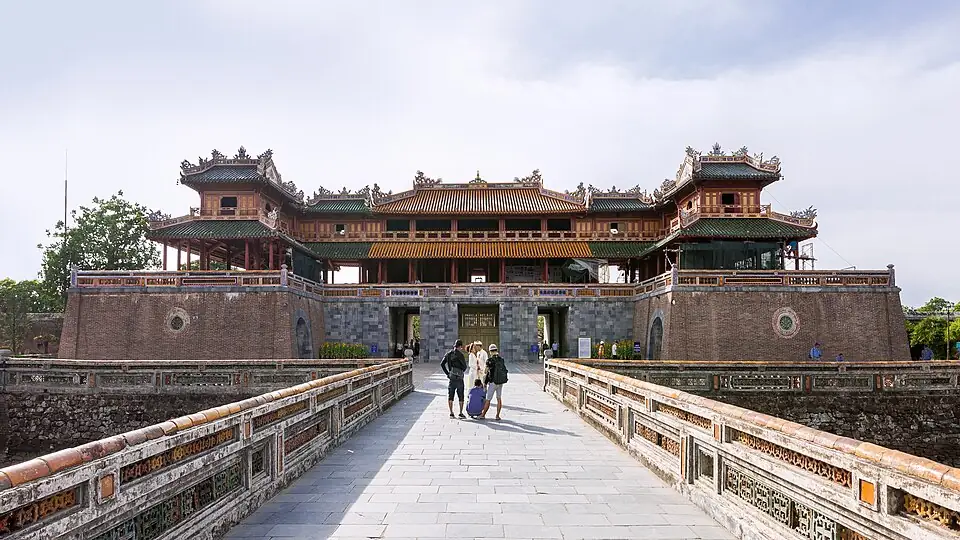
| Imperial City (Dai Noi) | 200,000 dong | Enter by the Ngo Mon (Meridian Gate); allow half a day |
| Tomb of Tu Duc | 150,000 dong | Lake, pavilions and pine trees; the most romantic of the tombs |
| Tomb of Khai Dinh | 150,000 dong | A steep stair to an interior covered in glass and porcelain mosaic |
| Tomb of Minh Mang | 150,000 dong | Symmetrical courtyards and lakes; the furthest south |
| Combo: Imperial City + 2 tombs | 420,000 dong | Pick any two of the three |
| Combo: Imperial City + 3 tombs | 530,000 dong | Saves 120,000 dong on four single tickets |
Children aged 7 to 12 pay 40,000 dong at the Imperial City and 30,000 dong at the three major tombs; under-7s enter free. The smaller sites (the Museum of Royal Antiquities, An Dinh Palace, the Nam Giao Esplanade) are 50,000 dong each.
- Thien Mu Pagoda: the octagonal tower on the north bank above the river is Hue’s best-known silhouette; go late afternoon for the light.
- The Perfume River at dusk: walk the south-bank riverside path as the bridges light up.
- Dong Ba Market: the city’s main market by the river, good for snacks and a sense of daily life.
- Bun bo Hue: the city’s own beef noodle soup, spicy and fragrant with lemongrass, is a breakfast dish here. Look for busy local stalls in the morning, and try the small steamed rice cakes (banh beo) the city is also known for.
Day trips: the Hai Van Pass to Da Nang and Hoi An
The Hai Van Pass, the mountain spur between Hue and Da Nang, is the most scenic stretch of the whole north-south journey. You have two ways over it:
- By train. Vietnam Railways runs the Central Heritage Connection train between Hue and Da Nang on the 102 km coastal line, with fares of roughly 180,000 to 500,000 dong depending on the departure and seat class. Allow up to about four hours on the heritage service; sit on the sea side.
- By car. Roads through the Hai Van Tunnel are quicker but you see nothing. Hire a car and driver who takes the old pass road instead, stops at the top, and carries on to Hoi An, about 45 minutes beyond Da Nang. This turns a transfer into a sightseeing day.
What goes wrong in Hue?
- One night is too short. The Imperial City alone fills a morning, and the tombs are spread over the hills south of town. Two full days is the comfortable minimum.
- October and November bookings. Floods can close sites and cut roads. If you must come then, book refundable rates and keep a buffer day.
- Midday heat from May to August. The Imperial City has big open courtyards with little shade; go at opening time.
- Buying four single tickets. If you plan to see the Imperial City and all three major tombs, the 530,000 dong combo is cheaper.
How many days do you need in Hue?
Two days is the sweet spot: day one for the Imperial City and the Citadel, day two for Tu Duc, Khai Dinh and Minh Mang, with Thien Mu on the way back. A third day lets you make the Hai Van Pass a proper outing on your way south. Hue fits naturally between Hanoi and Hoi An on a two-week route; see our Vietnam itinerary and Vietnam budget guides.
Sources
Ticket prices come from the fee schedule approved by the Thua Thien Hue People’s Council, as reported by Báo Văn Hóa and Tuoi Tre; climate figures are the Japan Meteorological Agency’s 1991-2020 normals for the Hue station; flood figures cite Vietnam’s National Center for Hydro-Meteorological Forecasting; train details come from Vietnam Railways’ announcements as reported by Viet Nam News and VTV. Full links are in the sources box on this page.
Frequently Asked Questions
How much is the Hue Imperial City ticket?
The Imperial City (Dai Noi) costs 200,000 dong for an adult and 40,000 dong for a child aged 7 to 12; children under 7 enter free. The tombs of Minh Mang, Tu Duc and Khai Dinh are 150,000 dong each. A combo of the Imperial City plus two of those tombs costs 420,000 dong, and the Imperial City plus all three costs 530,000 dong, which saves 120,000 dong on buying four tickets separately.
What is the best time to visit Hue?
February to April is the best window: the rains have eased (around 50 to 90 mm a month) and mean temperatures sit around 21 to 26°C. May to August is hot, with monthly means of about 28 to 29°C. September to December is the wet season, with October averaging about 840 mm of rain and real flood risk from the Perfume River.
Is it safe to visit Hue in October and November?
You can visit, but plan for disruption. October and November are the two wettest months in Hue, and floods are a normal hazard rather than a freak event: in late October 2025 more than 1,000 mm of rain fell in 24 hours, a national record, and the Imperial City stood under water. Book flexible rates, watch the national forecast and keep a spare day.
Where should I stay in Hue?
Most first-timers stay on the south bank of the Perfume River, around Le Loi street and the Pham Ngu Lao and Vo Thi Sau walking streets, where restaurants and tour desks cluster and the Imperial City is a short ride across a bridge. Stay inside the Citadel walls for quiet homestays near the main sight, or along the river south of town for resort calm close to the royal tombs.
How do I get from Hue to Hoi An or Da Nang?
Vietnam Railways runs the Central Heritage Connection train between Hue and Da Nang, with fares of roughly 180,000 to 500,000 dong and a route over the Hai Van Pass that is the scenic highlight. By car, the road through the Hai Van Tunnel is quicker but skips the views, so many travellers hire a car and driver that takes the old pass road and continues to Hoi An, about 45 minutes beyond Da Nang.
How many days do you need in Hue?
Two full days covers the essentials: one for the Imperial City and the Citadel, one for the royal tombs of Tu Duc, Khai Dinh and Minh Mang plus Thien Mu Pagoda by the river. Add a third day if you want the scenic Hai Van Pass transfer to Hoi An as its own outing rather than a rushed travel day.
Start planning your Hue trip
Fly into Phu Bai or ride the train in from Hanoi, then compare a few dates between February and April first: that is when Hue looks its best and rooms are still reasonable.
Find cheap flights to Hue | Compare Hue hotel prices
Planning the wider trip? See our Vietnam travel guide, the Vietnam eSIM guide and the hotels hub.