Quick Answer
- Best time to visit Chiang Mai: November to February. Late February to April is the smoky burning season.
- From the airport: 10 to 20 minutes to the Old City; shuttle bus 40 to 60 baht, counter taxi around 150 to 200 baht.
- Getting around: walk the Old City; red songthaews and Grab for longer hops.
- Where to stay: the Old City for first-timers, Nimman for cafés, the Ping River for calm.
- Entry: 30 days visa-free for many passports since 15 September 2026, plus the free online TDAC arrival card.
At a glance
- Best time
- November to February
- Time needed
- 3 to 4 days
- Currency
- Thai baht (THB)
- Language
- Thai (northern Thai dialect widely spoken)
- From the airport
- Shuttle bus 40-60 THB, ~15 min
- Plugs
- Flat or round two-pin, 220 V
- Visa
- Visa-free up to 30 days for many
- Getting around
- Walking, red songthaews, Grab
What should you know before your first trip to Chiang Mai?
The one mistake that ruins Chiang Mai trips is timing. Cheap March flights are cheap for a reason: it is the heart of the burning season, when smoke can hang over the valley and hide the mountains entirely.
Get the season right and the rest is easy: a compact, walkable old city, temple mornings, café afternoons and night markets. This Chiang Mai travel guide covers the timing, the airport ride, the sights and where to stay. VoyageHacks checked the transport options and seasonal details on 3 October 2026.
What to pack for Chiang Mai
Four picks from our gear guides that suit this trip. Each card opens the live Amazon price; the links below lead to the full comparisons.
360-degree memory foam with asymmetrical sides, so you pick which side gets the most support instead of getting the same generic curve everywhere. It was the single most-purchased travel product among Travel + Leisure readers in 2025. The catch: even compressed to about 60% of its size in the included bag, it’s still bulkier than an inflatable.
Check price on Amazon Live price on AmazonThe cheapest way to find out whether you even like compression socks: three knee-high pairs in 15-20 mmHg, the range most often recommended for flying.
Check price on Amazon Live price on AmazonThe reliable all-rounder: one USB-C and four USB-A ports, plugs for 200+ countries, and a built-in fuse with a spare. The adapter most people should buy.
Check price on Amazon Live price on AmazonModel A1259, 10,000mAh, about 37Wh, 215 g. Two phone charges in a jacket pocket, and small enough that the two-bank limit never becomes a question.
Check price on Amazon Live price on AmazonWhen is the best time to visit Chiang Mai?
Chiang Mai’s seasons change the air you breathe, not just the temperature.
| Season | Weather and air | Crowds and prices | Best for |
|---|---|---|---|
| Cool and dry (Nov to Feb) | Cool mornings, clear skies | Busiest, peak rates | Temples, markets, mountain views |
| Burning and hot (late Feb to Apr) | Hot; smoke and haze, often poor air quality | Quieter, lower rates | Hard to recommend if you are sensitive to smoke |
| Green and rainy (Jun to Oct) | Warm, lush, afternoon showers | Lightest, best value | Green hills, waterfalls, lower prices |
Burning-season smoke comes from crop and forest fires across the region and varies a lot year to year. If you must travel then, check the live PM2.5 readings on Thailand’s Pollution Control Department site before you book, and pack a proper mask.
How do you get from Chiang Mai airport into the city?
Chiang Mai International Airport is unusually close to town, only about 3 to 4 km from the Old City.
| Option | Cost | Notes |
|---|---|---|
| Airport shuttle bus (routes A1 to A3) | 40 baht (A1, A2) or 60 baht (A3) | From the international terminal, gate 12 |
| Chiang Mai City Bus | Low flat fare | Loops past Tha Phae Gate and the Night Bazaar, roughly 6 am to 11:30 pm |
| Counter taxi | Around 150 to 200 baht flat | Pay cash at the official counter after baggage reclaim |
| Grab | Set in the app | Pick-up from the designated area |
How do you get around Chiang Mai?
What should you see in Chiang Mai?
| Sight | What it is | Tip |
|---|---|---|
| Wat Phra That Doi Suthep | Gold-spired temple on the mountain above the city | Clear mornings; 306 naga steps or the cable car; small foreigner fee |
| Wat Chedi Luang | Huge ruined brick chedi in the Old City | Small entry fee; quiet early |
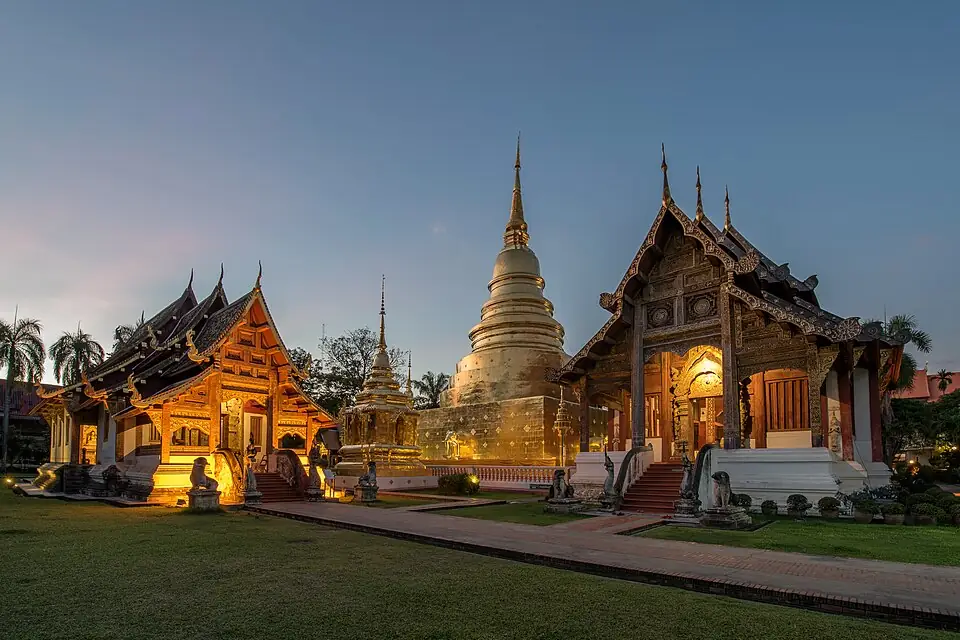
| Wat Phra Singh | The Old City’s most revered temple | Cover shoulders and knees |
| Sunday Walking Street | Street food and crafts through the Old City | Arrive around 5 pm before the crush |
| Ethical elephant sanctuary | Observe and feed rescued elephants | Choose a no-riding, no-bathing-show operator |
| Northern Thai cooking class | Market shopping, then khao soi and curries | Half-day classes are plenty |
Day trips: Doi Inthanon, Thailand’s highest mountain, is a full day out with waterfalls and twin royal pagodas, and Chiang Rai is about three hours away by road.
What should you eat in Chiang Mai?
- Khao soi: the northern coconut-curry noodle soup with crispy noodles on top, the city’s signature dish.
- Sai ua: herb-packed northern sausage, grilled at markets.
- Nam prik noom: a smoky green-chilli dip eaten with vegetables and sticky rice.
- Market grazing: the Sunday Walking Street and Warorot Market are the easiest places to try everything.
Where should you stay in Chiang Mai?
| Area | Vibe | Best for | Trade-off |
|---|---|---|---|
| Old City (inside the moat) | Historic, temple-dense, walkable | First-timers, the Sunday market | Touristy on market nights |
| Nimman (Nimmanhaemin) | Modern cafés and design, near the university | Coffee culture, remote workers | A short ride to the temples |
| Ping River | Leafy, calm, riverside | Slower stays, couples | Fewer sights on foot |
Our where to stay in Chiang Mai guide compares the areas in detail.
Do you need a visa for Chiang Mai?
From 15 September 2026, nationals of around 60 countries and territories (including the US, UK, Canada and Australia) get a 30-day visa exemption for tourism in Thailand, down from 60 days. Every visitor also files the free Thailand Digital Arrival Card at the Immigration Bureau’s official site within 72 hours before arrival. See our Thailand visa guide.
Frequently Asked Questions
What is the best time to visit Chiang Mai?
November to February is the best time to visit Chiang Mai: cool, dry days, blue skies and comfortable evenings, which is also why it is the busiest and priciest stretch. Avoid roughly late February to April, the burning season, when smoke from crop and forest fires can blanket the valley for weeks. The green, rainy months (June to October) are quieter and cheaper.
Where should I stay in Chiang Mai for the first time?
The Old City inside the moat is the easy first base: walkable, packed with temples, and steps from the Sunday Walking Street. Nimman (Nimmanhaemin) is the modern, café-and-design district near the university, while staying by the Ping River trades buzz for leafy calm. Pick the Old City if it’s your first trip and you want to walk everywhere.
How do I get from Chiang Mai airport into the centre?
Chiang Mai International Airport is only about 3 to 4 km from the Old City, a 10 to 20 minute ride. Airport shuttle buses cost 40 to 60 baht, flat-rate taxis from the official counter cost around 150 to 200 baht, and Grab serves the terminal too. Red songthaews are the local budget option: agree the fare first.
How do you get around Chiang Mai?
The Old City is compact and genuinely walkable, so you’ll cover most temples on foot. For longer hops, flag a red songthaew (shared trucks that run loose routes around town) and agree the fare, or use the Grab app for door-to-door rides. Renting a scooter is popular, but only if you already ride confidently and hold the right licence.
Do I need a visa for Chiang Mai?
Many nationalities, including US, UK, Canadian and Australian passport holders, can stay in Thailand visa-free for up to 30 days for tourism since 15 September 2026 (it was 60 days before). Every foreign visitor must also complete the free Thailand Digital Arrival Card online within 72 hours before arrival. Confirm the rule for your passport before you fly.
How many days do you need in Chiang Mai?
Three to four days covers the essentials: the Old City temples, Doi Suthep, a Sunday Walking Street evening and either a cooking class or an ethical elephant sanctuary day trip. Stay a week and you can add Doi Inthanon, Chiang Rai and slow café mornings in Nimman without ever feeling rushed.
Ready to plan your Chiang Mai trip?
If your dates are flexible, don’t book March just because the fare is low: the haze can hide the mountains you came for. Aim for November to February and book the Old City early for December.
Find cheap flights to Chiang Mai | Compare Chiang Mai hotel prices
Planning the wider trip? See our best time to visit Thailand guide, the Thailand itinerary, Bangkok and Chiang Rai, or browse more stays on the hotels hub.