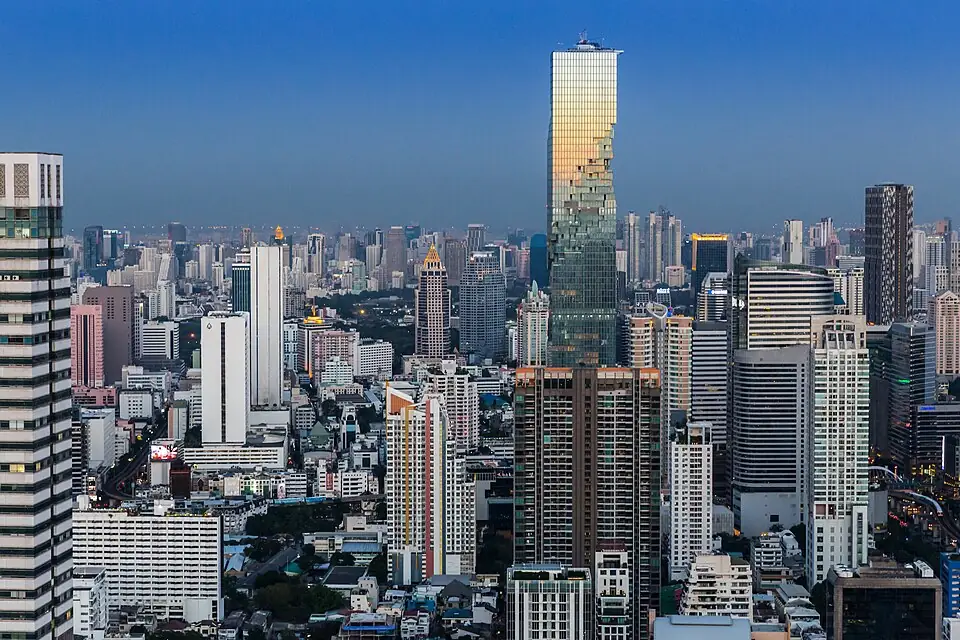
Quick Answer
- Best for a first visit: Siam/Pratunam for central BTS access, or Asok/Phrom Phong for BTS plus the MRT Blue Line.
- Best balanced business-and-leisure base: Silom/Sathorn, near rail and Lumphini Park.
- Best atmosphere: Riverside, provided the hotel has a useful pier, shuttle boat or access to Saphan Taksin BTS.
- Best for temples and lower room rates: Rattanakosin Old City, accepting less convenient access to modern Bangkok.
- Best neighbourhood feel: Ari, on the BTS Sukhumvit Line north of Siam.
- Treat all hotel bands below as July 2026 planning estimates, then compare live totals for your dates, room and cancellation terms.
Where to Stay in Bangkok: Match the Area to Your Days
Bangkok punishes the wrong map decision more than the wrong hotel decision. A beautiful room becomes a poor base if every morning starts with a long road transfer. Bangkok has several centres, so ask: Which area puts most of my plans on one rail line or boat route?
Bangkok Areas Compared
| Area | July 2026 planning band | Transport advantage | Best for | Main trade-off |
|---|---|---|---|---|
| Siam / Pratunam | 1,500–5,500 THB | Siam BTS junction; nearby BTS/ARL options | First trips, shopping, families | Busy; Pratunam station walks vary |
| Sukhumvit: Asok / Phrom Phong | 1,600–5,500 THB | BTS; MRT interchange at Asok/Sukhumvit | Easy logistics, dining, longer stays | Traffic and premium prices near stations |
| Silom / Sathorn | 1,400–4,800 THB | BTS and MRT choices | Couples, work trips, park access | Quieter on some office streets after hours |
| Riverside | 2,000–6,500 THB | Boats; BTS via Saphan Taksin for some hotels | Views, temples, slower stays | Convenience depends on the exact pier |
| Rattanakosin Old City | 900–3,200 THB | MRT Blue Line at Sanam Chai for part of the area; boats | Temples, heritage, tighter budgets | Patchy rail access across the district |
| Ari | 1,300–4,000 THB | Ari BTS | Repeat visitors, cafés, calm | Fewer headline sights within walking distance |
These per-room bands come from live Booking.com and Expedia spot checks for July 2026 stays. They are not quotes: dates, room, occupancy, cancellation conditions, service charges and taxes can change the total.
The 6 Best Areas to Stay in Bangkok
1. Siam and Pratunam: best for a first central base
Siam puts major malls, food courts and indoor heat breaks around the junction of both BTS lines, making it the easiest flexible base for a short first trip or family stay. Pratunam, immediately north, is more market-driven and often cheaper, with Ratchathewi BTS, Chit Lom BTS, Ratchaprarop Airport Rail Link or Phaya Thai potentially useful. The catch: a “Pratunam” address can still mean an awkward walk across crowded roads, so inspect the route from the hotel entrance.
2. Sukhumvit at Asok or Phrom Phong: best for easy logistics
Sukhumvit stretches far beyond one neighbourhood; Asok and Phrom Phong are the useful visitor anchors. At Asok, BTS connects with MRT Sukhumvit and the Blue Line. Phrom Phong is one stop away beside major shopping, Benchasiri Park, serviced apartments and hotels. Choose this corridor for rail access, varied dining and everyday services. Skip it for a temple-dominated itinerary: persistent road traffic, deceptively long side streets and cross-city journeys to the Old City become tiring.
3. Silom and Sathorn: best central compromise
Silom and Sathorn mix offices, residential towers, local food lanes and Lumphini Park. Depending on the address, BTS Sala Daeng or Chong Nonsi and MRT Si Lom or Lumphini make this a strong base for work trips and couples wanting a less shopping-dominated centre. “Sathorn” covers a broad area, however; a hotel deep down a side road may require a shuttle or long walk, so check the pedestrian route rather than the listing’s straight-line distance.
4. Riverside: best for views and river journeys
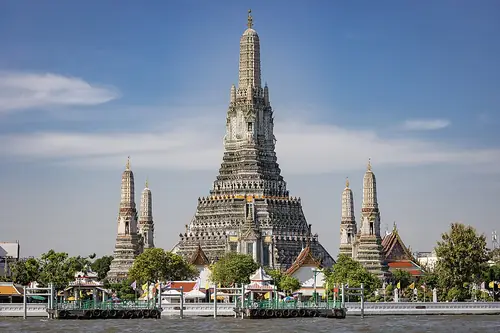
The Chao Phraya makes the journey part of the day and works well for Wat Arun, Wat Pho and river-linked sightseeing. Yet “Riverside” is not one transport experience: a hotel near Sathorn Pier and BTS Saphan Taksin differs from one dependent on a private shuttle. Identify the operating pier and shuttle hours before paying for a view. The Express Boat schedule was updated from 24 June 2026; recheck the operator’s current colour-coded routes, fares and timetable.
5. Rattanakosin Old City: best for temples and heritage
Rattanakosin puts the Grand Palace, Wat Pho, museums and historic streets close by, alongside inexpensive guesthouses and simple hotels. For a short heritage-focused trip, walking can beat commuting from Sukhumvit. The claim that the entire area has no MRT is outdated: Blue Line station Sanam Chai serves Wat Pho and the southern Old City, while boats cover other journeys. Connections remain uneven, though, making it weaker for shopping districts or frequent cross-city travel.
6. Ari: best for a neighbourhood stay
Ari, north of Siam on the BTS Sukhumvit Line, feels more residential than the main visitor corridors. Independent cafés, casual restaurants and small shops make it comfortable for repeat visitors and slower stays. The trade-off is boarding the BTS for most attractions. Hotels are less numerous than in Sukhumvit, and a good-value room may sit farther from the station than it appears; keep the walk realistic in July heat or rain.
Bangkok Transport Rules That Should Decide the Hotel
For 2026 planning, allow up to 65 THB for a BTS trip including extensions, though most central rides cost less; use the operator’s live calculator for exact stations. Legacy MRT/MRT Plus stored-value cards stopped working on the Blue and Purple Lines on 1 June 2026. Those lines still accept single-journey tokens, the new MRT EMV product and eligible contactless bank cards; check your issuer before relying on a foreign card. Rabbit Card remains BTS-only, while Airport Rail Link has accepted contactless Visa, Mastercard, JCB and UnionPay since 8 November 2025.
The current official transit map shows BTS, MRT, Airport Rail Link and SRT together. Siam/Pratunam can work well via Phaya Thai or Ratchaprarop, but map the final hotel leg.
For named properties rather than neighbourhood strategy, use the best budget hotels in Bangkok guide. For a wider itinerary, continue with the Bangkok travel guide and the Thailand planning pillar. Set up mobile data before arrival with the travel eSIM guide so station maps and hotel directions work immediately.
- Activate before you fly: data works on arrival
- Plans for 200+ countries from a few dollars
- Keep your number; no physical SIM swap
Frequently Asked Questions
Where should I stay in Bangkok for the first time?
For a first Bangkok trip, stay in Siam or around Asok and Phrom Phong on Sukhumvit. Siam is ideal for shopping and central BTS connections; Asok adds an MRT Blue Line interchange. Choose the base that puts more of your plans on a direct train line.
What is the best area in Bangkok for families?
Siam works well for families who want short, air-conditioned trips to shopping, food courts and central attractions. Phrom Phong adds BTS access and nearby parks. Prioritise a comfortable station walk, check occupancy rules, and compare the final total for the exact family room.
What is the best area to stay in Bangkok on a budget?
Rattanakosin Old City usually has the lowest central guesthouse and simple-hotel prices, while Ari offers value near BTS and Pratunam has abundant lower-cost rooms. Include daily rail, boat or taxi costs before choosing, because the cheapest room is not always the cheapest stay.
Is it better to stay on the Riverside or in Sukhumvit?
Choose Riverside for views, temple-focused days and boat journeys; choose Sukhumvit for simple rail connections, dining variety and more hotels. Riverside convenience depends on the exact pier and shuttle, while Asok and Phrom Phong are straightforward BTS bases. For first-timers, Sukhumvit is usually easier.
Should my Bangkok hotel be near the BTS or MRT?
Yes, unless most plans are walkable in the Old City or directly on the river. Legacy MRT/MRT Plus stored-value cards stopped working on the Blue and Purple Lines on 1 June 2026. Those lines still accept single-journey tokens, the new MRT EMV product and eligible contactless bank cards; check your issuer before relying on a foreign card. Rabbit remains BTS-only, while Airport Rail Link has accepted contactless Visa, Mastercard, JCB and UnionPay since 8 November 2025.
How much does a Bangkok hotel cost in 2026?
For July 2026 planning, roughly 900 to 6,500 THB per room per night covers simple Old City rooms through comfortable central and Riverside hotels; luxury costs more. These are marketplace spot-check bands, not quotes: dates, room, occupancy, cancellation terms, service charges and taxes can change the total.
Compare live Bangkok hotel prices on Booking.com