Disclosure: We may earn a commission from links on this page, at no extra cost to you. How we earn
This article contains affiliate links. If you make a booking through these links, we may earn a commission at no extra cost to you. About & Affiliate Disclosure
Quick Answer
- Route: Seoul, extended to Busan (via KTX) at 10 days and Jeju (via domestic flight) at 14.
- Minimum days: 7, for Seoul alone at an unhurried pace.
- Transport: KTX high-speed rail to Busan from Seoul Station or Suseo (~2h25-2h50, around $38 since KTX and SRT merged on 1 September 2026), domestic flights to Jeju from Gimpo (~1h16m, around $20-55).
- Base yourself in: Myeongdong or Jongno/Insadong (Seoul), Haeundae (Busan).
- Entry paperwork: check your K-ETA exemption status, and file the free e-Arrival Card within 72 hours of arrival if you don’t hold one.
- Avoid the lunar holidays - Seollal and Chuseok spike domestic transport and hotel prices nationwide.
Planning a South Korea Itinerary? Get the Entry Paperwork Right First
Here’s the thing almost every first-timer misses in 2026: you might not need a visa, but you still need paperwork. Most Western passport holders travel to South Korea under a temporary K-ETA exemption, so no visa application, no fee, no waiting on approval. Feels like a free pass. Except since January 1, 2026, anyone who skips the K-ETA has to file a separate e-Arrival Card online, within 72 hours of landing, or risk a hold-up at immigration. It’s free and it takes minutes - but it’s new enough that plenty of travelers still don’t know it exists.
Get that sorted and the rest of the trip is refreshingly easy to plan: Seoul anchors every version of this itinerary, with Busan (a KTX ride away) or Jeju (a short flight) as the natural second act. Below are three itineraries that hold up at 7, 10 and 14 days, plus exactly where to add or cut.
The Route at a Glance
| Days | Route | Best for |
|---|---|---|
| 7 | Seoul only (7n) | First-timers, palaces, cafés and street food |
| 10 | Seoul (6-7n) → Busan (2-3n) | The sweet spot - city plus coast, linked by KTX |
| 14 | 10-day route → Jeju (3-4n) | A slower, greener finish with a domestic flight |
The 7-Day South Korea Itinerary (Seoul Only)
A week is enough for Seoul if you don’t try to bolt on a second city. The palaces, markets and neighborhoods are dense enough to fill seven days without a single travel day eating into it.
| Day | Base | Plan |
|---|---|---|
| 1 | Seoul | Land at ICN, AREX into Seoul Station, settle in Myeongdong; evening at the street-food stalls |
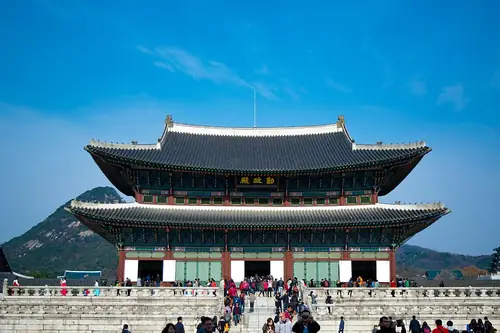
| 2 | Seoul | Gyeongbokgung Palace (rent a hanbok for free entry), Bukchon Hanok Village, tea houses in Insadong |
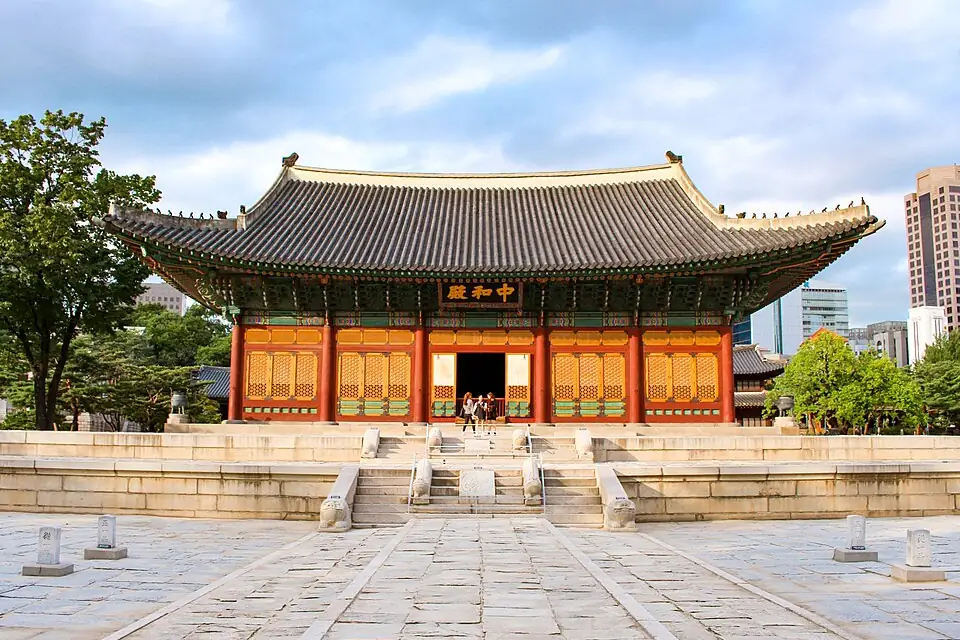
| 3 | Seoul | Changdeokgung and its Secret Garden, Jongno’s back streets, sunset at N Seoul Tower |
| 4 | Seoul | Hongdae’s cafés and indie shops by day, Gwangjang Market’s street-food stalls for dinner |
| 5 | Seoul | Gangnam’s K-culture landmarks and COEX Mall, an evening at a jjimjilbang bathhouse |
| 6 | Seoul | A half-day DMZ tour (3rd Tunnel and Dora Observatory) or a slower day around Cheonggyecheon |
| 7 | Seoul → home | Itaewon’s international food scene for a last meal, connect to your flight |
The one cut if you’re tight on time: treat the DMZ tour as optional rather than essential - it’s a half-day commitment, and the JSA (Panmunjom) leg has been closed to the public since 2023, so verify exactly what’s included with the operator before booking. Don’t shorten the palace day to fit it in; Gyeongbokgung and Changdeokgung both reward unhurried visits.
See the full South Korea travel guide for month-by-month weather and when to time this trip.
The 10-Day South Korea Itinerary (the sweet spot)
This is the one worth booking. It keeps a full week in Seoul and adds real time on the coast in Busan, linked by a single high-speed train ride rather than a long transfer.
| Day | Base | Plan |
|---|---|---|
| 1-2 | Seoul | Arrive, settle in Myeongdong or Jongno, Gyeongbokgung Palace, Bukchon Hanok Village |
| 3 | Seoul | Changdeokgung, Insadong tea houses, N Seoul Tower |
| 4 | Seoul | Hongdae cafés, Gwangjang Market street food |
| 5-6 | Seoul | Gangnam K-culture, COEX, a jjimjilbang evening, DMZ day tour or a rest day |
| 7 | Seoul → Busan | KTX from Seoul Station or Suseo Station (~2h25-2h50, around $38) |
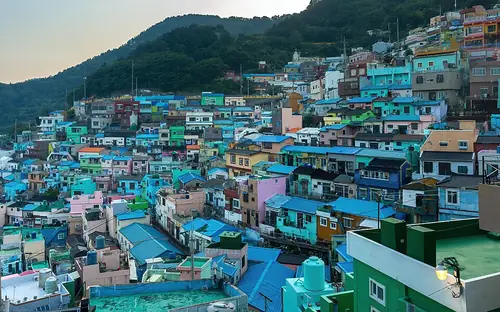
| 8-9 | Busan | Haeundae Beach, Gamcheon Culture Village, Jagalchi Fish Market’s food stalls, BIFF Square |
| 10 | Busan → home | Fly out of Busan (Gimhae) if it connects, or KTX back to Seoul to connect through Incheon |
Where to cut to 8-9 days: drop one Seoul day and treat Busan as a 2-night add-on instead of 3. Where to add: an extra Busan night around Haeundae, or a second Gangnam day for shopping and a spa afternoon, is never wasted.
The 14-Day South Korea Itinerary (add Jeju)
Two weeks lets the trip breathe. Take the 10-day route and close it out with Jeju - a genuinely different Korea from the palaces of Seoul and the port energy of Busan.
| Days | Base | Plan |
|---|---|---|
| 1-7 | Seoul | As above: palaces, Hongdae cafés, Gangnam, a jjimjilbang evening, optional DMZ tour |
| 8 | Seoul → Busan | KTX to Busan |
| 9-10 | Busan | Haeundae Beach, Gamcheon Culture Village, Jagalchi Fish Market |
| 11 | Busan → Seoul → Jeju | KTX back to Seoul, then a same- or next-day domestic flight from Gimpo (~1h16m, around $20-55) |
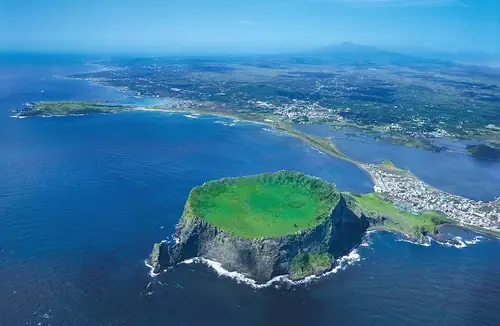
| 12-13 | Jeju | Seongsan Ilchulbong volcanic crater, Hallasan foothill trails, tangerine orchards, coastal cafés |
| 14 | Jeju → home | Fly out via Jeju International, or connect back through Seoul/Incheon |
The alternative fortnight: swap Jeju for Gyeongju instead - ancient temples, royal tombs and a very different, history-first rhythm from Busan’s coastline - if a slower inland finish appeals more than beaches. Check current KTX schedules to Gyeongju before booking, since fares and routing there aren’t as fixed as the Seoul-Busan line.
Getting Between Stops
The transport question first-timers overthink most: which train, whether Jeju is worth the extra flight, and whether the eSIM and entry paperwork are sorted before landing.
- Activate before you fly: data works on arrival
- Plans for 200+ countries from a few dollars
- Keep your number; no physical SIM swap
Budget for This Route
Expect a 10-day Seoul-plus-Busan trip to land in the budget range around $50-80/day (hostel dorm, street food, subway) or mid-range around $100-150/day (private room, sit-down meals, occasional taxi or activity) - more once you add the 14-day Jeju leg with a domestic flight and coastal cafés. A Korean-BBQ or bibimbap sit-down meal runs around $11-18 (KRW 15,000-25,000) per person, and street food like tteokbokki runs around $2-4 (KRW 3,000-5,000) a portion; a specialty coffee at one of Korea’s countless cafés typically runs around $3-5 (KRW 4,500-7,000).
Budget separately for attraction tickets: Gyeongbokgung Palace runs around $2 (KRW 3,000) for adults, or free if you’re wearing a rented hanbok (rental shops near Exit 5 of Gyeongbokgung Station start around $7/KRW 10,000 for 2-4 hours). The Integrated Palace Pass covers five palaces plus Jongmyo Shrine for around $7 (KRW 10,000), valid roughly three months. N Seoul Tower’s observatory runs around $13-19 standalone, and a half-or-full-day DMZ tour (3rd Tunnel and Dora Observatory) runs around $40-55 - remember the JSA leg itself has been off-limits to the public since 2023.
For where to sleep, central Seoul spans every budget: budget guesthouses in Jung-gu or Yongsan run around $45-80/night, mid-range 3-4 star rooms in Jongno or Gangnam run around $115-160/night, and a hanok stay or upscale hotel in Jongno/Myeongdong runs around $240-375/night (August 2026 search, 2 adults) - spring and autumn peaks tend to book out earlier and can run a little higher. See our South Korea travel guide for area-by-area notes on Myeongdong, Hongdae, Jongno/Insadong, and Gangnam, and compare rates directly:
Shorter or Longer?
Cutting to 4-5 days: do Seoul only, as a long weekend focused on the palaces and one neighborhood day (Hongdae or Gangnam), and save Busan or Jeju for a return trip. Stretching past 14 days: Gyeongju works as a self-contained 3-4 day add-on reached by KTX rather than forcing it into the same coastal-and-island flow as Busan and Jeju - treat it as its own short leg bolted onto either end of the main route.
Frequently Asked Questions
Is 7 days enough for South Korea?
Seven days is enough to do Seoul properly - the palaces of Jongno, Myeongdong’s street food, Hongdae’s cafés and Gangnam’s K-culture scene - at a relaxed pace with a day trip built in. It’s not enough to add Busan or Jeju without rushing; those need 10-14 days. Base the whole week in Seoul rather than splitting nights across cities.
Do I need a visa for South Korea in 2026?
Most Western passport holders (US, UK, EU, Canada, Australia) travel under a temporary K-ETA exemption running through December 31, 2026, for stays around 90 days (some other exempt nationalities get shorter windows). Since January 1, 2026, anyone without a valid K-ETA must file a free e-Arrival Card online at e-arrivalcard.go.kr within 72 hours of arrival - don’t skip it even if you’re visa-exempt.
How do I get from Seoul to Busan?
The KTX high-speed train covers Seoul to Busan in around 2 hours 25 minutes to 2 hours 50 minutes, running about every 20-30 minutes at peak times. Since KTX and SRT merged into one KTX network on 1 September 2026, fares are about 10% lower on average, with a standard seat reported at around $38 (roughly KRW 54,400), and trains leave from both Seoul Station and Suseo Station in Gangnam. Book on the Korail website or the Korail+ app.
Should I add Jeju or Gyeongju to a longer South Korea itinerary?
At 14 days, Jeju is the easiest add: domestic flights from Gimpo run around $20-55 one-way, take about 1 hour 16 minutes, and depart on 600-plus weekly flights, delivering volcanic craters, beaches and a genuinely different pace from Seoul. Gyeongju suits history-focused travelers instead, swapping Jeju’s coastline for ancient temples and royal tombs - check current KTX schedules before locking in either add-on.
How much does a South Korea trip cost per day?
Budget travelers can expect around $50-80/day covering a hostel dorm, street food and subway fares; mid-range travelers land around $100-150/day with a private room, sit-down meals and the occasional taxi or activity. A Korean-BBQ or bibimbap meal runs around $11-18 per person, and street food like tteokbokki runs around $2-4 a portion.
What’s the best time of year for a South Korea itinerary?
Early-to-mid April (cherry blossoms, 2026 peak forecast around April 6-10) and mid-October through mid-November (fall foliage, 2026 peak forecast around November 5-15) offer the best weather-to-scenery ratio. June-August is hot, humid and includes the Jangma monsoon, with August specifically warm and muggy at the tail end of it - plan around rain and lean on café stops if you travel then.
Book the Bones of the Trip
Check your K-ETA exemption status first - it’s the one step with a genuine paperwork trail, even when no visa fee is involved - then lock in flights into Seoul, your KTX ticket to Busan, and a first-night hotel near Myeongdong or Jongno. Travel in April or October-November for the easiest weather, keep the e-Arrival Card in mind if you’re not holding a K-ETA, and let the high-speed rail carry you from Seoul to Busan - extending to Jeju once the core route is booked.
Compare prices and lock in your dates:
Find cheap flights to Seoul | Compare Seoul hotels
Keep planning with our South Korea pillar guide, our South Korea getting-around guide and South Korea eSIM guide for the KTX, T-money, and data-plan details, plus our eSIM, hotels, and travel insurance hubs for the rest of the trip.