Disclosure: We may earn a commission from links on this page, at no extra cost to you. How we earn
This article contains affiliate links. If you make a booking through these links, we may earn a commission at no extra cost to you. About & Affiliate Disclosure
Quick Answer
- Don’t tip: restaurants, taxis, hotels and spas all price in service; leaving cash can confuse staff rather than please them.
- Use two hands when giving or receiving money, cards, or gifts, especially with anyone older or in a service role.
- Shoes off in most homes, many guesthouses and some temple interiors. Watch for a shoe rack or raised floor.
- A slight bow alongside a handshake is a normal, low-effort polite greeting.
- Subway priority seats (pink/marked) stay free for elderly, pregnant or disabled riders, and keep calls off speaker.
- Palaces and temples expect respectful dress; some temple halls ask for covered shoulders and knees.
- Tap your T-money card firmly and wait for the reader’s beep before moving through the gate.
- Jjimjilbang basics: separate-sex nude bathing floors, shower first, then a co-ed common floor in provided clothing.
- Korean BBQ is a food event, and Seoul’s social scene runs on specialty cafés, night markets and palace-lit evenings.
Tipping Trips Up Visitors First
Pulling out cash to tip at a restaurant is the single etiquette instinct most visitors need to switch off in South Korea: servers often pause, unsure what to do with it, because it reads as odd rather than generous.
That’s the pattern with South Korea’s etiquette: almost none of it is about avoiding offense. It’s a small set of habits, learned once, that let you move through a restaurant, a subway car or a palace gate like you’ve already been here. Get these down before you land and the rest of the trip stops feeling like guesswork.
Tipping: The Habit to Leave at Home
Tipping is the single etiquette instinct visitors most need to switch off in South Korea.
- Service is already built into the price at restaurants, taxis, hotels and spas. There’s no 15-20% expectation to calculate, and no tip line on the card receipt.
- Leaving cash on the table or trying to hand a taxi driver extra can genuinely confuse staff, since it isn’t read as generosity so much as an odd, slightly awkward gesture.
- The one exception is rounding up informally for a very small, personal favor (not a standard transaction), but even this is optional and never expected.
- A simple “thank you” and paying the listed amount is the entire etiquette move here. It’s one of the easiest habits to get right on day one.
Two Hands: The Small Gesture That Reads as Respect
If there’s one physical habit worth practicing before you land, it’s this one.
Shoes, Homes and the Floor-Seating Restaurants
Shoe etiquette in South Korea is less universal than in some neighboring countries, which is exactly why it trips people up.
- Most Korean homes and many guesthouses expect shoes off at the entrance. Look for a raised floor, a shoe rack, or slippers left out as the cue.
- Restaurants with traditional low floor seating (cushions on a heated ondol floor rather than chairs) typically expect shoes off too; sit-down Western-style restaurants and cafés usually don’t.
- Some temple interiors require shoes off before entering a main hall, while palace grounds themselves (courtyards, walkways) don’t.
- When unsure, watch the entrance, a wall of shoes by the door is the clearest signal you’ll get, clearer than any sign in English.
Palaces and Temples: Dress and Behavior
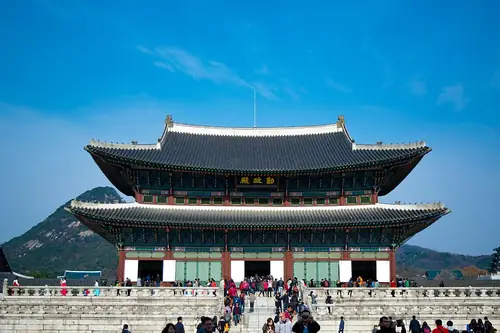
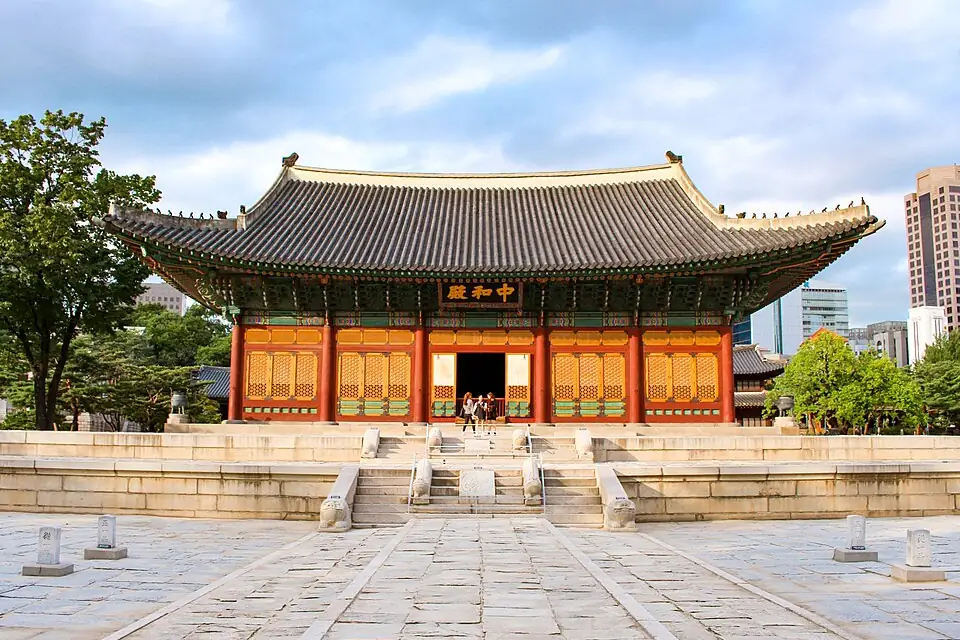
Seoul’s palace-and-temple circuit is one of the best reasons to visit, and it comes with its own light etiquette code.
- Cover shoulders and knees inside some temple main halls, even though the palace grounds themselves (Gyeongbokgung, Changdeokgung) don’t enforce a strict dress code for outdoor courtyards.
- Wearing a full traditional hanbok gets you free entry to Gyeongbokgung Palace (regular adult entry runs around $2/₩3,000): rental shops cluster near Gyeongbokgung Station Exit 5, from around $7 (₩10,000) for 2-4 hours, and the rental fee already includes the free palace entry.
- The Integrated Palace Pass covers five palaces plus Jongmyo Shrine for around $7 (₩10,000), valid roughly three months: worth it the moment you’re visiting more than two sites.
- Bukchon Hanok Village is a residential neighborhood, not an open-air museum. Keep noise down and respect any “no entry” or quiet-hours signage on private homes between the photogenic alleys.
- Speak quietly inside temple halls and during any ceremony in progress, and avoid pointing your feet toward a Buddha statue or another person while seated on temple floors.
Subway Manners: Priority Seats and Quiet Cars
Seoul’s subway is fast, cheap and easy to misuse politely without meaning to.
- Pink or clearly marked priority seats stay reserved for elderly riders, pregnant passengers and people with disabilities: even in a half-empty car, locals leave them free rather than claim them “since no one’s using it.”
- Phones stay on silent and calls get taken quietly or not at all, a loud phone conversation on the subway draws more attention here than almost any other faux pas.
- T-money is the card to get on day one: buy and top up at CU, GS25 or 7-Eleven convenience stores, tap firmly at the gate and wait for the reader’s beep before pushing through. A single subway ride runs around ₩1,550 (about $1.10); transfers between bus and subway within 30 minutes (60 minutes overnight) are free, so you’re only charged the extra-distance fare rather than a fresh flat fare each time.
- The Climate Card, Seoul’s unlimited pass, runs around ₩62,000 (about $44) for 30 days of subway and bus, or around ₩65,000 (about $47) including the Ttareungi bike-share network. It pays off once you’re taking more than a handful of rides a day; short passes run from around ₩5,000 (one day) to around ₩20,000 (seven days).
Jjimjilbang Basics: What First-Timers Get Wrong
A Korean bathhouse is one of the most rewarding, and most misunderstood, things a first-time visitor can try, and it comes with real rules, not just customs.
| Area | What’s expected |
|---|---|
| Bathing/shower floors | Separate by sex; full nudity required, no swimwear |
| Before entering a tub | Shower and rinse off completely first |
| Common relaxation floor | Co-ed, everyone wears the provided uniform |
| Sauna rooms, sleeping areas | Co-ed, uniform stays on, quiet is the norm |
| Entry cost | Around $7-14 (₩10,000-20,000), no tipping |
Getting this wrong usually means one thing: a first-timer trying to keep a towel on in the bathing area, or wandering into the wrong-sex floor by accident. Both are easy to avoid once you know the layout going in. Check in, get your uniform and locker key, shower before the tubs, and save the common floor for after you’ve actually bathed.
Korean BBQ, Cafés and Night Markets: Evenings Without a Bar
South Korea’s evening social scene is genuinely one of its best features, and it doesn’t need a drink to work.
- Korean BBQ is a food event, not a drinking session, a table grill, banchan side dishes and a server who checks on your meat doneness is the whole draw; a sit-down BBQ or bibimbap meal runs around $11-18 (₩15,000-25,000) per person.
- Korea’s specialty-coffee culture is enormous and affordable, a coffee or specialty drink typically runs around $3-5 (₩4,500-7,000), and café-hopping in Hongdae or Insadong is a legitimate evening activity on its own.
- Night markets and street food stalls turn a normal evening into browsing-and-grazing territory: tteokbokki (spicy rice cakes) runs around $2-4 (₩3,000-5,000) a portion.
- Palaces with evening light shows or extended hours, and riverside promenades along the Han, are where Seoul unwinds after dark: walkable, free to enjoy, and full of families and groups doing exactly the same thing.
Etiquette Mistakes Visitors Make Most
| Mistake | Do this instead |
|---|---|
| Trying to tip at a restaurant, taxi or hotel | Just pay the listed amount, service is already included |
| Handing over money or a gift with one hand | Use two hands, or support your arm with the other |
| Keeping shoes on at a home or floor-seating restaurant | Watch for the shoe rack or raised floor at the entrance |
| Sitting in a marked priority seat because the car looks empty | Leave pink/marked seats free regardless of how full the car is |
| Taking a loud phone call on the subway | Keep it silent, or step to the connecting area between cars |
| Wearing a towel or swimwear in a jjimjilbang bath area | Full nudity is expected; shower before entering any tub |
| Assuming K-ETA is mandatory for every nationality in 2026 | Check the current exemption list before assuming you need one |
Entry Paperwork: K-ETA, the Exemption and the e-Arrival Card
The one non-social “etiquette” mistake that actually costs travelers time is arriving without the right paperwork. A temporary K-ETA exemption remains in effect for citizens of around 67 countries and regions (including the US, Canada, Australia and EU/UK nationals), and has been extended year-by-year, currently running through December 31, 2026. Under the exemption, standard visa-free stays run around 90 days for US, Canadian and Australian passport holders (some other exempt nationalities get a shorter ~30-day window, so check by nationality). Since January 1, 2026, anyone arriving without a valid K-ETA must file the free e-Arrival Card online at e-arrivalcard.go.kr within 72 hours of arrival. This applies every trip, not just the first one. Travelers who prefer to apply for K-ETA anyway can do so voluntarily: it costs around $7 (₩10,000) and stays valid around 3 years or until passport expiry. Either way, your passport simply needs to stay valid through your departure date from Korea.
Getting Connected Before Any of This Matters
Reading a subway map, translating a menu at a night market, or double-checking a temple’s opening hours all go faster with data from the moment you land. See our South Korea eSIM guide for current plans before you fly, since installing it at home means you skip the arrivals-hall queue entirely.
Frequently Asked Questions
Is tipping expected in South Korea?
No. Tipping is not expected anywhere in South Korea, including restaurants, taxis, hotels and spas, and service is already built into the listed price. Leaving cash on a table or trying to tip a taxi driver can genuinely confuse staff rather than come across as generous, so the polite move is simply to pay the amount on the receipt.
Why do people in Korea give and receive things with two hands?
Using two hands (or supporting your right forearm with your left hand) to give or receive money, cards, gifts or business cards is a basic sign of respect in South Korea, especially toward anyone older or in a service role. It takes no extra time and is one of the fastest ways for a visitor to read as polite rather than careless.
Do you have to take your shoes off in South Korea?
Yes, in most homes, many guesthouses and some temple interiors. Look for a shoe rack or a raised floor at the entrance as the cue. Restaurants with low floor seating typically expect shoes off too, while most cafes, shops and Western-style restaurants don’t require it, so watching what other guests do at the door is the safest rule.
What are the pink seats on the Seoul subway for?
The pink or clearly marked priority seats on Seoul Metro trains are reserved for elderly riders, pregnant passengers and people with disabilities, even when a car looks empty otherwise. Locals also keep phones on silent and avoid loud calls on the subway, so matching that quiet baseline is as important as leaving the marked seats free.
What should I know before visiting a jjimjilbang in Korea?
A jjimjilbang (Korean bathhouse) separates bathing floors by sex and requires full nudity in the bath and shower areas (swimwear isn’t worn there) plus a quick shower before entering any tub. A shared co-ed common floor, where everyone wears the provided uniform, covers saunas and sleeping areas; entry runs around $7-14 (₩10,000-20,000) with no tipping involved.
What is the K-ETA and do I need one for South Korea in 2026?
K-ETA is South Korea’s electronic travel authorization, but a temporary exemption for around 67 countries (including the US, Canada, Australia and EU/UK nationals) runs through December 31, 2026, allowing visa-free entry without it. Anyone traveling without a valid K-ETA must still file the free e-Arrival Card online within 72 hours of arrival, and K-ETA itself, when needed, costs around $7 (₩10,000) and is valid around 3 years.
Travel Korea Like You’ve Already Been
Skip the tip, use two hands, leave the marked subway seats free, and know the jjimjilbang rules before you strip down for one, and the rest of South Korea’s etiquette sorts itself out by watching the room. None of it is about fear of a misstep. It’s what turns a first Seoul trip into the kind where a shopkeeper hands you your change with both hands, you already know to take it the same way, and the whole exchange takes half a second longer and feels entirely right.
Find cheap flights to Seoul | Compare Seoul hotels
Keep planning with our South Korea itinerary, South Korea travel budget guide, getting around South Korea, South Korea eSIM guide and best time to visit South Korea. Compare more hotels, grab a data eSIM, or check travel insurance before you land.