Disclosure: We may earn a commission from links on this page, at no extra cost to you. How we earn
This article contains affiliate links. If you make a booking through these links, we may earn a commission at no extra cost to you. About & Affiliate Disclosure
Quick Answer
- Daily on-the-ground cost: budget around $50-80 · mid-range around $100-150 (avg. ~$113 cited).
- The cheap part: tteokbokki and street food (~$2-4), café coffee (~$3-5), and the Seoul subway (~$1,550 KRW a ride, free transfers within 30 min).
- The expensive part: upscale hanok/5-star hotels (~$240-375/night), the DMZ day tour, and last-minute domestic flights.
- The won moves: budget around ₩1,450-1,500 per US dollar for mid/late 2026. Check a live rate before you go.
- Save by eating at street-food markets over tourist-row BBQ houses, getting a T-money card and the Climate Card for multi-day stays, and basing near Seoul Station or Jung-gu if you’re rail-heavy rather than paying Myeongdong’s premium.
Is South Korea Actually Cheap? It Depends Where You Sleep
Pull up a guesthouse near Seoul Station for an August night and you’ll see rates close to $45. Pull up a smarter 3-4 star option a few subway stops away in Jongno or Gangnam, and you’re closer to $120-160. Same city, same season, a very different bill depending on which neighborhood (and which star rating) you book. That’s the real shape of a South Korea budget: the country isn’t uniformly cheap or expensive, it’s a stack of tiers, and the food and transit tiers sit refreshingly low compared to what a similar trip costs in Western Europe or Japan.
Add up a full day in Seoul (a T-money subway fare, a bibimbap lunch, a café stop, one paid palace), and a backpacker day lands close to $50-60. Push into a 3-4 star hotel, a couple of sit-down BBQ dinners and a Kakao T taxi instead of the subway, and the same day runs closer to $100-130. Below is what things actually cost by category, what a day runs at each travel style, and where the money actually goes once you’re on the ground.
What Things Actually Cost in South Korea
Real, current on-the-ground prices in US dollars, converted at around ₩1,450-1,500/USD (per the July 2026 research used for this guide):
| Item | Typical cost |
|---|---|
| Budget guesthouse/3-star, Seoul | ~$45-80/night |
| Mid-range hotel (3-4 star), Seoul | ~$115-160/night |
| Upscale hanok or 5-star hotel, Seoul | ~$240-375/night |
| Korean BBQ or bibimbap, sit-down meal | ~$11-18 (₩15,000-25,000) |
| Street food (tteokbokki), portion | ~$2-4 (₩3,000-5,000) |
| Specialty coffee / café drink | ~$3-5 (₩4,500-7,000) |
| Seoul subway or bus, single ride (T-money) | ~₩1,500-1,550 |
| Climate Card, 30-day (subway + bus) | ~$44 (₩62,000) |
| Climate Card, 30-day (+ bike share) | ~$47 (₩65,000) |
| AREX All-Stop, Incheon Airport → Seoul Station | ~$3.50-4 (₩4,750-5,350) |
| AREX Express, Incheon Airport → Seoul Station | ~$8-9 (₩11,000-13,000) |
| Airport limousine bus | ~$7-12 (₩10,000-17,000) |
| KTX high-speed rail, Seoul-Busan | ~$38 (around ₩54,400 since 1 September 2026) |
| Former SRT from Suseo, Seoul-Busan | Now KTX: same network, fares about 10% lower on average |
| Domestic flight, Gimpo-Jeju | ~$20-55 |
| eSIM (Airalo, South Korea, 5GB/7-30 days) | ~$10-11 |
| Gyeongbokgung Palace entry | ~$2 (₩3,000); free in a rented hanbok |
| Integrated Palace Pass (5 palaces + Jongmyo) | ~$7 (₩10,000) |
| Jjimjilbang (Korean bathhouse) entry | ~$7-14 (₩10,000-20,000) |
| K-ETA (if applicable), valid ~3 years | ~$7 (₩10,000) |
The pattern holds across Seoul: eat at street-food markets and cafés over tourist-row BBQ houses, ride the subway on a T-money card instead of taxis, and the daily total stays low; upscale hotels, the DMZ day tour, and last-minute domestic flights are where a South Korea budget actually gets tested.
Cost Per Day by Travel Style
| Style | Per day (on the ground) | What it looks like |
|---|---|---|
| Budget | ~$50-80 | Guesthouse or hostel room (~$45-80/night), street food and tteokbokki, subway/bus rides on T-money, one paid palace or market day |
| Mid-range | ~$100-150 (avg. ~$113 cited) | 3-4 star hotel (~$115-160/night), a mix of café stops and sit-down BBQ or bibimbap, Climate Card or occasional Kakao T taxis, a paid attraction most days |
| Comfort | ~$250-400+ | Hanok or 5-star hotel (~$240-375/night), full restaurant dining, KTX between cities, a DMZ tour or theme-park day |
These exclude your international flight. On rail, book the KTX (around $38 Seoul-Busan) well ahead on the Korail website or the Korail+ app. Since the KTX and SRT merged on 1 September 2026, fares are about 10% lower on average, and trains from Seoul Station and Suseo Station in Gangnam both cover the route in around 2.5-3 hours.
A Sample Day at Each Style
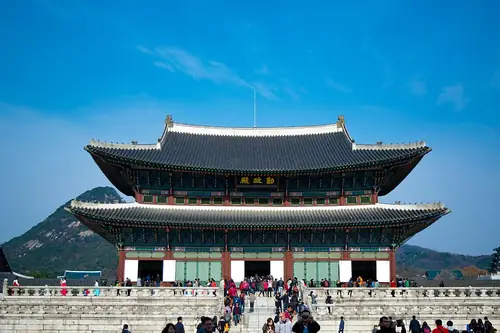
Budget day (~$55-65): a guesthouse near Seoul Station (~$50/night), a tteokbokki breakfast at a street stall (~$3), a T-money subway ride to Gyeongbokgung Palace (~$1,550), the ~$2 palace entry (or free in a rented hanbok), a bibimbap lunch at a local spot (~$8), and a specialty coffee break in a Hongdae café (~$4) before heading back on the subway.
Mid-range day (~$115-130): a 3-4 star hotel in Jongno (~$120/night), a sit-down Korean BBQ dinner (~$16), a Climate Card covering unlimited subway/bus that day, the Integrated Palace Pass (~$7) covering two palace visits, a café stop (~$5), and a Kakao T taxi back after dark instead of the last subway.
Comfort day (~$300+): a hanok-style hotel like a traditional courtyard stay (~$250+/night), full-menu restaurant dining, a KTX day trip to Busan or Gyeongju (~$40 each way), and a guided DMZ or Everland day tour (~$45-55 for the DMZ leg, or ~$45-50 for Everland’s day admission).
Where Your Money Goes Further: Seoul Neighborhoods
Seoul isn’t one price point. It’s several, spread across a subway map. Jung-gu / Seoul Station, the AREX terminus and a major KTX hub, sits at the budget end and is the most transit-convenient base for arriving, departing, or day-tripping by rail. Myeongdong is central and tourist-friendly with easy subway access, but its shopping-district location pushes rates toward the mid and upscale bands. Hongdae, around Hongik University, mixes budget and mid-range rooms with the city’s café and indie-music scene. Jongno / Insadong covers the widest span (budget guesthouses up through hanok stays near Gyeongbokgung and Changdeokgung), and suits travelers prioritizing palace-hopping and traditional architecture. Gangnam sits in the mid-range band, modern and business-district polished, with KTX access via Suseo Station, the former SRT terminal. Itaewon, Seoul’s most international neighborhood, offers a wide range of world-cuisine restaurants for travelers who want variety.
| Area | Price band | Best for |
|---|---|---|
| Jung-gu / Seoul Station | Budget (~$45-80) | Rail-heavy itineraries, early AREX departures |
| Myeongdong | Mid-upscale (~$150-330) | First-timers, walkable shopping and transit |
| Hongdae | Budget-mid | Café culture, younger travelers |
| Jongno / Insadong | Budget-upscale (~$45-375) | History, hanok stays, palace-hopping |
| Gangnam | Mid (~$115-160) | Modern base, K-culture, KTX from Suseo |
| Itaewon | Budget-mid | International food scene |
If your itinerary allows it, basing near Seoul Station or in Jung-gu instead of Myeongdong (unless you genuinely want the shopping-district location) is the easiest lever on a total Seoul budget. For a deeper look at which area actually suits your trip, see our South Korea getting-around guide for how each neighborhood connects to the rest of the country.
How to Cut Your South Korea Budget (Without Cutting the Trip)
Cash vs Card in South Korea
Cards are widely accepted at hotels, restaurants and convenience stores across Seoul, but it’s worth carrying some won for smaller vendors, street-food stalls and traditional markets that skew cash-only. Tipping is not expected anywhere (restaurants, taxis, hotels or spas), and can genuinely confuse staff, since service is already built into the price. Use two hands when handing over cash, cards or gifts as a small sign of respect. Load your T-money card with cash or a card at any subway station machine, and top it up as you go. In an emergency, dial 112 for police or 119 for fire/ambulance; the 1330 Korea Travel Hotline offers free, 24/7 multilingual tourist help if you need directions, translation or general assistance. For the accommodation side of a trip, compare current Seoul rates on our hotels hub, and check our South Korea itinerary guide for how to sequence a first trip.
Frequently Asked Questions
How much does a trip to South Korea cost per day?
Budget travelers manage on around $50 to $80 a day, covering a guesthouse or hostel room, street food and tteokbokki, and Seoul subway/bus rides on a T-money card. Mid-range travelers should plan for around $100 to $150 a day (some estimates put the average nearer $113), covering a 3-4 star hotel, a mix of café stops and sit-down BBQ or bibimbap meals, and occasional taxis, before international flights.
How much is a Korean BBQ or bibimbap meal in Seoul?
A sit-down Korean BBQ or bibimbap meal runs around ₩15,000-25,000 (roughly $11-18) per person in 2026. Street food like tteokbokki (spicy rice cakes) costs around ₩3,000-5,000 (about $2-4) a portion, and a specialty coffee or café drink is typically around ₩4,500-7,000 ($3-5): Korea’s café culture is one of the cheapest ways to spend an afternoon.
Do I need a visa to visit South Korea in 2026?
Most US, UK, EU, Canadian and Australian travelers don’t need a visa: a temporary K-ETA exemption is extended through December 31, 2026 for around 67 exempt countries, giving a visa-free stay of around 90 days for US/Canada/Australia nationals (some other exempt nationalities get a shorter window). Since January 1, 2026, travelers without a valid K-ETA must file a free e-Arrival Card at e-arrivalcard.go.kr within 72 hours of arrival. If you do need or choose a K-ETA, it costs around ₩10,000 (about $7) and is valid around 3 years.
How much does the Seoul subway cost?
A single Seoul subway ride runs around ₩1,550 (bus fares are around ₩1,500) using a T-money card, with free transfers between bus and subway within 30 minutes (60 minutes overnight). For multi-day stays, the Climate Card gives 30 days of unlimited subway and bus travel for around ₩62,000 (about $44), or around ₩65,000 (about $47) including Seoul’s bike-share network.
How do I get from Incheon Airport to Seoul cheaply?
The AREX All-Stop train from Incheon to Seoul Station costs around ₩4,750-5,350 ($3.50-4) and takes around 59-66 minutes. The AREX Express is faster (around 43-51 minutes) for around ₩11,000-13,000 ($8-9). Airport limousine buses run a fixed fare of around ₩10,000-17,000 ($7-12) depending on the route, while a regular taxi into central Seoul costs around ₩55,000-65,000 ($40-47).
What’s the exchange rate for the Korean won in 2026?
As of late July 2026, the won trades around ₩1,450-1,500 per US dollar, with the spot rate on July 23, 2026 sitting near ₩1,474 within a 2026 trading band of roughly ₩1,428-1,559. Rates shift week to week, so check a live converter before you travel and budget with a round number in that range.
Start Planning Your South Korea Trip
The headline worry (that South Korea will blow the budget) mostly comes down to two things: which neighborhood you base in, and whether you’re paying tourist-row prices for a BBQ dinner that costs half as much two streets over. Weight your nights toward Seoul Station or Jung-gu over Myeongdong unless you need the shopping-district location, get a T-money card on day one, and eat where the locals queue, and the daily cost is genuinely reasonable by developed-Asia standards. Set your style, copy the sample day above, and lock in your flights and first few nights before you go.
Find cheap flights to Seoul | Compare Seoul hotel prices
Keep planning with the South Korea travel guide pillar for the full month-by-month breakdown, and see our South Korea eSIM guide for connectivity options. For the wider trip, browse our eSIM hub and hotels hub.