Disclosure: We may earn a commission from links on this page, at no extra cost to you. How we earn
This article contains affiliate links. If you make a booking through these links, we may earn a commission at no extra cost to you. About & Affiliate Disclosure
Quick Answer
- Airport train: the AREX all-stop from Incheon to Seoul Station costs around KRW 4,750-5,350 (~$3.50-4) and takes about 59-66 minutes.
- Cafés & young energy: Hongdae: around Hongik University, indie music and specialty coffee, budget-friendly.
- Palace on the cheap: Gyeongbokgung entry is around KRW 3,000 (~$2) but free in a full hanbok, with rental from around KRW 10,000 for 2-4 hours near Exit 5.
- Modern & upscale: Gangnam: malls, K-culture, SRT from Suseo; polished mid-range and up.
- World food & cosmopolitan: Itaewon: Seoul’s most international neighborhood.
- Eating: a sit-down Korean BBQ or bibimbap meal runs around KRW 15,000-25,000 (~$11-18) per person.
- Book ahead for spring (Apr blossom) and autumn (mid-Oct–mid-Nov foliage): the pricey peaks; August is warm, humid summer.
The Seoul Neighborhood Puzzle
A listing can promise “quiet boutique stay, heart of Seoul” and still sit up four flights of a Hongdae side street, where a busker soundcheck runs till midnight and the café below opens at seven with a queue out the door. That is a fine base for a nightlife-and-music trip and the wrong one for palaces and slow mornings. Right city, wrong neighborhood. That’s the whole Seoul question in one arrival: the area you pick decides your entire trip’s rhythm before you’ve unpacked.
So skip the guessing. Seoul is enormous and spreads across both banks of the Han River, but travelers really choose between a handful of bases, and the trade-offs are clear once you name them. Here’s the honest map: six areas, live 2026 prices, and exactly who each one suits: plus the one orientation fact that makes the whole city easy, which is that the subway and a tap-and-go T-money card connect every neighborhood below for around KRW 1,550 a ride.
Seoul Neighborhoods Compared
| Neighborhood | Vibe | Roughly / night | Best for |
|---|---|---|---|
| Myeongdong | Central shopping, transit hub, tourist-friendly | $115–160 (budget from ~$45) | First-timers who want everything reachable |
| Hongdae | Young, cafés, indie music, universities | Budget-friendly guesthouses ~$45–80 | Younger travelers, café and street-art culture |
| Jongno / Insadong | Palaces, hanok, tea houses, walkable history | $154 mid; hanok/5★ ~$240–375 | History, tradition, palace-hopping |
| Gangnam | Modern, upscale, business, K-culture | ~$157 mid and up | A contemporary base, SRT access |
| Itaewon | International, diverse world cuisine | Mid-range | Food variety, a cosmopolitan feel |
| Jung-gu / Seoul Station | Transit hub, AREX airport line | ~$45–80 | Short stays, rail-heavy trips, early flights |
The Areas, One by One
Myeongdong: the first-timer base
If you stay one place in Seoul, make it Myeongdong. It’s the dense, central shopping quarter in Jung-gu, a grid of pedestrian streets packed with cosmetics stores, street-food carts and department stores, and, crucially for a first trip, it’s a major transit hub on subway lines 2 and 4 with English signage everywhere. From here Gyeongbokgung, N Seoul Tower, Dongdaemun and the airport trains are all a short hop, and you can walk to the evening food-cart run without touching a map. From a live August 2026 search, budget guesthouses and simple rooms start around $45–80, mid-range doubles run around $115–160, and stepping up to Hotel28 Myeongdong lands around $327. The catch: it’s a commercial, crowd-heavy district rather than a pretty old town, and it can feel touristy, but for walkable convenience on a first trip, nothing beats it.
Hongdae: cafés, music and young energy
A few subway stops west, Hongdae is the creative quarter around Hongik University: indie music venues, weekend street performances, boutique shopping and one of the best specialty-coffee scenes in Asia. This is where you base if you’re younger, travel light, and want Seoul’s café-and-street-art side over its museum side, a flat white and a busker at golden hour rather than a palace at nine. Guesthouses here run budget-friendly (roughly the $45–80 band), and the AREX all-stop airport train stops right at Hongik Univ. station, so getting in from Incheon is painless. The honest trade-off: it’s lively into the small hours, so if you want early, quiet nights, pick a room a street back from the main drag or look at Jongno instead.
Jongno & Insadong: palaces and hanok
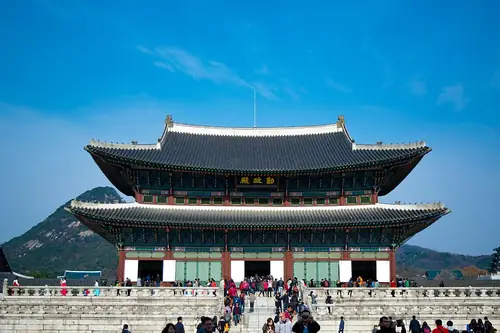
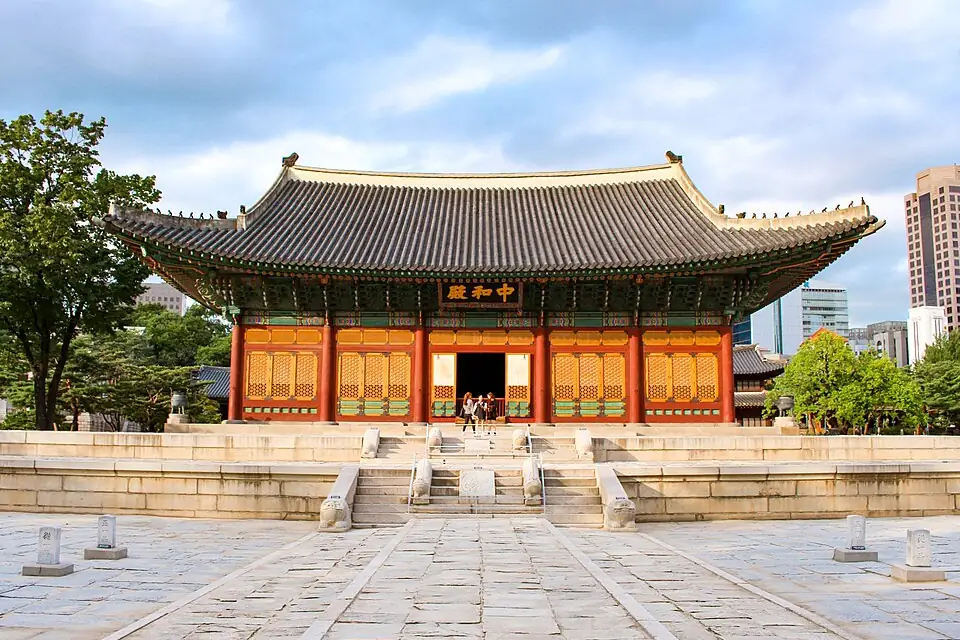
Head to the historic core and Seoul changes register: Jongno and Insadong hold Gyeongbokgung and Changdeokgung palaces, Bukchon Hanok Village’s tiled lanes, and Insadong’s traditional-craft shops and tea houses. This is the pick if history and atmosphere are the point. You can palace-hop on foot, watch the changing-of-the-guard, and rent a hanbok near Gyeongbokgung (from around KRW 10,000 for a few hours, which also gets you free palace entry). Mid-range hotels like HOTEL THE MAY Jongno sit around $154, and the area’s signature splurge is a traditional hanok stay: Hanok Hotel DAAM runs around $242 a night, a courtyard-and-ondol experience you can’t get in a tower. It’s walkable and characterful; just know the palace crowds arrive by mid-morning, so stay here and you get the quiet early hours to yourself.
Gangnam: modern, upscale, south of the river
Cross the Han and Gangnam is the other Seoul: glossy malls, high-rise dining, K-pop and entertainment-company landmarks, and a polished, business-district feel. Base here for a contemporary trip with strong K-culture access, and for rail convenience, since the SRT high-speed train leaves from Suseo Station in the district’s east, a handy alternative to KTX for heading south. Mid-range rooms like Hotel Peyto Samseong run around $157, with plenty of upscale options above that. The trade-off is distance: Gangnam sits well south of the historic palace core, so you’ll ride the subway (line 2 is your friend) more than you’d walk. Great for style and modern Seoul; not the base for palace-first sightseeing.
Itaewon: the international quarter
Itaewon is Seoul’s most cosmopolitan neighborhood, a hillside district long shaped by an international community, and today the place to go for the widest range of world cuisines in the city, from Turkish to Thai to South Asian, alongside vintage shops and a diverse, easygoing feel. It suits travelers who want variety on their plate and a break from an all-Korean menu, or anyone who values a mixed, global atmosphere in their base. Mid-range rooms are the norm. It’s a little less transit-central than Myeongdong (line 6 serves it), so it works best as a second-trip choice or for travelers who prize the food and the vibe over palace-doorstep convenience.
Jung-gu & Seoul Station: for early flights and rail trips
If your trip is rail-heavy or your flight lands late or leaves at dawn, base around Seoul Station in Jung-gu. It’s the AREX Airport Railroad terminus and a major KTX hub, so you’re one tap from both the airport and the high-speed lines south. It also holds Seoul’s best-value rooms: from a live August 2026 search, Stay Aall Seoul Station comes in around $45 and similar guesthouses in the $45–80 band. It’s practical rather than scenic (a transit district, not a strolling one), so it’s ideal for short stays and itineraries built around trains, less so for a slow city break where you’d rather sleep in the middle of the sights.
How to Choose (and Get In From the Airport)
Getting from Incheon to your base is half the decision, and in Seoul it’s cheap, fast and well-signed either way. Here’s the ground-level know-how that saves money and hassle.
Getting into Seoul is only half the planning: the entry paperwork is the part travelers leave too late. Good news for 2026: a temporary K-ETA exemption runs through December 31, 2026 for citizens of around 67 visa-waiver countries (including the US, UK, EU, Canada and Australia), so most visitors don’t need to apply for one. But since January 1, 2026, anyone without a valid K-ETA must file a free e-Arrival Card (at e-arrivalcard.go.kr) within 72 hours of arrival, so exemption travelers must do it each trip. Our South Korea visa & K-ETA guide walks through exactly what applies to your nationality before you fly.
Frequently Asked Questions
Where should I stay in Seoul for the first time?
For a first trip, base yourself in Myeongdong. It’s central, sits on subway lines 2 and 4, has English signage everywhere, and puts shopping, palaces and easy day-trips in every direction. Mid-range doubles run around $115–160 a night (Aug 2026 summer rates; the spring cherry-blossom and autumn foliage peaks run higher). Budget guesthouses start around $45–80. For traditional atmosphere, nearby Jongno-Insadong sits right by the palaces.
What is the cheapest area to stay in Seoul?
The best-value beds cluster around Jung-gu and Seoul Station (Yongsan), where guesthouses and simple 3-star rooms run around $45–80 a night from a live August 2026 search: places like Stay Aall Seoul Station around $45. Seoul Station is also the AREX airport-line terminus, so it’s ideal for early or late flights. Hongdae’s guesthouses near the universities are another budget-friendly pick with more nightlife energy.
Which area of Seoul is best for young travelers and café culture?
Hongdae, around Hongik University, is Seoul’s young, creative quarter: indie music venues, street performances, boutique shopping and a huge specialty-café scene. It suits younger travelers and anyone chasing Seoul’s café and street-art culture. The AREX all-stop airport train stops at Hongik Univ. station, so airport access is easy, and guesthouses here are budget-friendly.
Is Myeongdong or Gangnam better to stay in?
Choose Myeongdong for a central, walkable first-timer base near the palaces and on subway lines 2 and 4, with mid-range doubles around $115–160. Choose Gangnam for a modern, upscale district with polished malls, K-culture landmarks and the SRT high-speed train from Suseo Station: better for a contemporary, business-style trip. Gangnam sits south of the river, a little further from the historic core.
How much do hotels in Seoul cost, and when is it cheapest?
From a live August 2026 search, budget guesthouses and 3-star rooms run around $45–80 a night, mid-range 3–4 star around $115–160, and upscale hanok stays or 5-star hotels around $240–375. August is warm, humid summer at the tail of the monsoon: not the cheapest, but quieter than the peaks. Spring (early-to-mid April cherry blossom) and autumn (mid-Oct to mid-Nov foliage) are the pricier, busier seasons. Book well ahead.
Book Your Seoul Base
Pick the neighborhood before the hotel, read the reviews for your exact street, and book ahead for the spring and autumn peaks. That’s the whole game in a city this big. Get it right and Seoul stops being an overwhelming sprawl and becomes what it actually is: a fast, subway-and-T-money-connected capital where a first-time base in Myeongdong puts palaces, street food and specialty coffee all within a tap. Keep the essentials handy too: the police line is 112, fire and ambulance is 119, and the free, 24/7 multilingual 1330 Korea Travel Hotline will help in English with anything from directions to bookings.
Keep planning with our South Korea travel guide, South Korea itinerary, getting around South Korea by train, South Korea budget guide, Korea etiquette mistakes to avoid, our hotels hub and the best travel eSIM for Asia so your maps and ride apps work the moment you land.