Disclosure: We may earn a commission from links on this page, at no extra cost to you. How we earn
This article contains affiliate links. If you make a booking through these links, we may earn a commission at no extra cost to you. About & Affiliate Disclosure
Quick Answer
- Best overall: February to April, the drier, sunnier window before the heavy rains return.
- Cheapest: late January to February (outside Chinese New Year) and the November rainy season.
- Avoid for price and crowds: Chinese New Year, the mid-September Grand Prix weekend, school holidays, and Christmas.
- Warm all year: 26 to 32 C every month; the variable is rain, not temperature.
- Daily budget: 70 to 110 US dollars for backpackers, 160 to 280 for mid-range comfort.
The Best Time to Visit Singapore, in One Sentence
Changi layovers of even a few hours are long enough to reach Marina Bay by MRT and stand under the glowing Supertrees at Gardens by the Bay, where brief, theatrical downpours typically clear within twenty minutes into a sky-show of city lights. Many travelers extend a short layover into a multi-day stay once they see how much the city offers just outside the airport.
But you came for the answer, so here it is. The best time to visit Singapore is February to April, the drier, sunnier stretch before the heaviest rains return. Sitting almost on the equator, the city is hot and humid every single month, so the real question isn’t temperature; it’s rain, crowds, and price. February through April simply gives you the best odds of dry afternoons.
Honestly? You can have a brilliant trip in any month here, because Singapore is built to shrug off the weather: air-conditioned malls, covered walkways, and downpours that pass in twenty minutes. This guide breaks down every month so you can pick the version that fits your wallet and your patience for humidity.
What to pack for Singapore
Four picks from our gear guides that suit this trip. Each card opens the live Amazon price; the links below lead to the full comparisons.
360-degree memory foam with asymmetrical sides, so you pick which side gets the most support instead of getting the same generic curve everywhere. It was the single most-purchased travel product among Travel + Leisure readers in 2025. The catch: even compressed to about 60% of its size in the included bag, it’s still bulkier than an inflatable.
Check price on Amazon Live price on AmazonThe cheapest way to find out whether you even like compression socks: three knee-high pairs in 15-20 mmHg, the range most often recommended for flying.
Check price on Amazon Live price on AmazonThe reliable all-rounder: one USB-C and four USB-A ports, plugs for 200+ countries, and a built-in fuse with a spare. The adapter most people should buy.
Check price on Amazon Live price on AmazonModel A1259, 10,000mAh, about 37Wh, 215 g. Two phone charges in a jacket pocket, and small enough that the two-bank limit never becomes a question.
Check price on Amazon Live price on AmazonSingapore’s Two Seasons and What They Cost
Singapore doesn’t really have four seasons; it has wet and less-wet, plus two short inter-monsoon spells. Temperatures barely move all year, so prices follow holidays and big events far more than weather. Knowing which monsoon you’re landing in still matters, because it shapes how many of your afternoons get rained on.
Northeast Monsoon (November to January): Wettest and Festive
This is the main rainy stretch, with November the wettest month of the year and heavy, frequent downpours through December into January. It’s also festive: Deepavali, Christmas, and the run-up to Chinese New Year light up Orchard Road and the ethnic quarters. The catch is the year-end price spike around Christmas and New Year. Early November, before the holidays, can be quietly good value if you don’t mind the rain.
Inter-Monsoon and Dry Spell (February to April): The Sweet Spot
After the monsoon eases, February to April brings the driest, sunniest weather of the year, with hot 31 to 33 C afternoons. This is the best window for Gardens by the Bay, Sentosa beaches, and walking the city without a daily soaking. Prices are moderate outside Chinese New Year, which spikes hotels for about a week.
Southwest Monsoon (June to September): Drier Than You’d Think, but Hazy
Despite being called a monsoon, June to September is actually one of the drier stretches, with sunny mornings and shorter showers. The trade-off is occasional haze drifting over from forest fires in Sumatra, worst in some Septembers, and the Grand Prix crowds mid-month. The Great Singapore Sale and the F1 night race define this season.
Inter-Monsoon (October): Stormy Afternoons, Quiet Crowds
October is a transitional month: hot mornings, dramatic afternoon thunderstorms, and crowds easing before the year-end rush. Prices are reasonable, and the storms, while spectacular, rarely last long.
Month-by-Month Guide to Visiting Singapore
Use this as your at-a-glance planner before the detailed notes below.
| Month | Weather | Crowds | Prices | Best for |
|---|---|---|---|---|
| January | Wet early, drying late | Moderate | Mid | Festive run-up, late-month value |
| February | Driest, sunny (watch CNY) | Spike at CNY | Low then spike | Best weather, value outside CNY |
| March | Dry, hot, sunny | Moderate | Mid | Sightseeing, gardens, beaches |
| April | Dry, very hot | Moderate | Mid | Sunny days, fewer rain delays |
| May | Hot, building humidity | Moderate | Mid | Hottest month, indoor attractions |
| June | Drier monsoon, school holidays | High | Mid-high | Great Singapore Sale, families |
| July | Drier, sunny mornings | High | Mid-high | Festivals, layovers, sunshine |
| August | Drier, National Day | Moderate | Mid | National Day, fireworks |
| September | Drier but hazy, Grand Prix | High mid-month | High mid-month | F1 night race (if you want it) |
| October | Stormy afternoons | Easing | Mid | Quieter crowds, dramatic skies |
| November | Wettest month | Low | Low | Deepavali, rainy-season deals |
| December | Wet, festive | High late-month | Low then peak | Christmas lights, year-end spike |
A note on the numbers: highs barely move all year, from about 30 to 32 C, so “season” here is rain and events, not heat. A few dates worth circling for the spectacle (and for the price spikes): National Day fireworks on August 9, the mid-September Formula 1 night race, Deepavali lighting up the ethnic quarters in November, and Christmas along Orchard Road, with Chinese New Year (late January or February) the one week hotels jump.
Find Cheap Flights to Singapore
Singapore’s Changi (SIN) is one of the world’s great hubs, served by full-service and budget carriers across Asia, Europe, and the Americas, and consistently rated the best airport on earth. From Europe, watch the Gulf carriers via Doha and Dubai, plus direct routes; from elsewhere in Asia, low-cost carriers like Scoot and Jetstar keep regional fares cheap.
Use the live calendar below to spot the cheapest departure dates at a glance, then compare across months.
Tips for cheaper flights:
- Book 2 to 4 months ahead for long-haul to Singapore; the hub is busy and last-minute fares climb.
- Use Singapore as a stopover. Many Asia and Australia routes pass through Changi, so a stopover can be near-free to add.
- Travel midweek and outside events. Tuesday and Wednesday departures away from the Grand Prix and holidays are cheapest.
- Watch Scoot and the budget carriers for cheap regional links if you’re island-hopping onward.
- Avoid Chinese New Year and the F1 weekend. Both carry the steepest fares and hotel rates.
For more route ideas and fare hacks, browse our full flights hub.
When Prices Are Lowest: Best Time for Budget Travelers
Target these windows for the cheapest trips:
Late January to February, outside Chinese New Year, brings some of the lowest fares of the year along with the driest weather, an unusually good combination. Hotels that spike for the New Year week settle quickly afterward.
November, the rainy season, delivers the deepest discounts. A hotel that runs 200 US dollars in peak weeks can drop noticeably, and the rain falls in short bursts you can wait out over a kopi.
Early December, before the year-end rush, offers festive lights at off-peak prices, right up until the late-December spike.
Steer clear of Chinese New Year, the mid-September Grand Prix weekend, the June school holidays, and the Christmas to New Year window for the lowest rates.
Where to Stay in Singapore
Where you sleep shapes both your budget and your experience, and Singapore offers everything from backpacker bunks in Chinatown to glittering Marina Bay towers. The city is compact and the MRT makes every neighborhood easy.
| Area | Vibe | Budget room | Best for |
|---|---|---|---|
| Marina Bay | Skyline, luxury, light shows | 120 to 300 US dollars/night | Splurges, views, the iconic Singapore |
| Chinatown | Heritage, food, hostels | 35 to 90 US dollars/night | Budget travelers, hawker food, culture |
| Bugis & Kampong Glam | Arts, cafes, mid-range | 60 to 130 US dollars/night | Indie shops, central value, nightlife |
| Little India | Color, cheap eats, energy | 40 to 90 US dollars/night | Value, food, lively streets |
| Sentosa | Beaches, resorts, theme parks | 150 to 400 US dollars/night | Families, beach days, Universal Studios |
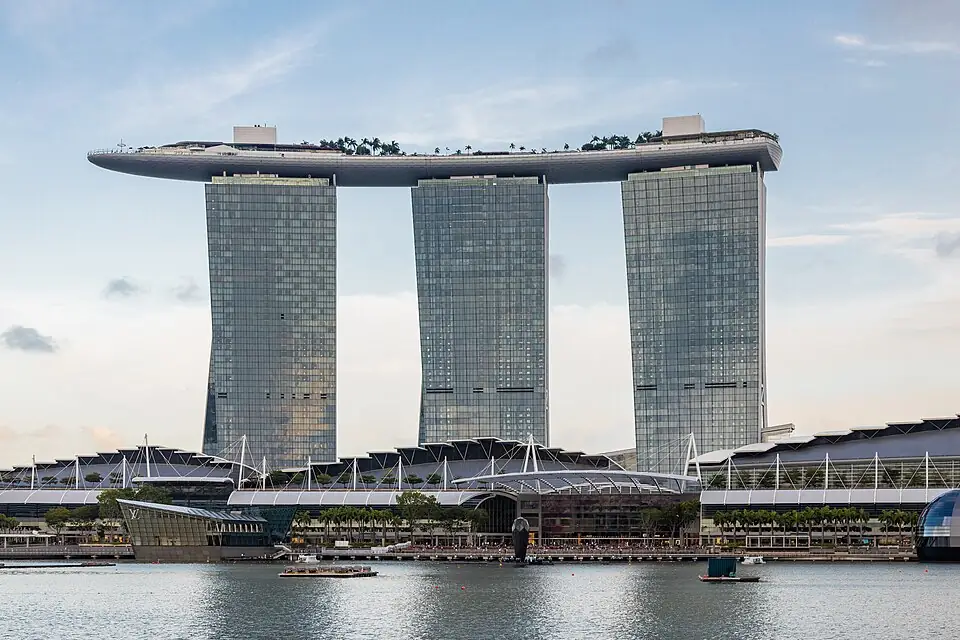
Marina Bay is the postcard Singapore of infinity pools and the nightly light show. Chinatown packs heritage shophouses and the best-value beds beside legendary hawker centers. Bugis and Kampong Glam mix indie cafes with central convenience, while Sentosa is the resort island for families. Compare current rates anytime on our hotels hub.
Daily Budget for Singapore
| Category | Budget (US dollars) | Mid-Range (US dollars) | Comfort (US dollars) |
|---|---|---|---|
| Accommodation | 30 to 55 | 90 to 170 | 220 to 450 |
| Food (3 meals) | 15 to 30 | 40 to 75 | 90 to 180 |
| Transport | 5 to 10 | 12 to 25 | 30 to 70 |
| Activities | 15 to 25 | 35 to 70 | 80 to 160 |
| Daily Total | 70 to 110 | 160 to 280 | 420 to 860 |
A few notes that keep costs honest: a plate of Hainanese chicken rice or laksa at a hawker center runs 4 to 7 Singapore dollars and is some of the best food in Asia, so eating well here is genuinely cheap. The MRT is fast, spotless, and inexpensive with an EZ-Link or contactless card. Big-ticket attractions like Gardens by the Bay’s domes, the S.E.A. Aquarium, and Universal Studios add up fast, but the city’s parks, Marina Bay waterfront, and nightly Supertree light show cost nothing at all.
Stay Connected and Safe: eSIM and VPN
Skip the airport SIM counter. A travel eSIM gives you fast data the moment you land at Changi, which matters when you’re decoding MRT lines, finding the best stall in a sprawling hawker center, or timing the Supertree light show. Singapore has some of the fastest, most reliable mobile data in the world.
- Activate before you fly: data works on arrival
- Plans for 200+ countries from a few dollars
- Keep your number; no physical SIM swap
Singapore offers plenty of open Wi-Fi in malls, the airport, and cafes, and a VPN keeps your banking and logins private on those public networks while letting you reach your usual streaming and home services. Set it up before you fly.
- Up to 10 devices on one account
- Obfuscated servers for networks that block VPNs
- 30-day money-back guarantee
For the full rundown, see our guides to the best travel eSIM and VPN.
Tours & Activities: Singapore
Skip the ticket queues and pre-book the best local tours, day trips and skip-the-line attractions.
Frequently Asked Questions
What is the best time to visit Singapore?
February to April is the best window: it is among the drier, sunnier stretches of the year before the heaviest rains return. The whole year is warm, so the question is really about rain and price rather than temperature.
What is the cheapest time to visit Singapore?
Late January to February (outside Chinese New Year) and the November rainy season bring the lowest fares and hotel rates. Avoid school holidays, Chinese New Year, the Grand Prix weekend, and Christmas for the cheapest prices.
When is the rainy season in Singapore?
The wettest months are the Northeast Monsoon, roughly November to January, with November the rainiest. Even then, rain usually falls in short heavy bursts rather than all day, and the city is built to keep you dry and cool.
Should I visit Singapore during the Grand Prix?
Only if you want the race. The mid-September Formula 1 night race brings huge crowds and the highest hotel prices of the year. If you are not there for the cars, pick another week and save a lot on accommodation.
How much does a trip to Singapore cost per day?
Budget travelers manage on 70 to 110 US dollars a day; mid-range travelers should plan for 160 to 280, as Singapore is one of Asia’s pricier cities. See the cost table above for the full breakdown.
Is Singapore worth visiting as just a layover?
Absolutely. Changi Airport is a destination in itself, and a long layover of 8 to 12 hours is enough for Gardens by the Bay, Marina Bay, and a hawker-center meal. Many travelers extend a stopover into a two or three night stay.
Start Planning Your Singapore Trip
The best time to visit Singapore comes down to your priorities. February to April gives you the driest, sunniest weather; late January and November hide the lowest prices; and only Chinese New Year, the Grand Prix, and the year-end holidays truly cost a premium. Even a forty-minute layover can turn into a multi-day stay once a visitor gets caught in one perfect twenty-minute downpour under the Supertrees. Match the month to your wallet and Singapore rewards you in any weather.
Compare prices now and lock in your dates:
Find cheap flights to Singapore | Compare Singapore hotel prices