Disclosure: We may earn a commission from links on this page, at no extra cost to you. How we earn
This article contains affiliate links. If you make a booking through these links, we may earn a commission at no extra cost to you. About & Affiliate Disclosure
Quick Answer
- Best overall: December to May (dry season), with January to April the sweet spot.
- Wet season: roughly June to October, with afternoon downpours and humidity.
- Typhoon season: peaks July to September, mainly affecting the north and east.
- Cheapest: the wet season, June to October, when fares and resorts drop.
- Daily budget: 30 to 50 US dollars for backpackers, 70 to 130 for mid-range comfort.
The Best Time to Visit the Philippines, in One Sentence
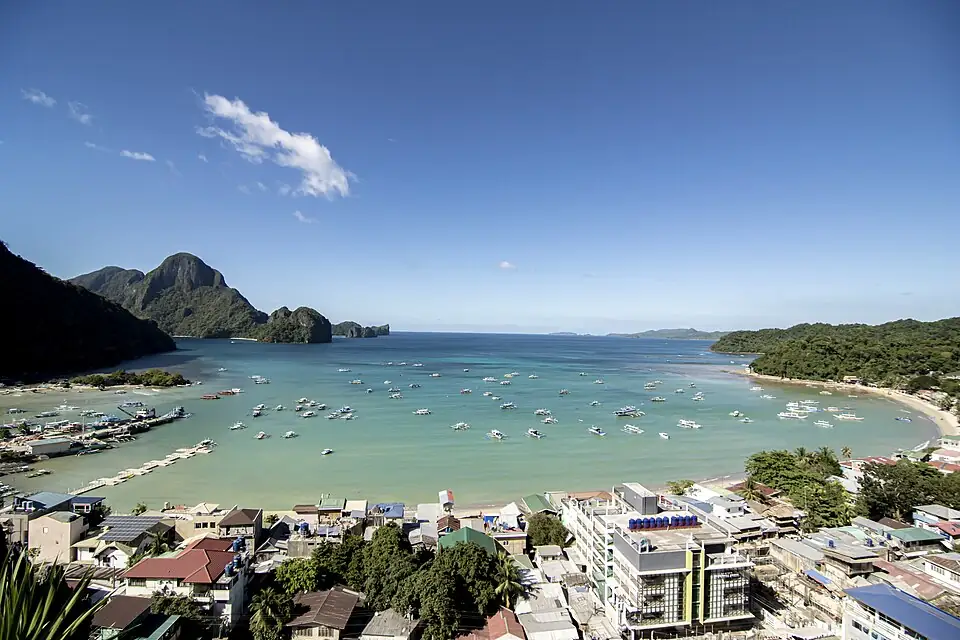
Showing up in El Nido in late August expecting island-hopping paradise is a common and avoidable disappointment: a sky the colour of wet concrete, a typhoon warning two islands over, and boat trips cancelled for the third day running are typical of that window. Booking on price alone during typhoon season comes with a reason attached. The same trip timed six months either side looks completely different.
Here’s the short answer. The best time to visit the Philippines is the dry season from December to May, with January to April the genuine sweet spot: sunny skies, calm seas, and perfect conditions for island-hopping in Palawan, Cebu, and Boracay. The wet season runs roughly June to October, overlapping with the typhoon season that peaks from July to September and mostly hits the north and east of the archipelago.
Honestly? The Philippines is over seven thousand islands, so the weather you get depends heavily on where you go. The far south stays drier and more sheltered when Luzon is getting battered. But for most travelers chasing that turquoise-lagoon trip, the dry season is the answer, and this guide breaks down the cost and weather of every month so you can match your trip to your wallet.
What to pack for Philippines
Four picks from our gear guides that suit this trip. Each card opens the live Amazon price; the links below lead to the full comparisons.
360-degree memory foam with asymmetrical sides, so you pick which side gets the most support instead of getting the same generic curve everywhere. It was the single most-purchased travel product among Travel + Leisure readers in 2025. The catch: even compressed to about 60% of its size in the included bag, it’s still bulkier than an inflatable.
Check price on Amazon Live price on Amazon61 x 122 cm, listed at 120 g in navy, snap loop and a ventilated carry bag. Rainleaf says it absorbs five times its own weight, and it comes in six sizes. The one most travelers should buy first.
Check price on Amazon Live price on AmazonThe reliable all-rounder: one USB-C and four USB-A ports, plugs for 200+ countries, and a built-in fuse with a spare. The adapter most people should buy.
Check price on Amazon Live price on AmazonModel A1259, 10,000mAh, about 37Wh, 215 g. Two phone charges in a jacket pocket, and small enough that the two-bank limit never becomes a question.
Check price on Amazon Live price on AmazonThe Philippines’ Seasons and What They Cost
The Philippines has two main seasons driven by the monsoon winds: the dry Amihan (the cool northeast monsoon, roughly November to May) and the wet Habagat (the warm southwest monsoon, roughly June to October). Temperatures stay tropical year-round (generally 28 to 33 C at sea level), so “season” here is really about rain, wind, and waves rather than heat. Prices track the sunshine: the drier and calmer it is, the more you pay.
Dry Season (December to May): The Peak
This is the season everyone pictures: blue skies, calm turquoise water, and reliable island-hopping. The Amihan keeps things sunnier and a touch cooler from December, building to hot, dry conditions by March, April, and May. Palawan’s lagoons, Boracay’s white sand, and Cebu’s reefs are all at their best. The catch is price and crowds: this is high season, so flights and resorts hit their annual peak, especially over Christmas, New Year, and Holy Week (the moveable Easter holiday, usually March or April), when Filipinos travel en masse.
Wet Season (June to October): Green and Bargain-Priced
The Habagat arrives around June, bringing humidity and heavy afternoon downpours, especially to the western side of Luzon, Manila, and Palawan. It rarely rains all day, and the islands turn lush and green, but boat trips can be cancelled and ferries delayed. Prices fall to their lowest, so if you can roll with the weather (or head to the more sheltered south) it’s superb value.
Typhoon Season (peaks July to September): Plan Around It
Typhoons can form any time but are most likely from June to October, peaking from July to September. They mainly track across the north and east (Luzon and the eastern Visayas) while the southern islands, including much of Mindanao and southern Palawan, are largely spared. This is the one window to watch the forecast, build in buffer days, and favour the sheltered south.
Month-by-Month Guide to Visiting the Philippines
Use this as your at-a-glance planner before the detailed notes below.
| Month | Weather | Crowds | Prices | Best for |
|---|---|---|---|---|
| January | Dry, sunny, cooler | High | High | Island-hopping, Sinulog festival, peak sun |
| February | Dry, sunny, breezy | High | High | Beaches, diving, perfect conditions |
| March | Hot, dry | Rising | High | Palawan, Boracay, whale sharks |
| April | Hot, dry, Holy Week | Very high | Peak | Beaches, diving, festivals (avoid Easter crush) |
| May | Hot, humid, rains near | Moderate | Mid-high | Last dry weeks, value before the rains |
| June | Wet season begins | Low | Low | Green landscapes, deals, southern islands |
| July | Wet, typhoon risk | Low | Low | Budget travel, sheltered south |
| August | Wettest, typhoon peak | Low | Low | Lush scenery, lowest prices, the south |
| September | Wet, typhoon risk | Low | Low | Cheap fares, quiet beaches in the south |
| October | Rains easing | Low-moderate | Low-mid | Shoulder value, MassKara festival in Bacolod |
| November | Drying out | Moderate | Mid | Pre-season value, improving seas |
| December | Dry, peak begins | Rising | Rising | Island-hopping, festive season, sun |
A few notes the table can’t hold: sea-level highs barely move all year, from about 30 C in January to 34 C in April, so “season” is really about rain and waves, not heat. Time a trip around the big festivals if you can: Cebu’s Sinulog falls on the third Sunday of January, and Bacolod’s colourful MassKara lights up October. The one date to dodge is the moveable Holy Week (usually late March or April), when Filipinos travel en masse and prices peak.
Find Cheap Flights to the Philippines
Manila (MNL) is the main international gateway, with Cebu (CEB) a strong second hub closer to the central islands and Clark (CRK) handy for low-cost carriers. From Europe, the cheapest long-haul routes usually connect through the Gulf (Doha, Dubai, Abu Dhabi), or through Asian hubs like Singapore, Hong Kong, and Bangkok. Once you land, cheap domestic flights on Cebu Pacific and Philippine Airlines, plus ferries, link the islands.
Use the live calendar below to spot the cheapest departure dates at a glance, then compare across months.
Tips for cheaper flights:
- Book 2 to 4 months ahead for the dry-season high months; Christmas and Holy Week fares spike hardest.
- Fly into Cebu (CEB) if you’re headed for the central islands. It can beat routing via Manila.
- Travel in the wet season. June to October fares are routinely the cheapest of the year.
- Connect through the Gulf or an Asian hub. Compare Gulf carriers against Singapore, Hong Kong, and Bangkok one-stops.
- Catch domestic flight sales. Cebu Pacific and AirAsia run frequent low-cost promos between islands.
For more route ideas and fare hacks, browse our full flights hub.
When Prices Are Lowest: Best Time for Budget Travelers
Target these windows for the cheapest trips:
June to October (the wet season) brings the lowest flight and resort prices of the year. The rain rarely lasts all day, and if you base yourself in the more sheltered south (Siargao, Bohol, southern Cebu, or southern Palawan) you can dodge the worst of the typhoons while everyone else pays peak rates up north. An early-June trip typically costs barely half of a late-August one for similarly good weather.
June in particular is a value sweet spot: the wet season is just beginning, prices have dropped, but many days are still sunny between showers.
November is the quiet shoulder before the December rush, with improving seas, drier days, and prices that haven’t yet climbed to high season.
Steer clear of Christmas, New Year, and Holy Week for the lowest rates, when both fares and resorts surge and Filipinos travel domestically in huge numbers.
Regional Differences: Luzon vs the Visayas vs the South
The Philippines stretches over a thousand kilometres north to south, so the same week can be stormy in one region and sunny in another.
| Region | Best months | Notes |
|---|---|---|
| Luzon & Manila (north) | Dec to May | Dry season; most exposed to typhoons Jun–Oct |
| Palawan (El Nido, Coron) | Dec to May | Calm seas for island-hopping; wet and rough Jun–Oct |
| Visayas (Cebu, Boracay, Bohol) | Dec to May | Classic beach season; central, fairly sheltered |
| Mindanao & far south (Siargao) | Drier, more sheltered year-round | Largely spared by typhoons; Siargao surf peaks Aug–Nov |
The headline: in the dry season, anywhere shines, from Palawan’s lagoons to Boracay’s sand. In the wet season, head south: Siargao, Bohol, and southern islands stay far more reliable while typhoons track across the north. Surfers, note that Siargao’s Cloud 9 actually peaks in the wetter August-to-November window.
Where to Stay in the Philippines
Where you sleep shapes both your budget and your experience, and the Philippines runs the full range from beach huts to luxury island resorts. Most trips touch down in Manila or Cebu before scattering across the islands.
| Area | Vibe | Budget room | Best for |
|---|---|---|---|
| Manila | Sprawling capital, transit hub | 25 to 60 US dollars/night | Arrivals, city stop, onward flights |
| El Nido (Palawan) | Lagoons, island-hopping | 25 to 70 US dollars/night | Iconic boat tours, dramatic scenery |
| Coron (Palawan) | Wreck diving, lagoons | 25 to 65 US dollars/night | Diving, lakes, quieter than El Nido |
| Boracay | White sand, nightlife | 30 to 90 US dollars/night | Beaches, parties, watersports |
| Siargao | Surf, laid-back island life | 20 to 60 US dollars/night | Surfing, relaxed vibe, sheltered south |
Manila is the busy gateway most travelers pass through quickly; Palawan’s El Nido and Coron deliver the postcard lagoons; Boracay is the classic beach-and-nightlife island; and Siargao is the surf-and-chill darling of the south. Compare current rates anytime on our hotels hub.
Daily Budget for the Philippines
| Category | Budget (US dollars) | Mid-Range (US dollars) | Comfort (US dollars) |
|---|---|---|---|
| Accommodation | 12 to 25 | 35 to 70 | 100 to 250 |
| Food (3 meals) | 8 to 15 | 18 to 35 | 40 to 80 |
| Transport | 4 to 10 | 12 to 25 | 35 to 80 |
| Activities | 6 to 15 | 18 to 40 | 50 to 120 |
| Daily Total | 30 to 50 | 70 to 130 | 220 to 500 |
A few notes that keep costs honest: a meal of chicken adobo or a carinderia rice plate runs 80 to 200 pesos, street snacks and fresh fruit are cheap, and bottled water is a small daily cost. Inter-island ferries and budget domestic flights are how you get around. Book ferries ahead in high season. Island-hopping tours in El Nido or Coron are the big-ticket items, often 1,200 to 2,000 pesos a day, while many beaches and viewpoints are free.
Stay Connected and Safe: eSIM and VPN
Skip the airport SIM counter. A travel eSIM gives you fast data the moment you land at MNL or CEB, which matters when you’re booking a ferry, checking a typhoon forecast, or arranging an island-hopping boat. Coverage is good in cities and main tourist hubs, though it thins out on remote islands: handy to know before you head off-grid.
- Activate before you fly: data works on arrival
- Plans for 200+ countries from a few dollars
- Keep your number; no physical SIM swap
Resorts, cafes, and ferries offer plenty of open Wi-Fi, and a VPN keeps your banking and logins private on those public networks while letting you reach your usual streaming and home services. Set it up before you fly.
- Up to 10 devices on one account
- Obfuscated servers for networks that block VPNs
- 30-day money-back guarantee
For the full rundown, see our guides to the best travel eSIM and VPN.
Tours & Activities: Philippines
Skip the ticket queues and pre-book the best local tours, day trips and skip-the-line attractions.
Frequently Asked Questions
What is the best time to visit the Philippines?
The dry season from December to May, with January to April the sweet spot: sunny, warm, and ideal for island-hopping in Palawan, Cebu, and Boracay. The wet season and typhoons run roughly June to October.
What is the cheapest time to visit the Philippines?
The wet season from June to October is the cheapest, with flights and resorts well below the December–April peak. June and the shoulder weeks often have decent weather between rain spells, especially in the typhoon-sheltered south.
When is typhoon season in the Philippines?
Typhoons are most likely from June to October, peaking around July to September, and mainly affect the north and east (Luzon, the eastern Visayas). The southern islands, like much of Mindanao and southern Palawan, are largely sheltered.
When is the best time for diving and island-hopping?
December to May for the calmest seas and best visibility, ideal for Palawan, Coron, Cebu, and Apo Reef. Whale shark season in Donsol peaks roughly November to June, and thresher sharks off Malapascua are year-round.
How much does a trip to the Philippines cost per day?
Budget travelers manage on 30 to 50 US dollars a day; mid-range comfort runs about 70 to 130. See the cost table above for the full breakdown.
Do I need a visa for the Philippines in 2026?
Many nationalities get 30 days visa-free on arrival, extendable in-country. Check the official Bureau of Immigration site for your passport’s allowance and any onward-ticket requirements before you fly.
Start Planning Your Philippines Trip
The best time to visit the Philippines comes down to the dry season (December to May, and especially January to April) when the seas are calm, the skies are blue, and Palawan’s lagoons and Boracay’s sand are exactly as the photos promise. The wet season trades afternoon downpours for the lowest prices of the year, and if you head to the sheltered south you can sidestep the worst of the typhoons. Time it to the dry season, or chase the value of the south, and these islands deliver some of Asia’s best beaches at a backpacker price.
Compare prices now and lock in your dates:
Find cheap flights to the Philippines | Compare Philippines hotel prices