Quick Answer
- Best time to visit Osaka: late March to April and October to November. June is rainy; July and August are very humid.
- From Kansai airport: Nankai to Namba, 970 yen (around 45 to 50 min) or the Rapi:t for 1,670 yen (from 34 min).
- Where to stay: Namba for food and nightlife, Umeda for transport and polish, Shin-Osaka for the shinkansen.
- Getting around: an ICOCA or Suica covers the Metro and JR loop line; skip the JR Pass for a city stay.
- Day trips: Kyoto around 30 min, Nara around 40 min.
At a glance
- Best time
- Late Mar to Apr, Oct to Nov
- Time needed
- 2 to 3 days plus day trips
- Currency
- Japanese yen (JPY)
- Language
- Japanese
- From the airport
- Nankai from KIX, ~45 min, 970 yen
- Plugs
- Type A, 100 V
- Visa
- Visa-free up to 90 days for many
- Getting around
- Osaka Metro, JR loop, ICOCA card
What should you know before your first trip to Osaka?
Many first-timers book Kyoto for the whole Kansai trip and give Osaka one night. It is often the wrong way round: Osaka has more hotels, livelier evenings and the best cheap food in Japan, and Kyoto and Nara are short train rides away.
This Osaka travel guide covers the season, the airport train, which district to sleep in and what to eat. VoyageHacks checked the fares, fees and taxes below against Nankai Railway, Osaka’s tourism bureau and Japanese government sources on 3 October 2026.
What to pack for Osaka
Four picks from our gear guides that suit this trip. Each card opens the live Amazon price; the links below lead to the full comparisons.
360-degree memory foam with asymmetrical sides, so you pick which side gets the most support instead of getting the same generic curve everywhere. It was the single most-purchased travel product among Travel + Leisure readers in 2025. The catch: even compressed to about 60% of its size in the included bag, it’s still bulkier than an inflatable.
Check price on Amazon Live price on AmazonThe cheapest way to find out whether you even like compression socks: three knee-high pairs in 15-20 mmHg, the range most often recommended for flying.
Check price on Amazon Live price on AmazonThe reliable all-rounder: one USB-C and four USB-A ports, plugs for 200+ countries, and a built-in fuse with a spare. The adapter most people should buy.
Check price on Amazon Live price on AmazonModel A1259, 10,000mAh, about 37Wh, 215 g. Two phone charges in a jacket pocket, and small enough that the two-bank limit never becomes a question.
Check price on Amazon Live price on AmazonHow do you get from Kansai airport into Osaka?
| Option | To | Time | Cost (adult) |
|---|---|---|---|
| Nankai regular express | Namba | Around 45 to 50 min | 970 yen |
| Nankai Rapi:t limited express (reserved seat) | Namba | From 34 min | 1,670 yen (150 yen less via Nankai’s ticketless service) |
| JR Kansai Airport Rapid or Haruka | Tennoji, Osaka, Shin-Osaka | Varies by service | Check JR West |
If your hotel is in Namba or anywhere in Minami, the Nankai regular express is the obvious choice. For Umeda or Shin-Osaka, JR services avoid a change.
How do you get around Osaka?
Osaka’s trains are cheap and frequent. The only real decisions are the card and whether you need a rail pass.
What should you see in Osaka?
| Sight | What it is | Cost | Tip |
|---|---|---|---|
| Dotonbori | Neon canal, Glico sign, street food | Free | Once by day, once after dark |
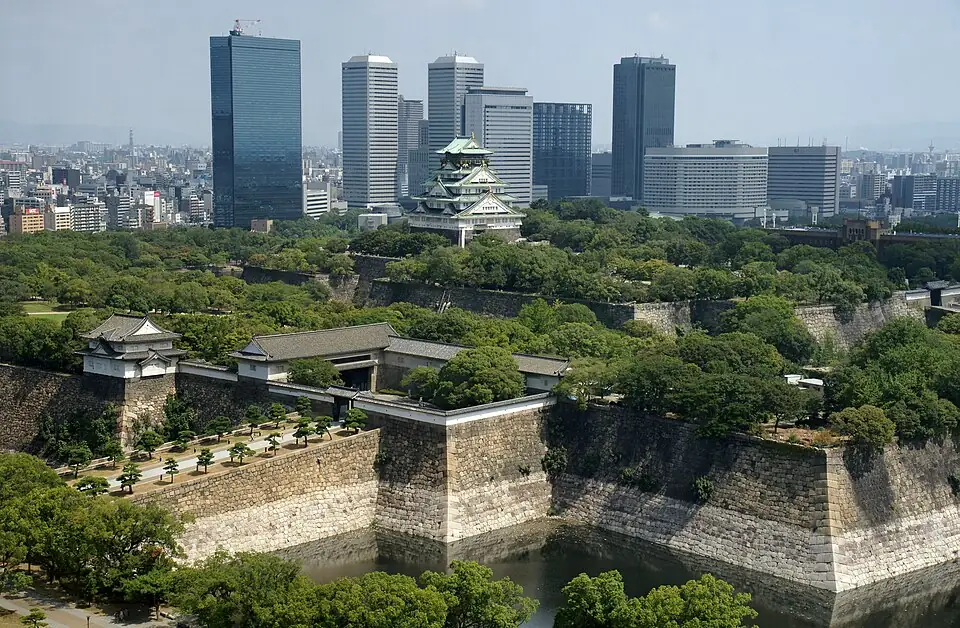
| Osaka Castle | Reconstructed keep in a moated park | Main tower 1,200 yen (adult) | The park is free and a top blossom spot |
| Kuromon Market | Covered market for seafood, fruit, grilled bites | Free entry | Mid-morning, before the lunchtime crush |
| Shinsekai and Tsutenkaku | Retro district, home of kushikatsu | Free to walk | Go hungry |
| Universal Studios Japan | Theme park with Super Nintendo World | Date-based tickets | Book online ahead and arrive at opening |
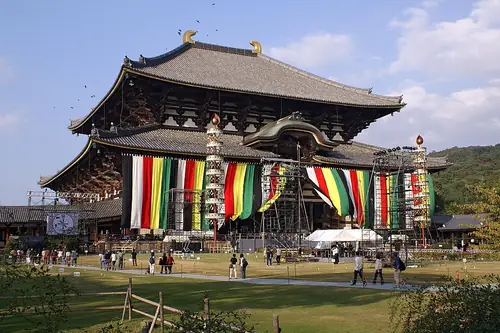
Day trips: Nara’s deer park and the giant Buddha at Todai-ji, and Kyoto’s temples, are both easy from an Osaka base. See our Kyoto guide and the Kansai region guide.
What should you eat in Osaka?
Osaka’s nickname is kuidaore, roughly “eat until you drop.” Follow the queue of locals.
- Takoyaki: octopus-filled batter balls, hot off the griddle along Dotonbori.
- Okonomiyaki: a savoury cabbage pancake built in front of you at a teppan counter.
- Kushikatsu: deep-fried skewers, best in Shinsekai.
- Kuromon Market: fresh seafood, fruit and grilled bites eaten as you wander.
- Department-store food halls in Umeda: bento and sweets, often discounted near closing.
When is the best time to visit Osaka?
| Season | Weather | Crowds and prices | Best for |
|---|---|---|---|
| Spring (Mar to May) | Mild; blossom usually late March to early April | Peak around the blossom | Osaka Castle Park in bloom |
| Summer (Jun to Aug) | Rainy season in June, then hot and very humid | Moderate | Tenjin Matsuri in late July |
| Autumn (Sep to Nov) | Typhoon risk early, crisp by November | Building into late autumn | Maples, comfortable walking |
| Winter (Dec to Feb) | Cool and dry | Lowest, except New Year | Quiet streets, lower hotel rates |
Where should you stay in Osaka?
Osaka splits into Minami (south, around Namba) and Kita (north, around Umeda), with the Shin-Osaka shinkansen hub off to the side.
| Area | Vibe | Best for |
|---|---|---|
| Namba and Minami | Buzzy, neon, food everywhere | First-timers, foodies, the Nankai airport line |
| Umeda and Kita | Polished, modern, the biggest rail hub | Shopping, JR day trips, a calmer base |
| Shin-Osaka | Functional, quieter | Shinkansen trips, value |
Osaka Prefecture’s accommodation tax (since 1 September 2025) is 200 yen per person per night from a 5,000 yen room rate, 400 yen from 15,000 yen and 500 yen from 20,000 yen. Our where to stay in Osaka guide compares the areas in detail.
Do you need a visa for Osaka?
Japan’s Ministry of Foreign Affairs lists visa exemption arrangements with 74 countries and regions, including the US, UK, EU states, Canada and Australia, usually for stays of up to 90 days. The International Tourist Tax is 3,000 yen for departures from 1 July 2026, collected in your airfare. Our Japan visa guide covers the details.
Frequently Asked Questions
What is the best time to visit Osaka?
Spring (late March to April) for cherry blossom and autumn (October to November) for clear air and red maples are the two clear winners: mild, dry and beautiful. Summer is hot and very humid, with a rainy season in June, and winter is cool, quiet and usually the cheapest time for hotels. Aim for the shoulder months if you can.
Where should I stay in Osaka for the first time?
Namba and the wider Minami district put you a short walk from Dotonbori and the best street food, which is most first-timers’ pick. Umeda (Kita) is the polished, transport-rich north around Osaka Station. The area by Shin-Osaka Station is quieter and handy if you’re hopping on the shinkansen a lot.
How do I get from Kansai airport (KIX) into central Osaka?
The Nankai line runs straight from Kansai Airport to Namba. A regular express takes around 45 to 50 minutes for 970 yen; the reserved-seat Rapi:t limited express takes from 34 minutes and costs 1,670 yen (970 yen fare plus a 700 yen seat charge, slightly less if booked online). From Namba the Osaka Metro covers the rest of the city.
Do I need a JR Pass for Osaka?
Usually no. Within the city an IC card like ICOCA or Suica covers the Osaka Metro and the JR loop line on a tap. A nationwide JR Pass only pays off if you’re doing a lot of long-distance shinkansen travel; for Osaka plus Kyoto and Nara day trips, an IC card and individual tickets are almost always cheaper.
Is Osaka a good base for Kyoto and Nara?
It’s one of the best. Kyoto is around 30 minutes from Osaka Station by JR Special Rapid and Nara around 40 minutes from Namba by Kintetsu, so you can sleep in Osaka, often for less than in Kyoto, and day-trip to the temples and the deer without changing hotels.
What food is Osaka famous for?
Osaka is Japan’s street-food capital. The big three are takoyaki (octopus balls), okonomiyaki (a savoury griddled pancake) and kushikatsu (deep-fried skewers). Eat your way along Dotonbori for the neon and the stalls, then visit Kuromon Market in the morning for fresh seafood, fruit and grilled bites.
Ready to plan your Osaka trip?
If you are doing Kansai in one trip, price an Osaka base against a Kyoto one before you book: the day trips are short, and the difference often pays for a few good meals. Then compare.
Find cheap flights to Osaka | Compare Osaka hotel prices
Planning the wider trip? See our best time to visit Japan guide, the Japan itinerary, is the JR Pass worth it, Hiroshima and Tokyo, or browse more stays on the hotels hub.