Quick Answer
- Getting there: Kintetsu from Osaka-Namba in about 40 minutes for 680 yen; from Kyoto by Kintetsu or JR in around 35 to 50 minutes.
- Must-see: Todai-ji’s Great Buddha Hall (800 yen), Nara Park’s deer and Kasuga Taisha.
- Best time: late March to May and mid November to early December.
- Deer: crackers around 200 yen are the only food to give; never tease them.
- Stay: near Kintetsu-Nara for the park, or Naramachi for old lanes.
At a glance
- Best time
- Late Mar–May, mid Nov–early Dec
- Time needed
- 1 full day, 2 days ideal
- Currency
- Japanese yen (JPY)
- Language
- Japanese
- Getting around
- Walking, JR and Kintetsu trains, buses
Nara was Japan’s capital in the 8th century, and its great temples still sit inside one big park, shared with about 1,700 wild deer. Everything that matters is walkable from the station. The real decisions are which train you take, whether you stay the night, and when you go. Fees and times below were checked on 10 October 2026.
When is the best time to visit Nara?
Nara is an inland basin city, so it runs a little hotter in summer and colder in winter than Osaka. Spring and late autumn are the comfortable seasons.
| Month | Average high / low (JMA) | Rain | What it’s like |
|---|---|---|---|
| January | 8.7°C / 0.8°C | 52 mm | Cold, dry and quiet; Wakakusa Yamayaki on the fourth Saturday |
| February | 9.9°C / 1.0°C | 63 mm | The coldest stretch; very few crowds |
| March | 13.9°C / 3.6°C | 105 mm | Cherry blossom arrives late in the month |
| April | 19.8°C / 8.7°C | 99 mm | Mild, blossom and fresh green; busy |
| May | 24.9°C / 13.9°C | 139 mm | Warm and pleasant before the rainy season |
| June to August | 28.1–33.4°C / 18.4–24.1°C | 128–184 mm | Rainy season, then hot and humid |
| September | 28.8°C / 20.1°C | 159 mm | Still hot, typhoon risk |
| October | 22.6°C / 13.5°C | 135 mm | Comfortable walking weather returns |
| November | 17.1°C / 7.3°C | 71 mm | Autumn leaves from mid month |
| December | 11.6°C / 3.0°C | 57 mm | Last of the leaves early in the month, then quiet |
Temperatures are 1991-2020 averages for Nara from the Japan Meteorological Agency. For autumn colour, Nara usually starts in mid November and peaks in late November to early December; our Japan autumn leaves forecast tracks the timing across the country. Nara Prefecture holds the Wakakusa Yamayaki, when the grass of Mount Wakakusa is set alight after fireworks, on the fourth Saturday of January every year; check the prefecture’s site for the 2027 schedule before you plan around it.
Day trip or overnight in Nara?
A day trip works well, and it is what most people do: Nara is an easy add-on from Kyoto or Osaka. The catch is timing. Tour groups and day-trippers fill Todai-ji and the park from mid morning to mid afternoon, so if you can only come for the day, arrive for Todai-ji’s opening.
Staying one night changes the feel of the place. You get the park and Kasuga Taisha’s forest in the early morning, the quiet lanes of Naramachi in the evening, and a slower second day for Isuien Garden or a museum.
| Area | Best for | Trade-off |
|---|---|---|
| Around Kintetsu-Nara Station | The shortest walk to Nara Park and Todai-ji | Busier streets by day |
| Around JR Nara Station | JR Pass holders and chain business hotels | A longer walk, or a short bus ride, to the park |
| Naramachi | Old merchant lanes and small guesthouses | Fewer large hotels; book ahead in autumn |
| Edge of Nara Park | Quiet mornings next to the sights | Few options, usually pricier |
For a single night, the Kintetsu-Nara side is the practical choice: you walk out of the station and into the park. Compare Nara hotel prices for your dates, especially in late November, when rooms go fast.
How do you get to Nara and around it?
Two rail companies serve Nara, and the station you arrive at matters: Kintetsu-Nara is closer to the park than JR Nara.
| From | Train | Time | Fare |
|---|---|---|---|
| Osaka-Namba | Kintetsu express | About 40 min | 680 yen |
| Kyoto | Kintetsu limited express | About 35 min | Fare plus a limited express surcharge |
| Kyoto | Kintetsu express | Around 50 min | 760 yen |
| Kyoto | JR Miyakoji Rapid | About 45 min | Around 720 yen; JR Pass valid |
| Osaka Station | JR Yamatoji Rapid | About 50 min | Around 820 yen; JR Pass valid |
What should you not miss in Nara?
| Sight | Adult entry (2026) | Tip |
|---|---|---|
| Nara Park and the deer | Free | Crackers around 200 yen at licensed stalls |
| Todai-ji Great Buddha Hall | 800 yen; 1,200 yen with the museum | Opens 7:30 Apr–Oct, 8:00 Nov–Mar |
| Kasuga Taisha | Grounds free; inner area 700 yen | Grounds 6:30–17:30, inner area 9:00–16:00 |
| Isuien Garden | 1,200 yen | Closed Tuesdays; 9:30–16:30, enter by 16:00 |
| Kofuku-ji | Grounds free | The five-storey pagoda is under restoration works |
| Naramachi | Free | Old merchant lanes south of Sarusawa Pond |
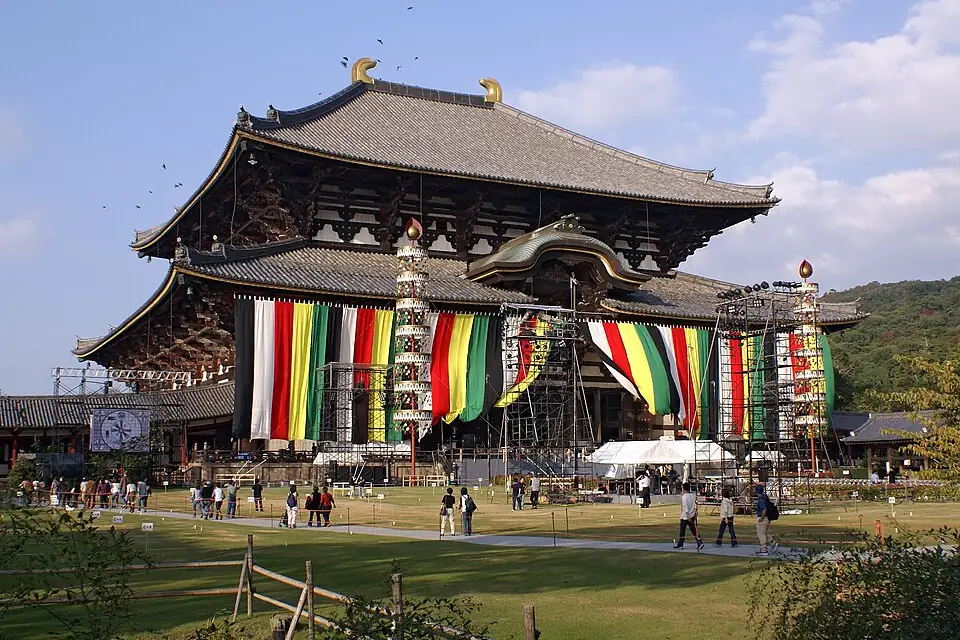
Todai-ji is the reason most people come: the Great Buddha Hall houses a giant bronze Buddha, and its fee is 800 yen for adults. An audio guide costs 500 yen just past the ticket gate.
The deer are a national natural monument, and Nara Prefecture counted 1,687 of them in July 2026. The only food they should get is shika senbei, crackers of rice bran and wheat flour with no sugar or salt.
Kasuga Taisha sits in the forest east of the park, reached along an approach lined with stone lanterns. The grounds are free; the 700 yen special area takes you through the hanging-lantern cloister to the Middle Gate, though it can close for ceremonies.
Isuien is a two-part garden from the Edo and Meiji periods, with a small museum of early East Asian art. It also closes for maintenance in late December to mid January and in the last third of September.
For food, look for kakinoha-zushi (sushi wrapped in persimmon leaves) and the cafés and sweet shops of Naramachi.
Day trips and combining Nara with Kansai
Nara slots into a wider Kansai itinerary rather than needing day trips of its own. The JR Nara Line between Kyoto and Nara also stops at Inari, for Fushimi Inari Taisha, and at Uji, so you can break the journey at either. If you are basing yourself in Kyoto, our Kyoto where-to-stay guide helps you pick a base close to the station.
What goes wrong in Nara?
- Deer bite and headbutt. Nara Prefecture and the Nara Deer Preservation Foundation both warn that the deer are wild animals. Don’t hide or wave crackers at them, hand them over promptly, and keep small children close: they are at deer head height.
- Autumn males are edgier. The foundation posts warnings about rutting males in autumn. Its traditional antler-cutting event, which moved from October to November in 2025, runs on 7 and 8 November 2026 (1,000 yen for adults).
- Feeding anything else hurts them. Other snacks and litter make the deer sick, so keep food and plastic bags packed away.
- Arriving at the wrong time. The park is busiest from mid morning to mid afternoon; Todai-ji at opening is a different experience.
- Isuien on a Tuesday. It is closed, unless that Tuesday is a national holiday.
How many days do you need in Nara?
One full day covers Todai-ji, the deer, Kasuga Taisha and a walk through Naramachi. Two days, with one night, let you see the park early and late and add Isuien and a museum without rushing. Pair it with Kyoto and Osaka for the classic Kansai trip, and see our Japan travel guide for the rest of the country.
Sources
Climate figures come from the Japan Meteorological Agency’s 1991-2020 normals for Nara. Fees and hours come from Todai-ji, Kasuga Taisha and Isuien; deer figures and rules from Nara Prefecture and the Nara Deer Preservation Foundation; train times from the Nara City Tourism Association and Kintetsu; and the airport bus fare from Nara Kotsu. The full list is in the sources box on this page.
Frequently Asked Questions
Is Nara worth a day trip from Kyoto or Osaka?
Yes. Nara is around 35 to 50 minutes from Kyoto and around 40 minutes from Osaka-Namba by train, and its main sights sit within walking distance of each other in and around Nara Park. One full day covers Todai-ji’s Great Buddha Hall (800 yen), the deer and Kasuga Taisha. Stay a night if you want the park early and late, after the day-trip crowds leave.
How do I get from Kyoto to Nara?
Kintetsu runs from Kintetsu Kyoto Station to Kintetsu-Nara in about 35 minutes by limited express (with a surcharge) or around 50 minutes on a regular express for 760 yen, and Kintetsu-Nara is the closer station to Nara Park. JR’s Miyakoji Rapid takes about 45 minutes to JR Nara Station, for around 720 yen, and is covered by the Japan Rail Pass.
How much are deer crackers in Nara and what are the rules?
Shika senbei, the rice-bran and wheat-flour crackers sold at licensed stalls in the park, cost around 200 yen a bundle and are the only food the deer should be given. Nara Prefecture asks visitors not to hit, chase or tease the deer, which are wild animals and a national natural monument. Hand crackers over promptly: deer get angry if you tease them, and they can bite or headbutt.
How much does Todai-ji cost?
Entry to Todai-ji’s Great Buddha Hall costs 800 yen for adults, and a joint ticket with the Todai-ji Museum costs 1,200 yen. The hall opens 7:30 to 17:30 from April to October and 8:00 to 17:00 from November to March, according to Todai-ji. Going right at opening is the best way to beat the tour groups.
When is the best time to visit Nara?
Late March to May and mid November to early December. The Japan Meteorological Agency’s 1991-2020 normals put Nara’s April highs around 20°C and November’s around 17°C, and the autumn leaves in Nara Park usually peak in late November to early December. Winter is cold but quiet, with January highs around 9°C and lows near 1°C.
How do I get from Kansai Airport to Nara?
Nara Kotsu’s airport limousine bus runs from Kansai International Airport to Kintetsu-Nara and JR Nara stations for 2,400 yen one way, and the timetable allows around 100 to 120 minutes. Seats can be reserved through Japan Bus Online. By train you change trains on the way, usually in Osaka.
Start planning your Nara trip
If you are only coming for the day from Kyoto or Osaka, you need nothing more than a train ticket. If you want the park at dawn or the late-November leaves, book a room early.
Find cheap flights to Kansai | Compare Nara hotel prices
Planning the wider trip? See our Japan travel guide, the Kansai itinerary and the hotels hub.