Quick Answer
- Reaching Kinkaku-ji: take the Karasuma subway line to Kitaoji, then bus 204 or 205 for about 11 minutes, followed by a 5-minute walk to the gate.
- Ryoan-ji: a short bus ride beyond Kinkaku-ji, it is worth the detour for its famous rock garden and is usually far quieter than the Golden Pavilion.
- Day 3: Northern Higashiyama or Nara: Ginkaku-ji (around ¥1,000, raised April 2026) and the free Philosopher’s Path to Nanzen-ji, or a ~45-minute train trip to Nara (around ¥720).
- Nothing here takes advance booking: every paid sight on this itinerary is cash at the gate. Arrive early at Fushimi Inari and Arashiyama instead.
- Ticket budget: around ¥2,500 per person covers every paid sight, with Fushimi Inari, the Bamboo Grove and Gion all free.
The Itinerary That Stops You Criss-Crossing Kyoto’s Temple Map
A common first-timer mistake: Fushimi Inari at 9am, then a bus clear across town to Arashiyama for the bamboo grove, back east for Kinkaku-ji, and a last dash north to Ginkaku-ji before it closed. Four incredible sights, and most of the day spent staring at a bus timetable between them. Kyoto doesn’t punish you for seeing too little in 3 days. It punishes you for treating a city with over a thousand temples like a single walkable old town.
The fix is obvious once you see it: the city’s sights cluster into distinct pockets (Southern Higashiyama, Arashiyama and the northwest, Northern Higashiyama), and an itinerary built around those clusters beats one built around a scattered “top 10” list every time. This 3-day Kyoto itinerary groups Kiyomizu-dera/Gion/Fushimi Inari, Arashiyama/Kinkaku-ji/Ryoan-ji, and Ginkaku-ji/Philosopher’s Path/Nanzen-ji (or Nara) into their own days, with the real ticket prices and bus/subway routing that make each day actually work.
The Route at a Glance
Three days, three clusters, minimal doubling back across a city where a “quick” bus ride can eat 40 minutes.
| Day | Area | Morning | Afternoon | Evening |
|---|---|---|---|---|
| 1 | Southern Higashiyama | Fushimi Inari Taisha at first light | Kiyomizu-dera + the Higashiyama lanes | Gion’s Hanamikoji-dori |
| 2 | Arashiyama + northwest | Bamboo Grove at dawn, then Tenryu-ji | Kinkaku-ji, optionally Ryoan-ji | Return to base, early night |
| 3 | Northern Higashiyama or Nara | Ginkaku-ji | Philosopher’s Path to Nanzen-ji, or Nara Park | Quiet return |
Day-by-Day
Day 1: Southern Higashiyama: Fushimi Inari, Kiyomizu-dera and Gion
Start at Fushimi Inari Taisha, and start early. The thousands of vermilion torii gates climbing the mountain are completely free and open 24 hours a day year-round (only the main shrine buildings close, around 17:00–18:00), so there’s no ticket to buy and no line to beat except the one that forms by mid-morning. Go at first light and you’ll walk long stretches of the gate tunnels almost alone; by 10am it’s a slow shuffle of tour groups all the way up. It’s a short ride on the JR Nara Line from Kyoto Station, making it an easy first stop before the rest of the day’s crowds wake up.
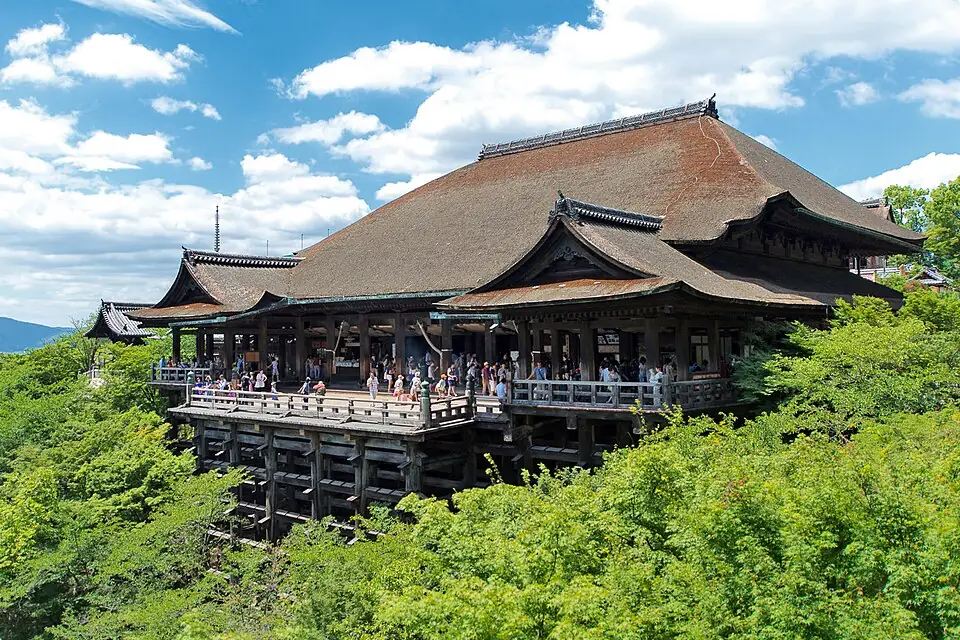
From Fushimi Inari, head into central Higashiyama for Kiyomizu-dera. Adult admission runs around ¥500 (a few sources cite ¥400: the gate price is what counts), paid in cash with no advance booking needed for a standard daytime visit. The wooden stage jutting out over the hillside is the postcard shot, but don’t rush past the temple grounds and the approach through Higashiyama’s preserved lanes: Sannen-zaka and Ninen-zaka’s stone-paved streets, lined with small shops, are as much the experience as the temple itself.
Close the day in Gion, Kyoto’s historic geisha district, which costs nothing to walk. Hanamikoji-dori is at its best in the early evening, when the lanterns come on and the day-trip crowds thin out. For dinner, look for a counter serving yudofu (simmered tofu) or a bowl of ramen near the Higashiyama lanes rather than a set menu aimed squarely at tour groups, a few hundred to around ¥1,000 gets you something better and considerably cheaper.
Day 2: Arashiyama, Kinkaku-ji and (Optionally) Ryoan-ji
Day two moves to the northwest, and like Fushimi Inari, the Arashiyama Bamboo Grove rewards arriving before the crowds do. It’s completely free, open 24 hours, with no gates or tickets: just a path through improbably tall green stalks that’s at its most atmospheric before 8am. Reach it by city bus 28 from Bus Stop C6 at Kyoto Station, or take the JR Sagano Line to Saga-Arashiyama, about an 11-minute walk from there to the Togetsukyo Bridge. Right next to the grove, Tenryu-ji’s temple garden charges around ¥500 for admission, plus around ¥300 more if you also want to enter the halls, with no fee revision announced (per its official visiting page, checked September 2026).
By early afternoon, head to Kinkaku-ji, the Golden Pavilion. Take the Karasuma subway line to Kitaoji, then bus 204 or 205 to the Kinkakuji-michi stop: about an 11-minute bus ride plus a 5-minute walk. Adult entry runs around ¥500 (elementary and junior-high students around ¥300), cash only at the gate, open daily 9:00–17:00. The gold-leafed pavilion’s reflection in the pond looks calmest earlier in the day, before the wind and the crowds both pick up.
If you’ve still got energy, Ryoan-ji is a short bus ride further and worth the detour for its famous rock garden: one of Japan’s most photographed Zen gardens, and usually far quieter than Kinkaku-ji. Like the other temples on this itinerary, it’s a cash-only gate ticket with no advance booking; check the current price on arrival. Wind down the day back near your hotel rather than pushing for a fourth sight: day two covers a lot of ground on buses and subways.
Day 3: Northern Higashiyama: or a Nara Day Trip
Day three splits two ways, and both are worth deciding on before you land.
Staying in Kyoto: Northern Higashiyama centers on Ginkaku-ji, the Silver Pavilion, whose adult entry rose from around ¥500 to around ¥1,000 as of April 1, 2026 (elementary/junior-high entry stays around ¥500): if you’re pricing this from an older guide, that number is out of date. From there, walk the Philosopher’s Path, a roughly 1.5km canal-side route lined with small cafés and shops rather than anything alcohol-focused, heading south toward Nanzen-ji. Nanzen-ji’s grounds and its dramatic brick Suirokaku aqueduct are free to explore on foot, with a few subtemple gardens charging their own modest, separate entry if you want to go deeper. It’s an unhurried, mostly outdoor day: the lightest one on this itinerary, and often the one people remember best.
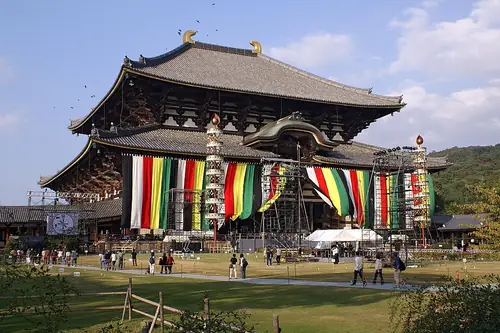
Taking a day trip instead: if you’d rather see something outside the city, Nara makes an easy half-day add-on. The JR Nara Line Miyakoji Rapid covers Kyoto Station to Nara in around 45 minutes for about ¥720 (local trains take around 75 minutes for the same fare, and the ride is covered by the JR Pass). Nara Park’s free-roaming deer and its cluster of ancient temples are the draw. It’s compact enough to see the highlights in an afternoon and be back in Kyoto for dinner. Either version of day three fits comfortably into a 3-day trip; pick Nara for a change of scenery, or Northern Higashiyama if you’d rather not watch a train clock on your last day.
Budget for This 3-Day Kyoto Itinerary
Ticket costs for this route run around ¥2,500 per person if you do every paid sight: Kiyomizu-dera (¥500) + Tenryu-ji (¥500) + Kinkaku-ji (¥500) + Ginkaku-ji (¥1,000): Fushimi Inari, the Bamboo Grove and the Philosopher’s Path all cost nothing. Add transit: the Subway & Bus 1-Day Pass runs around ¥1,100 and covers both networks, breaking even around five single rides (a single bus fare is around ¥230): worth it on days two and three when you’re covering more ground, less so on day one where an ICOCA or Suica IC card at pay-per-ride fares may end up cheaper. Budget food at around ¥2,500–4,000 a day eating the way locals do (yudofu, ramen, market stalls near Nishiki Market) versus considerably more at tourist-row restaurants near the big temples. Add a mid-range hotel and the trip fits comfortably inside the wider Japan itinerary guide if Kyoto is one stop on a longer trip.
Shorter or Longer?
Only 2 days? Merge days one and two into a single tighter loop: Fushimi Inari at dawn, then Kiyomizu-dera and Gion in Southern Higashiyama by early afternoon, skipping Ryoan-ji. Dedicate the full second day to Arashiyama and Kinkaku-ji, since both cluster in the northwest and don’t compress well onto a single rushed morning.
Have a 4th or 5th day? Add Nara as a proper day trip rather than choosing between it and Northern Higashiyama, or continue on to Osaka: about 15 minutes away by Shinkansen or around 28–30 minutes on the JR Kyoto Line special rapid. Our wider Japan itinerary guide covers 7, 10 and 14-day routes if Kyoto is one stop among several.
Getting Between Kyoto’s Sights
Kyoto is far more spread out than its compact old-town image suggests: buses and the subway do real work here, especially between clusters.
- Airport into the city: the Haruka limited express runs direct from Kansai International Airport (KIX) to Kyoto Station in around 75–80 minutes, costing around ¥3,060 for a non-reserved seat or around ¥3,590 reserved. Note that the bundled ICOCA & Haruka discount ticket was discontinued on September 30, 2023: an IC card (ICOCA or Suica) still covers the base fare, but the limited-express surcharge now needs booking separately (station machine or JR West online), or, as a short-term visitor, buy JR West’s discounted HARUKA One-way Ticket (¥2,200 to Kyoto). Compare transfer options on our transfers hub.
- Kyoto Station to the sights on this itinerary: for Kiyomizu-dera/Higashiyama, weekend and holiday express sightseeing buses EX100/EX101 run from Kyoto Station to Gojo-zaka (around ¥500, covered by the day pass), or take the JR Nara Line to Tofukuji plus the Keihan Railway. For Kinkaku-ji, ride the Karasuma subway to Kitaoji, then bus 204 or 205 to Kinkakuji-michi (around 11 minutes plus a 5-minute walk). For Arashiyama, city bus 28 leaves from Bus Stop C6, or take the JR Sagano Line to Saga-Arashiyama (about an 11-minute walk to the Togetsukyo Bridge).
- The Subway & Bus 1-Day Pass: around ¥1,100 for adults (¥550 for children), covering both the subway lines and city buses, a single bus ride alone is around ¥230, so the pass breaks even around five rides in a day. Kyoto’s old flat ¥700 City Bus 1-Day Pass was discontinued (sales ended September 30, 2023, honored through March 31, 2024) as part of the city’s push to ease overtourism-driven bus crowding. Don’t budget around that older, cheaper pass.
- Continuing beyond Kyoto: the Tokyo–Kyoto Tōkaidō Shinkansen leg runs around ¥14,170 on the Nozomi (about 2h13, fastest) or around ¥13,850 on the Hikari (about 2h45): the JR Pass covers Hikari, Kodama and Sakura services but not Nozomi, which needs a roughly ¥4,960 per-leg surcharge for pass holders. See our JR Pass worth it breakdown before buying, and our trains hub for booking Shinkansen seats.
Frequently Asked Questions
Is 3 days enough for Kyoto?
Yes, 3 days covers Kyoto’s essentials at a sane pace: Southern Higashiyama (Kiyomizu-dera, Gion, Fushimi Inari) on day one, Arashiyama plus Kinkaku-ji and Ryoan-ji on day two, and Northern Higashiyama (Ginkaku-ji, the Philosopher’s Path, Nanzen-ji) or a Nara day trip on day three. It won’t cover everything (Kyoto has hundreds of temples), but it hits every first-timer must-see once.
What is the best order to see Kyoto’s sights in 3 days?
Group sights by area rather than by fame: Southern Higashiyama (Kiyomizu-dera, Gion, Fushimi Inari) on day one, Arashiyama’s bamboo grove and Tenryu-ji plus Kinkaku-ji and Ryoan-ji on day two since they cluster in the northwest, and Northern Higashiyama (Ginkaku-ji, the Philosopher’s Path, Nanzen-ji) or a Nara day trip on day three. This order matches how Kyoto’s neighborhoods actually cluster and avoids crossing the city twice in one day.
How much do the main Kyoto sights cost for a 3-day itinerary?
Fushimi Inari Taisha and the Arashiyama Bamboo Grove are free. Kiyomizu-dera and Kinkaku-ji each run around ¥500. Tenryu-ji’s garden costs around ¥500, plus around ¥300 more for the halls, with no fee revision announced. Ginkaku-ji raised its adult admission from around ¥500 to around ¥1,000 as of April 1, 2026, while the adjoining Philosopher’s Path stays free.
Do I need to book Kyoto’s temples in advance?
No. None of Kyoto’s headline sights on this itinerary sell advance tickets. Kiyomizu-dera, Kinkaku-ji, Tenryu-ji and Ginkaku-ji are all cash-only at the gate, and Fushimi Inari and the Arashiyama Bamboo Grove are free with no ticket at all. The only strategy that matters is arriving early, especially at Fushimi Inari and Arashiyama, both of which fill up by mid-morning.
How do I get from Kansai airport (KIX) to Kyoto for a 3-day trip?
The Haruka limited express runs direct from Kansai International Airport to Kyoto Station in around 75 to 80 minutes, costing around ¥3,060 for a non-reserved seat or around ¥3,590 reserved. The bundled ICOCA & Haruka discount ticket was discontinued in September 2023, so an IC card now covers only the base fare: buy the limited-express surcharge separately, or, as a short-term visitor, buy JR West’s discounted HARUKA One-way Ticket (¥2,200 to Kyoto).
Should I do a Nara day trip instead of Northern Higashiyama on day 3?
Either works well as day three. Nara is reachable on the JR Nara Line Miyakoji Rapid in around 45 minutes for about ¥720 (JR Pass covered), making it an easy add-on for its free-roaming deer park and temples. Northern Higashiyama (Ginkaku-ji, the Philosopher’s Path, Nanzen-ji) keeps you in Kyoto and needs no train timing: pick Nara if you want a change of scenery, or Northern Higashiyama if you’d rather not watch a train clock.
Book the Bones of the Trip
If something goes wrong on the ground, Japan’s emergency numbers are 110 for police and 119 for fire and ambulance: both free to call from any phone, including payphones, with English-speaking operators available.
Lock in flights and a first-night hotel, then sort a data plan and the rest of the plan:
Find flights to Kyoto | Compare Kyoto hotels
Keep planning with our Kyoto hub, best things to do in Kyoto, where to stay in Kyoto, whether the JR Pass is worth it, the wider Japan itinerary guide for 7/10/14-day routes, where to stay in Tokyo if Tokyo is next, more stays on the hotels hub, and an eSIM for Japan to stay connected from the airport.