Quick Answer
- Best time to visit Kyoto: April to May and October to November. Blossom (early April) and colour (late November) are the most crowded weeks.
- Airport limousine bus: from Kansai it takes around 90 minutes or more to Kyoto Station, and from Itami around 55 minutes or more, with no transfers for heavy luggage.
- Skip the crowded buses: routes to Kiyomizu-dera and Kinkaku-ji are often packed, so the Keihan line to Gion-Shijo or the JR Sagano line to Arashiyama plus a walk is often faster.
- Beat the crowds: Fushimi Inari (free, open 24 hours) and the Arashiyama bamboo grove at dawn.
- Opening times: Kiyomizu-dera opens at 6 am for 500 yen, and Kinkaku-ji runs 9 am to 5 pm, where 45 minutes is plenty.
At a glance
- Best time
- April to May, October to November
- Time needed
- 2 to 3 days
- Currency
- Japanese yen (JPY)
- Language
- Japanese
- From the airport
- JR Haruka from KIX, ~75 min, 2,200 yen
- Plugs
- Type A, 100 V
- Visa
- Visa-free up to 90 days for many
- Getting around
- City buses, subway, ICOCA card
What should you know before your first trip to Kyoto?
Kyoto’s problem is not too little to see. It is too many people seeing the same five places between 10 am and 4 pm. The visitors who love Kyoto almost always do the same things: they pick the shoulder season, sleep somewhere central, and set an early alarm for the big sights.
This Kyoto travel guide covers those decisions plus the 2026 changes older guides miss: the new hotel tax, the visitor Haruka ticket and the current bus fares. VoyageHacks checked every figure on 3 October 2026 against Kyoto City, JR West and the temples’ own sites.
What to pack for Kyoto
Four picks from our gear guides that suit this trip. Each card opens the live Amazon price; the links below lead to the full comparisons.
360-degree memory foam with asymmetrical sides, so you pick which side gets the most support instead of getting the same generic curve everywhere. It was the single most-purchased travel product among Travel + Leisure readers in 2025. The catch: even compressed to about 60% of its size in the included bag, it’s still bulkier than an inflatable.
Check price on Amazon Live price on AmazonThe cheapest way to find out whether you even like compression socks: three knee-high pairs in 15-20 mmHg, the range most often recommended for flying.
Check price on Amazon Live price on AmazonThe reliable all-rounder: one USB-C and four USB-A ports, plugs for 200+ countries, and a built-in fuse with a spare. The adapter most people should buy.
Check price on Amazon Live price on AmazonModel A1259, 10,000mAh, about 37Wh, 215 g. Two phone charges in a jacket pocket, and small enough that the two-bank limit never becomes a question.
Check price on Amazon Live price on AmazonHow do you get from the airport to Kyoto?
Kyoto has no airport of its own. Most international flights land at Kansai International Airport near Osaka.
| Option | Time | Cost (adult) | Best for |
|---|---|---|---|
| JR Haruka limited express to Kyoto Station | Around 75 to 80 min | 2,200 yen with the HARUKA One-way Ticket (temporary visitors only) | Most travellers |
| Airport limousine bus to Kyoto Station | Around 90 min or more, traffic dependent | Check the operator | Heavy luggage, no transfers |
| From Itami (Osaka) airport by limousine bus | Around 55 min or more | Check the operator | Domestic arrivals |
Buy the HARUKA One-way Ticket online as a QR code before you fly and scan it at the gate. If you plan to use the Japan Rail Pass, check whether it is worth it for your route first in our JR Pass guide.
How do you get around Kyoto?
Kyoto is a bus city, not a subway city. Once you accept that, and cluster your sightseeing by area, it gets easy.
What should you see in Kyoto?
Pick a handful and time them well. The hour you arrive matters more than the order.
| Sight | What it is | Entry (adult) | Tip |
|---|---|---|---|
| Fushimi Inari Taisha | Thousands of vermilion torii gates up a hillside | Free, open 24 hours | Dawn, then climb past the first crowded section |
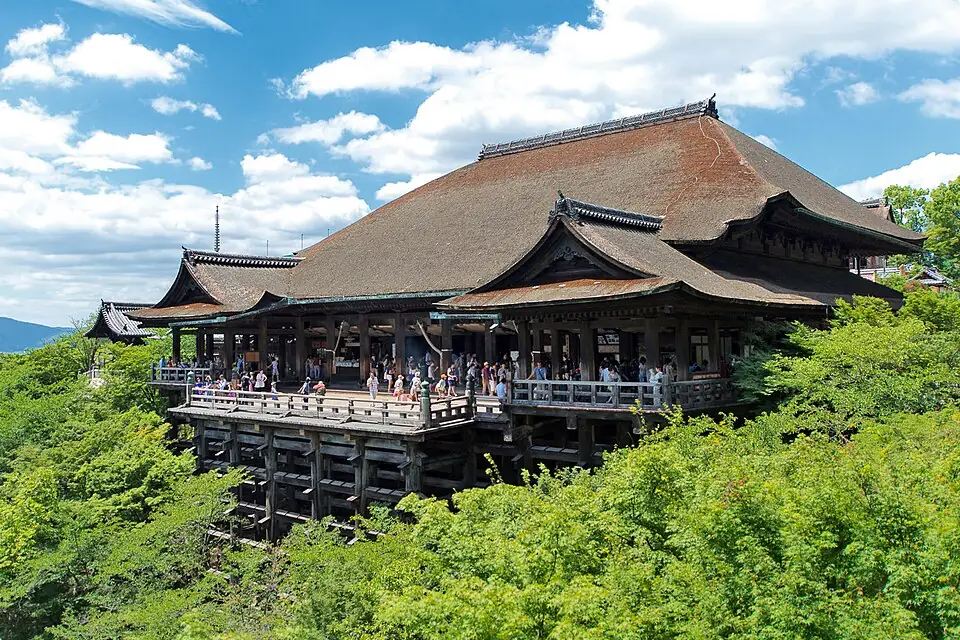
| Kiyomizu-dera | Wooden temple on stilts above the city | 500 yen, opens 6 am | Walk up through Sannenzaka and Ninenzaka |
| Kinkaku-ji (Golden Pavilion) | Gold-leaf pavilion mirrored in its pond | 500 yen, 9 am to 5 pm | Small site; 45 minutes is plenty |
| Arashiyama bamboo grove | The famous green tunnel | Free | Before 8 am, then nearby Tenryu-ji garden |
| Gion and Hanamikoji | Historic teahouse district | Free | Dusk, on the public streets only |
| Nishiki Market | Covered food arcade downtown | Free | Lunch by grazing the stalls |
Prices are adult admission as of October 2026; temples occasionally adjust them, so carry some cash.
What should you eat in Kyoto?
- Nishiki Market: grilled skewers, tamagoyaki, pickles and matcha sweets, stall by stall.
- Yudofu and shojin ryori: hot tofu and Buddhist vegetarian cooking, a genuine Kyoto specialty, especially around Nanzen-ji and Arashiyama.
- Udon or ramen at a counter: lunch sets are much cheaper than dinner.
- Matcha and wagashi: a bowl of whisked green tea with a seasonal sweet in a tea house, or a tea ceremony if you want the full ritual.
When is the best time to visit Kyoto?
| Season | Weather | Crowds and prices | Best for |
|---|---|---|---|
| Spring (Mar to May) | Mild; blossom usually early April | Peak in blossom week | Sakura, temple gardens |
| Summer (Jun to Aug) | Rainy season in June, then hot and humid | Lighter, except festival days | Gion Matsuri in July, green gardens |
| Autumn (Sep to Nov) | Crisp and clear by November | Peak in late November | Autumn colour, the best light |
| Winter (Dec to Feb) | Cold, occasional snow | Lowest, except New Year | Quiet temples, lower rates |
The blossom and foliage windows shift by a week or more each year, so follow the Japan Meteorological Agency and local forecasts, and book rooms months ahead for both. For autumn timing across Japan, see our Japan autumn leaves forecast.
Where should you stay in Kyoto?
Kyoto’s sights are spread out and you will ride a lot of buses, so one central base beats hotel-hopping.
| Area | Vibe | Best for |
|---|---|---|
| Around Kyoto Station | Modern, practical, every line on the doorstep | First-timers, day trips, easy arrivals |
| Gion and Higashiyama | Historic, lantern-lit, temple-rich | Atmosphere, walking to Kiyomizu-dera early |
| Downtown (Kawaramachi) | Lively, central, shops and food | Nishiki Market, the Kamo River |
Remember to add the accommodation tax to the room price when comparing. Our where to stay in Kyoto guide compares the areas in detail.
Do you need a visa for Kyoto?
Japan’s Ministry of Foreign Affairs lists visa exemption arrangements with 74 countries and regions, including the US, UK, EU states, Canada and Australia, usually for stays of up to 90 days. Japan’s departure tax is 3,000 yen for departures from 1 July 2026, collected in your airfare. Our Japan visa guide covers the details.
Frequently Asked Questions
What is the best time to visit Kyoto?
April to May and October to November are the best time to visit Kyoto: mild days, clear light and the city at its most beautiful. The cherry blossom in early April and the autumn colour in late November are stunning but the busiest, priciest weeks of the year. June’s rainy season and the humid July to August heat are quieter.
How do I get from Kansai airport (KIX) to Kyoto?
The JR Haruka limited express runs direct from Kansai International Airport to Kyoto Station in around 75 to 80 minutes. Foreign visitors can buy JR West’s HARUKA One-way Ticket for 2,200 yen as a QR code before they fly, well below the regular fare. Kyoto Station is the hub for buses, the subway and the shinkansen.
Where should I stay in Kyoto for the first time?
Around Kyoto Station is the practical, well-connected base; Gion and Higashiyama put you among the historic lanes and temples; and Downtown around Kawaramachi keeps you near the shops, the Nishiki Market and the river. Pick one area, since Kyoto’s sights are spread out and a central base saves you a lot of bus time.
How do you get around Kyoto?
Kyoto runs mostly on city buses plus two subway lines (Karasuma and Tozai). A ride in the city bus flat-fare zone costs 230 yen, and an ICOCA or Suica card lets you tap on and off. Buses to the big sights are often packed, so the subway or JR plus a short walk is often faster. The flat centre is easy by bicycle.
How much is Kyoto’s hotel tax?
From 1 March 2026, Kyoto’s accommodation tax depends on the room rate per person per night: 200 yen under 6,000 yen, 400 yen from 6,000 yen, 1,000 yen from 20,000 yen, 4,000 yen from 50,000 yen and 10,000 yen from 100,000 yen. It is usually paid at check-in, on top of the booked price.
Is Fushimi Inari free to visit?
Yes. Fushimi Inari Taisha and its thousands of vermilion torii gates are free to enter and the grounds are open around the clock, which is why arriving at dawn works so well. You get the famous tunnels of gates almost to yourself before the tour groups arrive, usually by mid-morning.
Ready to plan your Kyoto trip?
Don’t book a cheap room far out of the centre to save money: in Kyoto you pay it back in bus time and lost early mornings. Pick a central base, add the hotel tax to the price you compare, and book early for blossom or foliage weeks.
Find cheap flights to Kyoto (via Osaka/Kansai) | Compare Kyoto hotel prices
Planning the wider trip? See our best time to visit Japan guide, things to do in Kyoto, the Kyoto 3-day itinerary, the Kyoto airport guide, Osaka, the Kansai region and Tokyo, or browse more stays on the hotels hub.