Quick Answer
- Getting there: Romancecar from Shinjuku to Hakone-Yumoto in about 80 minutes, plus a 1,200 yen surcharge.
- Pass: Hakone Freepass 7,100 yen for 2 days from Shinjuku; worth it for the full loop.
- Best time: December to February for clear Fuji views, the driest months by JMA normals.
- Winter closures: ropeway replacement buses 7 to 24 December 2026 and 12 January to 26 February 2027.
- Stay: one night in a ryokan with its own onsen; check tattoo rules first.
At a glance
- Best time
- Nov–Feb for Fuji views
- Time needed
- 1 night, 2 days ideal
- Currency
- Japanese yen (JPY)
- Language
- Japanese
- Getting around
- Hakone Freepass: trains, ropeway, boat, buses
Hakone is a cluster of hot-spring villages in the mountains southwest of Tokyo, strung along one scenic transport loop that ends at a lake with Mount Fuji behind it. The trip comes down to three decisions: day trip or a night, which pass, and which season gives you the mountain. Fares and closures below were checked on 10 October 2026.
When is the best time to visit Hakone?
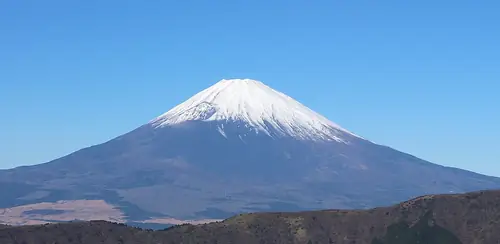
Hakone is one of the wettest places near Tokyo, and the difference between seasons is mostly about cloud. Winter is dry and clear, which is when Fuji shows itself.
| Season | Odawara high / low (JMA) | Hakone rain (JMA) | What it’s like |
|---|---|---|---|
| December | 13.0°C / 3.1°C | 108 mm | Dry and clear, best Fuji odds; ropeway section closure 7 to 24 Dec |
| January | 10.6°C / 0.6°C | 128 mm | Coldest month, and one of the sunniest; ropeway section closure from 12 Jan |
| February | 11.3°C / 1.3°C | 151 mm | Cold and quiet; ropeway section closure until 26 Feb |
| March to May | 14.1–22.8°C / 4.4–13.8°C | 285–327 mm | Mild; spring flowers, busier weekends |
| June to September | 25.2–30.6°C / 18.0–23.0°C | 346–449 mm | Rainy season, then humid; Fuji usually in cloud |
| October | 22.2°C / 14.1°C | 404 mm | Still wet early, typhoon risk |
| November | 17.4°C / 8.3°C | 197 mm | Autumn colour, crisp days, crowds |
Temperatures are 1991-2020 normals for Odawara, the gateway town on the coast; Hakone’s villages sit higher in the mountains and run colder, and the Hakone rain gauge itself is at 855 m. Odawara logs around 180 hours of sunshine in January and 171 in December, against about 131 in October. For the autumn colours, see our Japan autumn leaves forecast.
Day trip or a night in a ryokan?
A day trip from Tokyo works if you leave early and accept a fast loop. The catch is that the loop alone (train, cable car, ropeway, boat, bus back) fills most of a day, so the onsen gets squeezed out, and the onsen is half the point of Hakone.
One night changes the trip: do the loop on day one, soak in the evening, and look for Fuji in the clearer early morning before the day-trippers arrive.
| Area | Best for | Trade-off |
|---|---|---|
| Hakone-Yumoto | Romancecar terminus, the most hotels and ryokan, easy arrival | Lower down, busy with day-trippers |
| Miyanoshita and Gora | Classic hot-spring villages on the mountain railway, near the Open-Air Museum | Steep streets, fewer budget options |
| Sengokuhara | Quieter highland area with museums and pampas grass in autumn | Reached by bus, spread out |
| Lake Ashi (Hakone-machi, Motohakone) | Lake views and early Fuji light by the shrine | Fewer places to eat in the evening |
First time? Base yourself in Hakone-Yumoto if arrival is the priority, or in Gora if you want a ryokan halfway up the loop. Compare Hakone hotel and ryokan prices early for weekends and November.
How do you get to Hakone and around it?
Most visitors come on Odakyu from Shinjuku and then ride the loop with one pass.
| Leg | Operator | Time | Fare (adult) |
|---|---|---|---|
| Shinjuku to Hakone-Yumoto | Odakyu Romancecar | About 80 min | Regular fare plus 1,200 yen surcharge |
| Shinjuku to Hakone-Yumoto | Regular Odakyu trains | About 2 hours | Regular fare only |
| Hakone-Yumoto to Gora | Hakone Tozan Train | About 40 min | Covered by the Freepass |
| Gora to Sounzan | Hakone Tozan Cable Car | About 10 min | Covered by the Freepass |
| Sounzan to Togendai | Hakone Ropeway, via Owakudani and Ubako | About 15 min per section | 2,000 yen one way |
| Togendai to Hakone-machi or Motohakone | Hakone Sightseeing Cruise | About 25 to 40 min | 1,700 yen one way |
Ropeway closures in winter 2026-27
Odakyu Hakone has scheduled two maintenance closures, with replacement buses for ropeway and Freepass holders:
- Owakudani to Sounzan: 7 to 24 December 2026 (bus about 10 minutes).
- Togendai to Ubako to Owakudani: 12 January to 26 February 2027 (bus about 15 minutes).
The operator warns that the buses will be crowded and advises reaching Owakudani on the section still running, so in January and February ride up from Sounzan and come back the same way.
What should you not miss in Hakone?
| Sight | Adult entry (2026) | Tip |
|---|---|---|
| Owakudani | Free (reached by ropeway) | Black eggs 500 yen for 4 |
| Lake Ashi cruise | 1,700 yen one way; Freepass valid | Sit on the Fuji side |
| Hakone Open-Air Museum | 2,000 yen; 1,800 yen online | 9:00 to 17:00, every day; 2 min from Chokoku-no-Mori Station |
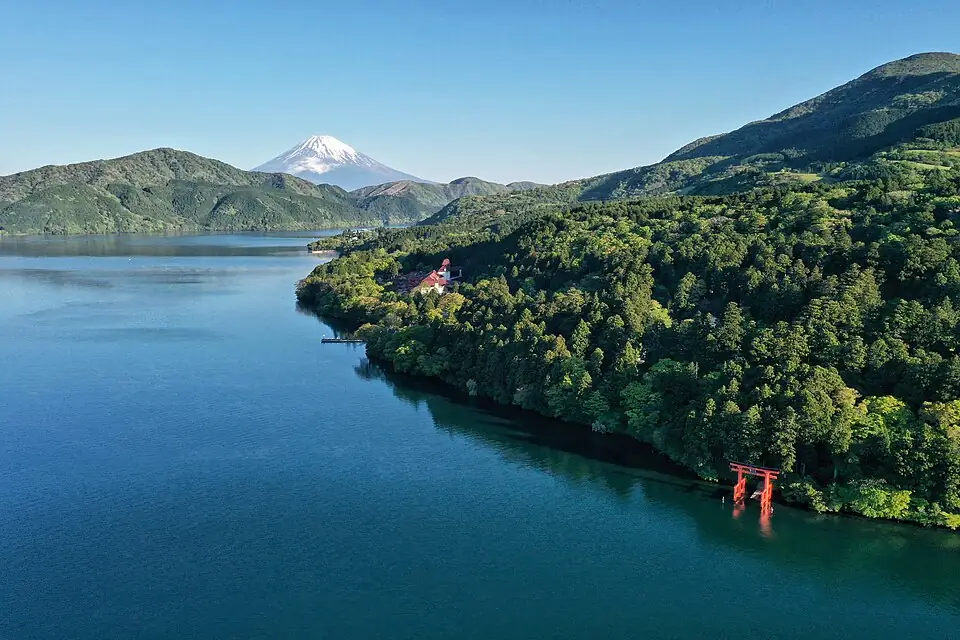
| Hakone Shrine | Grounds free | The red torii stands in the lake at Motohakone |
| Old Tokaido road and Hakone Checkpoint | Check locally | Cedar avenue between Motohakone and Hakone-machi |
Owakudani is a volcanic valley of steaming vents and sulphur, which you cross in a gondola about 130 m above the ground on the Sounzan section. The famous black eggs, boiled in the hot springs, cost 500 yen for four at the Kurotamago-kan shop. Hakoneyama is at the Japan Meteorological Agency’s alert level 1, the lowest, but volcanic gas levels change: signs warn people with breathing or heart conditions, and the area can close when gas rises. Odakyu Hakone also opened the Earth Valley observation area there in April 2025.
Lake Ashi is the end of the loop. The pirate-ship-styled boats link Togendai with Hakone-machi and Motohakone, and on a clear day Fuji rises over the far shore.
The Hakone Open-Air Museum is a large outdoor sculpture park beside Chokoku-no-Mori Station, one stop before Gora, and it is open all year.
For food, try the black eggs at Owakudani, and leave room for dinner at your ryokan, where half board usually means a multi-course kaiseki meal.
Onsen etiquette and tattoo rules
The baths are the reason to stay the night, and the rules are simple:
- Wash first. Shower and rinse fully at the seated taps before you get in the bath.
- No swimwear, no towels in the water. Bring the small towel in with you, but keep it out of the bath, often folded on your head.
- Tattoos depend on the bath. Many public onsen and ryokan baths still refuse visible tattoos, some accept them covered with a patch, and some have no rule. Policies vary, so check with your ryokan before you book. A room with its own bath or a private bath (kashikiri) avoids the question.
- Keep it quiet. Onsen are for soaking, not swimming or phone calls.
Our Japan etiquette mistakes guide covers the rest.
What goes wrong in Hakone?
- Fuji in cloud. It is hidden much of the year, especially June to October. Go in winter, look early in the morning, and do not build the whole day around one viewpoint.
- Running the loop backwards too late. Ropeway hours end at 16:15 in December and January; start the loop in the morning.
- The Romancecar is full. Weekend and holiday trains sell out; book seats a few days ahead, or a month ahead for November weekends.
- Big luggage on the loop. The mountain train and cable car are tight; leave suitcases at the hotel.
- Volcanic closures. Owakudani and the ropeway can stop at short notice; check Hakone Navi’s status page the morning you go.
How many days do you need in Hakone?
One night and two days is the right length for most people: the loop and an onsen on day one, Lake Ashi, Hakone Shrine or the Open-Air Museum on day two. A day trip covers the loop only. Hakone fits easily into a wider Japan itinerary between Tokyo and Kyoto, and our Japan budget guide helps you price the ryokan night.
Sources
Climate figures come from the Japan Meteorological Agency’s 1991-2020 normals for Hakone (rainfall) and Odawara (temperature and sunshine). Pass prices and Romancecar details come from Odakyu Electric Railway; ropeway and cruise fares, hours and the 2026-27 closures from Odakyu Hakone and Hakone Navi; museum fees from the Hakone Open-Air Museum; and the black egg price from the Owakudani Kurotamago-kan. The full list is in the sources box on this page.
Frequently Asked Questions
Is Hakone worth a day trip from Tokyo?
Yes, but a night is better. The Romancecar reaches Hakone-Yumoto from Shinjuku in about 80 minutes, and the classic loop of mountain train, cable car, Hakone Ropeway and Lake Ashi cruise takes most of a day on its own. A day trip means rushing the loop and skipping the onsen; one night in a ryokan lets you do the loop, soak in the evening and catch the clearer morning views of Mount Fuji.
How much is the Hakone Freepass and is it worth it?
Odakyu sells the Hakone Freepass for 7,100 yen (2 days) or 7,500 yen (3 days) from Shinjuku, including a round trip between Shinjuku and Odawara, or 6,000 yen and 6,400 yen from Odawara. It covers eight kinds of transport in Hakone. The ropeway alone costs 2,000 yen one way and the Lake Ashi cruise 1,700 yen, so the pass usually pays off if you ride the full loop. The Romancecar needs a separate 1,200 yen surcharge.
How do I get from Tokyo to Hakone?
Take Odakyu’s Limited Express Romancecar from Shinjuku to Hakone-Yumoto, about 80 minutes with no change. All seats are reserved, and you pay a 1,200 yen limited express surcharge on top of the regular fare or the Hakone Freepass. Regular Odakyu trains take about two hours. With a Japan Rail Pass, the Tokaido Shinkansen to Odawara is the other route in.
When can you see Mount Fuji from Hakone?
Winter gives the best odds. Japan Meteorological Agency normals put Hakone’s rainfall at about 108 mm in December and 128 mm in January, against 449 mm in September and 404 mm in October, and nearby Odawara gets around 170 to 180 hours of sunshine in December and January. Early morning is usually clearest. Fuji is often hidden by cloud from June to October.
Can you use an onsen in Hakone with tattoos?
It depends on the bath. Many public onsen and ryokan baths in Japan still refuse visible tattoos, some accept them if covered with a patch, and others have no rule. Policies vary from place to place, so check before you go. The simplest option is a ryokan room with its own bath or a private bath (kashikiri) you book for your group.
Is the Hakone Ropeway running in winter 2026-27?
Mostly, with two maintenance closures. Owakudani to Sounzan runs as a replacement bus from 7 to 24 December 2026, and Togendai to Owakudani via Ubako from 12 January to 26 February 2027, according to Odakyu Hakone. Freepass and ropeway tickets are valid on the buses. The ropeway also stops in winds of 30 m/s or more, and runs 9:00 to 16:15 in December and January.
Start planning your Hakone trip
If you are only doing the loop for the day, a Freepass and a Romancecar seat are all you need. If you want the onsen and the morning view of Fuji, book the ryokan first: good rooms with private baths go early.
Find cheap flights to Tokyo | Compare Hakone hotel prices
Planning the wider trip? See our Japan travel guide, where to stay in Tokyo, the Japan eSIM guide and the hotels hub.