Quick Answer
- Best time to visit Nusa Penida: April to October (dry season): calm seas, clear water, the safest boat crossings and best snorkelling.
- Day trip vs stay: a day trip from Bali is doable but rushed; 1–2 nights lets you beat the crowds at Kelingking and reach the quieter east coast.
- Getting there: fast boats from Sanur take roughly 45 minutes to Toya Pakeh or Banjar Nyuh.
- Getting around: roads are rough and steep: hire a driver or join a guided tour; scooters only for experienced riders.
- Don’t miss: Kelingking Beach, Angel’s Billabong & Broken Beach, Crystal and Atuh beaches, manta snorkelling, and Diamond Beach in the east.
Nusa Penida, Without the Day-Trip Regret
Booking Nusa Penida as a single day trip from Bali, because the photos look like a quick tick-off between hotel and pool, is the common mistake. By the time the fast boat docks, three other boats have already emptied, and the line at the Kelingking Beach viewpoint snakes back along the cliff in the heat: the T-rex-shaped headland seen over a hundred shoulders, then straight back to the harbour for the return crossing. The island deserves better. Stay two nights instead, and sunrise at Diamond Beach can mean sharing it with maybe six other people, which is when the fuss actually makes sense.
So here’s the short version this Nusa Penida travel guide is built around: come in the dry season (April to October) for calm seas and the best snorkelling visibility, give the island one or two nights rather than a single rushed day trip, get to Kelingking early before the tour boats land, and let a driver or guided tour handle the brutal roads. Do those four things and Nusa Penida stops being a stressful photo-stop and becomes the wild, cliff-edged, manta-filled island it actually is.
You probably don’t need a third day here unless you’re diving, but you almost certainly need more than the half-day most people give it. The first decision (day trip or overnight) is the one that quietly makes or breaks the whole visit.
What to pack for Nusa Penida
Four picks from our gear guides that suit this trip. Each card opens the live Amazon price; the links below lead to the full comparisons.
360-degree memory foam with asymmetrical sides, so you pick which side gets the most support instead of getting the same generic curve everywhere. It was the single most-purchased travel product among Travel + Leisure readers in 2025. The catch: even compressed to about 60% of its size in the included bag, it’s still bulkier than an inflatable.
Check price on Amazon Live price on Amazon61 x 122 cm, listed at 120 g in navy, snap loop and a ventilated carry bag. Rainleaf says it absorbs five times its own weight, and it comes in six sizes. The one most travelers should buy first.
Check price on Amazon Live price on AmazonThe reliable all-rounder: one USB-C and four USB-A ports, plugs for 200+ countries, and a built-in fuse with a spare. The adapter most people should buy.
Check price on Amazon Live price on AmazonModel A1259, 10,000mAh, about 37Wh, 215 g. Two phone charges in a jacket pocket, and small enough that the two-bank limit never becomes a question.
Check price on Amazon Live price on AmazonGetting Around Nusa Penida
First, getting there: this is the part that catches people out, because Nusa Penida is small but its roads are anything but easy.
And one honest note: the descent to the actual sand at Kelingking is a steep, hand-over-hand scramble down a rickety path. The viewpoint is the real prize. Plenty of people admire the beach from above and never regret skipping the climb down.
What Not to Miss
You can’t do all of Nusa Penida in a single day, so aim for a handful done well rather than a checklist done badly.
- Kelingking Beach viewpoint is the island’s icon: the T-rex-shaped headland over a turquoise cove. Come early; the view from the top is the postcard, with or without the scramble down.
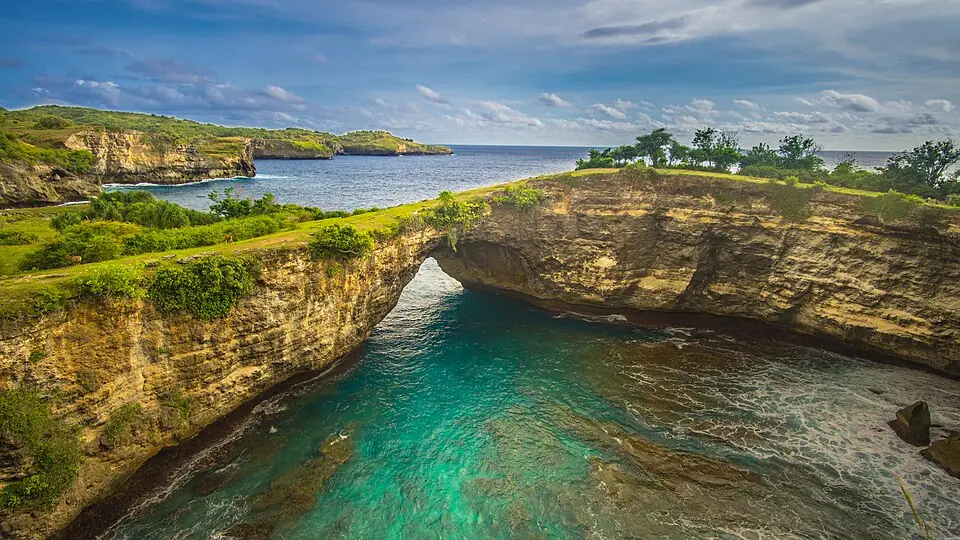
- Angel’s Billabong & Broken Beach sit side by side on the west coast: a natural infinity-edge tidal pool and a circular cliff cove the sea pours into through an arch. See them at low tide, and never swim in the billabong when the surf is up.
- Crystal Bay and Atuh Beach are the swim-and-snorkel pair: Crystal Bay on the west for clear, calm water, and Atuh on the east for a quieter, picture-book bay framed by sea stacks.
- Manta ray snorkelling at Manta Point is the bucket-list one: near year-round chances to drift over giant mantas with a licensed operator. Currents are strong here, so go guided.
- Diamond Beach in the east is the sunrise spot: white sand, towering rock pinnacles and a carved staircase down the cliff. Arrive at dawn and you may share it with only a handful of people.
The quiet wins are the in-between moments: a coast road with no one on it, a viewpoint you reach before the boats, the first light over the eastern cliffs.
Best Time to Visit Nusa Penida
Nusa Penida is a year-round island in theory, but the sea decides your trip more than the calendar does. The short answer: come in the dry season, when the crossings are smooth and the water is clear enough to make the snorkelling worth the trip. Here’s how the two seasons actually compare.
| Season | Weather | Seas & crossings | Snorkelling visibility | Best for |
|---|---|---|---|---|
| Dry (Apr–Oct) | Drier, sunnier, 24–31°C | Calmest; fast boats rarely cancelled | Best, clear, blue water | Snorkelling, boat tours, reliable day trips |
| Wet (Nov–Mar) | Wetter, humid, frequent showers | Rougher; more cancellations | Murkier after rain | Lower prices, fewer crowds (if seas cooperate) |
The trade-off is simple: the dry months give you the calmest crossings and the clearest water for snorkelling, but also the most boats and the longest queues at the headline viewpoints. The wet season is cheaper and quieter, but a rough morning can cancel your fast boat outright and cloud the reefs for days. Whichever season you land in, the single most useful move is to arrive at the popular spots early: the light is better, the cliffs are emptier, and you beat the tour-boat wave.
Day Trip or Stay Overnight?
This is the decision that shapes everything else. A day trip from Bali is genuinely doable, but it’s a race against the return boat, and you’ll share Kelingking with every other day-tripper who came in on the same morning sailings. Stay a night or two and the island opens up: the east coast, the sunrises, and viewpoints with almost no one on them.
| Day trip from Bali | 1–2 nights on the island | |
|---|---|---|
| Pace | Rushed; one eye on the return boat | Relaxed; time for the east coast too |
| Crowds | You arrive after the first tour boats | Beat them at dawn before the boats land |
| What you see | West-coast highlights only | West and east coast (Diamond, Atuh) |
| Best for | Tight schedules, a taster | Snorkellers, photographers, slower travel |
If your trip is locked tight, a day trip still beats skipping the island. But if you can spare even one night, take it: Kelingking before the crowds and Diamond Beach at sunrise are the moments people actually remember.
Frequently Asked Questions
When is the best time to visit Nusa Penida?
April to October is the dry season, with calmer seas, the best underwater visibility for snorkelling and the safest boat crossings. November to March is wetter and rougher, so fast-boat sailings cancel more often and the water clouds up. Aim for the dry months, and go early in the day at any popular viewpoint.
Can you do Nusa Penida as a day trip from Bali?
Yes, a day trip from Bali is doable, a morning fast boat from Sanur gets you onto a west-coast tour and back by evening. But it’s rushed: you arrive after the first tour boats, queue at Kelingking, and watch the clock for the return crossing. One or two nights lets you beat the crowds and see the quieter east coast.
How do you get to Nusa Penida?
Fast boats cross from Sanur in Bali in roughly 45 minutes, landing at Toya Pakeh or Banjar Nyuh on Nusa Penida’s north coast. Several operators run the route through the day. Book a return slot in advance in high season, and travel on the earlier sailings, which are calmer and less likely to be cancelled.
How do you get around Nusa Penida?
The island’s roads are rough, narrow and steep, so most visitors hire a driver for the day or join a guided tour to reach the west-coast highlights efficiently. Scooters are an option only for experienced, confident riders: the terrain is unforgiving. A guided day tour is the easiest way to cover the big sights.
Is Nusa Penida good for snorkelling?
It’s one of Indonesia’s best. Manta Point offers near year-round chances to snorkel with manta rays, and the reefs at Crystal Bay and Gamat Bay are clear and lively. The dry season (April to October) brings the calmest seas and clearest water. Always go with a licensed operator, as currents here can be strong.
How many days do you need in Nusa Penida?
Two days is the sweet spot. One full day covers the west-coast icons (Kelingking, Angel’s Billabong and Broken Beach), and a second lets you reach the east coast for Diamond Beach and Atuh, plus a manta or Crystal Bay snorkel. A single day trip works but only scratches the surface.
Start Planning Your Nusa Penida Trip
Get the season and the pace right and Nusa Penida rewards you far beyond the one viral photo. A rushed day trip means seeing Kelingking over a crowd; an overnight stay trades that for empty viewpoints, a sunrise at Diamond Beach and a manta drift worth remembering. Come in the dry season, give the island a night or two, get to the cliffs early, and let a driver or tour handle the roads.
Bali is the gateway: fly into Denpasar (DPS), then cross by fast boat. Compare prices now and lock in your dates:
Find cheap flights to Bali (DPS) | Compare Nusa Penida hotel prices
Planning the wider trip? See our best time to visit Bali guide and browse more stays on the hotels hub.