Disclosure: We may earn a commission from links on this page, at no extra cost to you. How we earn
This article contains affiliate links. If you make a booking through these links, we may earn a commission at no extra cost to you. About & Affiliate Disclosure
Quick Answer
- Airport transfers: the prepaid taxi counter runs around IDR 450,000 (~$26) to Ubud, IDR 250,000 (~$15) to Kuta/Seminyak and IDR 300,000 (~$18) to Canggu.
- Price bands: doubles run roughly $24-45 budget, $55-105 mid-range with a pool, and $135-300+ upscale, firming up in August.
- Split the stay: most travelers spend 2–3 nights in Ubud, then 2–4 by the sea.
- Culture, rice terraces, yoga: Ubud: $35–71 budget-to-mid, no beach, ~1–1.5h from the airport.
- Calm + family: Nusa Dua (gated resorts) or Sanur (flat seafront, Nusa-island boats).
- Quieter luxury + cliffs: Uluwatu / Bukit peninsula.
- Scooter and food costs: riding without the right IDP risks a fine around IDR 1,000,000 (~$60), while a warung meal with a drink rarely tops IDR 60,000 (~$3.80).
The One Bali Mistake Almost Everyone Makes
Here’s the booking that ruins more Bali trips than bad weather ever could: picking one hotel for the whole island. Someone reads that Ubud is “the real Bali,” books ten nights there, and spends half of them stuck in a car for two hours each way trying to reach a beach that Ubud doesn’t have. Or the opposite. Ten nights in Kuta, then a frantic day trip inland to see the rice terraces everyone photographs, back in traffic by dark.
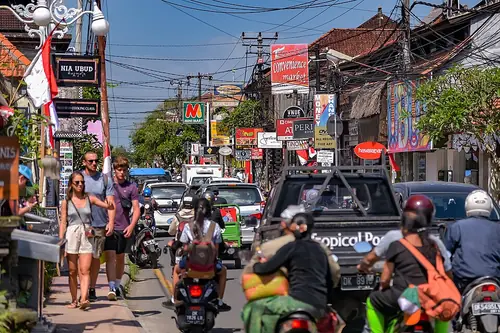
Bali isn’t a city with neighborhoods. It’s an island where the culture lives inland and the surf lives on the coast, and the roads between them are slow. So the real question isn’t “which area”. It’s “which two.” Get that right and Bali unfolds exactly the way the photos promise. Get it wrong and you’ll spend your holiday in a Grab. Here’s the map that saves you from that mistake: seven areas, honest 2026 prices, and the exact trade-off each one asks you to accept.
Bali Areas Compared
| Area | Vibe | Roughly / night | Best for |
|---|---|---|---|
| Ubud | Rice terraces, temples, jungle, yoga (no beach) | $35–300+ | Culture, wellness, waterfalls |
| Seminyak | Upscale beach, boutiques, café dining | $30–210+ | Style and sand, easy comfort |
| Canggu | Surf, cafés, digital-nomad, laid-back | $28–105 | Surfers, remote workers, slow mornings |
| Kuta / Legian | Cheapest, busiest, most central | $24–42 | Budget, beginner surf, airport access |
| Uluwatu / Bukit | Clifftops, luxury, surf, quieter | Varies, check live | Dramatic views, upscale calm |
| Nusa Dua | Gated resorts, calm swimmable water | Varies, check live | Families, resort holidays |
| Sanur | Flat seafront, sunrise beach, older crowd | Varies, check live | Calm, slow pace, Nusa-island gateway |
The Areas, One by One
Ubud: culture, rice terraces and jungle calm
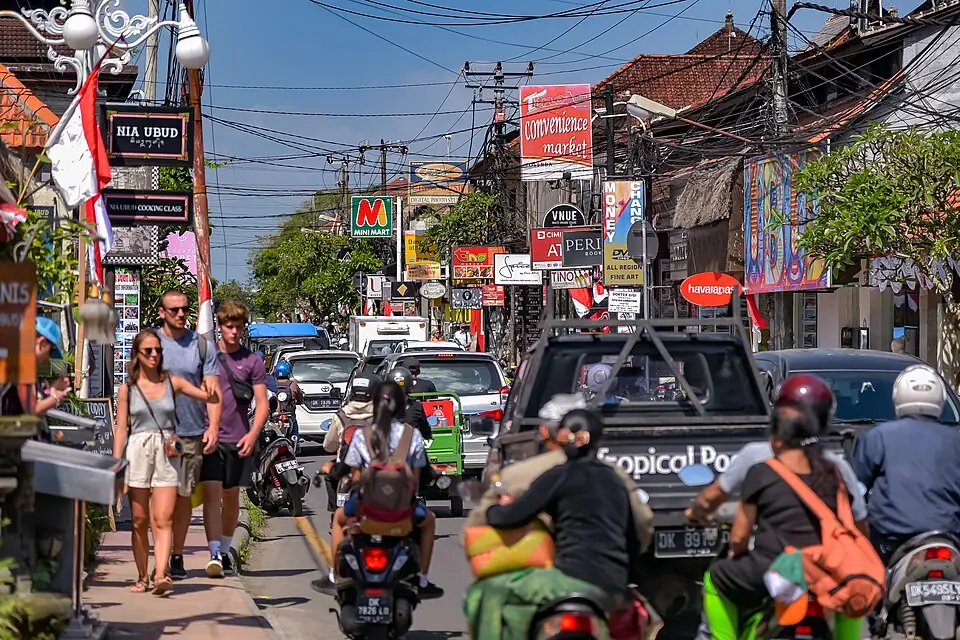
Ubud is the Bali of temples, terraced rice fields, waterfalls, yoga shalas and monkey-filled forest: the inland heart where the island’s Hindu culture is loudest and the pace slowest. Wake to mist over the Tegallalang terraces, spend the day temple-hopping or walking the Campuhan Ridge, and eat a warung plate of nasi campur for a couple of dollars. Budget bungalows near the Monkey Forest run around $35–40 a night, mid-range villas with a private pool around $55–71, and the famous jungle-valley resorts climb from around $135 to $300 and beyond (August 2026, peak dry season). The catch is simple and non-negotiable: there is no beach, and Ubud sits about 1–1.5 hours from the airport, so pair it with a coastal base rather than treating it as your only stop.
Seminyak: upscale beach and boutique comfort
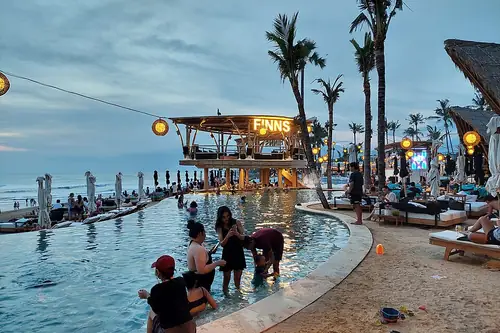
Seminyak is where Bali does polish: designer boutiques, a wide sunset-facing beach, and the island’s densest run of stylish cafés and restaurants (think smoothie bowls and slow coffee, not a party strip). It’s the easy-comfort pick (walkable, well-serviced, about 30–45 minutes from the airport), and prices span a wide arc, from around $30–80 for budget-to-mid rooms up to $70–210+ for the boutique and beachfront places that define the area. The trade-off is that Seminyak is busy and built-up, with real traffic on the main roads, so you’re paying for convenience and style rather than seclusion. Pick a lane a block or two back from Jalan Kayu Aya for quieter nights.
Canggu: surf, cafés and slow mornings
Just up the coast, Canggu is Seminyak’s laid-back younger sibling and the island’s digital-nomad capital: black-sand surf breaks, co-working cafés, rice-paddy backroads and a slower, barefoot rhythm. Budget rooms start around $28–45, and a spacious mid-range room with a pool, walkable to the café strip, runs around $70–105 a night. It’s the sweet spot for surfers and remote workers who want beach mornings and a good flat white without Seminyak’s polish or Kuta’s crowds. The catch: Canggu has boomed, so construction and narrow-road traffic are real, and it’s about an hour from the airport, a genuine slog at peak times.
Kuta & Legian: cheapest, central, beginner surf
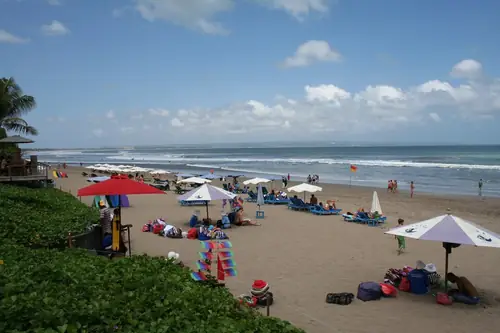
Kuta gets a bad rap, but strip away the reputation and what’s left is genuinely useful: Bali’s cheapest central beds, its most beginner-friendly beach, and the shortest airport transfer on the island. Budget doubles run around $24–42 a night, surf schools line the long sandy beach, and you’re a 30–45 minute ride from touching down. It’s the practical base for a first night, a short trip, or a tight budget: central to everything, with Legian next door offering a marginally calmer version of the same. The honest trade-off is that Kuta is dense, commercial and busy; come for the value and the learn-to-surf beach, not for tranquility, and you won’t be disappointed.
Uluwatu & the Bukit: clifftops and quieter luxury
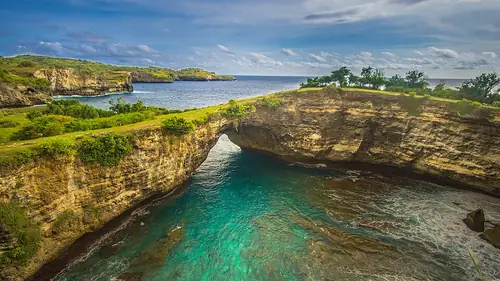
South of the airport, the Bukit peninsula rises into limestone cliffs, and Uluwatu is its showpiece: dramatic clifftop views, world-class surf breaks, the sea-temple of Pura Luhur Uluwatu with its evening Kecak fire dance, and a cluster of upscale, design-led stays. It’s quieter and more spread out than the beach towns, which is the appeal, but the beaches sit at the foot of the cliffs, reached by steep stairways, so factor the climb into your day (and think twice with very young kids or heavy luggage). Rates swing widely with the property and season; compare live prices rather than assuming, since the Bukit runs from mid-range guesthouses to serious clifftop luxury.
Nusa Dua & Sanur: calm, family and slow pace
If your idea of Bali is calm water and no rush, the east and southeast coasts deliver. Nusa Dua is a gated enclave of manicured resorts with gentle, swimmable water and a strong family focus: self-contained, orderly and quiet, with the trade-off that it feels a little sealed off from everyday Bali. Sanur is the low-key alternative: a flat, walkable seafront path, a calm sunrise-facing beach that suits an older or slower-paced crowd, and (crucially) the main fast-boat harbor for Nusa Penida and Nusa Lembongan, making it the natural launchpad for the Nusa islands. Both trade energy for calm; prices vary by property and season, so check live rates for your dates.
How to Choose (and Book Smart)
The airport logistics shape which “two areas” actually make sense, so plan the route in, not just the rooms.
Budget the entry costs before you book. Most nationalities (including the US, UK, all EU countries, Canada and Australia) pay the Indonesia Visa on Arrival: around IDR 500,000 (~$28–31), valid 30 days, extendable once, buyable in advance as an e-VOA at evisa.imigrasi.go.id or on arrival. On top sits Bali’s one-time tourist levy of IDR 150,000 (~$10) per entry, paid via the official Love Bali platform (lovebali.baliprov.go.id), pay ahead and keep the QR code. Neither is in your hotel rate. With the rupiah around IDR 16,900–17,900 to the dollar in 2026, everyday prices run into the hundreds of thousands. Always count the zeros before you pay. For the full visa and entry breakdown, see our Bali etiquette and mistakes guide.
Frequently Asked Questions
Where should I stay in Bali for the first time?
Split your trip: a few nights in Ubud for the rice terraces, temples and jungle, then a few by the coast in Seminyak or Canggu for the beach. Ubud budget doubles run around $35–40 a night and mid-range villas around $55–71 (August 2026, peak dry season); Seminyak runs around $30–80 and Canggu around $28–105. Bali is spread out and traffic is slow, so basing in two areas beats one: Ubud to Seminyak is only about 90 minutes but feels like a different island.
What is the best area to stay in Bali on a budget?
Kuta and Legian hold Bali’s cheapest central beds, with budget doubles from around $24–42 a night, a beginner-friendly beach and easy airport access (about 30–45 minutes from Ngurah Rai). Ubud is the budget pick inland, with simple bungalows from around $35–40 near the Monkey Forest. Canggu budget rooms start around $28–45. A warung meal of nasi goreng or nasi campur runs around IDR 20,000–50,000 (~$1.30–3), keeping daily costs low wherever you base.
Is Ubud or the beach better to stay in Bali?
Choose Ubud for culture, rice terraces, waterfalls, yoga and jungle calm, but there is no beach, and it’s about 1–1.5 hours inland from the airport. Choose the coast (Seminyak, Canggu, Sanur, Uluwatu) for surf, sand and sunset walks. Most travelers do both: 2–3 nights in Ubud, then 2–4 by the sea. Ubud runs around $35–71 for budget-to-mid rooms; beach areas range from around $24 in Kuta to $210+ for upscale Seminyak or clifftop Uluwatu.
Which area of Bali is best for families and quiet?
Nusa Dua is Bali’s calmest resort enclave (gated grounds, gentle swimmable water and a family focus) while Sanur suits an older, slower crowd with a flat seafront path, a sunrise beach and fast boats to the Nusa islands. Both trade nightlife energy for calm, which is the point. Uluwatu on the Bukit peninsula is quieter and more upscale but its beaches sit at the foot of cliffs, so check the walk down before booking with young kids.
How much do hotels in Bali cost, and what do I pay to enter?
Bali doubles run roughly $24–45 (budget), $55–105 (mid-range villa/room with pool) and $135–300+ (upscale jungle or beach resort) a night, firming up in August’s peak dry season. On arrival, most nationalities pay the Indonesia Visa on Arrival (around IDR 500,000, ~$28–31, 30 days, extendable once) plus Bali’s one-time tourist levy of IDR 150,000 (~$10) via the Love Bali platform. Neither is included in your hotel rate.
Book Your Bali Base
Pick two areas, not one (culture inland, beach on the coast), and book two to three months ahead for August’s peak, and Bali stops being a traffic-jam holiday and becomes the island of terraces, temples and surf you came for. Match the base to the day: Ubud when you want rice fields and waterfalls, Canggu or Seminyak when you want sand, Kuta when you want cheap and central, Nusa Dua or Sanur when you want calm.
Keep planning with our Bali travel guide, Ubud guide, Seminyak guide, Canggu guide, Nusa Penida guide, Bali itinerary, Bali budget guide, the best travel eSIM for Bali so your maps and Grab app work the moment you land, travel insurance for the scooter roads, and our wider hotels hub for booking tactics.