Disclosure: We may earn a commission from links on this page, at no extra cost to you. How we earn
This article contains affiliate links. If you make a booking through these links, we may earn a commission at no extra cost to you. About & Affiliate Disclosure
Quick Answer
- Bigger bikes: a Vario or NMAX scooter runs around IDR 100,000 to 200,000 a day, roughly $6.50 to 13, with the same licence and IDP rules.
- Grab/Gojek: 25–35% cheaper than a taxi, but no pickup at DPS arrivals: walk to the Grab Lounge, and expect app-pickup limits in some village zones.
- Blue Bird: Bali’s one reliably metered taxi brand. Watch for similarly-liveried imitators.
- Shuttle hubs: Kura-Kura Bus and Perama link Kuta, Legian, Seminyak, Sanur, Jimbaran, Nusa Dua and Ubud on fixed schedules with no haggling.
- Driver extras: a full 8 to 10 hour day includes fuel and parking, with a tip of around IDR 50,000 to 100,000, roughly $3 to 7, on top.
Getting Around Bali: Why One Option Never Covers the Whole Trip
A traveler dropping a pin inside Bali’s arrivals zone will watch the app cancel the ride automatically, not because of anything done wrong, but because the airport simply won’t let rideshare cars anywhere near international arrivals. Not knowing this in advance easily costs forty minutes and a chunk of phone battery arguing with an app that was never going to budge.
That’s the thing about getting around Bali: no single method works everywhere, and the rules that trip people up aren’t obvious until you’ve hit them once. A scooter is fastest and cheapest for short village hops, but useless (dangerous, even) on the ring road into Denpasar during rush hour. Grab is a bargain once you’re clear of the airport, except in the pockets of Kuta, Canggu and Ubud where the local taxi cooperative has quietly blocked app pickups. A private driver solves almost everything for a day, at a price that stops making sense if you’re traveling solo. Here’s exactly which one to use, when, and what each one actually costs in 2026.
Scooter Rental in Bali: Cheapest, Fastest, and the One With the Fine Print
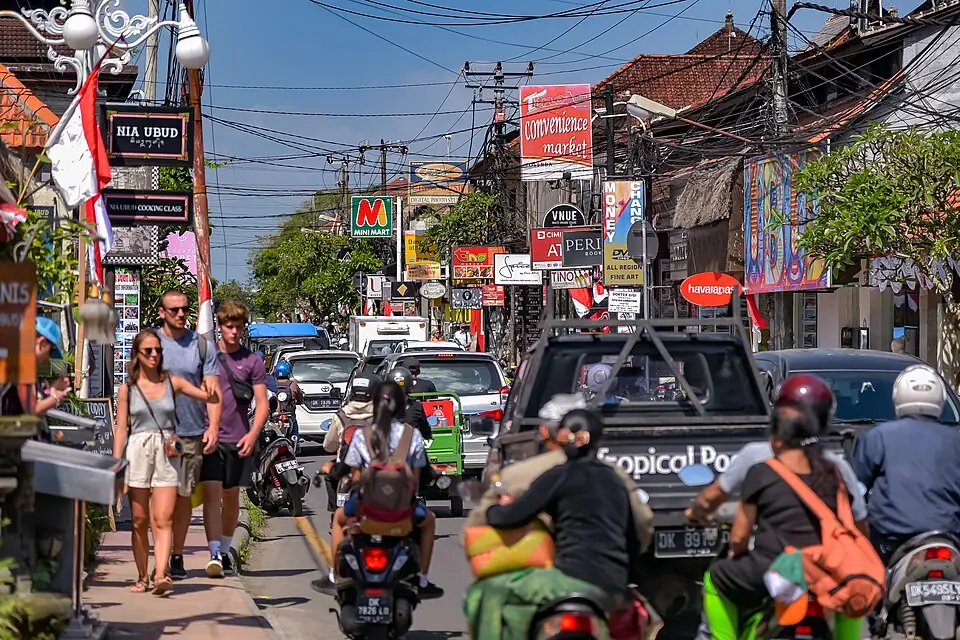
A scooter is how most of the island actually gets around, and for short hops between a warung, a rice terrace and your hotel, it’s hard to beat. A standard automatic: the little Honda Scoopy or BeAT you’ll see by the hundred outside Ubud and Canggu guesthouses: rents for around IDR 60,000 to 150,000 a day, roughly $4 to 10. Step up to a bigger Vario or NMAX, better for two riders or longer highway stretches, and you’re looking at around IDR 100,000 to 200,000, roughly $6.50 to 13.
Here’s the part that catches people out: renting one is easy, riding it legally is not, unless you’ve done the paperwork before you fly. Indonesia requires a valid home-country motorcycle license plus an International Driving Permit with a specific motorcycle endorsement, a regular car IDP does not cover it. Police checkpoints do stop tourists, and riding without the right permit risks a fine around IDR 1,000,000, roughly $60, on top of whatever the rental shop’s damage deposit costs you if things go wrong. A helmet is compulsory, and worth wearing regardless of the law: Bali’s roads mix scooters, trucks, dogs and the odd temple procession, often with no real shoulder.
- Cheapest way around at $4-10/day
- Total flexibility to stop at any rice terrace or warung
- No traffic-jam waiting once you're off the main roads
- Needs a genuine motorcycle-class IDP, not a car one
- Fine risk (~IDR 1,000,000) and real accident risk without one
- Miserable in Bali's afternoon downpours or Denpasar rush hour
A scooter also isn’t your only two-wheel option if you’d rather someone else drive: an ojek (motorbike taxi) booked through Grab or Gojek gets you the same speed through traffic without the license question, for the price of a short ride.
If riding isn’t your thing at all, a rental car is the other self-drive route: same International Driving Permit rules apply, and it makes more sense than a scooter for a family or a longer cross-island day.
- Free cancellation on most bookings
- Full price comparison, no hidden fees
- Pick up at airport or city centre
Grab and Gojek: Cheaper Than a Taxi, With One Big Catch at the Airport
Grab and Gojek are how most visitors actually get around once they’re clear of the airport. Book in the app, see the fare upfront, no haggling. Compared with a metered taxi or the prepaid airport counter, they typically run 25 to 35% cheaper on the same route.
The catch: neither app is allowed to pick up directly from Ngurah Rai Airport’s (DPS) international arrivals hall. Local taxi cooperatives hold the pickup rights there, so Grab and Gojek drivers can’t legally wait at the curb. Your ride still works. You just walk to a designated Grab Lounge or pickup point, roughly a 10-minute walk from the terminal, and meet your driver there instead. It’s a minor hassle once you know it’s coming, and a genuinely confusing one if you don’t, since the pickup can cancel more than once before a traveler figures out where to actually stand.
The airport isn’t the only spot with restrictions. Village “banjar” (customary neighborhood) cooperatives in pockets of Kuta, Canggu, parts of Ubud (notably around the Monkey Forest area), Sanur and Uluwatu limit or block app pickups specifically: drop-offs are generally fine. Drivers in these zones may cancel your ride or ask you to walk a short distance to a buffer point outside the restricted area. It’s not a Bali-wide rule, just a patchwork worth expecting rather than being surprised by.
Blue Bird Taxi, Kura-Kura Bus and Perama Shuttle: The Fixed-Route Options
Blue Bird is Bali’s one taxi brand tourists can generally trust on the meter, a genuine, reliable operator in a market that also has a handful of similarly blue-liveried imitators trading on its name. If you’re hailing a cab off the street rather than booking through an app, look for the actual Blue Bird branding and watch the meter start.
For point-to-point trips between the main tourist hubs, Kura-Kura Bus and Perama run fixed-schedule, fixed-price shuttle services linking Kuta, Legian, Seminyak, Sanur, Jimbaran, Nusa Dua and Ubud, for around IDR 80,000 to 150,000 a trip, roughly $5.50 to 10.50. No haggling, no surge pricing. You just need to work around a set timetable instead of an on-demand pickup, so they suit a planned day more than a spontaneous one.
| Method | Around IDR (one trip/day) | Around USD | Best for |
|---|---|---|---|
| Scooter rental | 60,000–150,000/day | $4–10 | Short local hops, full flexibility |
| Grab/Gojek | Varies by distance | 25–35% below taxi | Point-to-point rides, once past the airport curb rule |
| Blue Bird taxi | Metered | Varies | Street hails, airport back to hotel |
| Kura-Kura Bus / Perama | 80,000–150,000/trip | $5.50–10.50 | Fixed hub-to-hub routes, no haggling |
| Private driver, full day | 500,000–900,000/day | $35–55 | Multi-stop day trips, groups of 2–3+ |
Hiring a Private Driver for the Day
For a temple-and-rice-terrace itinerary with three or four stops, a private driver is often the least stressful, and, split between people, not much pricier than the alternative. A full day, typically 8 to 10 hours with fuel and parking included, runs around IDR 500,000 to 900,000, roughly $35 to 55, plus a tip of around IDR 50,000 to 100,000, roughly $3 to 7. Split two or three ways, that lands close to what a day of scooter rentals and warung stops would cost anyway, minus the traffic stress and the parking hunt at every stop.
A driver also doubles as an informal guide: most know which Tegallalang viewpoint is quieter, when Tanah Lot gets the best light, and which road to skip when it floods. Book through your accommodation, a driver-booking app, or an operator ahead of time rather than negotiating cold at a tourist spot, where day-rate quotes run noticeably higher.
- Fixed price, pay what you see
- Flight tracking, driver waits if delayed
- Free cancellation up to 24 h before
Book Your Airport Transfer or First Ride Ahead
Landing at DPS after a long-haul flight is not the moment to learn the arrivals-hall pickup rule the hard way. Booking a fixed-price transfer in advance, or at least knowing which door to walk out of for a Grab, saves the first hour of any trip.
Scooter accidents are also the single most common reason travelers end up filing a claim in Bali, so a policy that explicitly covers scooter/motorbike riding (and requires that IDP) is worth checking before you rent. See our travel insurance guide for what to look for.
Frequently Asked Questions
How much does scooter rental cost in Bali, and do I need a license?
A standard automatic scooter (Scoopy or BeAT-style) runs around IDR 60,000 to 150,000 a day, roughly $4 to 10; a bigger Vario or NMAX model costs around IDR 100,000 to 200,000, roughly $6.50 to 13. Riders legally need a home-country motorcycle license plus an International Driving Permit with a motorcycle endorsement, and a helmet is compulsory. Riding without the permit risks a fine of around IDR 1,000,000, roughly $60.
Can Grab or Gojek pick me up at Bali’s airport?
Not from the arrivals hall itself. Ngurah Rai Airport (DPS) bans app pickups directly outside international arrivals, so riders walk to a designated Grab Lounge or pickup point roughly a 10-minute walk from the terminal. Once there, Grab and Gojek typically run 25 to 35% cheaper than the prepaid taxi counter.
Is Blue Bird the only trustworthy taxi in Bali?
Blue Bird is Bali’s trusted metered-taxi brand and the safest bet if you’re flagging a cab on the street rather than booking an app ride. Watch for imitators using similar blue liveries and near-identical names to trade on Blue Bird’s reputation, and always confirm the meter is running before you set off.
What do Kura-Kura Bus and Perama shuttles cost in Bali?
Kura-Kura Bus and Perama both run fixed-schedule, fixed-price shuttle routes linking Kuta, Legian, Seminyak, Sanur, Jimbaran, Nusa Dua and Ubud for around IDR 80,000 to 150,000 a trip, roughly $5.50 to 10.50. They’re a solid no-haggle option between the main tourist hubs, though departures are far less frequent than an on-demand Grab or Gojek ride.
How much does a private driver cost for a day in Bali?
A private driver for a full day, typically 8 to 10 hours with fuel and parking included, runs around IDR 500,000 to 900,000, roughly $35 to 55, plus a tip of around IDR 50,000 to 100,000, roughly $3 to 7. Split between two or three people for a temple-and-rice-terrace day trip, it often works out cheaper per person than stitching together scooter rides or Grab fares all day.
Decide & Book Your Bali Transport
There’s no single right answer here, the right pick shifts by day. A scooter (with the right IDP) wins for short local hops; Grab and Gojek win for point-to-point rides once you’re past the airport curb rule; a private driver wins the moment you’ve got three or four stops and someone to split the cost with. Most travelers end up using two or three of these across a single trip, and that’s normal. Plan for it rather than trying to pick one and stick with it.
Find flights to Bali | Compare Bali hotels
Keep planning with the Bali travel guide, where to stay in Bali, the Bali daily budget, a full Bali itinerary, and check flights and hotels for your dates.