Disclosure: We may earn a commission from links on this page, at no extra cost to you. How we earn
This article contains affiliate links. If you make a booking through these links, we may earn a commission at no extra cost to you. About & Affiliate Disclosure
Quick Answer
- Best overall: September, then May and June, for dry weather plus shoulder-season prices.
- Cheapest flights and hotels: January, February, October, November (30-50% off peak).
- Avoid for crowds and price: July, August, and December 22-January 2.
- Rainy season (Nov-Mar) is underrated: short afternoon showers, lush scenery, big discounts.
- Book flights 6-10 weeks out for regional routes, 3-4 months out for long-haul.
The Best Time to Visit Bali, in One Sentence
The best time to visit Bali, if you want the easy win, is September: dry-season sunshine, half-empty beaches, and flights up to 40% cheaper than the August crush. May and June run a close second. But “best” depends entirely on what you’re chasing: perfect surf, the lowest prices, or the rainy season’s glowing-green rice terraces.
Bali sits eight degrees south of the equator, so it is warm every single month. What changes is rain, crowds, and price, and those three levers move together in ways that can save or cost hundreds of dollars. Below is the month worth booking, plus the one trap that catches almost everyone.
What to pack for Bali
Four picks from our gear guides that suit this trip. Each card opens the live Amazon price; the links below lead to the full comparisons.
360-degree memory foam with asymmetrical sides, so you pick which side gets the most support instead of getting the same generic curve everywhere. It was the single most-purchased travel product among Travel + Leisure readers in 2025. The catch: even compressed to about 60% of its size in the included bag, it’s still bulkier than an inflatable.
Check price on Amazon Live price on Amazon61 x 122 cm, listed at 120 g in navy, snap loop and a ventilated carry bag. Rainleaf says it absorbs five times its own weight, and it comes in six sizes. The one most travelers should buy first.
Check price on Amazon Live price on AmazonThe reliable all-rounder: one USB-C and four USB-A ports, plugs for 200+ countries, and a built-in fuse with a spare. The adapter most people should buy.
Check price on Amazon Live price on AmazonModel A1259, 10,000mAh, about 37Wh, 215 g. Two phone charges in a jacket pocket, and small enough that the two-bank limit never becomes a question.
Check price on Amazon Live price on AmazonBuild your Bali itinerary
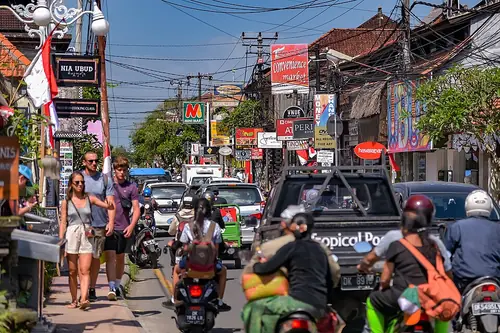
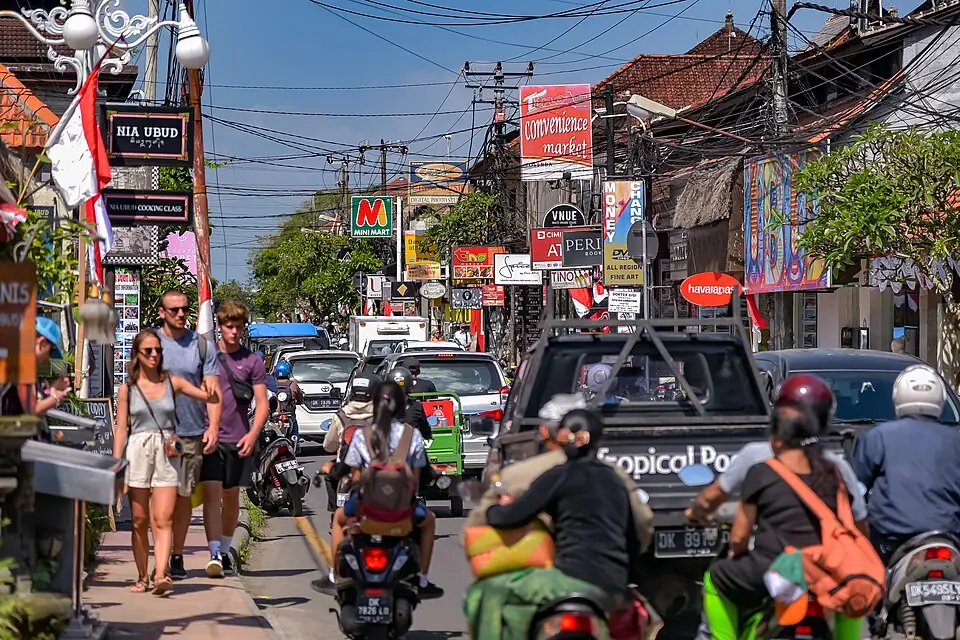
Bali looks tiny on a map, but the roads are slow and traffic is real, so the mistake most first-timers make is trying to day-trip the whole island from one hotel. Don’t. Base yourself in two or three areas and let each one breathe for a few days instead. The winning formula is simple: pair a cultural base inland (Ubud, for temples and rice terraces) with a beach base in the south (Seminyak or Canggu), then add an island day or two off the coast. The dry season, roughly April to October, is the best window island-wide, with September the sweet spot for sun without the July-August crowds.
Pick your bases first, then string them together so you’re moving forward, never doubling back.
| Area | Best for | How long to stay | Pairs well with |
|---|---|---|---|
| Ubud | Culture, temples, rice terraces, jungle | 2–3 days | The southern beaches |
| Seminyak | Beach days, boutiques, cafés | 2–3 days | Canggu |
| Canggu | Surf, cafés, laid-back coast | 2–3 days | Seminyak |
| Nusa Penida | Dramatic cliffs, snorkelling, viewpoints | 1–2 days (side trip) | Either beach base |
A few honest notes: Ubud is the green, temple-and-rice-terrace heart of the island and the natural cultural anchor, an easy hour or so inland from the south. Seminyak and Canggu sit side by side on the southwest coast and share the same beach-and-café vibe, which makes them the classic beach pairing, while Canggu leans more toward surf and a slower pace. Nusa Penida is a short fast-boat ride off the southeast coast, where jagged cliffs, hidden coves and some of Bali’s best snorkelling reward a one or two-day side trip.
Two routes that actually work:
- First-timer, 8–10 days: Ubud 3 (temples, the rice terraces, a waterfall morning) → Seminyak or Canggu 3 (beach days, surf lessons, café mornings) → Nusa Penida 2 (cliff viewpoints and snorkelling by fast boat). One forward arc, no backtracking.
- Beach + surf, 7 days: Canggu 4 (surf, long coastal walks, café mornings) → Uluwatu or Seminyak 3 (cliff-top temples at sunset, calmer beaches further south).
Remember Bali’s traffic: hopping between distant spots eats whole afternoons, so keep two or three solid bases and don’t zig-zag across the island. Use the city guides below to go deeper on whichever stops make your shortlist.
Top Cities to Explore
Bali’s Two Seasons: Dry vs Wet, and What Each One Means for You
Bali has a tropical monsoon climate with two clear seasons. Knowing which one you are walking into is the difference between a trip you planned and a trip left to luck.
Dry Season (April to October)
Humidity drops, rain becomes rare, and the sky stays clear for days. Days hover at 27-30 C (80-86 F); nights cool to 23-25 C (73-77 F), pleasantly so up in Ubud. This is peak tourism, especially July and August when European and Australian school holidays collide.
It is the season for doing things. Hikers on Mount Batur and Mount Agung get clear summit views. Divers at Nusa Penida enjoy visibility past 30 meters. Surfers score consistent swells at Uluwatu and Padang Padang.
Wet Season (November to March)
Forget the image of all-day rain. Showers usually hit for one to three hours in the afternoon, then clear; mornings are often bright. Rainfall peaks in January and February (over 300mm a month), and the humidity makes it feel hotter, with highs of 31-33 C (88-91 F).
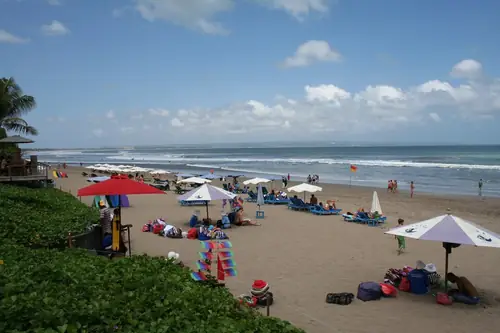
The payoff is real. In February the rice terraces of Ubud and Jatiluwih glow electric green, Sekumpul waterfall runs at full force, and the southern beaches feel far less crowded. Days typically fall into a rhythm of bright, dry mornings for exploring, then one afternoon downpour to wait out over a coffee before the sky clears again by evening. The trade-offs are real too: murkier dive visibility and the odd flooded road. With prices down 30-50%, plenty of travelers happily make that trade. But wet season isn’t automatically the right call, and the month-by-month breakdown below shows exactly where the sweet spots hide.
Month-by-Month Guide to Visiting Bali
Use this table as your at-a-glance planner for weather, crowds and prices.
| Month | Weather | Crowds | Prices | Best for |
|---|---|---|---|---|
| January | Hot, heavy PM rain | Moderate, then low | Low | Budget trips, spa, photography |
| February | Wettest month | Low | Lowest of the year | Rock-bottom prices, Ubud retreats |
| March | Rain easing | Low-moderate | Low | Nyepi, value before dry season |
| April | Drying out | Moderate | Shoulder | Beach + culture, fewer crowds |
| May | Dry begins | Moderate | Mid | Diving, hiking, all-rounder |
| June | Reliably dry | Growing | Mid-high | Volcano treks, Gili snorkeling |
| July | Peak dry, coolest | High | Peak | Guaranteed sun, surf, arts festival |
| August | Dry, breezy | Highest | Peak | Beaches, water sports, temples |
| September | Still dry | Thinning | Great value | The single best month overall |
| October | Dry ending | Low-moderate | Shoulder, cheap flights | Last dry treks, value diving |
| November | Wet begins | Low | Low | Surf, yoga, waterfalls |
| December | Regular rain | Low then very high | Low then peak | Early-month deals; holiday trips |
Because Bali sits eight degrees off the equator, the temperature barely moves: highs hold at 28 to 31 C all year, with July the “coolest” month and January-February the most humid (around 85%). A few date-specific extras worth planning around: March brings Nyepi, the Balinese Day of Silence (a genuinely unique experience when the whole island shuts down for 24 hours), and the Bali Arts Festival runs through July in peak dry season.
Find Cheap Flights to Bali
Ngurah Rai International Airport (DPS) is Bali’s only commercial airport. Direct flights run from Singapore, Kuala Lumpur, Bangkok, Jakarta, Sydney, and Melbourne. From Europe and North America, most routes connect through Singapore, Doha, or Dubai.
Use the live calendar below to spot the cheapest departure dates at a glance, then compare across months.
Tips for cheaper flights:
- Book 6-10 weeks ahead for regional routes, 3-4 months ahead for long-haul.
- Fly midweek. Tuesday and Wednesday departures are consistently cheaper, often by 10-20%.
- Split the journey. Fly into Jakarta or Singapore first, then grab a budget carrier (Lion Air, AirAsia) to Bali and save $100-200.
- Set fare alerts. Prices shift fast on competitive Asian routes.
- Skip peak windows. School holidays (July-August), Christmas/New Year, and Chinese New Year carry the highest fares.
For more route ideas and fare hacks, browse our full flights hub.
When Prices Are Lowest: Best Time for Budget Travelers
Target these windows for the cheapest trips:
January to mid-February is the absolute cheapest stretch. A private villa that runs $150 a night in August can drop to $60-70 in January. Tours follow the same curve.
Late October to November delivers similar savings with better weather, since the rain has only just started and showers clear fast.
September is the budget traveler’s sweet spot when you still want dry skies: the same conditions as July-August at 20-30% lower prices.
Steer clear of Chinese New Year (late January to mid-February), Easter week, and the Christmas-New Year block.
Where to Stay in Bali
Bali is not one place; it is a cluster of very different regions. Where you sleep shapes the whole trip.
| Area | Vibe | Budget room | Best for |
|---|---|---|---|
| Ubud | Culture, rice terraces, wellness | $15-25/night | Temples, yoga, cool evenings |
| Seminyak | Polished dining and beachfront cafes | $40-60/night | Sunsets, dining, boutique shopping |
| Canggu | Surf and digital nomads | $10-15 hostel / $50-80 villa | Cafes, coworking, beginner surf |
| Uluwatu | Cliffs and world-class surf | $12-20 hostel / $200+ resort | Big surf, dramatic sunsets |
Ubud is the cultural heart, ringed by paddies and Hindu temples, with the Tegallalang terraces and Monkey Forest nearby. Seminyak is south Bali’s glossy side, full of boutiques, beachfront cafes, and sunset dining. Canggu is the laid-back surf-and-coffee nomad hub around Echo Beach. Uluwatu brings limestone cliffs, hidden beaches, and the cliff-top temple’s sunset Kecak fire dance. Compare current rates anytime on our hotels hub.
Daily Budget for Bali
| Category | Budget ($) | Mid-Range ($) | Comfort ($) |
|---|---|---|---|
| Accommodation | $10-25 | $40-80 | $100-250 |
| Food (3 meals) | $8-12 | $15-30 | $40-80 |
| Transport | $3-8 | $10-20 | $25-50 |
| Activities | $5-10 | $15-30 | $30-60 |
| Daily Total | $30-55 | $80-160 | $195-440 |
A few notes that keep costs honest: local warungs serve nasi goreng or mie goreng for $1.50-3, so eating local keeps meals under $5. A scooter rental ($4-6/day) is the cheapest, most flexible way around (an international driving permit is technically required). Temple entry runs $3-5, a Nusa Penida snorkeling day trip is $25-40 with boat transfer, and a full-day car with driver is $35-50, well worth splitting.
Stay Connected and Safe: eSIM and VPN
Skip the airport SIM queue. A travel eSIM gives you fast data the moment you land at DPS, which matters when you are ordering a Gojek ride, navigating Canggu’s lane-maze, or hunting a warung. Indonesia has solid 4G/5G across the south and Ubud.
- Activate before you fly: data works on arrival
- Plans for 200+ countries from a few dollars
- Keep your number; no physical SIM swap
Bali runs on plenty of open cafe and villa Wi-Fi, and Indonesia blocks some sites and apps. A VPN keeps your banking and logins private on public networks and lets you reach your usual streaming and home services. Set it up before you fly.
- Up to 10 devices on one account
- Obfuscated servers for networks that block VPNs
- 30-day money-back guarantee
For the full rundown, see our guides to the best travel eSIM and VPN.
Tours & Activities: Bali
Skip the ticket queues and pre-book the best local tours, day trips and skip-the-line attractions.
Frequently Asked Questions
What is the best month to visit Bali?
September is the standout: dry-season weather without July-August crowds or prices. May and June run a close second with clear skies and strong value.
Is Bali worth visiting during rainy season?
Yes. Rain mostly falls in short afternoon bursts, not all day, and mornings stay sunny. Prices drop 30-50%, beaches are emptier, and the landscape turns vivid green from November through March.
What is the cheapest time to fly to Bali?
January, February, October, and November usually have the lowest airfares, often 30-40% below August. Avoid school holidays, Christmas/New Year, and Chinese New Year, and fly midweek to shave another 10-20%.
How much does a trip to Bali cost per day?
Budget travelers manage on $30-55 a day; mid-range travelers should plan for $80-160. See the cost table above for the full breakdown.
Is Bali crowded in December?
Early December (1st-20th) is quiet with low-season pricing. From December 22 to January 2, expect peak prices, fully booked villas, and packed beaches in Kuta and Seminyak. Book the holiday window well ahead.
Do I need a SIM card or eSIM in Bali?
An eSIM is the easiest route. Indonesia has fast, affordable 4G/5G across the south and Ubud, and an eSIM gets you online the moment you land at DPS, with no SIM queue.
When is the rainy season in Bali?
Bali’s rainy season runs from November to March, peaking in January and February when rainfall tops 300mm. Even then, rain usually falls in short afternoon bursts rather than all day, and mornings often stay bright. The dry season runs April to October.
When is the dry season in Bali?
The dry season runs April to October, with clear skies, lower humidity, and highs of 28-30 C. July and August are the driest and busiest; September offers the same sunshine with fewer crowds and lower prices.
Start Planning Your Bali Trip
The best time to visit Bali comes down to priorities. Dry season (April-October) means sunshine and outdoor adventures; wet season (November-March) trades a few showers for dramatic green landscapes and prices 30-50% lower. Whichever month you pick, Bali stays one of Southeast Asia’s best-value destinations: the trick is matching the season to what you actually want.
Compare prices now and lock in your dates: