Quick Answer
- Best time: December to March or July to August (Colombia’s two dry windows); Medellín’s altitude keeps temperatures mild and spring-like nearly year-round regardless.
- How long: 2 to 3 days for the Metrocable, Comuna 13 and Centro, plus a third day for the Guatapé day trip.
- Where to stay: El Poblado for the widest price range and closest restaurants; Laureles-Estadio for a quieter, more local base at a similar budget-to-mid price.
- Getting around: the Metro and Metrocable cable-car lines, plus a flat regulated taxi tariff from the airport.
Medellín Turned Its Cable Cars Into the City’s Best Attraction
Most cities build a metro to move people. Medellín built one that also happens to be the best sightseeing ride in Colombia. The Metrocable strings orange cable cars up the steep hillsides that ring the valley, and for the price of a normal transit fare you get a bird’s-eye view over a city that spent decades known for the wrong reasons and rebuilt itself around public transport, public art and public escalators.
That’s the shape of this Medellín travel guide: the Metrocable up to Comuna 13’s murals, a full day out to Guatapé and the Piedra del Peñol rock, and an honest read on whether El Poblado or Laureles-Estadio is the better base for your trip.
A short, dated safety note. The US State Department rates Colombia a Level 3, “Reconsider Travel” advisory as of March 31, 2026, citing crime, terrorism, civil unrest, kidnapping and natural disasters. Medellín, along with the other main tourist cities, sits outside the separate Level 4 “Do Not Travel” departments the advisory names, and nothing in this guide routes through them. The UK Foreign, Commonwealth and Development Office takes a narrower position: it names specific no-go border areas rather than issuing a country-wide warning, and does not advise against travel to Colombia’s main tourist areas. Check your own government’s current travel advisory before you book.
What to pack for Medellín
Four picks from our gear guides that suit this trip. Each card opens the live Amazon price; the links below lead to the full comparisons.
25 x 18 x 4 cm, 254 g, 2.1 L. Locking zips, a cut-resistant double-cable strap, an RFID passport pocket and a strap that clips to a chair. Reader’s Digest’s best crossbody for travel.
Check price on Amazon Live price on AmazonThe best value compression set going. A double-zip pulls the air out so a week of clothes shrinks to a few inches thick, and you get eight pieces (cubes plus a shoe and laundry bag) for roughly the price of one branded cube. The fabric is thin and the zips aren’t lifetime kit, but for the money nothing beats it.
Check price on Amazon Live price on AmazonThe reliable all-rounder: three USB-C and two USB-A ports, plugs for 200+ countries, and a built-in fuse with a spare. The adapter most people should buy.
Check price on Amazon Live price on AmazonModel A1259, 10,000mAh, about 37Wh, 215 g. Two phone charges in a jacket pocket, and small enough that the two-bank limit never becomes a question.
Check price on Amazon Live price on AmazonBest Time to Visit Medellín
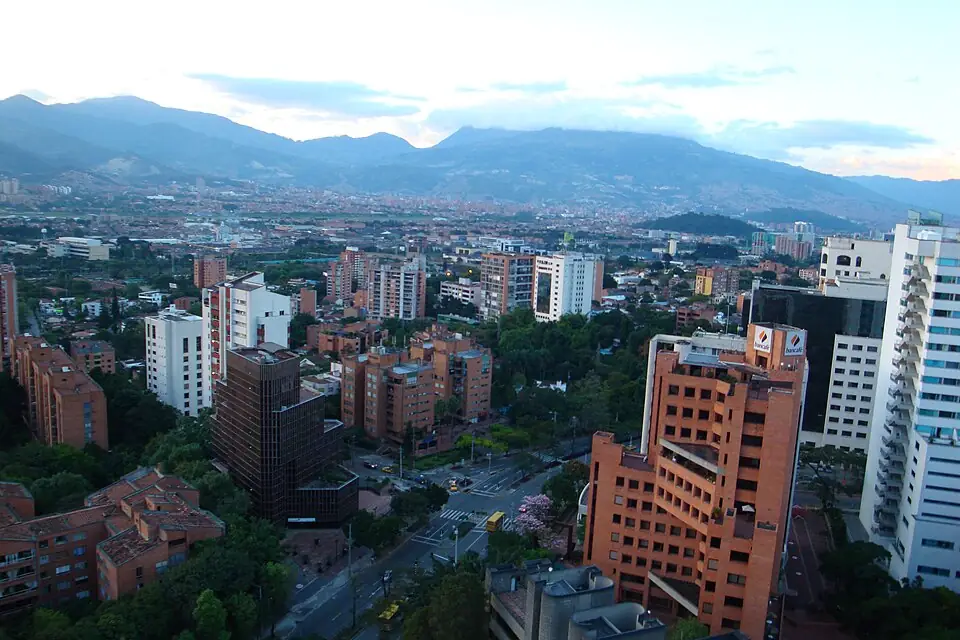
Medellín sits at roughly 1,495 m in the Aburra Valley, low enough to escape Bogotá’s chill but high enough to dodge the coast’s heat, which is exactly why locals call it the “City of Eternal Spring.” Temperatures stay mild and fairly consistent year-round; what actually changes is rainfall, not temperature. See the Colombia guide for the full country-wide month-by-month breakdown.
| Window | Conditions in Medellín | Best for |
|---|---|---|
| Dec to Mar | Drier, sunnier stretch | Sightseeing, the Metrocable, day trips |
| Jul to Aug | Second dry spell; also the Feria de las Flores flower festival in early August | Festivals, reliable weather |
| Apr to May, Sep to Nov | The Andes’ second rainy season, short afternoon showers | Lower prices, thinner crowds |
Because the hotel rates below were sampled for a September 2026 stay, a shoulder-season window, expect the December-holiday and July-August dates to run above the prices quoted here.
Where to Stay in Medellín: El Poblado vs. Laureles
Live Booking.com price data for a two-night September 2026 stay (2 adults, shoulder season, total halved to a per-night rate) shows no true budget floor in Medellín the way Bogotá has one:
| Band | Around (per night) | Clusters in |
|---|---|---|
| Budget to mid | ~$83 to 112 | El Poblado, Laureles-Estadio |
| Upscale | ~$127 to 186 | El Poblado |
El Poblado spans the whole sampled range, from the budget floor to the upscale ceiling, and puts you within walking distance of the neighborhood’s restaurant and cafe scene plus a direct Metro stop. Laureles-Estadio sits in the same budget-to-mid band as Poblado’s cheaper rooms, but trades the nightlife-adjacent buzz for a quieter, more residential feel popular with longer-stay visitors and closer to the Atanasio Girardot stadium. Neither neighborhood had sub-$80 stock in this sample, so Medellín’s floor sits above Bogotá’s; if cost is the deciding factor, front-load nights in Bogotá instead, per the Colombia budget guide.
Compare current rates anytime on our hotels hub.
Getting to Medellín
Most flights land at Jose Maria Cordova International Airport (MDE), which sits well outside the city in the Rionegro area rather than downtown. A regulated taxi tariff took effect on February 2, 2026, and now applies a flat fare regardless of which neighborhood you’re headed to:
| Option from MDE | Around, one way | Notes |
|---|---|---|
| Regulated taxi | ~132,000 COP standard (~134,100 electric, ~143,100 luxury) | Flat fare to Poblado, Laureles, Centro or Envigado alike; toll included |
| Combuses shuttle bus | ~20,000 COP | About 35 minutes to San Diego mall, continuing to Estacion Exposiciones |
| Colectivo (shared taxi) | ~27,000 COP | A cheaper middle ground between the shuttle and a private taxi |
| Uber / DiDi | ~80,000 to 110,000 COP | Ride-hailing apps operate in a legal gray area in Colombia but are widely used |
Domestic flights connect Medellín to Bogotá, Cartagena and Santa Marta in under 90 minutes each; the road route to Bogotá is currently unreliable (see the Colombia getting-around guide for why flying beats the bus on that corridor right now).
Getting Around: the Metro and Metrocable
Medellín’s Metro is the backbone of the city, and its Metrocable cable-car lines are the part that doubles as sightseeing.
| Option | Around (fare) | Notes |
|---|---|---|
| Metro/Metrocable with a Civica card | ~3,430 to 3,820 COP | Fare rose to 3,820 COP from January 10, 2026 |
| Metro/Metrocable, no card (“Eventual” tourist ticket) | ~3,900 to 4,400 COP | Simpler for a short visit, slightly pricier per ride |
| Civica reloadable card | ~10,900 COP | Reusable; pays for itself after 3 to 4 rides |
| Metrocable Line L to Parque Arvi | +~13,700 COP on top of the base fare | Parque Arvi itself has no separate entrance fee |
Top Things to Do in Medellín
- Comuna 13 graffiti tour. A hillside neighborhood once defined by conflict, now known for its outdoor public escalators and dense, constantly repainted street art. Paid tours run around 80,000 to 120,000 COP (about $25 to 38) for three to four hours, including the Metro fare, a guide and street food; free donation-based walking tours (suggested around $12 to 15) also run regularly.
- The Metrocable itself. Ride Line K or Line J purely for the view over the Aburra Valley; it costs nothing beyond a normal Metro fare and remains one of the most distinctive urban transit rides in South America.
- Parque Arvi via Metrocable Line L. A mountaintop nature reserve reached entirely by cable car, with hiking trails and an artisan market, for the base fare plus Line L’s small supplement.
- Plaza Botero. An open-air plaza in Centro holding 23 bronze sculptures donated by Fernando Botero, free to walk through any time of day.
- Feria de las Flores. Medellín’s flower festival runs in early August, built around the Desfile de Silleteros, a parade of growers carrying enormous flower arrangements on their backs, a genuinely local spectacle if your dates line up.
- Centro walking tour. Beyond Plaza Botero, Centro’s grid holds the Museo de Antioquia, colonial-era churches and a street-food scene worth an unhurried afternoon.
Food and Culture: No Bar Crawl Required
Medellín’s food and music scene runs on coffee, street food and dance rather than nightlife. Antioquia’s signature dish, the bandeja paisa (a hearty plate of beans, rice, ground beef, chicharron, plantain, avocado and a fried egg), shows up on nearly every traditional restaurant menu in the city.
Tinto, small strong Colombian black coffee, is offered constantly through the day at street stalls and every restaurant table, the same coffee culture that runs across the country. For an evening out, lean on live salsa and champeta music venues in Poblado and Laureles rather than a bar crawl: Medellín’s dance-hall scene stays lively well past dark and is a far better fit for a low-key night than any drinking strip.
Day Trip: Guatapé and Piedra del Peñol
The single best day trip from Medellín is the pairing of Guatapé’s lakeside town and the Piedra del Peñol rock formation, about two hours east.
| Step | Around (cost) | Notes |
|---|---|---|
| Bus from Terminal del Norte | ~16,000 to 25,000 COP one way | About 2 hours; longer on weekends with traffic |
| Piedra del Peñol entrance | ~25,000 to 35,000 COP (~$8 to 11) | Cash only at the kiosk; sources disagree so check at the gate; under-5 free, senior discount with ID |
| Organized day tour | Varies by operator | Transport, guide and sometimes a boat are bundled; confirm the current price with the operator before booking |
Climb the rock’s built-in staircase for a reservoir view widely considered one of the best in Colombia, then walk Guatapé’s town center, where every house facade carries a colorful hand-painted zocalo relief panel. Both the bus and the rock entrance are straightforward to do independently if you’d rather skip an organized tour.
Practical Tips for Medellín
- Visa and entry. Most US, UK, EU, Canadian and Australian citizens enter Colombia visa-free for up to 90 days, extendable once for another 90 days at a Migración Colombia office, with a 180-day cap per calendar year. A free, mandatory Check-Mig pre-registration must be filed online 1 to 72 hours before each flight to or from Colombia; use only the official government portal, since third-party sites impersonate the form and charge a fee. Full details in our Colombia visa guide.
- Stay connected. A 20 GB / 30-day Colombia eSIM from Saily runs around $37, or an unlimited-data Holafly plan runs around $98 for 30 days; local Claro, Movistar and Tigo prepaid SIMs are also sold at MDE and in city stores, generally cheaper per GB but requiring a passport-registered physical SIM swap. See our full Colombia eSIM guide.
- Activate before you fly: data works on arrival
- Plans for 200+ countries from a few dollars
- Keep your number; no physical SIM swap
- Etiquette matters. Formal “usted” address, tidy dress in mid- and high-end restaurants, and a generally indirect, polite communication style all apply in Medellín the same as the rest of Colombia. Full details in our Colombia etiquette guide.
- Currency. Colombia uses the peso (COP), trading around 3,179 to the US dollar as of early August 2026. Cards are widely accepted in Poblado and Laureles restaurants and hotels; carry cash for Comuna 13 street food, Centro markets and the Guatapé bus. Always choose to be billed in pesos, never Dynamic Currency Conversion, at an ATM.
- Tap water is treated to safe standards in Medellín, and it’s commonly drunk locally, though bottled water is still a reasonable extra precaution in some buildings.
- Scopolamine is a real, documented risk, worth knowing rather than fearing. This odorless, tasteless compound has occasionally been used to incapacitate victims for robbery, most often slipped into food or drink accepted from a stranger, including dating-app meetups. Don’t accept food, drinks or cigarettes from people you’ve just met, and watch your drink being poured.
- “No dar papaya” applies here too. Keep phones and cash out of sight on the Metro, in Comuna 13’s crowds and around Parque Lleras; it’s the same standard-precaution advice that applies across Colombia’s big cities.
- Up to 10 devices on one account
- Obfuscated servers for networks that block VPNs
- 30-day money-back guarantee
Browse the wider VPN guide for keeping your banking and logins private on hotel and cafe wifi, and see our travel insurance guide for what to look for in a policy before a multi-city Colombia trip.
Itineraries
- Building a full Colombia loop? See the Colombia itinerary guide for how Medellín slots in alongside Bogotá, Cartagena and Santa Marta.
- Setting a daily budget? The Colombia budget guide breaks down what a day in Medellín actually costs against the other three cities.
- Starting in the capital first? See our Bogotá travel guide for the altitude city that opens most Colombia trips.
- Heading to the coast next? See our Cartagena where-to-stay guide and the Santa Marta guide for the Caribbean leg of the trip.
Frequently Asked Questions
How many days do you need in Medellín?
Two to three days covers Medellín well: one for the Metrocable and Comuna 13, one for Centro’s Botero Plaza and a Poblado or Laureles food afternoon, and a third for the Guatapé and Piedra del Peñol day trip if your schedule allows it. Base yourself near a Metro line and the whole city opens up cheaply.
Where should I stay in Medellín: El Poblado or Laureles?
El Poblado spans the widest price range, from around $83 a night at the budget end to $127 to 186 for upscale rooms, and puts you closest to restaurants and the Metro. Laureles-Estadio sits in the same budget-to-mid band, around $83 to 112 a night, with a quieter, more residential, local feel and its own Metro access.
How do I get from Medellín’s airport to the city?
Jose Maria Cordova (MDE) sits well outside town, and a regulated taxi to Poblado, Laureles, Centro or Envigado runs a flat fare of around 132,000 COP (about $42), the same regardless of destination, effective from a February 2026 tariff update. The Combuses shuttle bus runs around 20,000 COP to San Diego mall in about 35 minutes, and a shared colectivo taxi runs around 27,000 COP.
What is the Comuna 13 tour and is it worth it?
Comuna 13 is a hillside neighborhood once known for violence, now known for its outdoor escalators and dense street-art murals painted by local artists. Paid graffiti tours run around 80,000 to 120,000 COP (about $25 to 38) for three to four hours, including the Metro fare, a guide and street food; free walking tours running on a suggested donation of around $12 to 15 also exist.
Is the Guatapé and Piedra del Peñol day trip worth it from Medellín?
Yes: a bus from Medellín’s Terminal del Norte runs around 16,000 to 25,000 COP one way and takes about two hours, and climbing the Piedra del Peñol rock costs around 25,000 to 35,000 COP (about $8 to 11, sources disagree so check at the gate), paid in cash at the kiosk, for a reservoir view that’s one of the best day trips in Colombia. Guatapé’s lakeside town, with its colorful zocalo-decorated houses, rounds out the day.
Is Medellín safe to visit in 2026?
The US State Department rates Colombia a Level 3, “Reconsider Travel” advisory as of March 31, 2026, citing crime, terrorism, civil unrest, kidnapping and natural disasters, but Medellín sits outside the Level 4 “Do Not Travel” departments entirely. The UK Foreign, Commonwealth and Development Office takes a narrower view, naming specific no-go border areas without a blanket country warning, and does not advise against Colombia’s main tourist areas. Check your own government’s current advisory before booking.
Sources
- US State Department, Colombia Travel Advisory: travel.state.gov
- UK Foreign, Commonwealth and Development Office, Colombia travel advice: gov.uk/foreign-travel-advice/colombia
- Metro de Medellín official 2026 tariff page: metromedellin.com.co
- Telemedellin, MDE regulated taxi tariff announcement (effective February 2, 2026): telemedellin.tv
- Booking.com live accommodation pricing, sampled 8 August 2026 for a 5 to 7 September 2026 stay
VoyageHacks checked Medellín’s hotel bands, Metro fares and the current advisory status live in August 2026. The Guatapé organized-tour price and the Piedra del Peñol entrance fee vary by source; confirm the current figure with the operator or at the kiosk before you go.