Quick Answer
- Best time: June to September for everything open; 14 November 2026 to 10 January 2027 for the free Winter Festival of Lights.
- Winter reality: January highs around -0.4°C; the falls build ice but never freeze solid.
- Where to stay: Fallsview for views of the falls, Clifton Hill for families, Lundy’s Lane for lower prices.
- Getting there: GO trains from Union Station all year; WEGO bus C$16 for 24 hours.
- Big sights: Journey Behind the Falls C$33 and the Power Station C$33, both open year round.
At a glance
- Best time
- Jun–Sep; mid-Nov–early Jan for lights
- Time needed
- 1 to 2 days
- Currency
- Canadian dollar (CAD)
- Language
- English
- From the airport
- Toronto Pearson: UP Express to Union Station, 28 min
- Visa
- eTA (C$7) for most air arrivals
- Getting around
- GO train from Toronto, WEGO bus
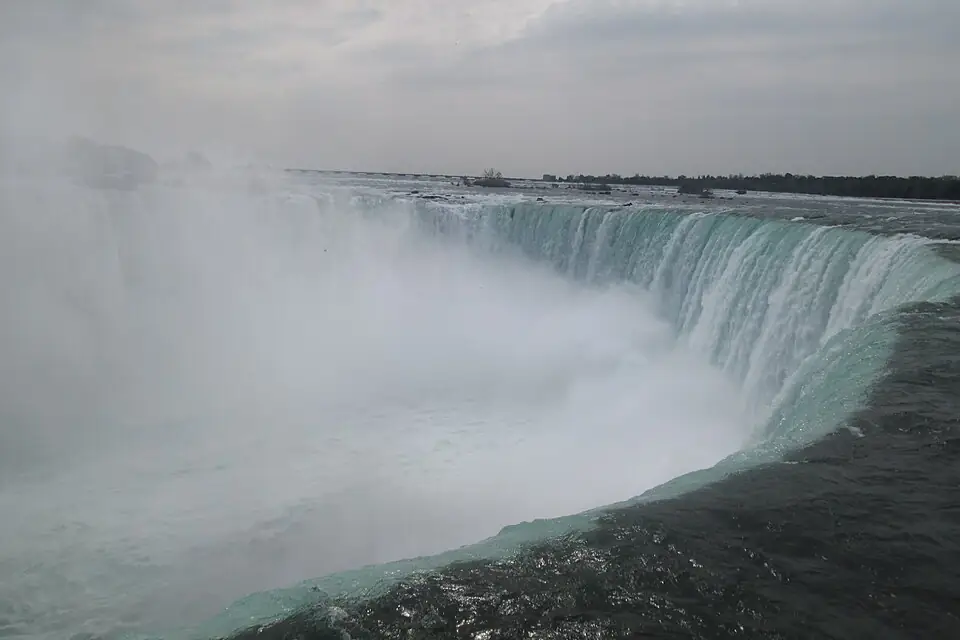
Niagara Falls is three waterfalls on the border between Ontario and New York State, and the Canadian side has the better view: it looks straight at the American Falls and into the curve of the Horseshoe Falls. The questions for a trip are simple. Which season, where to sleep, and whether to go by train or car. Prices and dates below were checked on 10 October 2026.
When is the best time to visit Niagara Falls?
Summer is the full experience; winter is quieter and colder, with ice on the gorge and the light festival in town. The figures are Environment and Climate Change Canada’s 1981-2010 normals for the Niagara Falls station, the most recent published normals for the city itself.
| Month | Average high / low | Snowfall | What to expect |
|---|---|---|---|
| November | 8.7°C / 1.1°C | about 10 cm | Winter Festival of Lights opens 14 November 2026 |
| December | 2.7°C / -4.1°C | about 32 cm | Lights nightly, fireworks Friday and Saturday |
| January | -0.4°C / -7.8°C | about 48 cm | The coldest month; ice builds on the gorge |
| February | 1.3°C / -6.6°C | about 32 cm | Still deep winter; quietest hotels |
| March–May | 5.9–19.4°C / -3.5–7.7°C | falling to almost none | Thaw, then spring; fewer crowds |
| June–August | 24.5–27.4°C / 13.7–17.0°C | none | Peak season; every attraction open |
| September–October | 15.1–21.9°C / 6.3–12.3°C | none | Mild, softer prices, autumn colour |
Winter at the falls is damp as well as cold: the mist freezes on railings, trees and paths near the brink. Pack properly with our guides to winter boots for travel, packable down jackets and heated gloves.
Does Niagara Falls freeze in winter?
Not completely, whatever the photos suggest. In very cold spells the mist and spray build a crust of ice over the falls and the gorge, but Niagara Parks says the water keeps flowing underneath. The winter flow is about 85 million litres a minute, half the summer flow, because about 75% of the water is diverted for hydroelectric power. The river has stopped only once on record, for about 30 hours in March 1848, when Lake Erie ice jammed its source. An ice boom has sat at the head of the river since 1964 to control the ice.
What you can expect in a cold January: thick ice on the rocks and trees, frozen mist that looks like snow, and sometimes an ice bridge across the lower river. What you should not expect is a silent, solid wall of ice.
Where should you stay in Niagara Falls?
Most visitors stay on the Canadian side, within walking distance of the falls or a short WEGO ride away.
| Area | Best for | Trade-off |
|---|---|---|
| Fallsview | Rooms that look over the Horseshoe Falls, a short walk downhill to the brink | The priciest area; ask for a falls-view room in writing |
| Clifton Hill and the riverfront | Families, the main attractions strip, walking to the boat dock area | Loud, neon and touristy |
| Lundy’s Lane | Cheaper motels and chain hotels | You need the bus or a car to reach the falls |
| Niagara-on-the-Lake | A quiet historic town to the north, near the mouth of the river | Far from the falls; best with a car or the WEGO-linked shuttle |
First trip, especially in winter? Fallsview is worth paying for: the Festival of Lights and the brink of the falls are a short walk away, and you can watch the fireworks without standing in the cold for long. Compare Niagara Falls hotel prices .
How do you get to and around Niagara Falls?
Most international flights land at Toronto Pearson International Airport, about 130 km by road from the falls.
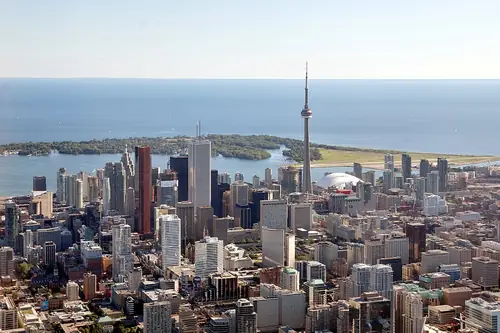
Our Toronto travel guide covers the UP Express from Pearson to Union Station, where the GO trains leave.
What should you not miss at Niagara Falls?
| Sight | Price (2026, adult) | Winter? |
|---|---|---|
| Table Rock and the brink of the Horseshoe Falls | Free | Open; paths can be icy |
| Journey Behind the Falls | C$33; C$21.50 ages 3–12 | Open year round |
| Niagara Parks Power Station and the Tunnel | C$33; C$21.50 ages 3–12 | Open year round; the tunnel platform can close in bad weather |
| Winter Festival of Lights | Free | 14 November 2026 to 10 January 2027, 5 p.m. to midnight |
| Niagara City Cruises boat tour | Check the booking calendar | Seasonal; it sails only when conditions are safe |
- Journey Behind the Falls: an elevator drops 125 feet through the bedrock to tunnels with viewing portals behind the Horseshoe Falls, plus an upper and a lower observation deck. Niagara Parks suggests arriving at least an hour before closing.
- The Tunnel at the Power Station: a 2,200-foot tunnel leads to an observation deck at the river’s edge, and the station runs an evening sound and light show called Currents.
- Winter Festival of Lights: Canada’s largest free outdoor light festival, with more than 25 new displays and interactive exhibits this season and fireworks every Friday and Saturday at 8 p.m. in November and December.
The Niagara Falls Pass (Classic C$89, Plus C$109, Premium C$129 for adults) bundles the main Niagara Parks attractions with WEGO, but the 2026 pass is valid from 20 April to 1 November 2026, so in winter you pay attraction by attraction.
Can you visit the American side?
Yes, but it is an international border. Walking or driving across to Niagara Falls, New York, means entering the United States: bring your passport, and if you travel on the Visa Waiver Program, U.S. Customs and Border Protection requires an approved ESTA for land arrivals too. You then go through Canadian border control on the way back. For most visitors, the Canadian side gives the better view of both falls; plan the crossing only if the US side is part of a wider trip, such as on to New York City. See our USA travel guide for the wider picture.
What goes wrong on a Niagara Falls trip?
- Ending up at the GO station on foot. Niagara Falls GO is in the north end of the city. Buy the GO+WEGO combo or plan the bus before you arrive.
- Expecting a frozen waterfall. The falls do not freeze solid; come in winter for ice and lights, not for a still wall of ice.
- Booking the boat for December. The boat tour is seasonal; in winter, Journey Behind the Falls and the Power Station tunnel are the close-up views.
- Counting on the Niagara Falls Pass in winter. The 2026 pass runs only from 20 April to 1 November.
- Underdressing for the mist. Near the brink, spray soaks you in summer and freezes on you in winter. Bring a waterproof layer.
For data on arrival, compare plans in our best eSIM for travel guide.
How many days do you need at Niagara Falls?
One day covers the falls, Journey Behind the Falls and the Power Station, and it works as a day trip from Toronto by GO train. Stay one night between mid-November and early January to see the Winter Festival of Lights after dark and the Friday or Saturday fireworks without racing for the last train. Add a second day for Niagara-on-the-Lake or the rest of the Niagara Parks attractions in summer.
Sources
Climate figures come from Environment and Climate Change Canada’s 1981-2010 normals for the Niagara Falls station; festival dates and hours from Niagara Falls Tourism; attraction prices, the Niagara Falls Pass, WEGO fares and the frozen-falls facts from Niagara Parks; train service and combo fares from GO Transit; US entry rules from U.S. Customs and Border Protection. The full list is in the sources box at the end of this page.
Frequently Asked Questions
What is the best time to visit Niagara Falls?
June to September is the best time for the full experience: Environment and Climate Change Canada’s 1981-2010 normals for Niagara Falls give average highs of 24.5 to 27.4°C in June to August, and every attraction is open. For a winter trip, come between 14 November 2026 and 10 January 2027 for the free Winter Festival of Lights, and dress for highs around 0°C.
When is the Niagara Falls Winter Festival of Lights 2026?
The 2026-2027 Winter Festival of Lights runs from 14 November 2026 to 10 January 2027. It is free, the light displays are on nightly from 5 p.m. to midnight, including holidays, and winter fireworks go off every Friday and Saturday at 8 p.m. in November and December.
Does Niagara Falls freeze in winter?
Not completely. Niagara Parks says that in very cold weather the mist and spray build a crust of ice, but the water keeps flowing underneath, with a winter flow of about 85 million litres a minute. The river stopped only once on record, for about 30 hours in March 1848, when ice from Lake Erie blocked it.
How much is Journey Behind the Falls?
Journey Behind the Falls costs C$33 for adults (13 and over) and C$21.50 for children aged 3 to 12, and children 2 and under go free, according to Niagara Parks. It is open year round: an elevator takes you 125 feet down through the bedrock to tunnels and observation decks behind the Horseshoe Falls.
How do I get from Toronto to Niagara Falls without a car?
Take a GO train from Union Station to Niagara Falls GO. GO Transit runs service to Niagara Falls all year, seven days a week, and children 12 and under ride free. The station is in the north end of the city, so add the WEGO bus: GO’s weekday GO+WEGO combo costs C$34 round trip with 24 hours of WEGO, and weekend combos start from C$22.
How many days do you need at Niagara Falls?
One day is enough for the falls themselves, Journey Behind the Falls and the Niagara Parks Power Station, and it works as a day trip from Toronto. Stay one night if you want to see the Winter Festival of Lights after dark, or the Friday and Saturday fireworks without rushing back for the last train.
Start planning your Niagara Falls trip
If you are visiting on a day trip from Toronto, you only need the GO+WEGO ticket. If you want to stay for the lights, compare a few dates: summer weekends and festival Saturdays fill first, and winter weeknights are the easiest to book.
Find cheap flights to Toronto | Compare Niagara Falls hotel prices
Planning the wider trip? See our Canada travel guide, the Toronto guide, the USA guide and the hotels hub.