Quick Answer
- Aconcagua fees: daily trekking costs ARS $15,000 for Mendoza residents, $25,000 for other Argentine residents, $45,000 for Latin American visitors and $55,000 for international visitors.
- How long: 2 to 3 days covers the city sights, one high-Andes day trip and Cacheuta.
- Getting there: a long-distance bus from Buenos Aires takes roughly 15 hours, while JetSMART flights from Aeroparque are listed from around ARS $31,826 one way.
- Mercado Central: the covered market at Av. Las Heras 279 has run since 1883 and is the easiest single stop for a local lunch.
Mendoza Travel Guide: The Andes Are the Main Event
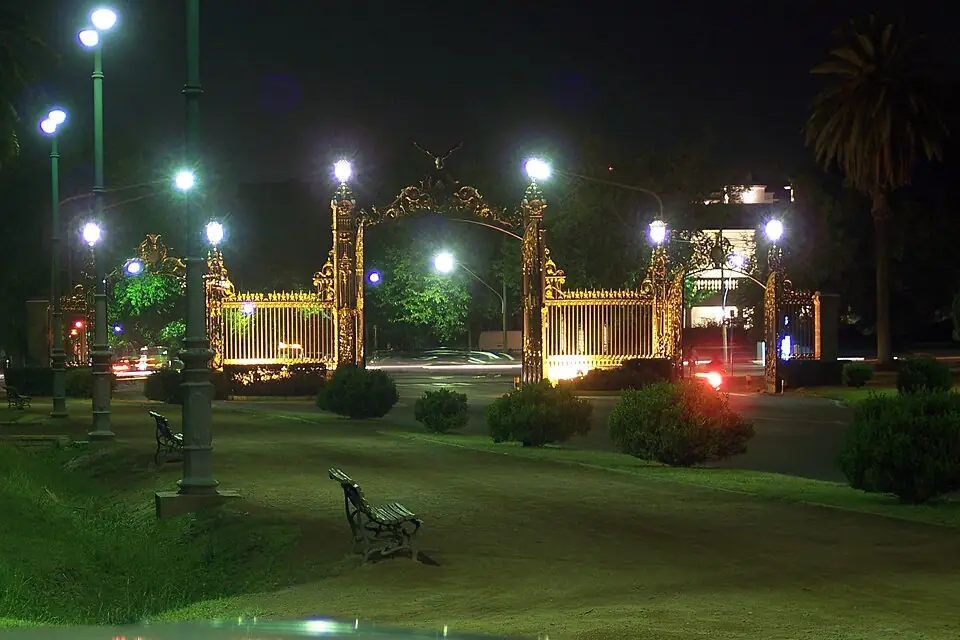
Mendoza’s real headline for most visitors is the Andes wall east of downtown: snow-capped for most of the year and reachable on one long day trip to Puente del Inca and the Aconcagua viewpoint. Add Parque General San Martín, the Cerro de la Gloria monument and the hot pools at Cacheuta, and you have a mountain-first few days built around outdoor sights, a historic produce market and thermal water.
The trap most September and October itineraries fall into is promising an Aconcagua trek that isn’t open yet: the park’s daily-trekking window starts November 15, not summer or spring. Below is what’s actually open now, what to save for later in the season, and what everything costs.
What to pack for Mendoza
Four picks from our gear guides that suit this trip. Each card opens the live Amazon price; the links below lead to the full comparisons.
25 x 18 x 4 cm, 254 g, 2.1 L. Locking zips, a cut-resistant double-cable strap, an RFID passport pocket and a strap that clips to a chair. Reader’s Digest’s best crossbody for travel.
Check price on Amazon Live price on AmazonThe best value compression set going. A double-zip pulls the air out so a week of clothes shrinks to a few inches thick, and you get eight pieces (cubes plus a shoe and laundry bag) for roughly the price of one branded cube. The fabric is thin and the zips aren’t lifetime kit, but for the money nothing beats it.
Check price on Amazon Live price on AmazonThe reliable all-rounder: three USB-C and two USB-A ports, plugs for 200+ countries, and a built-in fuse with a spare. The adapter most people should buy.
Check price on Amazon Live price on AmazonModel A1259, 10,000mAh, about 37Wh, 215 g. Two phone charges in a jacket pocket, and small enough that the two-bank limit never becomes a question.
Check price on Amazon Live price on AmazonWhere to Stay in Mendoza
A live Booking.com sample checked August 8, 2026 for a September stay shows a clear ladder, clustered in Mendoza’s City Center, the walkable core near Parque General San Martín.
| Band | Around, per night | Neighborhood |
|---|---|---|
| Budget | ~$36 to $50 | City Center |
| Mid-range | ~$56 to $101 | City Center |
| Upper | ~$139 | City Center |
| Luxury | ~$224 to $319 | City Center |
Early September is spring shoulder season in Mendoza, milder pricing than the peak spring and autumn weeks. The City Center puts you within walking distance of the park, Cerro de la Gloria and Mercado Central, and close to the pickup points most Uspallata and Cacheuta day tours use. Compare live prices anytime on our hotels hub.
Getting to Mendoza
Mendoza’s Governor Francisco Gabrielli International Airport (MDZ) connects to Buenos Aires’s Aeroparque (AEP), the domestic hub used for nearly every Argentine cabotage route. Aerolíneas Argentinas, Flybondi and JetSMART all fly the route, with JetSMART fares listed from around ARS $31,826 one-way and other search listings showing fares from around $140 in US dollars.
Overland option. A long-distance bus from Buenos Aires to Mendoza, on carriers like Andesmar via the Retiro terminal, takes roughly 15 hours; check the operator directly for current fares, since no verified 2026 figure was confirmed this pass.
The low-cost carrier catch. Flybondi and JetSMART headline fares are typically carry-on only. A checked bag is a paid add-on that can rival the base fare if you buy it at the airport instead of online in advance, so add it during booking, not at check-in.
Getting Around Mendoza
Mendoza’s City Center is compact and walkable, and most visitors only need public transit for longer hops or the ride out to a tour pickup point. The Metrotranvía light rail charges a flat fare of around ARS $1,680 as of July 13, 2026, up from ARS $1,400 set in January 2026. Mendoza’s older trolleybus network is history now, not a current option: it was permanently shut down in February 2021, so the Metrotranvía is today’s only electric transit line.
Top Things to Do in Mendoza
- Parque General San Martín. Mendoza’s largest green space, a short walk or Metrotranvía ride from the City Center, with free public access and shaded paths that make a genuinely relaxing counterpoint to a day of touring.
- Cerro de la Gloria. A hilltop monument inside the park honoring General San Martín’s Army of the Andes, and one of the better city viewpoints toward the mountains on a clear day.
- Mercado Central. A covered market at Av. Las Heras 279 running since 1883, with butcher counters, produce stalls, hot-food stands and cafes under one roof, and the easiest single stop for a real local lunch.
- Uspallata, Penitentes and Puente del Inca. A full-day road trip east into the Andes, covering the Potrerillos dam, the frontier town of Uspallata, the ski town of Penitentes and the natural rock bridge at Puente del Inca, with a stop at the Aconcagua viewpoint.
- Cacheuta thermal park. Hot-spring pools fed by natural thermal water, roughly an hour outside the city, a good way to close out a mountain day.
Day Trips From Mendoza
Mendoza’s best sights sit outside the city, and both of the main day trips run on organized tours rather than public transit.
| Day trip | Around, per person | Hours | Best for |
|---|---|---|---|
| Uspallata + Puente del Inca (Aconcagua viewpoint) | ~ARS $80,000 to $95,000 | Full day, about 7:30am to 7:30pm | High-Andes scenery, the Aconcagua photo stop |
| Cacheuta thermal park | ~ARS $13,000 to $15,000 entry only; ~ARS $45,000 to $47,000 with transfer from Mendoza | Half day, park open 10am to 6pm | Hot-spring pools after a mountain day |
The Uspallata day tour is the practical way to see Aconcagua, South America’s highest peak, without a trekking permit: it stops at a roadside viewpoint rather than entering the park itself, and continues on to Las Cuevas and, weather permitting, the Cristo Redentor monument at the Chilean border.
Aconcagua’s trekking season is genuinely narrower than the park’s
Aconcagua Provincial Park’s 2026-2027 season runs November 1 to April 30, but that’s not the same window as daily trekking. Daily trekking is specifically enabled November 15 to April 10, subject to weather and ranger availability, per the official season announcement from Mendoza’s provincial government. A September or October visit will not get you onto the park’s trails, no matter what a tour operator’s marketing implies: budget the road viewpoint instead, and save the trek for the open window.
Once trekking is open, two access points are authorized for day visits: the Quebrada de Horcones trail reaches as far as Confluencia base camp (Plaza Francia is not authorized on a day trek), and the Quebrada de Matienzo trail reaches La Cascada camp, Cerro Mirador del Tolosa and Laguna del Potrero Escondido. The daily-trekking fee runs ARS $15,000 for Mendoza residents, $25,000 for other Argentine residents, $45,000 for Latin American visitors and $55,000 for international visitors.
Food: What & Where to Eat in Mendoza
Mendoza’s food scene centers on Mercado Central and the cafe culture around Parque General San Martín, both easy to build a day around.
| Dish or stop | What it is | Where to find it |
|---|---|---|
| Empanadas and choripán | Baked or fried pastry hand pies, and a grilled sausage sandwich | Stalls throughout Mercado Central |
| Tortita mendocina | A local flatbread pastry, a classic afternoon-coffee pairing | Cafes near Mercado Central and the plazas |
| Set lunches (menú del día) | Fixed-price local lunch, usually the day’s best value | Small eateries around the City Center |
Build in time for a slow coffee at one of the cafes ringing the plazas: Mendoza’s outdoor seating and mild spring afternoons make it a genuinely nice place to sit rather than rush between sights.
Practical Tips for Mendoza
Money. The peso traded around 1,500 ARS to the US dollar as of early August 2026 (xe.com’s live rate), and the historic gap between the official exchange rate and the informal “blue dollar” rate has nearly closed, down to around 2 to 3 percent as of mid-2026. Argentina lifted its currency controls for individuals in April 2025, and a foreign Visa or Mastercard charged in pesos now settles close to the market rate automatically, so always tell the terminal to charge in pesos, never your home currency. Carry some cash for tips (around 10 percent at restaurants, almost always paid in cash) and for Mercado Central’s smaller stalls. Peso prices move fast with inflation, so treat any figure here as “around,” not fixed. For a full daily-cost breakdown, see our Argentina budget guide.
eSIM. Install a data eSIM before you land rather than hunting for a local SIM counter. Saily’s Argentina plans start around $4.76 for a 7-day, 1GB pack, with a 3GB/30-day plan around $8.99 and 20GB/30 days around $42.29. Airalo’s 20GB/30-day plan runs around $49, and Holafly’s unlimited-data 7-day plan averages around $35.90. See our Argentina eSIM guide for the full comparison, or the general eSIM guide for other destinations.
- Activate before you fly: data works on arrival
- Plans for 200+ countries from a few dollars
- Keep your number; no physical SIM swap
Visa. US, UK, EU, Canadian and Australian citizens can enter Argentina visa-free for up to 90 days under the Type 24H tourist entry, and none of these nationalities currently pays a reciprocity fee, abolished for the US in 2016, Australia in 2017 and Canada in 2018. A single 90-day extension is available for around $50 through the Dirección Nacional de Migraciones. Full country-wide rules, including the passport-validity detail worth double-checking before you fly, are in our Argentina visa guide.
Safety and water. The national emergency number is 911. Mendoza’s tap water is treated and generally safe, though quality reads slightly less consistent than Buenos Aires; some hotels here still recommend bottled water as a precaution. Our Argentina etiquette guide covers greeting norms and other mistakes visitors actually make.
Itineraries and the Wider Trip
Mendoza usually slots into a wider Argentina trip alongside Buenos Aires, El Calafate and Bariloche. For sequencing all four, see the Argentina itinerary guide and the Argentina getting around guide for the domestic flights between them. Basing in the capital first? See the full Buenos Aires travel guide and the Buenos Aires where to stay guide. Heading further south afterward, see our El Calafate guide for the Perito Moreno glacier and our Bariloche guide for the Lake District.
Sources
- Government of Mendoza (prensa.mendoza.gob.ar) and losandes.com.ar: Aconcagua Provincial Park’s 2026-2027 season and daily-trekking window, checked 2026-08-07
- quehacermendoza.site: Uspallata and Puente del Inca day-tour pricing, checked 2026-08-07
- mendozafacil.com.ar and sitioandino.com.ar: Cacheuta thermal park pricing, checked 2026-08-07
- mendozapost.com and elsol.com.ar: Metrotranvía fare increase, checked 2026-08-07
- jetsmart.com and travelocity.com: AEP-MDZ domestic flight fares, checked 2026-08-07
- Booking.com live accommodation pricing, sampled 2026-08-08
- xe.com: live USD/ARS exchange rate, checked 2026-08-07
VoyageHacks checked Mendoza’s Andes day-trip pricing, the Aconcagua trekking season and its hotel bands against live sources in August 2026. The Aconcagua trekking window in particular is a genuine gotcha for anyone planning a September or October trip: the park is technically “open” for months before the trails actually are.
Frequently Asked Questions
What is Mendoza best known for?
Mendoza is Argentina’s gateway city to the high Andes: Parque General San Martín’s green space and the Cerro de la Gloria monument anchor the city itself, while full-day tours run east to Puente del Inca and the Aconcagua viewpoint. The 1883-built Mercado Central covers the food side, and the Cacheuta thermal park, about an hour outside the city, adds a hot-spring day trip.
Can I trek in Aconcagua Provincial Park if I visit Mendoza in September?
Not on the trails. Aconcagua Provincial Park’s 2026-2027 season runs November 1 to April 30, but daily trekking specifically only opens November 15 to April 10, per Mendoza’s official season announcement. September and October visitors can still see Aconcagua from the road via the Uspallata and Puente del Inca day tour, just not enter the park’s trekking trails.
How much does the Uspallata and Puente del Inca day trip cost from Mendoza?
A full-day tour covering the Potrerillos dam, Uspallata, Penitentes, Puente del Inca and the Aconcagua viewpoint (with Las Cuevas and Cristo Redentor if weather allows) runs around ARS $80,000 to $95,000 per person, departing around 7:30am and returning around 7:30pm.
What does Cacheuta thermal park cost?
Cacheuta’s entry fee for adults (ages 11 and up) runs around ARS $13,000 on weekdays and ARS $15,000 on weekends, per pricing checked in June 2026. A combined entry-plus-transfer package from Mendoza city for a small group runs around ARS $45,000 to $47,000, and the park is open 10am to 6pm.
Do I need a visa to visit Mendoza, Argentina?
US, UK, EU, Canadian and Australian citizens can enter Argentina visa-free for up to 90 days under the Type 24H tourist entry, and none of these nationalities currently pays a reciprocity fee. A single 90-day extension is available for around $50 through the Dirección Nacional de Migraciones. See our Argentina visa guide for the full country-wide rules.
How do I get around Mendoza city?
Mendoza’s Metrotranvía light rail charges a flat fare of around ARS $1,680 as of July 2026, up from ARS $1,400 in January. The city’s historic trolleybus system was permanently shut down in February 2021, so today’s light rail is the only electric public transit option, and the compact City Center itself is easily walkable.