Quick Answer
- Best time: November to March for summer; October and April for the sweet-spot shoulder.
- Where to stay: City Bowl for walking; Sea Point or Camps Bay for the sea; the Waterfront for polish; Constantia with a car.
- Cable car: R475 adult return online, tickets valid seven days; closes in strong wind.
- Airport and city transport: the MyCiTi airport bus runs to the Civic Centre, a myconnect card costs R40, and Uber or Bolt suits night arrivals or heavy bags.
- Entry: visa-free for up to 90 days for many passports, including the US, UK and most of the EU.
At a glance
- Best time
- Nov to Mar; Oct and Apr shoulder
- Time needed
- 4 to 5 days
- Currency
- South African rand (ZAR)
- Language
- English, Afrikaans, isiXhosa
- From the airport
- MyCiTi bus or Uber/Bolt
- Visa
- Visa-free 90 days for many passports
- Getting around
- MyCiTi, Uber or Bolt, hire car
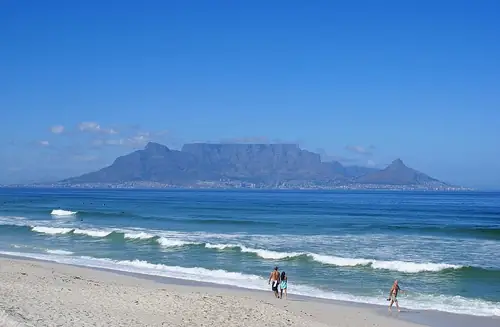
Cape Town’s best days depend on two things you can’t control: the wind and the cloud on Table Mountain. The trick is to come in the dry season, stay somewhere you can walk out of, and grab the mountain on the first calm, clear day. This guide covers the seasons, the bases, the costs and the Peninsula day, with prices checked against the Table Mountain Aerial Cableway, SANParks and the Department of Home Affairs on 3 October 2026.
When is the best time to visit Cape Town?
Cape Town is in the southern hemisphere, so the warm, dry months are November to March and winter (June to August) brings most of the rain.
| Season | Average high / low (WMO) | Rain | Best for |
|---|---|---|---|
| Summer (Dec–Mar) | 25–27°C / 14–16°C | Very little | Beaches, long evenings; strongest southeaster wind and peak prices |
| Autumn (Apr–May) | 20–23°C / 9–12°C | Rising | Calmer days, fewer crowds, the all-round sweet spot in April |
| Winter (Jun–Aug) | 18°C / 7–8°C | Wettest months | Lowest prices, green landscapes, grey days |
| Spring (Sep–Nov) | 19–24°C / 9–13°C | Falling | Gardens, wildflowers, pre-peak value |
Averages are long-term normals published by the World Meteorological Organization for Cape Town. The southeaster wind is strongest in summer and is what most often shuts the cable car, so leave two or three possible mountain days in your plan. The cableway also closes for about two weeks of annual maintenance in winter (27 July to 9 August in 2026).
What to pack for Cape Town
Four picks from our gear guides that suit this trip. Each card opens the live Amazon price; the links below lead to the full comparisons.
25 x 18 x 4 cm, 254 g, 2.1 L. Locking zips, a cut-resistant double-cable strap, an RFID passport pocket and a strap that clips to a chair. Reader’s Digest’s best crossbody for travel.
Check price on Amazon Live price on AmazonThe best value compression set going. A double-zip pulls the air out so a week of clothes shrinks to a few inches thick, and you get eight pieces (cubes plus a shoe and laundry bag) for roughly the price of one branded cube. The fabric is thin and the zips aren’t lifetime kit, but for the money nothing beats it.
Check price on Amazon Live price on AmazonThe reliable all-rounder: one USB-C and four USB-A ports, plugs for 200+ countries, and a built-in fuse with a spare. The adapter most people should buy.
Check price on Amazon Live price on AmazonModel A1259, 10,000mAh, about 37Wh, 215 g. Two phone charges in a jacket pocket, and small enough that the two-bank limit never becomes a question.
Check price on Amazon Live price on AmazonWhere should you stay in Cape Town?
Cape Town is spread between the mountain and the sea, so your base sets the rhythm of the trip. For a detailed breakdown by street and budget, see where to stay in Cape Town.
| Area | Feel | Best for |
|---|---|---|
| City Bowl (centre) | Central, walkable, museums and cafés | First-timers without a car |
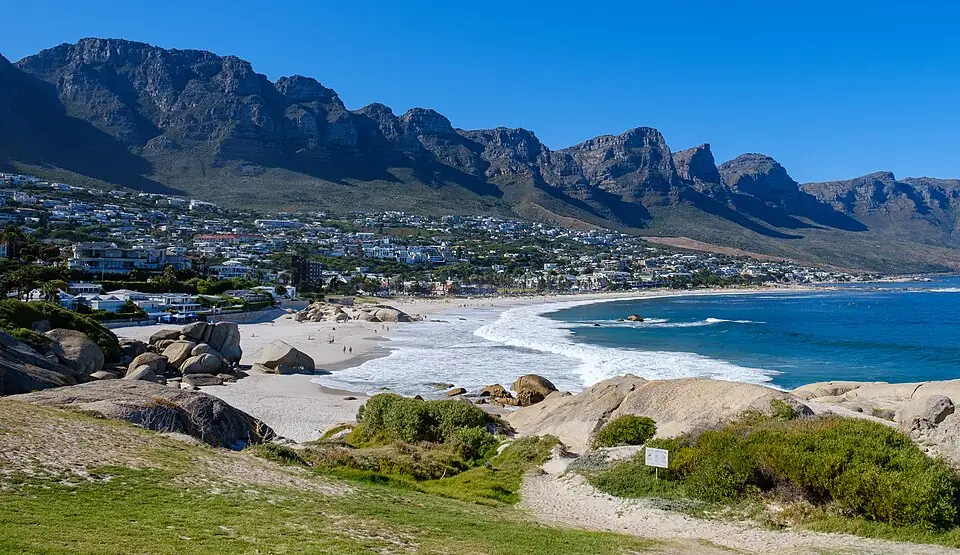
| Atlantic Seaboard (Sea Point, Camps Bay) | Seafront promenade, beaches | Sea views, sunset walks, beach days |
| V&A Waterfront | Polished harbour, shops | Comfort, families, Robben Island ferries |
| Constantia | Leafy, calm | A quieter base with a hire car |
Sea Point is the better-value seaside choice; Camps Bay has the showpiece beach at higher prices.
How do you get around Cape Town?
Food is a highlight: try Cape Malay dishes such as bobotie in the Bo-Kaap, and share a Gatsby, the city’s famous overstuffed roll.
What should you not miss in Cape Town?
- Table Mountain. By cable car on a clear, calm day, or on foot up Platteklip Gorge if you are a strong walker. Hikers can still walk during the maintenance closure but must walk down too.
- The Cape Peninsula and Cape Point. Chapman’s Peak Drive’s cliff road and the lighthouse at Cape Point make a full day. Cape Point’s conservation fee for international adults is R592 per day from 1 November 2026 to 31 October 2027, up from R515, by SANParks’ official tariff.
- Boulders penguins. Watch the African penguin colony from boardwalks on the False Bay side, R282 per international adult from 1 November 2026 to 31 October 2027 (R245 until then). SANParks updates fees every 1 November.
- V&A Waterfront and Robben Island. Ferries to Robben Island, where Nelson Mandela was imprisoned, leave from the Nelson Mandela Gateway at the Waterfront. Book ahead, and check the sea forecast, since crossings are cancelled in rough weather.
- Bo-Kaap and Kirstenbosch. The colourful streets of the historic Cape Malay quarter, and Kirstenbosch National Botanical Garden on the mountain’s eastern slopes.
What do you need to enter South Africa?
According to South Africa’s Department of Home Affairs, ordinary passport holders from countries including the United States, United Kingdom, Canada, Australia, Japan, Germany, France and the Netherlands can visit visa-free for up to 90 days. South Africa launched an Electronic Travel Authorisation in 2026, aimed first at nationalities that need a visa. Check our South Africa visa guide and the Home Affairs list for your passport before booking.
Frequently Asked Questions
What is the best time to visit Cape Town?
November to March is Cape Town’s warm, dry summer and peak season, with average highs of about 24 to 27°C, but also the strongest southeaster wind and the highest prices. October and April are the sweet spot for lighter crowds. June to August is the wet, green season, with highs around 18°C and most of the year’s rain.
Where should I stay in Cape Town for the first time?
The City Bowl keeps you walkable to the Company’s Garden, the museums and Bo-Kaap. The Atlantic Seaboard (Sea Point and Camps Bay) trades a short ride into town for sea views and beaches, the V&A Waterfront is polished and pricey, and leafy Constantia suits a quieter base if you have a hire car.
How do I get from Cape Town airport into the city?
The MyCiTi airport bus runs to the Civic Centre in the city centre; you pay with a myconnect card, which costs R40 at MyCiTi kiosks and retailers, loaded with credit. Uber or Bolt is the easy door-to-door option, especially at night or with luggage. Avoid unmarked taxis touting at arrivals.
Do I need a car in Cape Town?
Not for the city: MyCiTi buses, the City Sightseeing hop-on bus and Uber or Bolt cover the centre and the Atlantic Seaboard. A hire car is the easiest way to do the Cape Peninsula, because Chapman’s Peak Drive, Cape Point and the Boulders penguins are spread out and better at your own pace.
Is the Table Mountain cable car worth it, and when should I go?
Yes, on a clear, calm day. An adult return costs R475 online or R530 at the ticket office, and tickets are valid for seven days, so you can use the next open day if wind closes the cableway. Check the cableway’s live status before you go and aim for the morning. Fit hikers can walk up Platteklip Gorge instead.
Is Cape Town safe for tourists?
Cape Town is rewarding but you should be streetwise, especially after dark. Stick to busy, well-lit areas in the evening, use Uber or Bolt rather than walking unfamiliar streets at night, keep phones and valuables out of sight, and keep car doors locked. Ask your accommodation about any area you are unsure of.
Start planning your Cape Town trip
Come in the warm half of the year, sleep somewhere central or by the sea, take the mountain the moment the wind drops, and give the Peninsula a full day.
Find cheap flights to Cape Town | Compare Cape Town hotel prices
Planning the wider trip? See our best time to visit South Africa guide, the Garden Route, getting around South Africa, and more stays on the hotels hub.