Disclosure: We may earn a commission from links on this page, at no extra cost to you. How we earn
This article contains affiliate links. If you make a booking through these links, we may earn a commission at no extra cost to you. About & Affiliate Disclosure
Quick Answer
- Dress modestly away from pools and riad courtyards: shoulders and knees covered travels best, especially in smaller towns and at religious sites.
- Haggle in the souks, starting around half the first asking price; fixed-price shops and restaurants don’t expect it.
- Right hand only for eating, greetings, and handing over money or items: the left is considered unclean.
- Remove shoes entering homes and many riads; watch your host and follow suit.
- Koutoubia and the call to prayer: Marrakech’s Koutoubia can be admired from outside and its gardens only; the call to prayer sounds five times daily, so keep voices down near entrances.
- Ask before photographing people, especially performers and vendors at Jemaa el-Fnaa, a small tip is customary if you do.
- Heat and dress: Marrakech’s August highs run around 38-45°C, so long, airy layers are as much a comfort call as a courtesy.
- Petit taxi etiquette: the day meter starts around 1.70 MAD with a around 7 MAD minimum; agree the fare first if the driver claims the meter is broken.
- Mint tea is the social ritual: atay is poured with ceremony in cafés, riads and souks: the heart of Moroccan hospitality.
Haggling Badly Is the Fastest Way to Overpay in a Souk
A visitor who agrees to the first, or even the second, number a vendor names has already lost the negotiation. The real starting move is a counter-offer around half the seller’s first asking price, not a token nudge down, and the whole exchange works best as a friendly conversation rather than a standoff.
Most of Morocco’s etiquette isn’t posted anywhere. It’s read off the vendor’s face, the riad host’s gesture, the woman ahead of you covering her shoulders before stepping into a courtyard. Get a handful of these habits down before you land and you move through medinas, riad doorways and dinner tables like you’ve done this before, instead of catching up a beat behind everyone else.
Dress Code: What Actually Gets Noticed
Morocco isn’t legally strict about dress outside religious sites, but modest clothing is the etiquette norm that spares you unwanted attention and keeps doors open.
Haggling: Start at Half, Stay Friendly
Bargaining is a normal, expected part of shopping in Morocco’s souks: treating it as awkward or refusing to engage is itself a small etiquette miss, and so is haggling too hard.
| Situation | What’s normal |
|---|---|
| Souks, medina stalls, souvenir sellers | Haggling expected, a common approach is starting around half the first asking price |
| Fixed-price shops, malls, government-run cooperatives | Marked prices, no haggling |
| Petit taxis (metered) | Meter runs the fare, day rate starts around 1.70 MAD with a around 7 MAD minimum; agree first if the driver claims the meter’s broken |
| Grand taxis (shared, intercity) | Fixed per-seat fare for the route, no haggling once the price is posted |
| Riads, restaurants | Rate-card or menu prices, not up for negotiation |
Keep it warm rather than adversarial, a smile, a counter-offer, and a willingness to walk away (calmly, not stormed off) usually gets the better price faster than pushing hard. Vendors expect the back-and-forth; they don’t expect to be lectured about it.
The Right-Hand Rule: Eating, Money and Greetings
This is the etiquette rule most likely to catch a first-time visitor off guard, because nobody explains it at the border.
- Use your right hand for eating: many meals, especially bread with tagine, are eaten by hand, and the right hand is the one to use.
- Give and receive money, cards or small items with your right hand: handing a note to a stallholder or a riad host with your left reads as careless rather than deliberate, but it’s noticed.
- Greetings follow the same logic, a handshake uses the right hand; among Moroccan friends a light cheek-to-cheek greeting is common, but as a visitor a warm handshake or nod is always safe.
- Left-handed travelers aren’t expected to relearn everything overnight, a visible effort with food and cash at the table is what actually earns goodwill, not flawless consistency in every gesture.
Shoes and Homes: The Rule Nobody Explains
Removing your shoes before entering a home or many riads is one of the more consistent etiquette habits in Morocco, and it’s easy to miss if nobody points it out.
- Most Moroccan homes and traditional riads expect shoes off at the door. Watch whether your host removes theirs, and follow suit even if they wave you in.
- Some modern riads and hotels don’t enforce it strictly, but removing shoes at a private home is close to universal courtesy.
- Socks are fine to keep on. This isn’t about bare feet, just leaving street shoes at the threshold.
Mosques: Closed Doors, One Exception
This is the single biggest etiquette-adjacent mistake first-time visitors make in Morocco, because it looks like it should work the same way it does elsewhere.
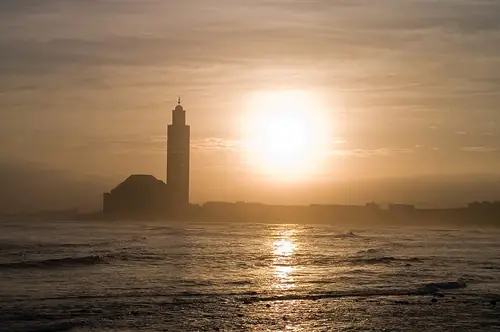
Non-Muslims cannot enter active mosques anywhere in Morocco: including Marrakech’s iconic Koutoubia Mosque, where the exterior and gardens are viewable but the interior is off-limits. The one nationwide exception is the Hassan II Mosque in Casablanca, which runs paid guided tours for non-Muslims outside prayer times, for around 140 MAD (around $14). If a mosque visit matters to your itinerary, it has to be the Casablanca stop specifically: no amount of asking nicely opens the door elsewhere.
Outside mosques, dress modestly and keep voices down near entrances during call to prayer, which happens five times daily and is simply part of the city’s rhythm, not a moment that requires tourists to do anything except be considerate.
Photos: Ask First, Especially at Jemaa el-Fnaa
Jemaa el-Fnaa’s snake charmers, henna artists and water sellers make for the postcard shot everyone wants, and the etiquette mistake everyone makes is raising a phone without asking.
- Ask before photographing people, especially performers and vendors, a nod or a quick “puis-je?” (French) or a gesture toward the camera usually gets a yes.
- A small tip is customary if you photograph a performer or someone posing for you specifically, a few dirham is the norm, not a formal fee.
- Street scenes and architecture are generally fine to shoot freely. It’s specific people, especially those posed for tips, where asking first matters.
Ramadan 2027: Timing That Changes the Trip
Ramadan reshapes daily rhythm across Morocco more than any single custom, and it’s worth checking dates before booking.
Ramadan 2027 is expected to run roughly from 8 February to 9 March 2027, with the exact start and end depending on the moon sighting. During daylight fasting hours, many local cafés and restaurants adjust their hours or close, and it’s polite to avoid eating, drinking or smoking visibly in public even though tourist-facing riads and restaurants generally keep serving travelers. Evenings shift the other way entirely: the iftar meal brings medinas and squares to life after sunset, often livelier than a normal night. Traveling just before or after the month avoids the hours-adjustment altogether if timing flexibility matters more than the atmosphere.
Tipping: Dirham Cash, Small Amounts
Tipping in Morocco is modest and expected in specific, predictable places rather than a blanket percentage.
| Where | Around |
|---|---|
| Café or mint tea | A few MAD (coins) |
| Restaurant meal | Around 10-20 MAD, or rounding up |
| Guide or driver for a day trip | Around 10-20 MAD, more for a full-day private tour |
| Porter (riad or hotel) | A few MAD per bag |
| Petit taxi | Rounding up to the next few dirham, not required |
Cash in dirham coins or small notes is the expectation: card tipping isn’t really a thing here, and MAD is a closed currency you’ll withdraw from an ATM after landing rather than pre-order at home.
Mistakes Tourists Make Most
| Mistake | Do this instead |
|---|---|
| Dressing too skimpily outside the riad/pool | Cover shoulders and knees in medinas and smaller towns |
| Refusing to haggle, or haggling aggressively | Start around half the asking price, stay friendly |
| Eating or handing over money with the left hand | Use the right hand for food, cash and greetings |
| Photographing people without asking | Ask first, especially performers at Jemaa el-Fnaa |
| Trying to enter an active mosque | Save mosque interiors for the Hassan II Mosque in Casablanca |
| Eating/drinking visibly in public during Ramadan | Be discreet in daylight hours; evenings are lively |
| Tipping by card or skipping it entirely | Carry small dirham notes/coins for cafés, guides, porters |
Evenings: Mint Tea, Food Stalls & Rooftops
Morocco’s evenings revolve around mint tea, food stalls and rooftop views, and they hold up completely on their own.
- Mint tea (atay) ceremony is the country’s actual social ritual, poured from height in cafés, riads and even mid-negotiation in a carpet shop: the pause that makes a haggling session feel human.
- Jemaa el-Fnaa after dark turns into a food-stall carnival: grilled skewers, snail soup stalls, orange-juice carts and storytellers, all walkable and cheap.
- Rooftop terraces across the Medina turn sunset into a view rather than a drink order: many riads open theirs to non-guests for the price of a tea or a light meal.
- Hammams in the evening are a genuinely local way to unwind after a day of walking souks, and a proper steam-and-scrub session runs a fraction of a spa day back home.
Getting Around Without the Mistakes
Good etiquette extends to how you move through Marrakech, too: arriving with the fare in mind beats an argument at the airport curb. A petit taxi from Menara Airport to the Medina or Gueliz runs an official day fare of around 100-150 MAD (around $10-15) for the roughly 15-20 minute ride, rising by about 50% overnight; agree the price before your bags go in the trunk since it’s a regulated rate rather than a freely negotiable one. The airport bus (line 19) covers the same route for around 30 MAD (around $3), with the ticket valid 15 days and including a free return trip. Inside the Medina itself, expect to walk (it’s largely car-free), and use metered petit taxis for anything farther, with a typical in-town ride running around 20-30 MAD (around $2-3).
For the wider country, our Marrakech hotels guide covers riad picks by neighborhood, and staying connected for maps, translation and confirming a fair taxi fare matters as much here as anywhere. See our Morocco eSIM guide for current data plans before you land.
Frequently Asked Questions
What are the most common etiquette mistakes tourists make in Morocco?
The most common mistakes are dressing too skimpily away from the pool or riad courtyard, refusing to haggle (or haggling aggressively) in the souks, handing over money or food with the left hand, photographing people without asking first, and trying to walk into an active mosque. None of these will get a traveler thrown out of the country, but avoiding them earns real warmth from shopkeepers, guides and riad hosts.
Is haggling expected in Moroccan souks?
Yes. In the souks of Marrakech, Fes and other medinas, haggling is the normal way prices are set, since almost nothing carries a fixed price tag. A common approach is to start around half the vendor’s first asking price and work toward the middle, staying friendly rather than confrontational; fixed-price shops, malls and restaurants don’t expect it.
Can tourists visit mosques in Morocco?
Almost never: non-Muslims are barred from entering active mosques across Morocco, including the Koutoubia in Marrakech, where only the exterior and gardens are viewable. The one nationwide exception is the Hassan II Mosque in Casablanca, which runs paid guided tours for non-Muslims outside prayer times for around 140 MAD (around $14).
Is it rude to eat with your left hand in Morocco?
Yes, in practice: the right hand is the one used for eating, greeting, and handing over money or small items, since the left hand is traditionally considered unclean. Left-handed travelers aren’t expected to relearn everything overnight, but a visible effort with food and cash at a riad table or souk stall is noticed and appreciated.
What should I know about visiting Morocco during Ramadan?
Ramadan 2027 is expected to run roughly from 8 February to 9 March 2027 (exact dates depend on the moon sighting). Many cafés and restaurants shift their hours around fasting times, and it’s polite to avoid eating, drinking or smoking visibly in public during daylight hours, even though tourist-oriented riads and restaurants generally keep serving travelers.
How much should I tip in Morocco?
Tip in dirham cash rather than card, a few MAD left at a café is enough, and around 10-20 MAD is standard for guides, porters or after a restaurant meal. Rounding up a petit taxi fare to the next few dirhams is common practice rather than a strict requirement.
Travel Morocco Like You’ve Done This Before
Get the basics right: modest layers for the medina, half-price haggling openers, the right hand for food and cash, a mosque visit saved for Casablanca, and small dirham tips ready, and the rest of Morocco’s etiquette sorts itself out by watching the person next to you. None of it is about fear of a misstep; it’s what turns a checklist trip into the kind where a carpet seller pours you tea mid-negotiation and you already know exactly what to do with it.
Find cheap flights to Morocco | Compare Marrakech hotels
Keep planning with our Morocco itinerary, Morocco budget guide, Morocco eSIM guide and best time to visit Morocco. Heading to specific cities? See our guides to Marrakech, Fes, Chefchaouen and Essaouira. Compare more hotels, grab a data eSIM, or check travel insurance before you land.