Quick Answer
- Best time to visit Fes: spring (Mar–May) and autumn (Sep–Nov): warm, dry, walkable, with the medina at its most pleasant.
- Where to stay: a riad inside Fes el-Bali for atmosphere; the Ville Nouvelle for calm and restaurants; Bab Boujloud for medina life at the main gate.
- Getting around: Fes el-Bali is the world’s largest car-free urban area. It’s all on foot, so wear good shoes and use an offline map.
- From the airport: take a petit taxi from Fès-Saïss (FEZ); agree the fare before you go.
- Eat smart: bowls of bissara soup and medina street food at local prices, where the line is local.
Fes, Without Getting Lost (Or Overpaying)
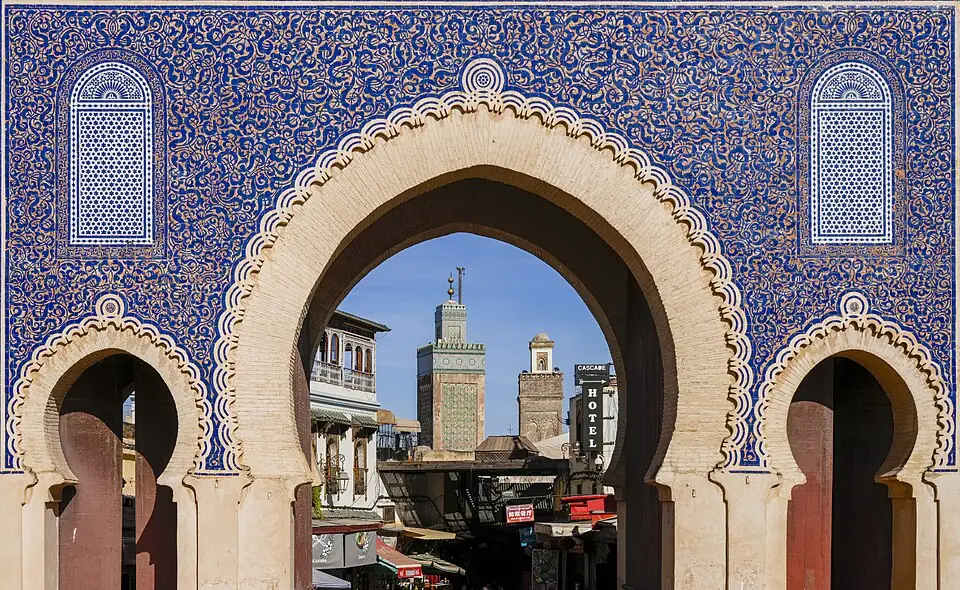
Step through Bab Boujloud, the blue gate, and it takes most first-timers only a few minutes to lose any sense of which way is out. Boys offering “tannery, this way” are a fixture here, and following one can mean paying for a guided detour nobody asked for. That’s Fes. The medina swallows you, and the city makes you decide fast whether that’s a thrill or a headache.
So here’s the short version this Fes travel guide is built around: come in spring or autumn, sleep in a riad inside Fes el-Bali so the history is on your doorstep, accept that the old city is entirely on foot, and hire a real guide for your first half-day so the maze stops feeling hostile. Do those four things and Fes turns from overwhelming into one of the most rewarding cities in Morocco.
A rigid itinerary doesn’t suit this city, Fes resists one. What matters is the right season, the right base, and a head start on the medina so visitors are wandering on purpose instead of in circles. The single thing most first-timers get wrong is a decision made before they’ve even walked through the gate.
What to pack for Fes
Four picks from our gear guides that suit this trip. Each card opens the live Amazon price; the links below lead to the full comparisons.
25 x 18 x 4 cm, 254 g, 2.1 L. Locking zips, a cut-resistant double-cable strap, an RFID passport pocket and a strap that clips to a chair. Reader’s Digest’s best crossbody for travel.
Check price on Amazon Live price on AmazonThe best value compression set going. A double-zip pulls the air out so a week of clothes shrinks to a few inches thick, and you get eight pieces (cubes plus a shoe and laundry bag) for roughly the price of one branded cube. The fabric is thin and the zips aren’t lifetime kit, but for the money nothing beats it.
Check price on Amazon Live price on AmazonThe reliable all-rounder: one USB-C and four USB-A ports, plugs for 200+ countries, and a built-in fuse with a spare. The adapter most people should buy.
Check price on Amazon Live price on AmazonModel A1259, 10,000mAh, about 37Wh, 215 g. Two phone charges in a jacket pocket, and small enough that the two-bank limit never becomes a question.
Check price on Amazon Live price on AmazonGetting Around Fes
Here’s the thing most first-timers don’t fully grasp until they’re standing inside it: Fes el-Bali is the world’s largest car-free urban area. There are no cars in the old city. None. You move the way people have for a thousand years. On foot, weaving past handcarts and the odd donkey hauling goods through lanes barely wide enough for two people to pass.
And honestly? Getting a little lost is the point. The medina has roughly nine thousand lanes; nobody sees them all. Pick a landmark to aim back toward (a gate, a tall minaret), and let yourself drift between the workshops in between.
Where to eat without overpaying takes the same instinct: follow the locals, not the laminated menu:
- Bissara for breakfast. This thick fava-bean soup, drizzled with olive oil and cumin, is a cheap, filling medina staple sold from tiny counters where workers eat standing up. It’s one of the best few-dirham meals in the city.
- Street food off the main drag. Step one lane off the tourist artery and the same grilled skewers, msemen flatbread and bowls of harira cost a fraction of the gate-side cafés.
- A pastilla worth seeking out. Fes is the home of this savoury-sweet pie; a good one at a medina table is a proper sit-down meal at a fair local price.
- Mint tea on a terrace. A glass of sweet mint tea on a rooftop over the medina is the city’s social ritual: slow, cheap and the best seat in Fes at sunset.
What Not to Miss
You can’t see all of Fes in one trip, so aim for a handful done well rather than a checklist rushed.
- The Chouara tanneries are the city’s signature sight: vast stone vats of dye worked by hand exactly as they have been for centuries. View them from one of the surrounding leather shops’ terraces; you’ll be handed a sprig of mint for the smell, and there’s no obligation to buy.
- Al-Quaraouiyine is one of the oldest continuously operating universities on earth, founded in 859. Non-Muslims can’t enter the prayer hall, but you can glimpse the courtyard and admire the exterior of a place that’s been a centre of learning for over a thousand years.
- The Bou Inania and Al-Attarine medersas are the most beautiful interiors open to visitors: jaw-dropping carved cedar, stucco and zellij tilework in these old Quranic colleges. They’re calm, photogenic and worth the small entry fee.
- Bab Boujloud, the blue gate, is the grand, tiled entrance to the medina (blue on the outside, green on the inside), and the easiest landmark to navigate home to.
- The medina maze itself is the headline act: the souks of the metalworkers, weavers and woodcarvers, with the rhythm of hammers and looms down every lane.
- A Volubilis and Meknes day trip pairs the well-preserved Roman ruins of Volubilis with the imperial gates of Meknes: an easy, rewarding day out from Fes for a change of pace.
The quiet wins are the ones you stumble into: a craftsman tapping out a brass tray, a tucked-away medersa with no one else in it, the call to prayer rolling across the rooftops at dusk.
Best Time to Visit Fes
Fes sits inland, away from the coast’s cooling breeze, so the season you pick changes the experience more than almost anywhere else in Morocco. Walk the medina for hours in May and it’s a joy; do it in a July heatwave and it’s an endurance test. The short answer: the shoulder seasons win, comfortably. Here’s how they compare.
| Season | Weather | Crowds | Prices | Best for |
|---|---|---|---|---|
| Spring (Mar–May) | Warm, dry, 18–28°C | Building | Mid | All-day medina walks, comfortable touring, the all-round sweet spot |
| Summer (Jun–Aug) | Hot, dry, often 35°C+ | Lighter (heat deters) | Lower midweek | Early-morning starts only; alleys drain you by midday |
| Autumn (Sep–Nov) | Warm, golden, 20–30°C | Easing after summer | Good value | Best light, calmer souks, still-warm evenings |
| Winter (Dec–Feb) | Cool, crisp days, chilly nights | Low | Cheapest | Quiet medina, bargains, but pack layers and rain cover |
The real planning note isn’t a month, it’s the heat. Fes in high summer demands you treat the day like a local does: out early, retreat to shaded courtyards and a cool riad at midday, back out when the sun drops. Come in spring or autumn and you simply don’t have to manage your day around the temperature, which is why first-timers should aim there.
Where to Stay in Fes
In Fes, where you sleep is the trip. A riad inside the old walls puts you in the middle of the maze; the new city trades that intensity for calm and convenience. There’s no wrong answer, only the right one for how much immersion you want.
| Area | Vibe | Roughly | Best for |
|---|---|---|---|
| Riad in Fes el-Bali (the medina) | Historic, immersive, maze-like | 60–150€/night | First-timers who want the full medina experience on their doorstep |
| Ville Nouvelle (new city) | Calm, modern, leafy, easy taxis | 40–90€/night | Quiet nights, restaurants, easy arrivals and transport |
| Around Bab Boujloud (the blue gate) | Atmospheric, central, lively | 50–120€/night | Medina life right at the main entrance, easy in-and-out |
For a first visit, book a riad inside Fes el-Bali, a restored courtyard house with a fountain, tilework and a rooftop terrace over the medina is half the reason to come, and it means the history is steps from your door. The Ville Nouvelle is the quieter, greener pick if you want modern comforts, easy restaurants and a taxi rank rather than a tangle of alleys. Bab Boujloud is the in-between: medina atmosphere at the famous blue gate, with a clear landmark to navigate home to. Compare live rates anytime on our hotels hub.
Frequently Asked Questions
What is the best time to visit Fes?
Spring (March to May) and autumn (September to November) are the sweet spot: warm, dry days, manageable medina crowds and comfortable temperatures for walking all day. Summer is genuinely hot, often above 35°C, which makes the alleys draining by midday. Winter is cool, quiet and cheap, with crisp days and chilly evenings.
Where should I stay in Fes for the first time?
Stay in a riad inside Fes el-Bali, the old walled medina, to be surrounded by the history you came for. The Ville Nouvelle (new city) is calmer, greener and good for restaurants and easy taxis. The area around Bab Boujloud, the blue gate, splits the difference: medina atmosphere right at the main entrance.
How do I get from Fes airport into the city?
From Fès-Saïss airport (FEZ), take a petit taxi into town. The airport sits a short drive southwest of the centre, and a metered or agreed-fare petit taxi is the simplest way in. Agree the fare before you set off, as airport runs are often a flat negotiated price rather than metered.
Is it easy to get around the Fes medina?
Fes el-Bali is the world’s largest car-free urban area, so getting around the medina means walking. There are no cars, just narrow lanes, handcarts and the occasional donkey. Wear sturdy shoes, use an offline map, and consider a local guide for a half-day to learn the layout before exploring on your own.
How many days do you need in Fes?
Two to three full days is a comfortable amount for Fes: one to get lost in the medina and see the tanneries and main medersas, one for the souks and craft workshops at a slower pace, and a third for a day trip to Volubilis and Meknes. Add more if you want to truly settle into the rhythm.
Is Fes worth visiting?
Yes. Fes holds the best-preserved medieval medina in the Arab world, a living maze of craft workshops, tanneries, ancient medersas and one of the oldest universities on earth at Al-Quaraouiyine. It is rawer and less polished than Marrakech, which is exactly why many travellers find it the more rewarding of the two.
Start Planning Your Fes Trip
Get the season and the base right and Fes stops feeling like a city out to lose you and starts feeling like the extraordinary, lived-in medieval maze it actually is. A first afternoon spent turning in circles usually gives way, by day three, to finding shortcuts and a quiet terrace for mint tea. Aim for spring or autumn, sleep inside the medina, take a petit taxi in from the airport, and let a guide unlock the layout on day one.
Compare prices now and lock in your dates:
Find cheap flights to Fes | Compare Fes hotel prices
Planning the wider trip? See our best time to visit Morocco guide and browse more stays on the hotels hub.